
Why ‘Ghost Companies’ Matter for Corporate Transparency and Oversight
Imagine a business that exists only on paper, with no real office, no known employees, and owners who are hidden from public view. These are often called ‘ghost companies’. They are like a shadowy puppet show where you can see the puppets, but not the people pulling the strings. In 2026, understanding these hidden companies is more important than ever for good corporate transparency.
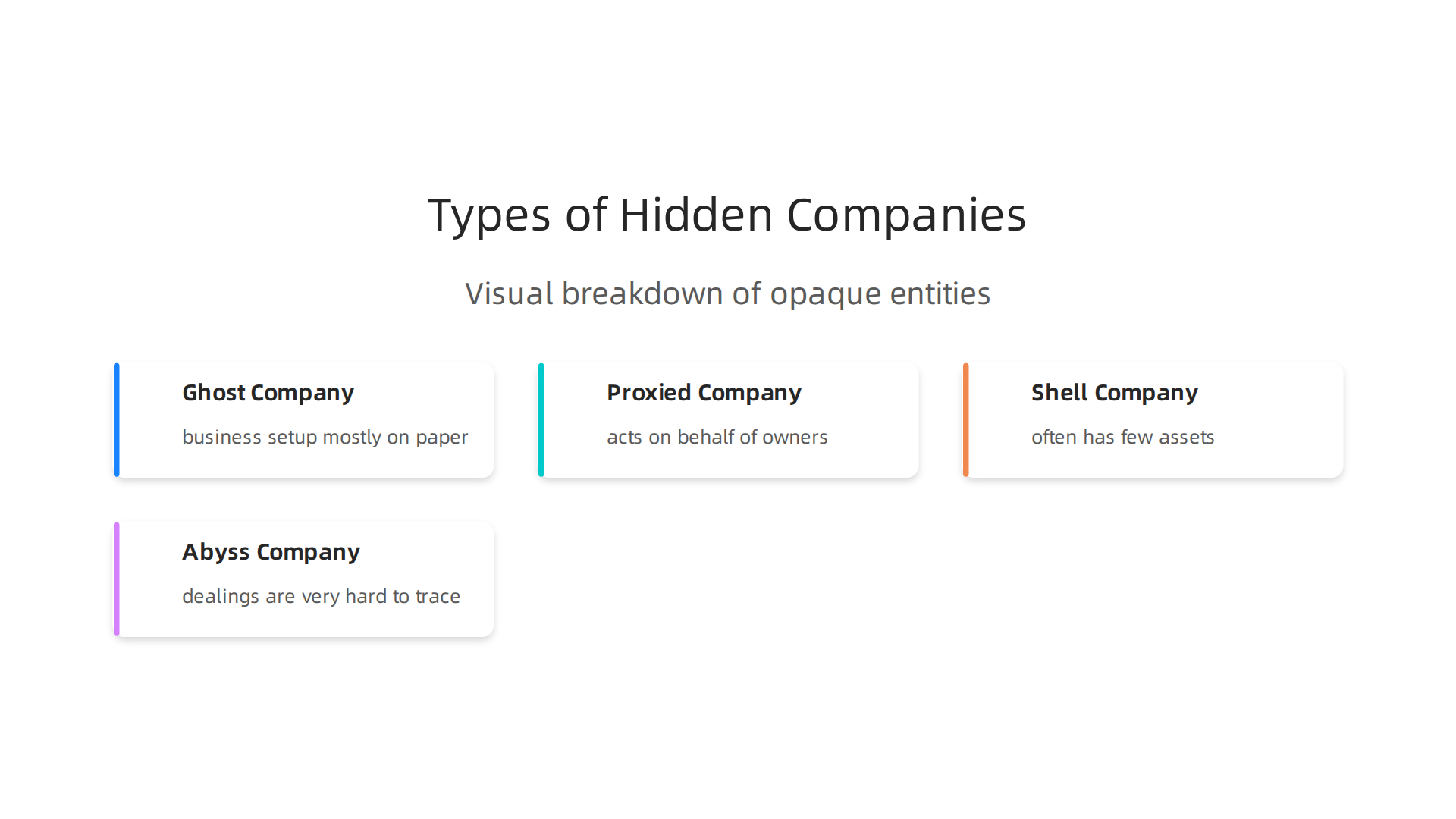
A ghost company, or a proxied company, is essentially a business entity that keeps its true owners a secret. This lack of clear ownership creates many problems. For example, bad actors can use these companies to hide money they got illegally, avoid taxes, or even fund dangerous activities. When a company acts like an abyss company, it means its financial dealings and ownership are hard to trace, which makes it a big risk.
For regulators and legal teams, these companies are a major headache.

They make it really hard to stop illegal money flows or catch people committing fraud. For example, while the U.S. has recently changed its rules, ending beneficial ownership reporting for domestic companies, many other places like the EU and international groups still push for more transparency New IMF AML Guidance pushes for beneficial ownership transparency. This makes it a complex global issue for businesses trying to understand shell company uncover hidden ownership.
Investors and corporate leaders also care a lot about this. They want to make sure the companies they deal with are honest and play by the rules. No one wants to accidentally support a business involved in something shady. When it’s hard to find out who really owns a company, it creates regulatory and compliance risks for everyone involved. This makes transparent oversight crucial for keeping the business world safe and fair.
Staying on top of these complex tech and policy issues is essential for any professional. For daily insights and analysis on AI and technology policy, which often touches on corporate transparency and related challenges, you can easily get informed.
Get clear daily AI updates from The Deep View Newsletter.
When we talk about ‘ghost companies’, it helps to understand exactly what they are and how they differ from other types of businesses.
The main idea behind a ghost company is that its true owners are hidden. It’s like a secret club where you don’t know who the members really are.
A ghost company is a business setup mostly on paper. It typically does not have real business operations, actual offices, or known employees doing day-to-day work. Its main goal is to keep the identity of its owners a secret. This makes it harder for anyone to know who is truly behind the company’s actions. These are sometimes called proxied companies because another person or group acts on behalf of the real owners.
You might also hear about shell companies. A shell company is similar because it often has very few assets and minimal operations. But here’s the difference: a shell company can be used for legal and fair reasons. For example, a big company might set up a shell company to hold patents or to make it easier to buy another company later. These companies can have a clear and known owner. However, a ghost company almost always aims for secrecy to avoid rules or taxes, or to hide money from illegal activities, making it a type of abyss company where tracing its dealings is very hard.
One common way ghost companies hide ownership is through "nominee arrangements." This means that someone acts as the official owner or director of the company, but they are not the real decision-maker. They are just a face, a placeholder for the actual person or people in control. It’s like a stand-in actor. These nominees make it nearly impossible to find out who truly benefits from the company’s actions.
For example, countries and unions like those in the EU continue to create clear rules for beneficial ownership. They want to make sure real owners are known to help stop bad actors from hiding money European Union’s regulatory legislative framework on beneficial ownership. These rules aim to pull back the curtain on these hidden companies.
Understanding these different types of company setups is important for anyone dealing with business or policy. It helps to tell the difference between a normal business and one that might be trying to hide something. For more on company structures and policy, you can learn about Mastering Definitions and Corporate Forms for Effective Tech Policy. The goal is always to make the business world safer and more transparent for everyone involved.
Making sure company ownership is clear is a big job for governments around the world. They use many legal tools to shine a light on businesses, especially those that might be acting as a ghost company. These tools help to make sure everyone knows who is truly in charge.
What Are Beneficial Ownership Registers?
One key tool is a beneficial ownership register. Think of this as a public list or database that shows the real people who own or control a company. It’s not just about who is listed on paper, like a nominee, but who actually benefits from the company’s money and decisions. By having these registers, it becomes much harder for people to hide behind a proxied company or an abyss company to do bad things.
For example, countries in the European Union are working to make these registers common and easy to access. This helps stop criminals from hiding money or avoiding taxes. The goal is to make all business dealings more open and fair. You can even Access the Beneficial Ownership Register in places like Ireland to see who really owns certain financial companies.
Anti-Money Laundering (AML) Rules
Another important set of rules are called Anti-Money Laundering (AML) and Countering the Financing of Terrorism (CFT) rules. These are laws and procedures designed to prevent criminals from disguising illegally obtained money as money earned from legal sources. When businesses have to follow AML rules, they must check who their customers are and report any suspicious activities. This makes it much harder for a ghost company to be used for illegal money transfers. Even international groups like the IMF are pushing for stronger beneficial ownership transparency to help with AML efforts New IMF AML Guidance pushes for beneficial ownership transparency.
Corporate Registry Reforms
Many countries are also changing how they set up and manage their company registries. These are the official places where businesses register their names and basic information. By making these registries more modern, digital, and connected, it’s easier to find information about companies. This helps link different pieces of information together and makes it harder for hidden companies to exist.
Different Rules in Different Countries
Here’s the thing: not all countries have the same rules, and they don’t always enforce them in the same way. Some places might have very strict rules about showing who owns a company, while others might be more relaxed. This can create challenges because a ghost company might simply move its operations to a country with weaker laws.
For example, in the United States, there have been some changes. While the Corporate Transparency Act aimed to make beneficial ownership reporting mandatory for many U.S. companies, the Financial Crimes Enforcement Network (FinCEN) issued a final rule in August 2026 that permanently ended this requirement for most U.S. companies and individuals. This means that U.S.-formed businesses are currently not required to file beneficial ownership information reports to FinCEN FinCEN Permanently Ends Beneficial Ownership Reporting. This is a big shift compared to the earlier plans and what some other countries are doing. This situation shows how rules can change and how much they can vary.
The main idea behind all these rules is to create a more open business world. But putting these rules into practice is not always easy. Challenges include making sure the information is correct and that there are strong penalties for those who don’t follow the rules World Bank Document on beneficial ownership enforcement. Staying updated on these changing rules is important for anyone in business.
To learn more about how policies are changing the tech world, including new rules around company structures and data, consider signing up for insights.
The AI Newsletter Worth Reading
Even with rules in place, people who want to hide things try to find ways around them. This is where the structure of a ghost company becomes important. These companies are set up in special ways to keep their true owners a secret. Understanding these structures helps us spot them.
How Ghost Companies Are Put Together
Ghost companies often use clever tricks to hide who is really in charge.
Here are some common ways they are structured:
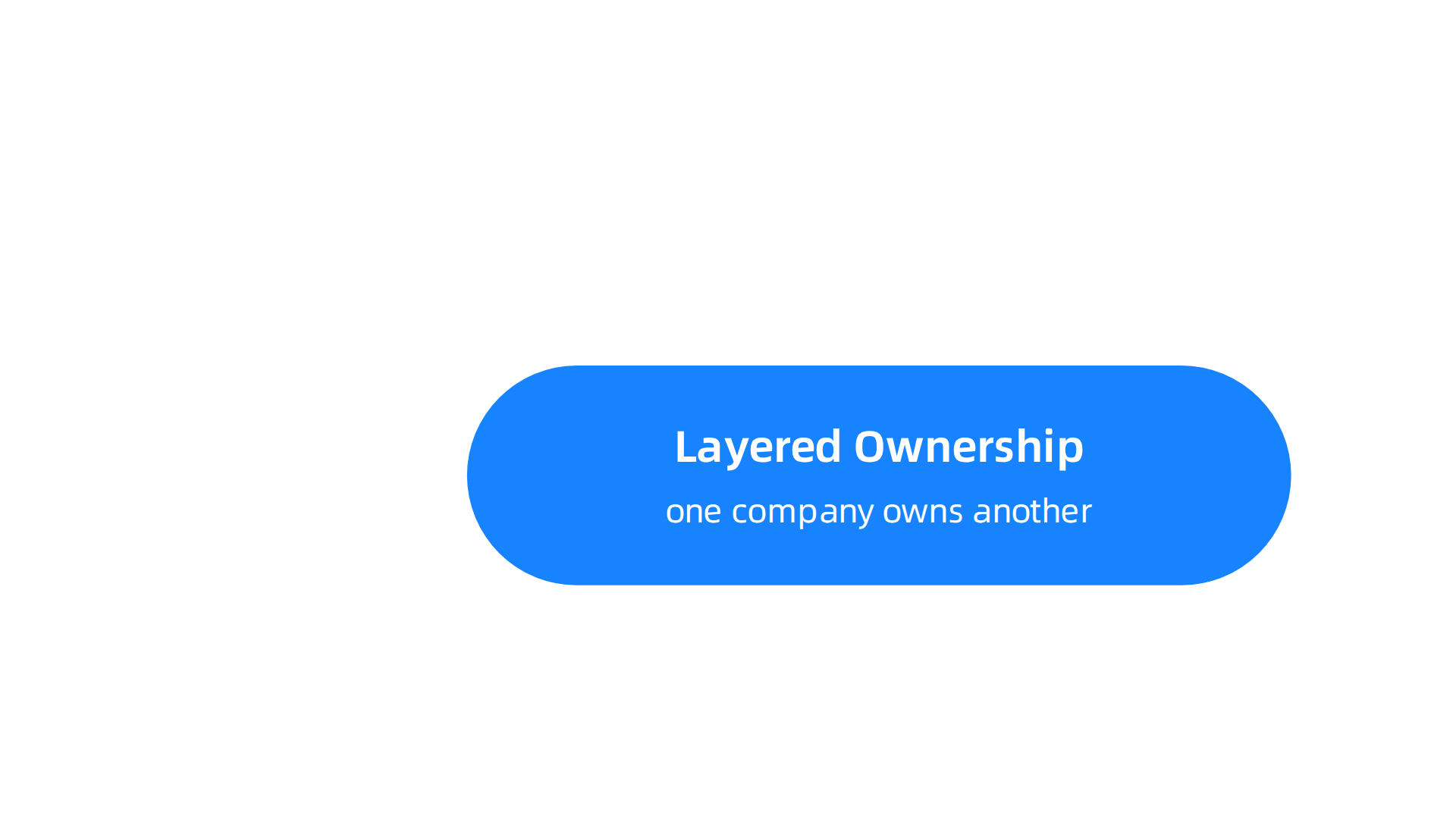
- Layered Ownership: Imagine a set of Russian nesting dolls. One company owns another company, which then owns another, and so on. This makes it very hard to trace back to the real person at the top. This kind of setup can involve many businesses, sometimes even across different countries, making it a true abyss company that seems to have no bottom 6 Corporate Structure Red Flags Banks Check in 2026.
- Nominee Directors and Shareholders: Sometimes, a company will list people as directors or owners who don’t actually make any decisions or benefit from the company’s money. These "nominees" are often just paid to have their names used, while the real owner stays hidden behind this proxied company arrangement BENEFICIAL OWNERSHIP. These nominees might be professionals who work for services that help set up companies.
- Rapid Registration and Closure: Some ghost companies are created very quickly, used for a short time to move money or complete a shady deal, and then closed down just as fast. This quick turnaround makes it hard for authorities to keep track.
Common Red Flags to Watch For
When someone is looking for a ghost company, there are certain warning signs, or "red flags," that help tell them apart from honest businesses.
Compliance teams, who ensure companies follow rules, use these flags to investigate.
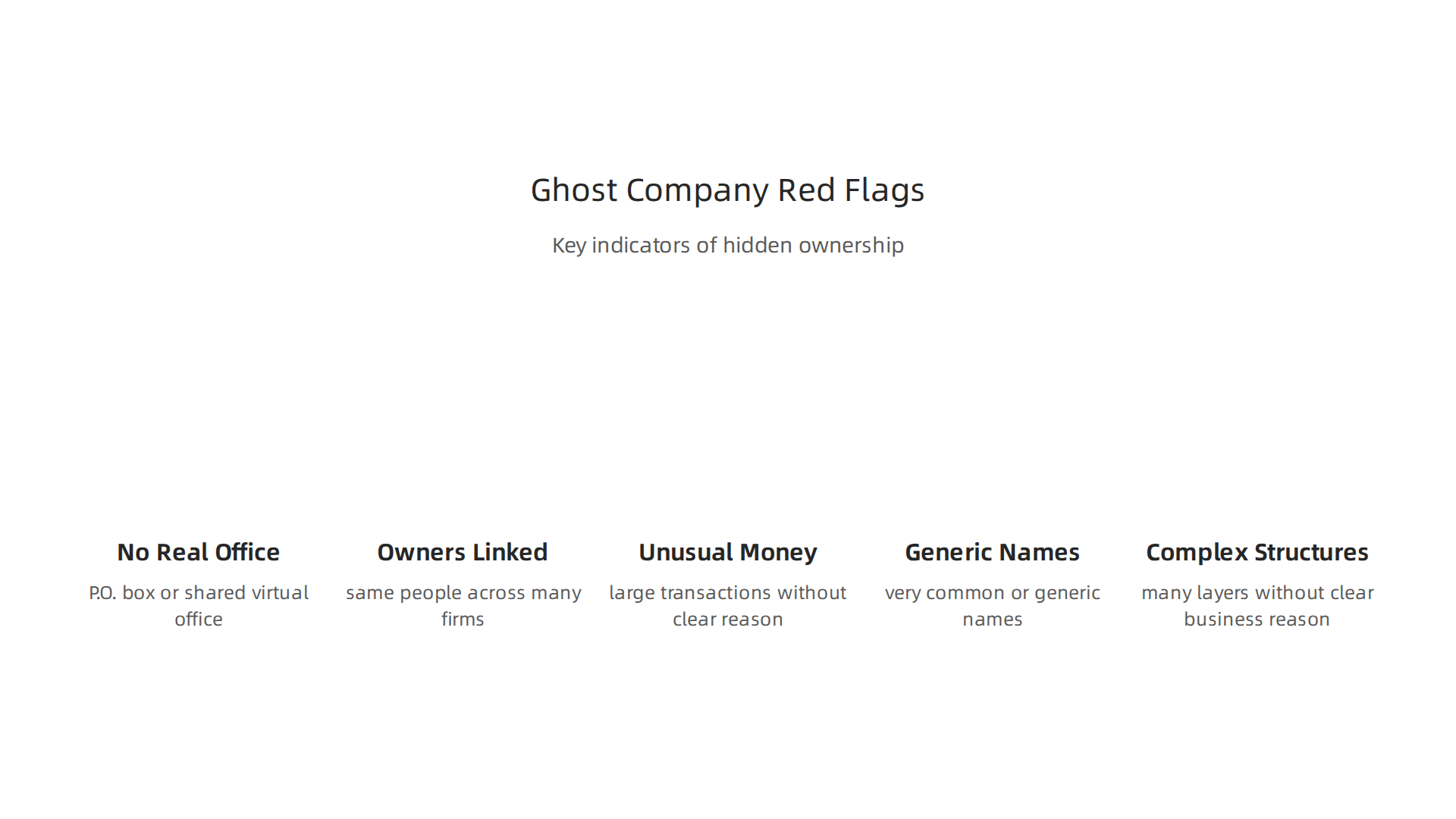
Here are some common red flags:
- No Real Office or Employees: A ghost company might list an address, but it could just be a P.O. box or a shared virtual office where many companies are registered. They often have no real staff or actual business activities happening there Shell Company Red Flags: How to Spot Front Companies.
- Owners Linked to Many Companies: If the same few people or names show up as owners or directors for hundreds or even thousands of different companies, especially in various countries, that’s a big warning sign. This is often a feature of nominee services AML Screening for Shell Companies: Best Practices.
- Unusual Money Movements: A ghost company might have lots of money moving in and out, but its stated business doesn’t make sense for such large transactions. Or the money moves between many different companies without any clear business reason Shell Company Risks and AML/KYC Red Flags.
- Generic or Similar Names: Sometimes, ghost companies use very common or generic names that are hard to distinguish, or names that are very similar to other legitimate companies.
- Complex Legal Structures Without Clear Reason: When a company’s ownership structure is extremely complicated, involving many layers or different countries, but there’s no good business reason for it, that’s often a sign of an attempt to hide the true owner Shell Company Red Flags Every Analyst Should Know. These structures are usually meant to confuse investigators.
Learning about these company structures and warning signs helps businesses and governments fight against illegal activities. For more details on how different types of businesses are defined, you can read our guide on mastering definitions and corporate forms for effective tech policy. Knowing how companies are structured is key to understanding compliance.
When companies and investors don’t know who is truly behind a business, they face many problems. These problems are called "risks." If you deal with a ghost company without knowing it, you could get into serious trouble. This is why knowing about hidden owners is so important.
What Risks Do Companies and Investors Face?
Working with a ghost company can lead to big headaches. Here are some of the main risks:
- Sanctions Problems: Imagine a country puts rules on certain people or businesses, saying no one can deal with them. If a ghost company hides its real owner, and that owner is on one of these "sanctions" lists, then doing business with them is against the law. This can cause huge fines and legal problems for your company.
- Money Laundering Trouble: Ghost companies are often used to make dirty money look clean. This is called money laundering. If your company accidentally helps a ghost company do this, you could face legal charges for not following anti-money laundering (AML) and counter-financing of terrorism (CFT) rules.

Experts warn that shell companies can hide money laundering by having no real office or unclear ownership The Role of Shell Companies in Money Laundering.
- Bad Reputation: No one wants their business linked to illegal activities or shady companies. If it comes out that your company worked with a proxied company that was doing bad things, your good name could be ruined. People might stop trusting your business, and that can hurt sales and partnerships.
- Contracts Not Working: When you sign a deal with a company, you expect them to follow through. But if you’re dealing with an abyss company or a ghost company whose true owners are unknown, who do you hold accountable if things go wrong? It can be very hard to make them keep their promises or pay if they break the rules. This makes it tough to make sure contracts are solid.
How Investors and Boards Can Protect Themselves
To avoid these risks, investors and company leaders (like board members) must be very careful. This careful checking is called "due diligence." It means really looking into a company to find out who owns it, where its money comes from, and what it actually does.
Here are some ways to protect your business:
- Do Strong Checks (Enhanced Due Diligence): Don’t just take a company’s word for it. Look deeper. This means checking public records, talking to people who know the company, and using special tools to uncover hidden owners. An enhanced due diligence checklist helps identify true owners and check backgrounds Enhanced Due Diligence Checklist for 2026. You should also look for signs of unusual activity, like nominee directors who don’t seem to be involved in the business.
- Understand Beneficial Ownership: This means finding the real people who own or control a company, even if their names are hidden behind layers of other companies. It’s about seeing past the "nominees" to the actual person making decisions and getting the benefits. In 2026, it’s important to know that the U.S. government’s FinCEN agency removed the rule that made most U.S. companies and people report their beneficial ownership information. This change happened on August 14, 2026, meaning U.S. companies are no longer required to share this information with FinCEN FinCEN Permanently Ends Beneficial Ownership Reporting. However, this doesn’t mean other businesses or investors should stop doing their own checks.
- Watch for Red Flags: Keep an eye out for the warning signs discussed earlier, like a company having no real office or many different companies linked to the same few people.
- Get Expert Help: Sometimes, these hidden structures are too tricky to figure out on your own. Hiring lawyers or special investigators who know how to uncover ghost companies can save you a lot of trouble.
By being careful and doing your homework, you can protect your company from the serious dangers that come with unknowingly dealing with a ghost company. If you want to learn more about keeping your business safe, check out our guide on LLC compliance in 2026.
Staying informed about complex policy changes and technology is key for any professional. Get daily updates and insights on AI and technology policy from The AI Newsletter Worth Reading.
Protecting your business from a ghost company gets even trickier when companies operate across different countries. Rules can change a lot from one place to another. This makes it easy for bad actors to hide.
Why Different Country Rules Cause Problems
Imagine some countries have very strict rules about who owns a company, and some have very loose rules. A bad actor wants to set up a ghost company. They will naturally pick a country with loose rules. This is like choosing the easiest path to hide. This problem is called "jurisdictional arbitrage." It means people pick the best legal place for their sneaky plans.
A ghost company or a proxied company can use these differences to stay hidden. For example, a company might be set up in a place that does not ask for the real owner’s name. This makes it very hard for another country with stricter rules to find out who is truly in charge. This is how hidden owners can create an abyss company, making it impossible to see the real people behind it. These companies often have no real office or employees, existing only on paper in a friendly jurisdiction.
Different regions also have different rules for identifying owners. For instance, in Europe, there are new rules for checking who owns a company, called KYC (Know Your Customer) rules, in 2026. These rules may have lower thresholds for identifying beneficial owners for high-risk entities compared to other parts of the world KYC 2026: New Requirements in Europe. This mix-and-match of rules creates gaps where a ghost company can slip through unnoticed. To understand more about navigating complex rules, you might find our guide on Navigating Global Tech Systems Policy in 2026 helpful.
How Countries Work Together to Fight Hidden Ownership
Because a ghost company can easily jump from one country to another, no single country can fight them alone. Countries must work together.

This is called international cooperation and data sharing.
Here’s how they do it:
- Global Rules: Groups like the Financial Action Task Force (FATF) create standards for all countries to follow. These standards help make sure everyone is looking for hidden owners in similar ways. In fact, FATF strengthened its rules against anonymous shell companies, making countries more accountable FATF Strengthens Financial Transparency Standards and Updates.
- Sharing Information: Countries share details about who owns companies and how money moves across borders. This helps put together the pieces of a puzzle when a ghost company tries to hide its tracks. When one country finds a suspicious company, it can tell another country. This way, they can stop illegal money flows.
- Tax Transparency: The Organisation for Economic Co-operation and Development (OECD) is working to make tax rules more open around the world. In 2026, the OECD is tightening global tax control to make it harder for shell companies to avoid paying taxes OECD 2026: Global Tax Control Tightens as Shell Companies Face Systemic Scrutiny. This helps shine a light on companies that try to hide their money.
- Using Technology: New computer tools can help connect information from many places to find hidden owners. These tools look for patterns and links that people might miss.
By working together, countries can make it much harder for a ghost company to hide. This teamwork is key to keeping businesses safe and honest around the world. If you want to learn more about how to keep your business safe from hidden ownership, check out our article on Shell Company: Uncover Hidden Ownership, Secure Business Compliance in 2026.
Even with countries working together, it’s hard to catch every hidden company. Luckily, technology offers new and smart ways to find a ghost company or a proxied company. These tools can dig through lots of information much faster than people can.
Technology and Data Tools for Detecting Ghost Companies
In 2026, we have some powerful computer tools that help find companies that are trying to stay hidden.
Think of these tools as super smart detectives. They look for clues in big piles of data.
Here are some ways technology helps:
- Looking at Company Records: Software can quickly check all the details about when a company was started, who signed its papers, and where it says its office is. These are called registry analytics. They can spot strange patterns, like many companies sharing the same address or the same person setting up many businesses in a short time. This helps to identify high-risk shell companies that might be a ghost company.
- Mapping Connections (Network Graphing): Imagine a map where every person and company is a dot, and lines connect them when they know each other or work together. These "network graphs" help us see hidden links. They can show when a small group of people are secretly controlling many different businesses, making it hard to find the real owner. Tools can detect opacity by design, meaning they look for company structures that seem made to hide things.
- Smart Computer Learning (Machine Learning): This is like teaching a computer to be a detective. We show it examples of past abyss company setups or money laundering schemes. Then, the computer learns to spot similar new ones. It looks for signals that a company might be hiding its true purpose or owners. These smart systems can identify shell company risks with artificial intelligence.
- Matching Open Data: There’s a lot of public information out there. This includes news articles, social media, and even government lists. Computer programs can put all this information together. They might find a person mentioned as an owner of a company in one place and see that the same person is linked to a hidden company in another.
These tools are very good at sifting through mountains of data and spotting things that humans might miss. They can work quickly and help point investigators in the right direction. For more about the tech that supports these efforts, you can read about AI Infrastructure 2026: Navigating Cost, Security, and Compliance.
The Role of Humans and Computers Working Together
Even with all these smart tools, humans are still very important.
- Strengths of Technology: Technology is great for speed and finding patterns across huge datasets. It helps us see connections we couldn’t before. It can even use special algorithms to detect illicit shell companies by looking at how money moves.
- What Computers Can’t Do Alone: Computers can sometimes make mistakes or get confused by tricky setups. They might flag something as suspicious that is actually okay. Also, they need good, clear data to work with. If the data is messy or incomplete, the computer’s answers won’t be good. For instance, sometimes older systems have little ability to identify shell company risks.
- Why Humans Are Still Key: This is where human experts come in. They look at what the computer finds and decide if it’s really a problem. Humans can understand complex situations, ask deeper questions, and use their judgment. They can also double-check the facts and make sure that a legitimate business isn’t wrongly accused of being a ghost company.
So, technology helps by doing the heavy lifting and finding possible clues, but people are still needed to solve the puzzle and make the final decisions. This teamwork makes it much harder for a ghost company to stay hidden in 2026. If you’re interested in how smart AI tools are impacting various fields, you might like The Smartest AI in 2026: A Data-Driven Roadmap for Policy and Business Leaders.
The world of technology policy is constantly evolving. Get clear daily AI updates directly to your inbox with The AI Newsletter Worth Reading.
Summary
This article explains what ‘ghost companies’ (proxied or abyss companies) are, why hidden ownership undermines corporate transparency, and how governments, businesses, and technologists are responding in 2026. It covers the different corporate forms and nominee arrangements used to obscure real owners, the role of beneficial ownership registers and AML/CFT rules, and recent regulatory shifts that change reporting expectations. The piece also lists common red flags—like no real office, layered ownership, and rapid registration—and gives practical steps investors and boards can take through enhanced due diligence. It reviews how registry reforms, international cooperation, and standards such as FATF and OECD work to close loopholes, and it shows how modern tech—network graphs, registry analytics, and machine learning—augments human review to find hidden links. Readers will finish able to recognize warning signs, tighten compliance checks, and use policy and tech tools to reduce the risks of dealing with opaque companies.