

Why mastering AI is essential for policy, legal, and tech leaders
In 2026, artificial intelligence (AI) is changing the world faster than many people can keep up. New AI tools and ideas pop up almost every day. This rapid change creates a big problem for important leaders in government, law, and technology. They often find themselves facing a gap in what they know about AI and what they need to know to make smart choices.

It’s like trying to lead a fast-moving car without understanding how the engine works.
Leaders need to deeply understand AI to guide their teams and organizations. This is especially true for those who make rules and laws, ensure fairness, and build new technologies. They need to understand the latest generative AI news and how it affects everything from daily life to national security. Without this knowledge, it’s hard to create good policies, manage risks, or plan for the future. For example, MIT’s executive education programs highlight that learning about AI helps leaders get a clear picture of AI tools and how to use them across their organizations [^1].
This article is your guide to mastering AI. We will give you a clear, step-by-step plan based on facts. You will learn how to understand AI better, figure out how it changes laws and rules, and help everyone in your organization learn about this important top tech. Getting good at AI knowledge is not just about keeping up. It’s about being ready to lead the way into a future where AI does a lot of good.
To stay on top of daily changes in AI and technology policy, you need clear, reliable information.
The AI Newsletter Worth Reading
Get clear daily AI updates from The Deep View Newsletter.
[^1]: Course Experience
What ‘mastering AI’ actually means for policy professionals
When we talk about mastering AI, it’s not just about understanding how computers think. For leaders in policy, law, and technology, it means a deeper kind of learning. It’s about seeing AI from three important angles:
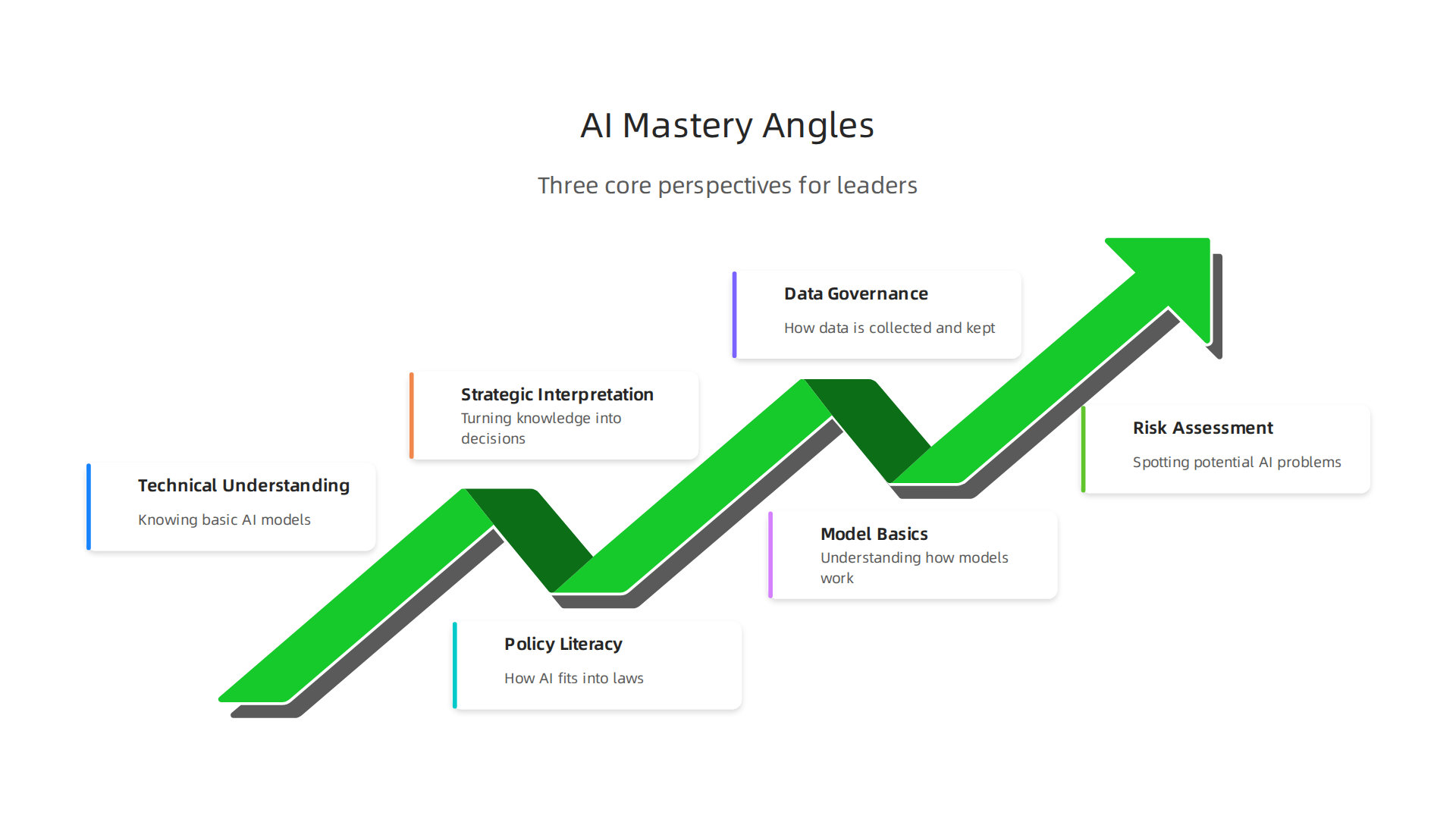
- Technical Understanding: This doesn’t mean you need to be a computer programmer. It means knowing the basic ideas behind AI models, like how they learn and make choices. It’s important to understand where the data comes from and how it’s used. Knowing about things like how AI systems can sometimes be unfair is also part of this. The UK government, for example, points out that AI skills involve knowing how to build, use, and manage AI systems well, including ethical parts Research evidence, analysis and methodology: What works for AI ….
- Policy Literacy: This is about knowing how AI fits into laws and rules. You need to understand new rules about privacy, safety, and who is responsible when AI makes a mistake. It also involves thinking about how AI affects jobs and society. The U.S. Department of Labor has even created an AI Literacy Framework in 2026 to help guide these efforts across different sectors.
- Strategic Interpretation: This means looking at the big picture. How can AI help your organization reach its goals? What are the risks? How can you plan for the future when AI changes so fast? It’s about turning knowledge into smart decisions.
For policy professionals, specific skills are key to truly mastering AI. These include:
- Model Basics: Understanding what AI models are and how they work in simple terms.
- Data Governance: Knowing how data for AI is collected, stored, and kept safe and fair.
- Risk Assessment: Being able to spot the potential problems and dangers that AI might bring, like privacy concerns or biased outcomes.
- Regulatory Awareness: Keeping up with all the new laws and rules that affect AI, both locally and globally.
By focusing on these areas, leaders can move beyond just "knowing about" AI to actually "mastering" it. This prepares them to guide their organizations and shape a future where this top tech is used wisely and for good.
Building foundational AI literacy: courses, resources, and learning paths
Now that we know what it means to truly understand AI, the next step is figuring out how to get there. For busy policy professionals, learning about AI can seem like a big task.

But there are many ways to build your AI knowledge, from quick self-study to deep executive programs. Choosing the right path depends on how much time and money you have.
Here are the main ways to learn about AI:
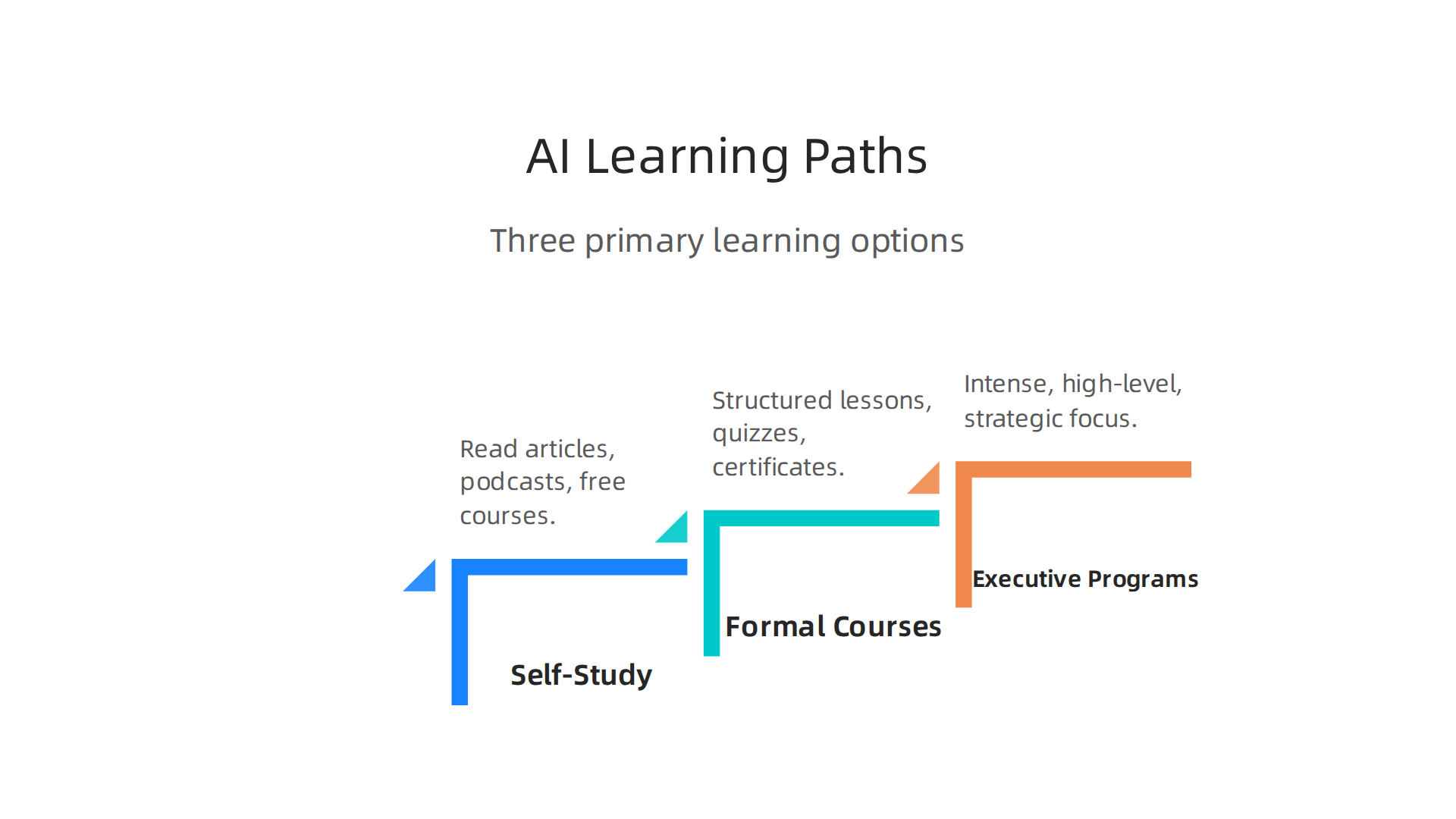
- Self-Study and Free Resources: This is a great starting point, especially if you have a tight schedule or budget. You can read articles, listen to podcasts, and watch explainer videos. Many online platforms offer free introductory courses. Keeping up with the latest generative AI news can also help you understand how fast this top tech is changing.
- Formal Online Courses: These courses offer more structure than self-study. They often come with lessons, quizzes, and sometimes a certificate when you finish. Many universities and tech companies offer these programs. For example, Coursera has an "AI Literacy for Managers" course that takes only a few hours and covers basics like risk management and governance for AI 10 Recommended AI Courses for General Managers in 2026. Harvard also offers AI courses for business leaders designed to build AI literacy.
- Executive Education Programs: These are often intense, high-level courses designed for leaders. They usually cost more but offer deep insights, networking chances, and a focus on strategy and policy. For example, Indiana University’s Kelley Executive Education Programs launched a new series of AI leadership courses in 2026. Other top schools like MIT and Emory also offer executive programs focused on AI, data, and analytics AI Executive Courses | MIT Sloan.
Your AI learning journey: a roadmap for busy professionals
To help you get started, here are some ideas for a learning plan, depending on how much time you can give:
- 3-Month Quick Start: Focus on getting the basic ideas down.
- Read daily tech policy news and AI updates.
- Take one or two free online introductory courses that explain what AI is and how it works.
- Listen to podcasts about AI ethics and policy.
- To stay informed easily, consider signing up for a specialized newsletter that breaks down complex AI topics.
The AI Newsletter Worth Reading
Get clear daily AI updates from The Deep View Newsletter.
Subscribe to The Deep View Newsletter
- 6-Month Deeper Dive: Build on your basics with more structured learning.
- Enroll in one comprehensive online course that covers topics like data governance and AI risk assessment.
- Look into case studies about how AI affects policy and society.
- Try to apply what you learn to a small project or problem at your job.
- 12-Month Mastery Track: This path aims for a deeper, more strategic understanding.
- Consider an executive education program, if your schedule and budget allow. These programs are great for linking AI knowledge to real-world policy decisions.
- Deepen your understanding of specific AI policy areas, such as privacy laws or rules for AI agents explained.
- Network with other professionals who are also mastering AI and shaping its future.
No matter your starting point, building your AI literacy for policy professionals is a continuous journey. You can find more tips on how to learn AI and build a future-ready career with the right roadmap.
Tracking regulatory change: tools and routines for staying current
After building a good understanding of AI, the next big challenge is keeping up with all the new rules and laws. The world of AI changes very fast. This means governments around the globe are always trying to catch up with new laws. For policy professionals, this can feel like a never-ending task. You need smart ways to keep track of new rules and what they mean for your work.
Setting up a smart way to get information
The first step in mastering AI policy is to set up a smooth way to get new information. Think of it like a news feed just for AI laws. You need to keep an eye on new laws, advice from government groups, and international rules. As of mid-2026, many countries have made their own laws about AI. In fact, 47 countries have AI-specific laws, though only a few have ways to make sure those laws are followed AI Regulation by Country 2026: The Definitive Global …. The sheer number of rules is huge; some tools track over 1,000 AI rules from many countries AI Regulations Tracker.
Here are some ideas for your information flow:
- Official Sources: Sign up for updates from government websites and law-making bodies. This includes groups that work on specific kinds of AI, like synthetic AI or those dealing with national security.
- Specialized News and Reports: Subscribe to newsletters or journals that focus only on AI policy and law. These can help you understand complex changes in places like UK tech policy.
- AI Policy Tracking Tools: Many new tools can help you track laws automatically. These systems map your AI products against rules in different places. Some can even help with things like AI agent governance, making sure your systems follow the rules. Using such tools can save a lot of time and help avoid mistakes.
Picking what matters most
With so much information, you cannot track everything. You need to pick which countries and topics are most important for your company or organization. This means looking at where your organization uses AI and what risks it faces.
Think about these key areas:
- Privacy: Laws about how AI uses personal data are always changing.
- Safety: Rules about making sure AI systems are safe and fair.
- Competition: Laws that stop big tech companies from having too much power.
- Export Controls: Rules about sending AI technology to other countries.
By focusing on the most important areas, you can make sure your organization stays safe and follows the law. This often involves doing an "AI impact assessment." This is a way to check if your AI systems might cause problems for people or for the company itself. Many free templates can help you get started with an AI Impact Assessment Template 2026. This smart approach helps you manage risks and make good decisions.
After figuring out which AI policies matter most, the next step is to turn that knowledge into smart business choices.

It is not enough to just know about the rules. You need to understand how they will change what your company does, where it invests, and how it works day-to-day. This is where practical decision frameworks come in handy. They help you map out policy risks and opportunities.
Using frameworks for smart business decisions
Decision frameworks are like a guide for making choices. They help you see how new AI rules might affect your products, what new projects you should start or stop, and how your team operates. This is key for mastering AI in a way that helps your business grow safely.
One important tool is the AI Impact Assessment. You learned about it briefly before. These assessments help you deeply check if your AI systems follow the rules and if they might cause any problems. Many free templates can guide you, like the AI Impact Assessment Template 2026 or the ISO/IEC 42001 AI Impact Assessment Template. These tools help you look at things like data privacy, fairness, and safety. They are useful for all kinds of AI, even the newest generative AI.
When you use such a framework, you usually follow these steps:
- Define the AI system: What does it do? Who uses it? Who does it affect?
- Spot the risks: How might this AI system cause harm or break a rule? Think about things like bias in decision-making or misuse of data.
- Check existing controls: What steps are you already taking to manage these risks?
- Plan new steps: What else do you need to do to fix problems or follow new laws?
By using these frameworks, you can link the abstract world of policy to the real-world choices your business makes. This helps in achieving "AI for good" by making sure your technology is helpful and safe.
Quick checks and telling your leaders
Sometimes, you need to act fast. A "rapid impact assessment" is a quicker way to check new policies or sudden changes. This means you do a fast review, focusing only on the most critical risks and opportunities. It’s about getting a good enough answer quickly, not a perfect one.
Here is how you might run a rapid check:
- Identify the key policy change: What is new or different?
- Pinpoint affected AI systems: Which of your company’s AI tools might be impacted?
- Estimate immediate risks: Could this change cause a big problem right away?
- Find quick solutions: What simple steps can you take now?
After this quick check, it is very important to tell your leaders what you found. Leaders need clear and simple reports. They need to know:
- What is the new rule?
- How does it affect our products and operations?
- What are the big risks?
- What should we do next?
This clear communication helps them make fast and informed decisions. For a deeper understanding of how to make sure your AI systems are policy-compliant, consider a rigorous artificial intelligence review for policy compliance. Staying informed is vital, and a great way to do that is to get daily, detailed insights.
Get clear daily AI updates from The AI Newsletter Worth Reading.
After quickly checking new AI policies and telling your leaders what you found, the next step is to build a strong system for how your business uses AI. This is called AI governance, and it is all about putting clear plans and steps in place to follow the rules.
Core Parts of an AI Governance Program
A good AI governance program helps your business use AI safely and responsibly. It is how you make sure your AI tools, even new ones like generative AI, follow all the rules. To do this, you need a few key things:
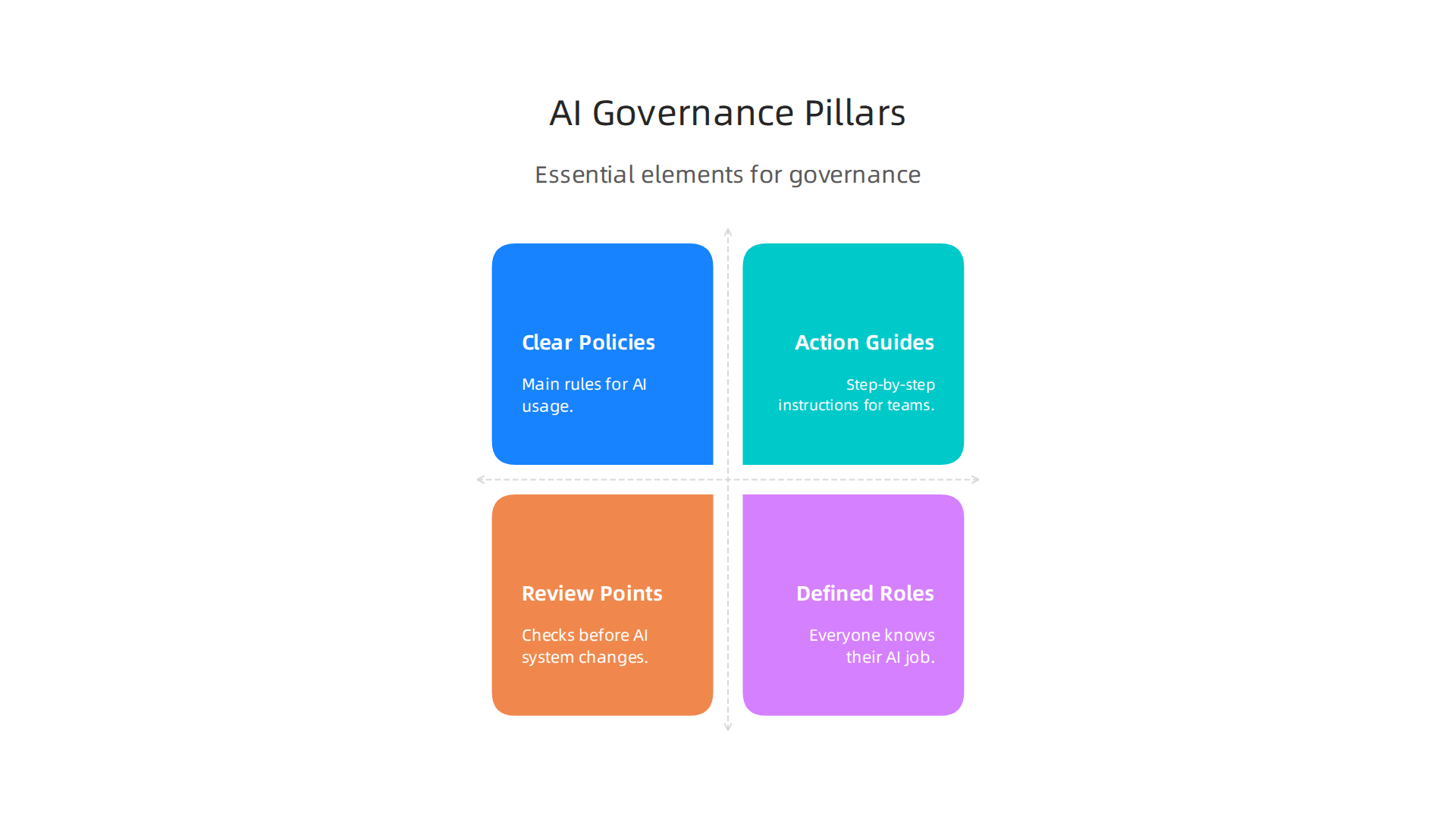
- Clear Policies: These are the main rules that tell everyone how to use AI. They cover things like data privacy, fairness, and what AI can and cannot do. Having clear policies helps your team know what is expected of them.
- Action Guides (Playbooks): These are like step-by-step instructions. They help different teams, such as engineers or product managers, know exactly what to do when they build or use AI. This makes sure everyone is on the same page.
- Review Points (Gates): Before any new AI system is used or a big change is made, it needs to be checked. These "review gates" are special times when experts look at the AI to make sure it follows all policies and does not create new risks. This is a key part of learning how to build AI securely and compliantly.
- Defined Roles: Everyone needs to know their job when it comes to AI. Who is responsible for privacy? Who checks for bias? Clearly defining these roles helps make sure nothing is missed. For example, giving a named owner for each AI system is a good practice, as noted in the Frequently Asked Questions about AI governance audits for investment firms.
By having these parts, you are not just hoping for the best. You are actively working towards "AI for good" by making sure your technology is fair, safe, and works as it should. This helps in mastering AI effectively within your organization.
Making Compliance Happen Day-to-Day: Operational Controls and Audits
It is one thing to have policies, but another to make sure they are actually followed. This is where "operational controls" come in. These are the regular checks and actions your teams do to keep things in line. For example, constantly checking your AI systems helps ensure they work as intended. For advanced systems, this includes good AI agent governance.
To prove your business is following the rules, you need to be ready for audits. An audit is like a careful check by someone outside your team to see if you are doing what you say you are. Companies use special checklists to get ready for these audits. For instance, an AI Audit Checklist can help you look at things like data quality, consent, and how you manage risks. Another helpful resource is an AI Governance Audit Checklist which covers many controls to test risk.
What do auditors look for? They want to see proof that your controls are working, not just written down. This includes showing records of your AI systems, who owns them, and decisions about risks. They might also check your AI policy and how you handle data, as detailed in an AI Governance Audit-Readiness Checklist.
Measuring how well you are doing is also important. This means tracking things like how many controls you have in place, how quickly you fix problems, and if your AI systems are staying on track with the rules. Keeping an eye on these things helps show that your business is serious about AI compliance. This ensures your company is a leader in top tech and responsible AI use.
To truly be a leader in top tech and use AI responsibly, a business also needs the right people. Even the best rules and checks will not work without a team that understands and can handle AI tools. This means focusing on the skills your employees have and how they learn new ones.
Skills, credentialing, and building an AI-aware team
Building a team that is ready for AI in 2026 is very important for mastering AI.

It means hiring people with the right knowledge and helping your current staff learn new skills. This includes teams across your business, from those who deal with legal matters and policies to your engineers who build the AI systems.
When hiring, look for people who understand how AI works, but also how it fits into rules and ethics. For example, the skills needed for AI include technical know-how, responsible and ethical thinking, and other important non-technical skills like critical thinking. This helps ensure your AI systems are not just powerful, but also fair and safe, promoting AI for good within your organization, as highlighted in Research evidence on AI upskilling. The U.S. Department of Labor even released an AI literacy framework to help guide these efforts nationwide.
For your current team, offering ways to learn and grow is key. This is called upskilling or reskilling. It helps employees gain the new skills needed for working with advanced AI, like generative AI news tools. Many companies are thinking about how to create learning paths for their teams, from technical roles to those in policy. You can help your business build your 2026 AI workforce strategy for policy compliance by investing in continuous learning.
How do you know if someone’s AI skills or training are good? You can look at different things. Some people get special certificates, which show they have learned certain things. Others gain skills through on-the-job training, by working on real AI projects. Both can be valuable. The key is that the training should lead to practical abilities, not just theories. This approach helps people accept and use new technology acceptance model principles more easily. Experts are even looking into how to legally manage AI upskilling and reskilling to ensure fair practices.
For policy professionals, having good AI literacy for policy professionals is especially important to understand new rules. For engineers, knowing how to become an AI engineer in 2026 with policy expertise can help them build compliant systems from the start.
Staying informed about these fast changes is a challenge. Get clear daily AI updates from The AI Newsletter Worth Reading.
Measuring outcomes: case-study approaches and evaluation metrics
After focusing on how to build an AI-ready team and teach them new skills, the next big step is to see if all that effort is actually working. How do you know if your team is truly mastering AI and making good decisions with it? This is where measuring outcomes comes in. You need to look at clear results to understand what’s working and what’s not.
To do this, businesses should define measurable outcomes for their AI awareness programs. These outcomes can include things like how fast decisions are made, how many times the company runs into trouble with rules (compliance incidents), or how changes in products affect users. For example, knowing your key performance indicators (KPIs) is super important. Experts suggest focusing on metrics like how much of your AI is covered by controls, how complete your evidence is, and how quickly you fix any audit issues. Looking at these can help you measure AI governance compliance effectively, as noted in a guide on how to measure AI governance compliance.
Another good way to measure is by using what we call a "case-study method." This means you look closely at specific examples or projects where AI was used. You document what worked really well and what did not. For example, you might look at a project using generative AI news tools and see how quickly the team produced content and how well it followed company rules. Or you might study how a new AI system was received by employees, tying back to the technology acceptance model principles.
By creating case studies, your business can learn from real-world situations. This helps you understand how employee training translates into practical results and supports your goal of using AI for good. Some important metrics to track could be the completion rate of training and how well people pass assessments. Other useful metrics include the value AI brings, costs saved by preventing risks, and how much faster projects get done, according to insights on AI Governance KPIs.
This approach of studying specific cases helps organizations learn and improve their AI strategies. It also prepares them for rigorous reviews to make sure they are following all the rules. Want to know more about keeping AI systems in line with policies? Learn about Rigorous Artificial Intelligence Review for Policy Compliance.
Summary
This article explains why leaders in government, law, and technology must master AI to make sound policy, manage risk, and guide organizational strategy as the field rapidly evolves. It defines