

Why Tech News Analysis Matters for Policy Professionals
Picture this: you are a policy professional trying to track the latest techcrunch news while also monitoring the wsj tech news briefing for regulatory signals.

By midday, you have scanned ten articles, three legislative updates, and two expert opinions. By evening, you wonder if you actually learned anything actionable.
This is the reality for anyone working at the intersection of technology and policy. The pace of change in 2026 is relentless. New AI governance rules land weekly. Privacy frameworks shift across jurisdictions. Computer systems technology evolves faster than the laws meant to govern it. If you rely on random headlines, you risk missing the signal in the noise.
Not all tech news coverage is created equal. Some publications focus on breaking startup deals. Others dive deep into regulatory text. A source like TechCrunch might give you a product launch first, but it rarely unpacks the policy implications behind that launch. Meanwhile, a policy-specific outlet gives you the context you actually need to make decisions.
That is why TechCrunch tech news is just one piece of a larger puzzle. To build strategic intelligence, you need a systematic approach. You need to know which sources to trust, how to filter for relevance, and when to dig deeper for hidden implications.
This guide gives you that framework. We will walk through how to evaluate top publications, spot policy signals early, and turn daily news into a competitive advantage for your team or organization.
If staying ahead of rapid regulatory shifts sounds exhausting, you are not alone. That is exactly why tools like The Deep View Newsletter exist to deliver clear daily AI and policy insights straight to your inbox, so you spend less time hunting and more time acting.

Want to see how AI governance is reshaping government compliance right now? Check out our breakdown of how AI policy in the public sector is transforming government compliance in 2026.
Understanding the Tech News Ecosystem in 2026
Here is the thing most people get wrong about techcrunch news. They treat every headline the same. A product launch gets the same weight as a regulatory filing. That is a recipe for overload, not insight.
The tech news world in 2026 is not a flat list of sites. It has three clear layers. Each layer serves a different purpose.
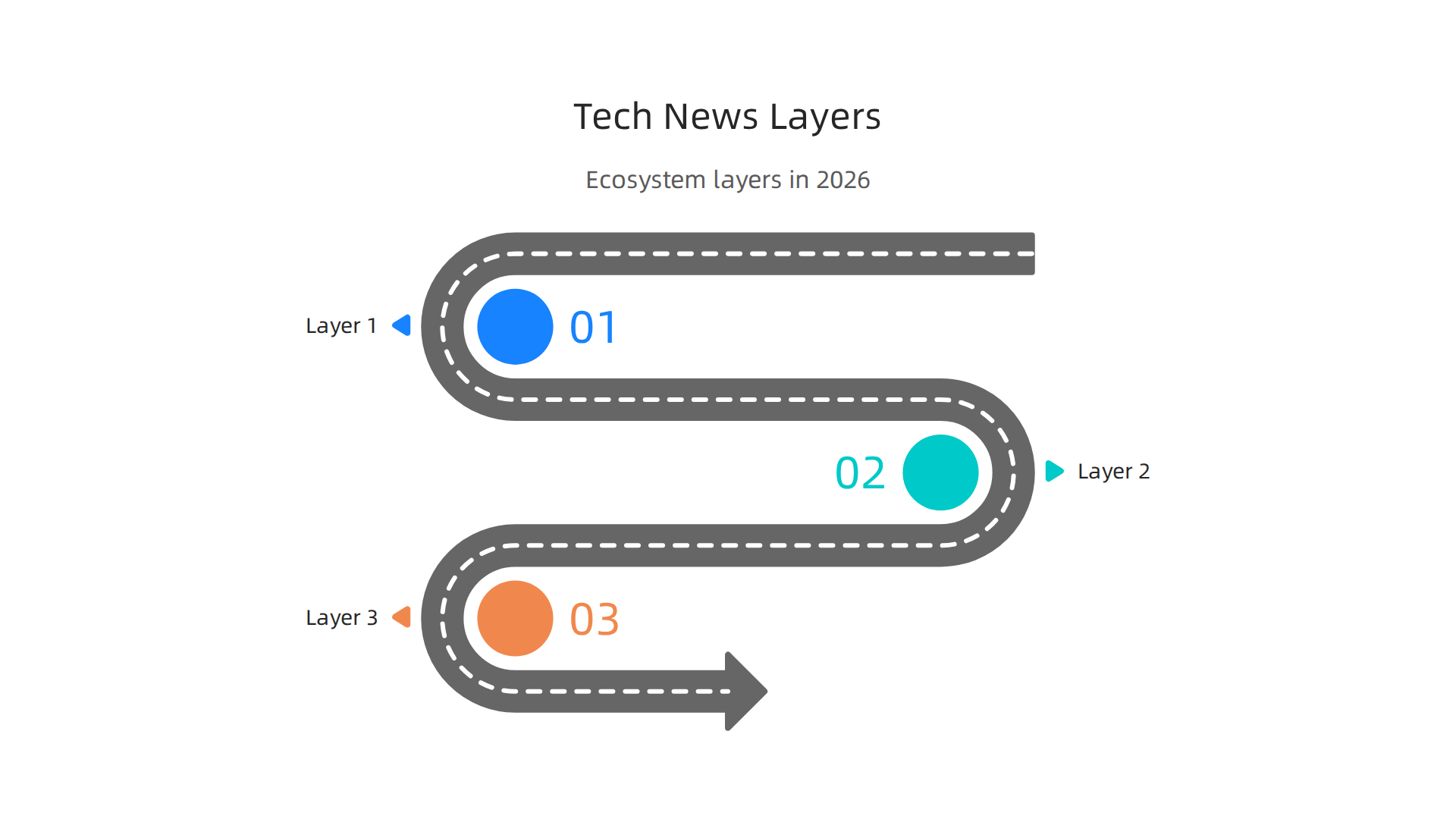
Once you see the layers, you can stop wasting time on stuff that does not move your policy work forward.
Layer 1: Breaking News Outlets
This is where stories break first. Think TechCrunch, The Verge, and CNET.
These outlets are great for speed. A techcrunch tech news piece might tell you that a major AI company just released a new model. But that same piece rarely tells you what the release means for regulation or compliance.
Another example is the wsj tech news briefing. The Wall Street Journal gives you solid business context. But it is still a generalist source. You get the facts, not the deep policy analysis you need.
For policy professionals, Layer 1 is your early warning system. Scan it for signals. Do not stop there.
Layer 2: Analysis Platforms
This layer adds context. Outlets like Axios, Politico, and Wired dig into the "why" behind the news. Axios Pro has dedicated tech policy verticals. Politico has a team tracking AI governance in Brussels and Washington. These sources help you understand the impact of a policy shift, not just that it happened.
But even this layer can be too broad. You still have to filter for your specific focus area.
Layer 3: Niche Newsletters and AI-Native Publishers
This is where the real power lies. Newsletters like Techmeme are incredibly influential. According to a recent media power ranking, Techmeme is "the most influential tech newsletter in the world" and a major driver of referral traffic. These sources curate and prioritize what matters most.
At the same time, the broader news industry is under pressure. A 2026 survey from the Reuters Institute found that publishers face a twin challenge from AI and influencers. The pace of change is forcing everyone to adapt. That is why niche, expert-driven newsletters are becoming essential for busy professionals.
For policy work, Layer 3 is your goldmine. It cuts through the noise of random computer systems technology headlines and gives you exactly what you need to act.
How to Use This Hierarchy
Start your day at Layer 1. Scan techcrunch news and similar sources for 5 minutes to catch breaking developments. Then move to Layer 2 for context. Finally, spend your main reading time on Layer 3 sources that align with your policy focus.
If you want a shortcut, consider a daily newsletter that already does this curation for you. For example, The Deep View Newsletter delivers clear, actionable AI and policy insights straight to your inbox. That is one less feed to monitor.
And if you want to see how these layers apply to specific policy areas, check out our breakdown of the biggest information technology policy shifts of 2026. It shows how breaking news evolves into lasting regulatory change.
Evaluating Source Credibility: Expertise, Funding, and Bias
Knowing which layer a source belongs to is only half the battle. The next step is making sure you can trust what you read. In 2026, the tech media landscape is noisy, and not every outlet has your best interests in mind. A techcrunch news article might get the facts right, but it might also carry the agenda of its parent company. You need to evaluate credibility the same way you evaluate a policy memo.

Let us break down three factors that matter most.
1. Editorial Independence
Does the source have the freedom to report without outside interference? Independent outlets often have an advantage here. They do not have shareholders or corporate parents pushing a narrative. For example, Techmeme has built its reputation on editorial independence. According to a 2026 media power ranking, Techmeme is "the most influential tech newsletter in the world" and a major driver of referral traffic. Its single focus on tech news gives it a level of credibility that broader media conglomerates sometimes lack.
Publications owned by larger corporations may have different biases. A wsj tech news briefing is valuable, but it comes from a newsroom that answers to a media giant. That does not mean it is untrustworthy. It means you should read it with awareness of potential blind spots.
2. Funding Transparency
Ask yourself: Who pays for this content? Is it subscription revenue, advertising, or venture capital? The answer shapes the editorial priorities.
In 2026, the news industry faces twin pressure from AI and influencers, according to a Reuters Institute survey. Publishers are scrambling for new revenue models. Some rely on sponsored content or partnerships. That can blur the line between news and marketing.
A trustworthy source will be open about its funding. Look for an "about us" page or an ethics policy. If you cannot find one, treat the source with caution.
3. Adherence to Journalistic Standards
Does the source correct errors quickly? Does it separate news from opinion? Does it cite original sources? These are basic journalistic standards that many outlets follow, but some cut corners.
For techcrunch tech news and similar sites, check whether they link to primary documents or press releases. A story that only quotes unnamed insiders is less reliable than one that links to a court filing or an official announcement.
A Quick Credibility Checklist
Use this when you land on an unfamiliar source:
- Is the funding model clear?
- Is there a corrections policy?
- Does the byline have subject matter expertise?
- Are sources cited and linked?
- Is the tone neutral or opinionated?
If you answer "no" to two or more of these, dig deeper before using that information in your policy work.
Putting It Into Practice
You do not have to do this for every article you read. Focus your energy on sources that you will rely on repeatedly. For policy professionals, a well curated daily newsletter can save you this work every day.
If you want a deeper look at how credibility affects policy analysis, check out our breakdown of the biggest information technology policy shifts of 2026. It shows how different sources cover the same story with different levels of depth and bias.
And when you want a source that already passes the credibility test, try The Deep View Newsletter. It delivers clear, vetted AI and policy insights every day, so you spend less time vetting and more time acting.
Remember, not every computer systems technology headline deserves your trust. Learn to spot the difference, and your policy decisions will be stronger for it.
The Role of TechCrunch in Shaping Tech Policy Discourse
When you read a techcrunch news article, you are getting more than just startup gossip. TechCrunch has grown into a major player in tech policy reporting. As of 2026, it is listed alongside outlets like Wired and The Verge as an established trade publication, according to the Trade Press AI Index. That matters for policy professionals.
Here is what you need to understand about TechCrunch’s influence.
Startup Funding Meets Regulatory Reality
TechCrunch started as a source for venture capital and startup news. And it is still the best place to track funding rounds and company launches. But in 2026, startups cannot ignore regulation. Every new AI tool, every data collection practice, every autonomous vehicle rollout faces regulatory scrutiny. TechCrunch covers that intersection.
Take its TechCrunch Mobility vertical. In a recent piece, it covered who is poaching self-driving vehicle talent and how AI is reshaping transportation policy. That kind of reporting connects startup strategy directly to the regulatory environment.
The TC+ Deep Dive
The paywalled TC+ section offers something rare in tech journalism: long-form analysis of regulatory impacts on innovation. These articles dig into topics like how a new FTC rule could affect early-stage funding or what a proposed AI licensing framework means for product roadmaps.
For a policy professional, these deep dives are gold. They translate complex regulations into concrete business consequences. That helps you understand how policy actually lands on the ground.
Ownership and Its Influence
Here is the catch. TechCrunch is owned by Verizon Media, which later became part of Yahoo. That corporate structure matters. The outlet’s editorial stance can reflect the interests of its parent company, especially when covering telecom policy or media consolidation.
Does that make techcrunch tech news untrustworthy? Not at all. But as we discussed in the previous section on credibility, you need to read with awareness. TechCrunch’s coverage of computer systems technology and related policy is excellent for understanding the startup perspective. Just balance it with sources that offer a regulatory or consumer viewpoint.
How to Use TechCrunch in Your Policy Work
Here is a practical approach:
- Use TechCrunch for early signals on emerging tech and business models.
- Read TC+ for deep analysis on regulatory impacts.
- Cross reference its coverage with outlets like Axios, which offers strong coverage of tech regulation from a policy angle.
If you want to see how different sources cover the same policy story, check out our analysis of the biggest information technology policy shifts of 2026. It walks through how TechCrunch, the WSJ tech news briefing, and other outlets approach the same topic from different angles.
TechCrunch is not the whole picture. But it is an essential piece of it. Use it wisely and your policy analysis will be sharper for it.
Beyond TechCrunch: A Comparative Analysis of Top Tech News Sources
So you have learned how techcrunch news covers policy from a startup lens. That is great. But if you want a full picture of what is happening in tech policy, you cannot rely on one source alone. Different outlets have different strengths. Matching the right source to your specific need can save you time and give you deeper insights.
Let us look at how a few top publications stack up in 2026.
Axios: Quick and Punchy Policy Briefs
Axios is famous for its "Smart Brevity" style. Its coverage of tech regulation is perfect when you need to catch up fast. The Axios tech regulation page gives you short briefs on how policymaking in DC and around the world hits tech.
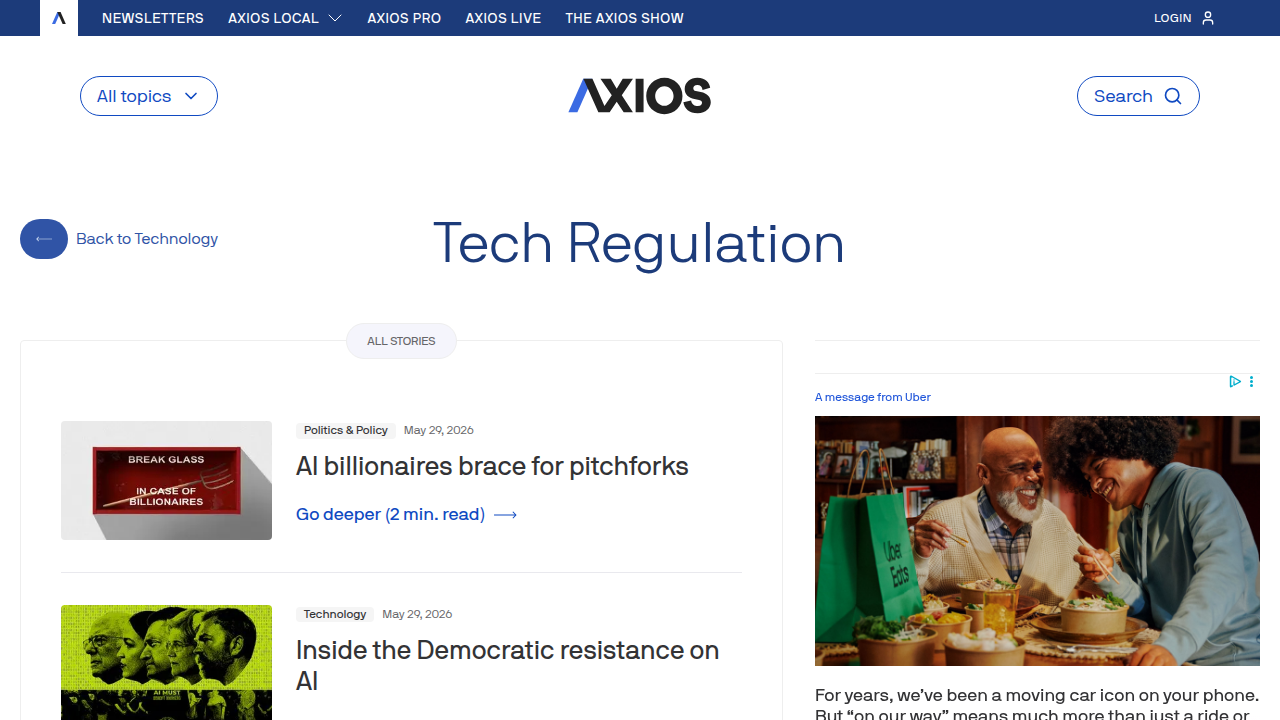
If you only have five minutes before a meeting, Axios is your go to.
But Axios does not go deep on technical details. It tells you what happened and why it matters, but not always how it works under the hood.
The Verge: Consumer Tech Meets Privacy
The Verge focuses on consumer tech, product reviews, and tech policy. According to the Baden Bower ranking of top tech journalists in 2026, The Verge is listed among leading publications for consumer tech and policy. The Trade Press AI Index 2026 also classifies The Verge as an established trade publication.
If you want to understand how a new privacy rule affects the average smartphone user, The Verge paints that picture well. It connects regulatory news to real life. That matters when you are trying to communicate policy impacts to non experts.
Wired: Security Culture and Deep Context
Wired is your source for long form features on security, AI, and digital culture. It takes time to explore the "why" behind a policy shift. When something big happens in cybersecurity, Wired often has the best context piece a few days later.
For policy professionals, Wired helps you understand the cultural and security implications of new regulations. It is less about breaking news and more about the story behind the news.
Niche Sources: Where the Specialists Live
Sometimes you need depth that general tech news cannot provide. Two niche sources stand out:
Politico’s tech team focuses squarely on the politics of tech regulation. If you care about committee hearings, lobbying battles, and legislative text, Politico delivers.
The Information offers premium, deeply sourced reporting on the business of technology. Its subscribers often include executives and investors. The reporting on company strategy and regulatory risk is second to none.
Both are worth including in your reading rotation.
How to Choose Your Mix
Here is a simple comparison:
| Source | Best For | Example Use Case |
|---|---|---|
| TechCrunch | Startup funding and regulatory impact on innovation | Tracking how a new FTC rule affects early stage companies |
| Axios | Quick policy updates and briefs | Morning check in before a hearing |
| The Verge | Consumer privacy and tech culture | Explaining the real world effect of a data privacy law |
| Wired | Deep security and AI analysis | Understanding the security culture behind a new AI regulation |
| Politico | Legislative details and lobbying | Following a bill through Congress |
| The Information | Insider business strategy and risk | Assessing how a Big Tech company is preparing for regulation |
Putting It All Together
No single outlet covers everything. But combining techcrunch tech news with Axios, The Verge, and a niche source like Politico gives you a 360 degree view.
For example, if you are analyzing a new AI regulation, you might read:
- TechCrunch for the startup angle
- Axios for the policy quick take
- Wired for the security implications
- Our own analysis on how AI policy in the public sector is transforming government compliance in 2026 for the public sector lens
This layered approach helps you move beyond headlines and into real understanding.
Actually, staying on top of all these sources takes real effort. That is why many policy pros rely on a curated daily briefing. If you want one newsletter that cuts through the noise and gives you clear updates on AI and tech policy, check out The Deep View Newsletter. It delivers actionable insights straight to your inbox so you never miss what matters.
How to Extract Actionable Policy Intelligence from Tech News
So you know which sources to watch. But reading great articles is not the same as getting smarter about policy. The real challenge is turning headlines into something you can actually use.

Here is the thing. In 2026, the amount of tech news is overwhelming. A recent Pew Research survey found that just 9% of U.S. adults get news from AI chatbots. Most people still rely on traditional sources. But even with the best sources, you need a system. Otherwise, you drown in noise.
Step 1: Curate Your Reading List to Reduce Noise
Start by building a focused list of sources. You already know the big ones: TechCrunch, Axios, The Verge, Wired, Politico. But do not try to read everything from every outlet every day.
Use a tool like Feedly or Ground News. According to a comparison of the best AI news aggregators in 2026, tools like Feedly help you filter feeds by topic.

Set up separate folders for "AI Policy," "Privacy," "Competition," and "Startup Regulation." This way, techcrunch news articles about startup funding land in one folder. Deep dives from Wired land in another.
By trimming your list to the essential feeds, you cut the noise before it reaches you.
Step 2: Identify Signal Through Cross-Referencing
No single article tells the whole story. To find the real signal, cross-reference multiple sources.
For example, when a major AI regulation lands, read:
- TechCrunch for the startup impact angle.
- Axios for the policy brief.
- Wired for security and cultural context.
Look for expert commentators who appear across multiple outlets. These are the voices worth tracking.
You can also use AI summarization tools to help. But be careful. According to the Reuters Institute report on how AI will reshape news in 2026, many experts warn that AI summaries can miss nuance. Use them as a first pass, not a final judgment.
Step 3: Build a Systematic Workflow
Here is a simple workflow that works:
- Scan headlines in your aggregator each morning. Spend 5 minutes.
- Read relevant deep dives only on topics that matter to your work. Bookmark the rest.
- Log key insights in a database. This could be a simple spreadsheet or a tool like Notion.
For each entry, log:
- The policy change or announcement.
- The source and date.
- How it affects your industry or organization.
- Any action you need to take.
This turns news into intelligence. Over time, you build a personal knowledge base that helps you spot trends before they explode.
If you want to go deeper on how policy shifts affect specific sectors, check out our analysis on how AI policy in the public sector is transforming government compliance in 2026.
Putting Your Workflow to Work
The goal is not to read more. It is to read smarter. A curated list, cross-referencing discipline, and a simple logging system will help you extract real policy intelligence from the daily flood of techcrunch tech news and beyond.
Actually, even the best workflow takes time to maintain. If you want a shortcut, let someone else do the curation for you. Subscribe to The Deep View Newsletter and get daily, actionable AI and tech policy insights delivered straight to your inbox.
The Future of Tech Journalism in an AI-Driven Media Landscape
The news you read today is not the same as it was two years ago. That is not a coincidence. Generative AI is changing journalism fast. And it is creating both opportunities and new risks for policy professionals.
Here is the reality. In 2026, roughly 77% of journalists use AI tools in their work, according to the Muck Rack State of Journalism report. Newsrooms rely on AI for transcription, research, fact-checking, and even repurposing content. A deep dive from AI Buzz confirms that adoption is now standard practice across major outlets.
But the same technology that speeds up production also powers disinformation. Experts at the University of California warn that deepfakes are becoming routine, scalable, and cheap. The line between real and fake is blurring fast. That is a serious problem when you rely on news for policy decisions.
Trust in media is eroding as a result. A forecast from the Reuters Institute gathered predictions from 17 experts at outlets including the BBC, WSJ, and The New York Times. The clear message? Fact-checking and source verification matter more than ever.

Some news organizations are doubling down on human expertise as their competitive edge. In an interview with Stratechery, New York Times CEO Meredith Kopit Levien explained exactly that bet.
What does this mean for you? You need to adapt your approach.
First, diversify your sources. Do not rely on a single outlet for your wsj tech news briefing or your daily techcrunch tech news hit. Cross-reference facts across multiple outlets to verify what is real.
Second, use detection tools. When a claim surprises you, check the source. Look for verified human journalists with a track record. Many outlets now label AI-generated content. Pay attention to those labels.
Third, prioritize depth over speed. A quick headline from techcrunch news might catch your eye. But the real policy signal lives in deeper analysis. That holds true whether you are tracking computer systems technology rules or AI governance.
If you want to stay ahead of the biggest shifts, check out our breakdown of the biggest information technology policy shifts of 2026.
The media landscape is changing fast. But the fundamentals of good journalism trust, verification, and context still matter. Policy professionals who understand this will stay ahead of the noise.
Actually, keeping up with all of this on your own takes serious time. That is exactly why The Deep View Newsletter exists. It delivers daily AI and tech policy insights straight to your inbox, curated and verified so you do not have to do the heavy lifting alone.
Summary
This article explains how policy professionals can turn the daily flood of tech headlines into reliable, actionable intelligence. It lays out a three-layer model — breaking news outlets, analysis platforms, and niche newsletters — so you can scan fast, add context, and spend your main time on curated expert sources. The guide shows when and how to use TechCrunch (and its TC+ deep dives) alongside Axios, The Verge, Wired, Politico and specialist newsletters to get startup, regulatory, consumer, and security perspectives. You’ll also learn a simple credibility checklist (funding, independence, corrections, sourcing), a practical morning workflow (scan, cross-reference, log), and rules of thumb for time management and tool use. Finally, the piece addresses how AI is reshaping journalism and why verification, source diversity, and curated briefings matter more than ever. After reading, you’ll be able to prioritize feeds, vet reporting efficiently, and build a repeatable system that converts tech news into policy-ready insight.