
Why precise definitions and corporate-form literacy matter for tech policy professionals
Imagine trying to write rules for something if no one can agree on what that "something" actually is. That’s a big problem many policy professionals face today when it comes to technology. If we don’t clearly define technology and related terms, it makes it really hard to create good policies, follow rules, and plan for the future.
For example, what exactly do we mean when we define technology? Is it just gadgets and machines? Or does it also include the way we use them and the knowledge behind them? Experts have many ideas. Some say technology is the use of knowledge, tools, and skills to solve problems and make human abilities better Toward a Productive Definition of Technology in Science and STEM Education. Others see it as a "designed, material means to an end" What is technology?. Without a clear understanding, writing effective laws for smart technologies like artificial intelligence becomes a guessing game. It also raises questions like is artificial intelligence capitalized when we write about it, which seems small, but shows a need for clarity.
This lack of clear definitions can cause real headaches. It means laws might not work as planned, companies might struggle to follow the rules, and everyone ends up confused. It also affects how we deal with different kinds of businesses, especially when we talk about group companies or bigger tech firms. Knowing how these businesses are set up is just as important as knowing what technology means. Understanding business structures, like when you are choosing the right business structure, helps ensure policies apply fairly and effectively.
This guide is here to help. We will break down key terms and explain common business structures. By doing this, we can connect these clear definitions to how they impact regulations and business decisions. You’ll learn how precise language can make a big difference in the world of tech policy.
Get clear daily AI updates from The Deep View Newsletter. The AI Newsletter Worth Reading
1) Define ‘technology’: core dimensions and practical working definitions
Now that we know why clear definitions are so important, let’s dive into what we actually mean when we define technology. It’s not always as simple as it seems, especially for those crafting policies for today’s fast-moving world. Many experts have tried to explain it, leading to different ideas.
For example, a common view is that technology is about applying scientific knowledge to help human life or to change our surroundings Technology | Definition, Examples, Types, & Facts. Another way to look at it is as the use of knowledge to reach practical goals, often in ways that can be repeated Technology – Wikipedia. This can include both physical tools and non-physical things like software.
To make things clearer for policy work, it helps to think about technology in a few main ways:
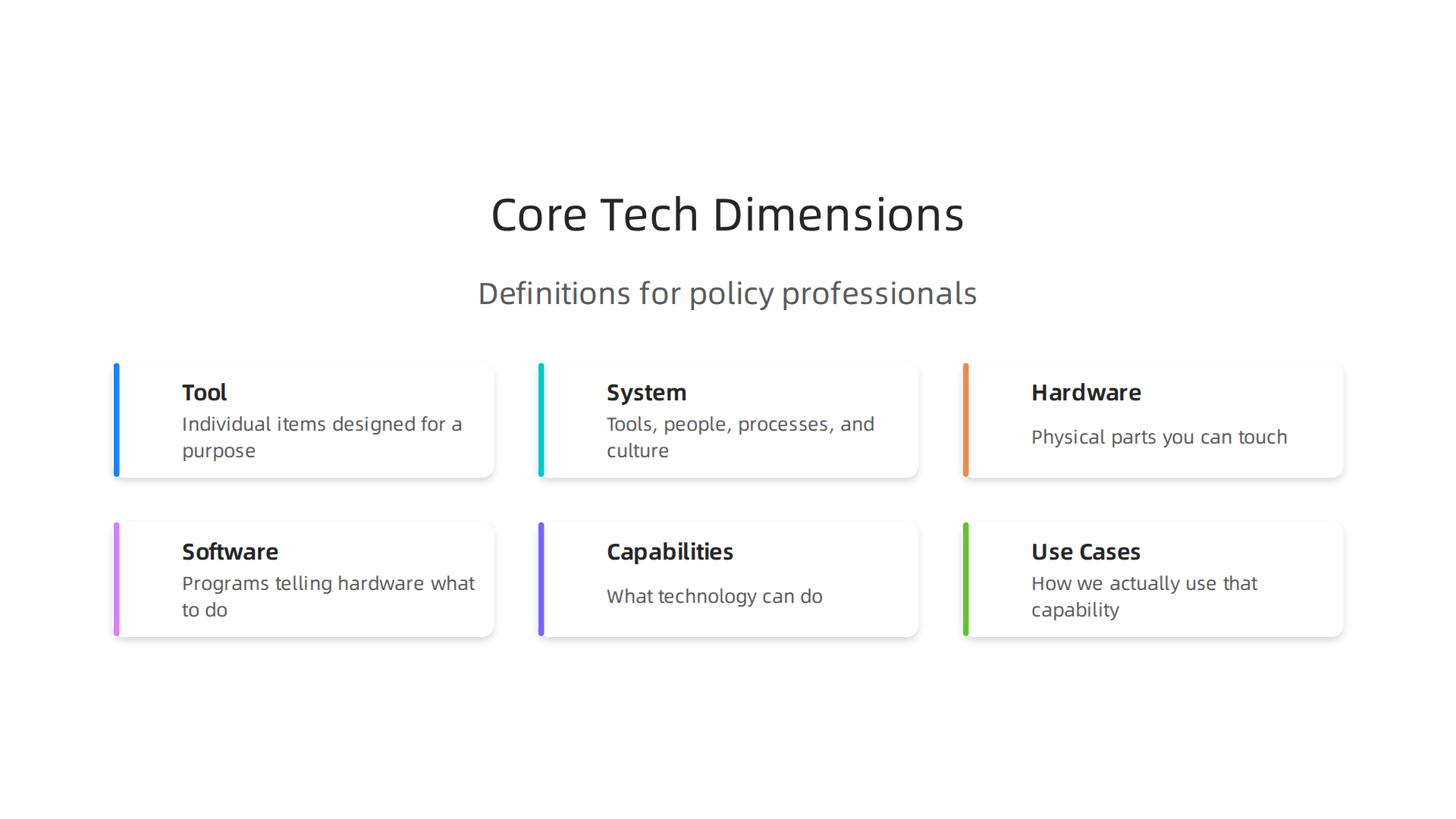
Tool vs. System
Is technology just a single item, like a smartphone? Or is it the entire network and all the rules that make that phone work? Often, it’s both.
- Technology as a Tool: This is the simple view. A hammer is a tool, and so is a new computer chip. These are individual items designed for a purpose.
- Technology as a System: This view is broader. It includes the tools, the people who use them, the processes they follow, and even the culture around them. Think of
smart technologieslike self-driving cars. It’s not just the car itself, but also the maps, the sensors, the software, the road rules, and how people interact with it all. Policies need to cover the whole system, not just one piece.
Hardware vs. Software
This is another important difference:
- Hardware: These are the physical parts you can touch. Things like circuit boards, robots, and data centers.
- Software: These are the programs and code that tell the hardware what to do. Think of apps on your phone or the complex instructions that make
artificial intelligencework.
When we talk about smart technologies, we’re often talking about both hardware and software working together. Rules for a physical drone will be different from rules for the AI program that controls it. Understanding this helps make sure policies are complete.
Capabilities vs. Use-Cases
- Capabilities: What a technology can do. For instance, AI’s capability might be to recognize faces.
- Use-Cases: How we actually use that capability. Face recognition can be used for unlocking a phone (good) or for constant public tracking (potentially bad).
Policy professionals need to look at both. They must consider what a technology is able to do and then think about all the different ways it might be used. This helps create policies that allow good uses while stopping harmful ones.
Working Definitions for Policy
For policy, legal, and compliance tasks in 2026, we need definitions that help us decide what to regulate and how. Here are some practical ideas:
- Broad Definition: Technology is any human-made solution that extends our abilities or solves a problem. This includes tools, machines, systems, methods, and knowledge.
- Policy-Focused Definition: When talking about policy, technology refers to engineered systems, products, or processes, including their underlying code and data, that have a notable impact on society, the economy, or security. This helps us focus on what really matters for regulations.
Knowing these differences helps when writing about smart technologies. And yes, when writing about artificial intelligence, it is usually capitalized as "Artificial Intelligence" because it’s a specific field of study and a proper noun in many contexts, especially in policy discussions. This kind of detail helps keep communication clear and makes sure everyone is on the same page. For a deeper dive into understanding AI for policy, consider improving your AI Literacy For Policy Professionals.
After looking at how to define technology in a broad sense, it’s time to talk about some specific kinds of technology that are very important for policy experts in 2026. These terms often come up in new rules and laws. Knowing what each one means clearly helps everyone work better.
2) Core tech concepts every policy professional must know (AI, ML, cloud, IoT, platform)
Let’s break down some key technology ideas that all policy professionals need to understand.
Artificial Intelligence (AI)
Think of Artificial Intelligence (AI) as making computers smart enough to do things that usually need human thinking. This includes learning, solving problems, understanding language, and making decisions. Yes, is artificial intelligence capitalized? Usually, yes. It’s often treated like a proper name for a field of study or a specific system, especially in policy talks.
For policies, it’s key to look at how AI makes decisions. Is it fair? Does it treat everyone the same? These are big questions that policy experts grapple with every day as they look at AI Trends 2026: Multimodal Models, Autonomous Agents, and the Governance Challenge.
Machine Learning (ML)
Machine Learning (ML) is a big part of AI. It’s how AI systems learn from information, or "data," without being told every single step. Instead, they get better at tasks by seeing more examples. Imagine teaching a computer to spot cats in pictures by showing it many pictures of cats.
From a policy view, ML brings up questions about the data used. If the data is biased or wrong, the ML system will learn wrong things, leading to unfair outcomes. This is why good, fair data is so important.
Cloud Computing
"The cloud" simply means using computer services like storage, databases, and software over the internet instead of having them on your own computer or in your own building. It’s like renting computing power instead of owning it.
Policy makers care about the cloud because it involves where data is kept, how secure it is, and who owns it. Rules about data privacy and national security become more complex when data can be stored anywhere in the world. Learning more about Unpacking Tech Data: A Policy Professional’s Guide for 2026 can help in this area.
Internet of Things (IoT)
The Internet of Things (IoT) connects everyday items to the internet. This includes things like smart home devices, fitness trackers, and even smart city sensors. These smart technologies can gather and share information.
For policy, IoT brings up big concerns about privacy. What information are these devices collecting about us? How is it being used? There are also security worries, as many connected devices can be weak spots that hackers might try to get into. The growing number of "smart" products and systems is a key feature of technology in the 21st century Technology.
Platform Technologies
Platform technologies are online services that connect many people or businesses. Think of social media sites, app stores, or online marketplaces. They create a digital space for users to interact, share, or buy and sell things.
Policy professionals look at platforms closely because of their great power. They can shape public talks, affect markets, and sometimes even hurt smaller businesses. Policies often focus on how these platforms control content, deal with user safety, and prevent unfair competition, especially when large group companies own many different platforms. Understanding how large tech firms influence policy can be found in Decoding Corporate Influence by Major Tech Firms in 2026 Policy.
It’s common for these terms to be mixed up or used loosely. But for laws and rules, it’s really important to know the clear differences. This helps make sure policies are well-aimed and truly fix the problems they set out to solve.
After learning about key tech concepts, it’s clear that policy experts need to go even deeper. They need ways to sort and group these different technologies. This is where "taxonomies" and "classification systems" come in handy. Think of a taxonomy as a big filing system that helps everyone understand what each technology is and where it belongs.

How governments and standards bodies categorize technology
Governments and groups that set standards use these systems to get a clear picture of the technology landscape. This helps them make smart rules and guide new projects. When we define technology in a structured way, it becomes much easier to manage its effects on society.
There are a few main ways to sort technology:
- Sector-based: This groups technologies by the industry they are used in. For example, "healthcare technology" or "financial technology." This helps create rules specific to that industry’s needs.
- Functional-based: This looks at what a technology actually does. Is it for communication? Data storage? Automation? For instance, the European AI Ecosystem uses different dimensions to classify AI, including what it does and where it is used CREATION OF A TAXONOMY FOR THE EUROPEAN AI Ecosystem.
- Capability-based: This is often used for advanced technologies like Artificial Intelligence. It sorts AI based on what it can achieve, such as its ability to learn, decide, or interact. The OECD Framework for the Classification of AI systems is a good example, classifying AI systems by factors like "Data & Input" and "AI Model" to understand their policy considerations. A broader Introduction to the Technology Taxonomy also highlights human-centered ways to group technologies.
Why taxonomy choice matters for rules and enforcement
The way technology is sorted has a huge impact on policies. Let’s look at why:
- Regulatory Scope: How you classify a technology decides which laws apply to it. If an AI system is sorted as "high-risk," it might face very strict rules compared to one called "low-risk." This also affects things like what kind of privacy rules apply or how data must be handled.
- Exemptions: Sometimes, a technology might be given a pass from certain rules if it’s classified in a way that shows it’s not harmful or falls outside a specific policy’s focus.
- Enforcement Priorities: When governments have a clear taxonomy, they know where to focus their efforts. They can prioritize overseeing certain types of technology that pose bigger risks or have greater public impact. This helps in understanding the impact of The Biggest Information Technology Policy Shifts of 2026.
Without good classification systems, policies can be messy, unclear, or even miss important technologies. Knowing how these systems work helps policy professionals make sure that laws are fair, effective, and ready for the future. It’s a key part of building strong AI Literacy for Policy Professionals: A Guide to Machine Learning and Regulation in 2026.
Knowing how different technologies are sorted helps policy experts create good rules. But it’s also key to understand how the companies that make these technologies are built. Just as we classify technologies, we must also understand how businesses group companies and set up their legal forms. This helps policy makers know who is responsible for what, where rules apply, and how risks are managed.
Here are some common ways tech companies are set up:
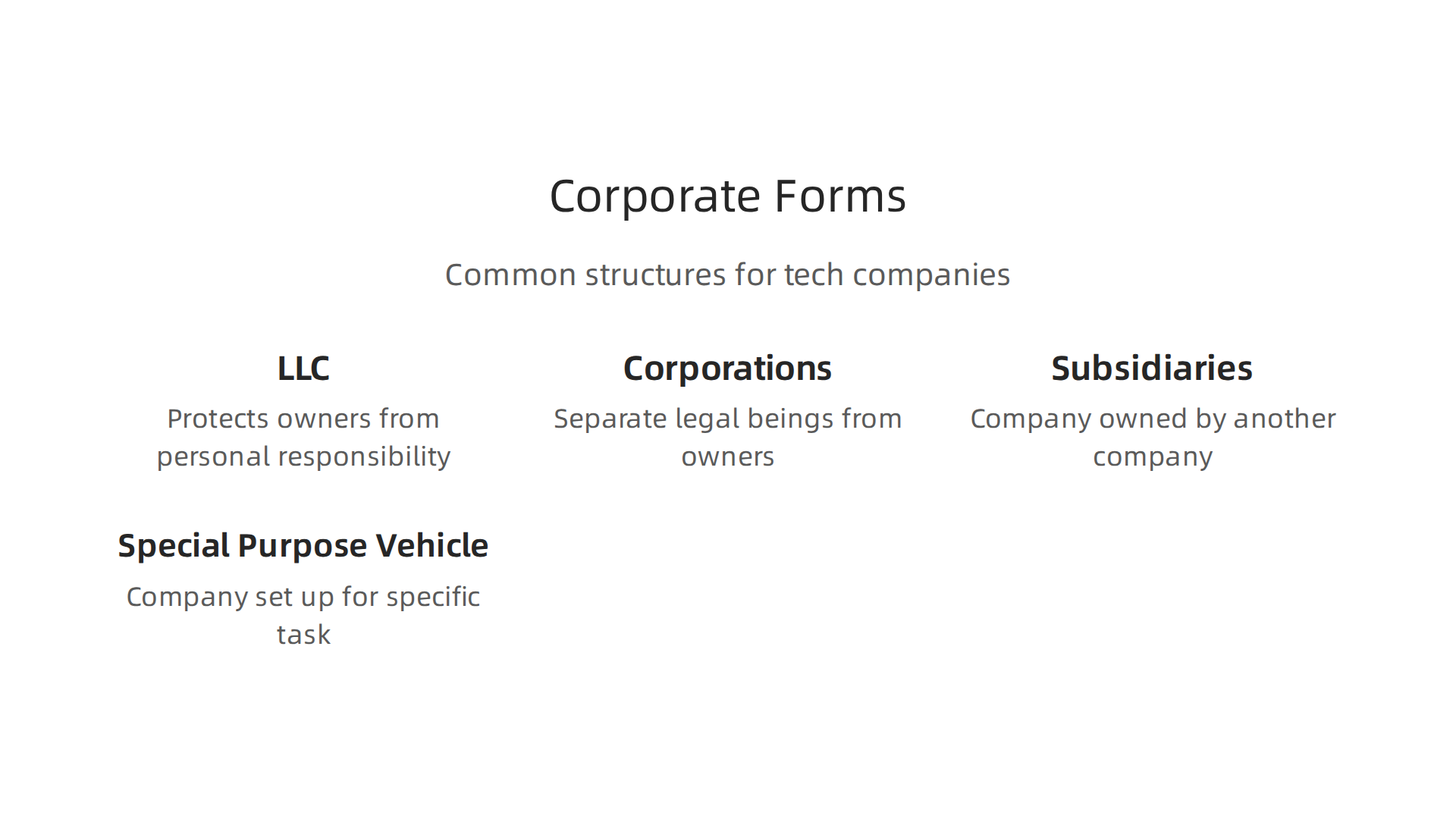
Limited Liability Companies (LLCs)
An LLC is a popular choice for many businesses, especially startups in the tech world. It’s like a mix of a company and a partnership. The main good thing about an LLC is that it protects the owners from personal responsibility. This means if the company gets into debt or faces a lawsuit, the owners’ personal things, like their house or savings, are usually safe. The U.S. Small Business Administration explains how LLCs protect you from personal liability in most cases.
LLCs also have flexible tax rules. Money earned by the company can often pass directly to the owners’ personal taxes, avoiding double taxation. For more details on this business structure, you can learn about the key differences between an LLC and Inc. Policy experts need to watch how these structures affect things like data privacy and consumer protection, especially as new rules come out for LLC Compliance 2026.
Corporations
Corporations are another type of business. They are separate legal beings from their owners. This means the corporation itself can be sued, buy things, and enter into contracts. Corporations can be more complex to set up and run, often having stricter rules and more paperwork. They are commonly used by larger companies or those that plan to raise a lot of money from investors.
Subsidiaries
A subsidiary is a company that is owned or controlled by another company, called the parent company. Think of it like a child company under a parent company. Big tech firms might create subsidiaries for many reasons:
- To run different parts of their business separately.
- To enter new countries, so the subsidiary follows the local laws.
- To keep risks from one project separate from the rest of the main company.
This setup allows a parent company to manage many ventures, even those dealing with complex [smart technologies], under different legal umbrellas.
Special Purpose Vehicles (SPVs) and Legal Wrappers
A Special Purpose Vehicle, or SPV, is a company set up for a very specific, single task or project. It’s a bit like creating a temporary company just for one job. SPVs are often used to manage a specific asset or a single investment deal. A key reason for using an SPV is to keep financial risks separate from the main company. For example, if a large company wants to test a risky new technology, it might create an SPV for that project. If something goes wrong, the SPV takes the hit, not the parent company.
These SPVs can take different forms, often being set up as LLCs or similar structures, especially in the US, as noted in the Special Purpose Vehicles (SPVs) Guide. They are often "bankruptcy-remote," meaning their financial health is kept apart from the main company’s. This separation is a core concept, as highlighted in the discussion on Bankruptcy-Remote Entities and Special Purpose Vehicles. SPVs can also help pool money for specific investments, making certain deals easier to access for investors, as described in Special Purpose Vehicle: What is an SPV and Why it’s useful.
When we talk about "legal wrappers," we mean any of these corporate forms (LLCs, corporations, SPVs) that create a legal boundary around a business activity or asset. These wrappers clearly define ownership, responsibilities, and liabilities.
Why Corporate Structure Matters for Regulations
The choice of corporate form has a huge impact on how policies and rules affect a tech company:
- Liability: Different structures offer different levels of protection for owners and leaders. This affects who is held accountable if a technology causes harm.
- Regulatory Obligations: A company structured as an SPV for a specific project might have different reporting duties than a large, publicly traded corporation. Policy makers need to understand these differences to apply rules fairly.
- Jurisdictional Exposure: If a company creates a subsidiary in another country, that subsidiary must follow the laws of that country. This helps manage where a company is legally exposed.
- Data Flow and Cross-Border Operations: The way companies are structured directly affects how data moves between them, especially across different countries with various privacy laws. This is crucial for policy experts looking at global tech rules.
Understanding these corporate forms is essential for policy professionals. It helps them see how companies operate, manage risk, and navigate the laws. It’s a key step in choosing the right business structure to protect assets and stay compliant.
5) Connecting definitions to regulation: how definitions shape AI, privacy, competition, and cybersecurity rules
After looking at how tech companies are structured, we need to talk about something even more basic: how we define technology itself. The words we use to describe a new tool or system are super important for making rules. Think of it like this: if a new toy is defined as a "simple plaything," it might have few rules. But if it’s defined as a "smart device with AI," it will face many more rules about safety, privacy, and how it uses your data.
How policy experts define technology decides what laws apply, what companies need to do to follow the law, and how those laws are enforced. This is especially true for fast-moving areas like artificial intelligence, data privacy, market competition, and cybersecurity. For example, knowing if artificial intelligence needs to be capitalized in formal documents can seem small, but it shows how precise definitions are needed in legal language.
Let’s look at some key areas:
- AI Rules: What exactly is "AI"? Different countries and groups have their own ideas. The OECD Framework for the Classification of AI systems helps people understand AI better. In Europe, the EU AI Act, which will be fully active by August 2026 for most rules, uses specific definitions to decide which AI systems are "high-risk" and need strict checks. If a product isn’t defined as AI, or as "high-risk" AI, it avoids those tough rules.
- Privacy Rules: What counts as "personal data"? What makes a device a "connected device" that gathers information? How these are defined affects how companies handle your data and what rights you have. New privacy laws in 2026, including some global changes, focus a lot on these definitions to keep your information safe. You can learn more about how new rules affect privacy in the 2026 Privacy Compliance Roadmap.
- Competition Rules: When do we
group companiestogether to see if they are too big or have too much power in the market? Clear definitions help regulators decide when a company is acting unfairly or has a monopoly. - Cybersecurity Rules: What kinds of
smart technologiesare so important they need extra strong cybersecurity? The U.S. National Institute of Standards and Technology (NIST) released guidelines for AI cybersecurity in late 2025. How they define AI systems helps set security expectations for companies.
To make sure a product or company follows the rules, policy experts use a kind of checklist. This helps them decide if something fits a regulatory definition:

- What does the law say? Look closely at the exact words used in the rule.
- What does the product do? Does it perform tasks that match the legal definition, like "learning" or "making decisions"?
- Who made it? How is the company structured? Is it part of a larger
group companiesthat might be treated differently by regulators? - What data does it use? Does it collect sensitive information?
- Where is it used? Different places have different laws.
Understanding these details helps everyone involved, from the people who make technology to those who make the rules. It makes sure that laws are fair and effective. Learning how to navigate these challenges is key for policy professionals in 2026. For more in-depth knowledge, consider improving your AI literacy for policy professionals.
Want to stay on top of the latest changes in AI and technology policy? Get clear daily AI updates from The AI Newsletter Worth Reading.
Since understanding how we define technology is so important, let’s talk about what companies can actually do to follow the rules and handle risks.

It’s not enough to just know the definitions. Businesses need clear steps to make sure they are doing things right. This means looking closely at how the company is set up and how its products work.
Practical Steps for Companies
Companies can use a few smart ways to manage risks and stay compliant in 2026.
- Contractual Clauses: When a company works with others, they can add special rules to their contracts. These rules make sure that everyone involved agrees on how to define technology, handle data, and what counts as acceptable use, especially for
smart technologies. This helps avoid problems later on. - Entity-Level Controls: This means putting rules in place across the whole company. For example, if a
group companiesowns several smaller businesses, the main company might have rules that all parts must follow. This helps make sure that even if a product isn’t strictly defined as "high-risk AI," the company still acts responsibly. Understanding your company’s structure is key for navigating compliance, especially for LLC compliance in 2026. - Product-Risk Mapping: Companies should check each product to see what risks it might have. This means asking: Does this product use AI? Does it collect personal data? How could it cause harm? By doing this, they can match the risks to the right rules and fix problems before they get big. Thinking about how to
define technologyhelps here, as different definitions mean different risks. For example, classifying AI systems is crucial for understanding these risks, as highlighted in the Introduction to the Technology Taxonomy. Other classification systems, like those forEdge AI, also help categorize systems by risk and deployment, as seen in research on Edge AI: A Taxonomy, Systematic Review and Future Directions.
Compliance Checklist for Leaders
For company leaders, a simple checklist can help them understand compliance quickly:
- What is it, really? How do we
define technologywe are using? Is itartificial intelligence? Does it process sensitive data? (Remember, decidingis artificial intelligence capitalizedcan even be a legal detail.) - Who owns it? What is the corporate structure? Is it part of a larger
group companies? - What are the rules? Which laws apply based on how we define it and where it’s used?
- What are the risks? What could go wrong, and how serious is it?
- What’s our plan? How will we fix potential problems and prove we are following the rules?
This kind of clear thinking helps companies stay safe and act responsibly in the world of fast-changing tech. For deeper insights into regulatory environments, understanding academic foundations guide strong AI governance can be very helpful for policy professionals. Also, knowing how to conduct a rigorous artificial intelligence review for policy compliance is a practical step for any organization.
To keep that clear thinking going and to help leaders act even faster, having simple tools at hand is super helpful. This means quick definitions for key terms and an easy-to-read table to guide decisions.
Quick-Reference Glossary and Corporate-Form Decision Table for Briefings
Here is a short list of important words and what they mean for your company in 2026. This can help everyone be on the same page, especially when talking about new rules for technology.
- Define Technology: This means giving a clear explanation of what a piece of tech is, what it does, and how it works. Getting this right is the first step to knowing which rules apply to it.
- Artificial Intelligence (AI): Machines that can learn and make decisions like humans. When you write about it, you should know is artificial intelligence capitalized or if "AI" is enough. This small detail can matter in legal papers.
- Smart Technologies: These are everyday items or systems that use AI or other clever tech to do things automatically, like smart home devices or advanced sensors. They often collect data and connect to other systems.
- Group Companies: This refers to a main company that owns or controls several smaller businesses. Rules often apply differently to a whole group compared to just one company. If you need to understand how different business structures influence risks and responsibilities, you might find it helpful to learn about choosing the right business structure.
- Compliance Playbook: A guide that tells a company how to follow all the rules and laws. It’s like a step-by-step manual for making sure everything is done correctly and consistently across different departments and products. For leaders, these playbooks are essential for making sure teams understand how to stay on track, as outlined in articles like Creating Compliance Playbooks for Departmental Leaders.
- Decision Table: A helpful chart that lays out different situations (conditions) and what actions should be taken for each one. It’s a clear way to show rules, especially when things get complicated. A decision table helps ensure all possible choices are thought through and acted upon correctly, as explained in an Introduction to Decision Table.
Corporate-Form Decision Table
This table helps you quickly see how your company’s setup affects the rules you need to follow and what you can do about it.
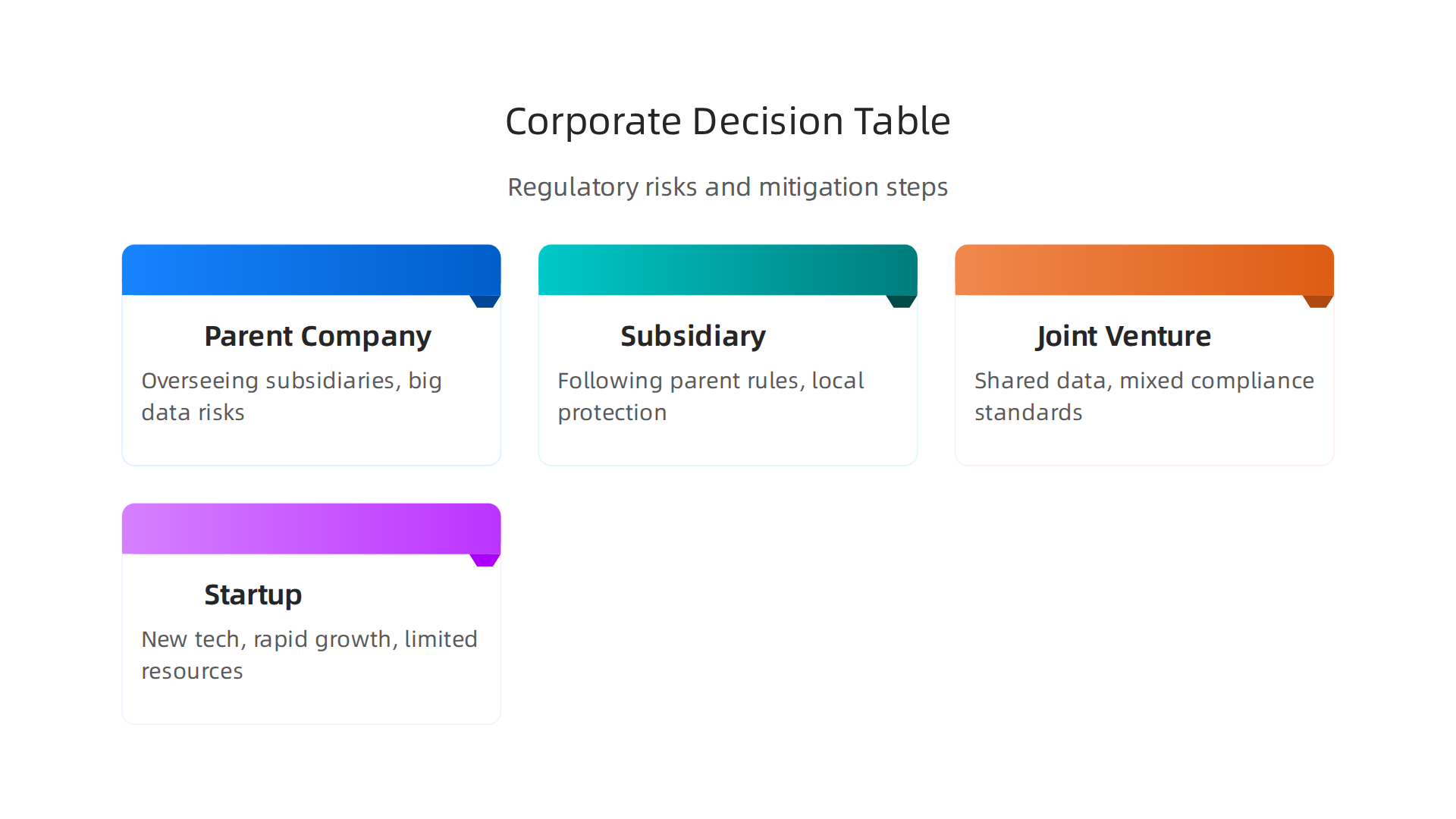
It’s a simple way to map out risks for different parts of your business, especially if you’re a part of larger [group companies].
| Corporate Form | Common Regulatory Risks | Mitigation Steps |
|---|---|---|
| Parent Company | Overseeing all subsidiaries, big data privacy rules, brand reputation risks | Centralized policy team, group-wide audits, clear guidelines for smart technologies |
| Subsidiary | Following parent company rules, local data protection laws, specific product risks | Regular reporting to parent, local compliance officer, product-risk assessments |
| Joint Venture | Sharing data with partners, different compliance standards, legal disagreements | Clear contracts and data sharing agreements, shared compliance lead, independent audits |
| Startup | New tech not covered by old laws, fast growth means new risks, limited resources | Early legal advice, flexible compliance plan, focus on core regulatory areas |
This quick guide helps everyone in the company understand complex rules faster. It makes sure that important decisions are based on clear information and plans, helping your business run smoothly and safely.
To stay on top of daily AI updates and policy changes, many professionals find newsletters helpful. Get clear daily AI updates from The AI Newsletter Worth Reading.
Summary
This article explains why precise definitions and corporate-form literacy are essential for tech policy professionals. It shows how unclear language about what counts as