

Introduction
Feeling overwhelmed by all the tech policy news this year? You are not alone. In 2026, the world of information technology is moving faster than ever. New rules, new tools, and new debates pop up every single day. It can feel impossible to keep up.
Experts at the Harvard Kennedy School say 2026 is less about brand-new gadgets and more about how existing tools shape our lives. At the same time, the International Association of Privacy Professionals calls this year "busier and more consequential than any other" for digital responsibility and AI governance.
Here is the problem: there is just too much information. Between AI governance, data privacy, security rules, and competition laws, how do you know what really matters? You need a clear, structured look at the key changes without all the noise.
That is exactly what this article gives you. We break down the biggest information technology policy shifts of 2026 in a simple, useful way. You will understand what is changing, why it matters, and what to do next.
For a deeper dive into one of the biggest topics this year, check out our piece on how artificial superintelligence is driving a new wave of regulations.
And if you want to stay ahead every day, get clear daily AI updates from The Deep View Newsletter. It is the easiest way to cut through the clutter and focus on what counts.
The Evolving Landscape of IT Policy in 2026
The way governments handle information technology has changed a lot this year. In the past, policymakers often waited for a big problem to happen before writing new rules. Not anymore. In 2026, countries are moving from reactive to proactive policymaking. They are trying to get ahead of the curve.
This shift shows up everywhere. According to experts at the Harvard Kennedy School, 2026 is less about brand new tools and more about how older tools get used in new ways. At the same time, the IAPP calls this year the busiest and most consequential one yet for privacy and AI governance. Rules are being written faster than ever.
Let us look at the key themes driving all this change.
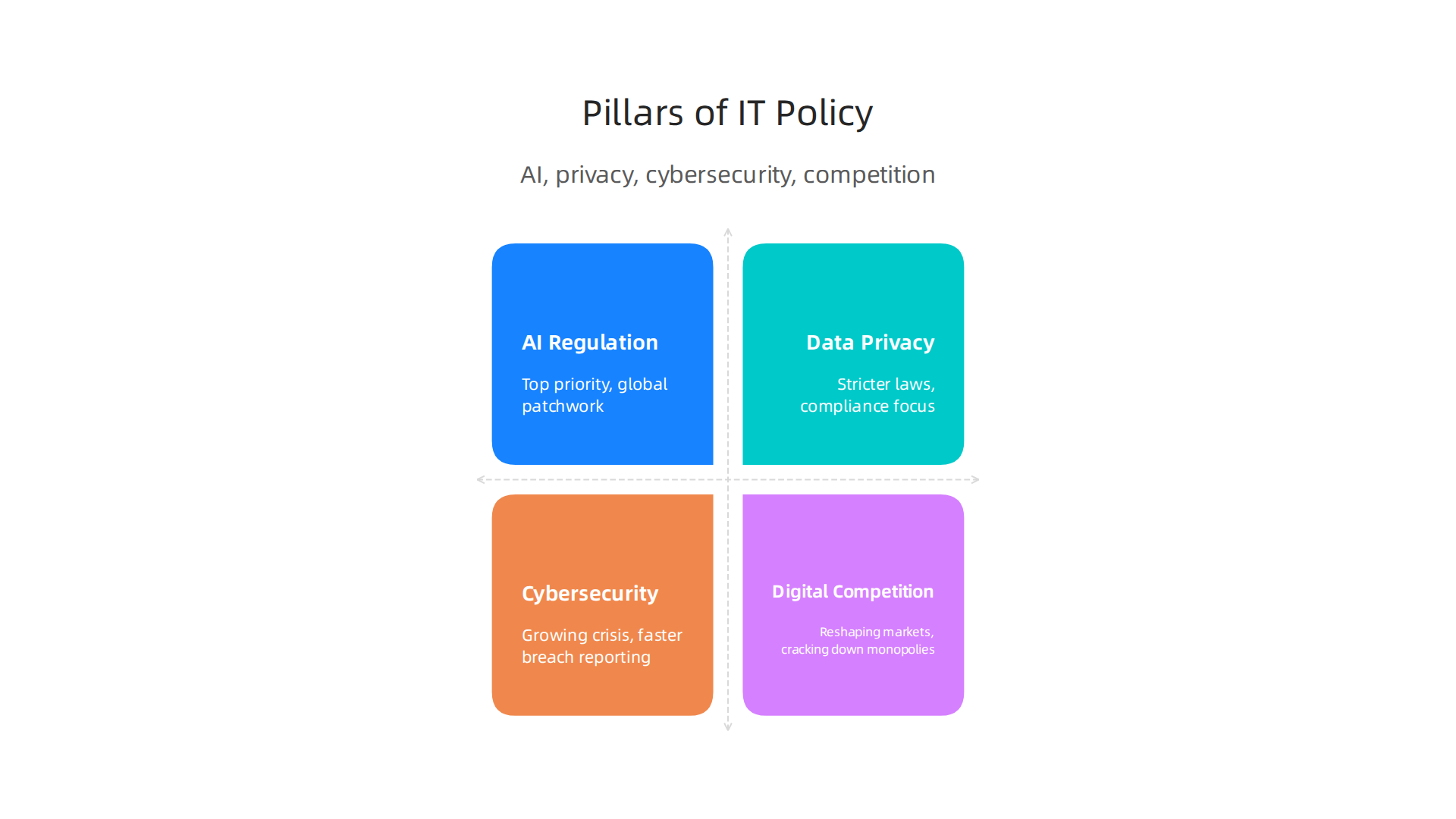
AI regulation is the top priority. The US, EU, UK, and Asian countries are all working on their own versions of AI rules. Some focus on safety testing for powerful models. Others focus on transparency and labeling. This is not just a single law. It is a patchwork that companies must follow. For a deeper look at one specific area, read our article on how artificial superintelligence is driving a new wave of regulations.
Data privacy is getting stricter. New privacy laws are popping up in more states and countries. The rules about how companies collect and use personal data are tightening. Compliance is becoming a major focus for tech firms.
Cybersecurity is a growing crisis. Cyberattacks are more common and more damaging. The World Economic Forum warns that confidence in cybersecurity is dropping, while the number of major incidents is rising. Governments are now requiring companies to report breaches faster and take stronger security steps.
Digital competition laws are reshaping markets. Regulators in the EU and US are cracking down on big tech monopolies. New rules aim to give smaller companies a fair chance to compete. This is changing how platforms operate and how users experience the web.
These four themes AI, privacy, cybersecurity, and competition are the pillars of information technology policy in 2026.
They affect everyone from startup founders to government leaders.
One thing is clear: staying on top of all these changes is a full time job.

That is why getting a daily dose of clear insights helps. The fsdfsdf newsletter cuts through the noise so you know what matters. Subscribe today to get daily AI updates straight to your inbox.
This section is part of a larger article on the biggest IT policy shifts of 2026. For more context, check out our previous section on the introduction and our upcoming sections on specific regions and laws.
AI Governance and Regulatory Frameworks
Here is the thing about ai development in 2026. Rules are being written faster than the technology itself can evolve. That makes it hard for anyone running a business or working in policy to keep up. But once you understand the main frameworks, the picture gets a lot clearer.
Let us break down what is happening in three of the biggest regions right now.
The EU AI Act Sets the Global Standard
The European Union took the lead with the EU AI Act, which officially came into force in August 2024. Now, as we reach August 2026, the rules are fully applicable. This means companies that build or use high-risk AI systems must follow strict rules around safety, transparency, and fundamental rights. The EU AI Act is the world’s first complete legal framework for frontiers in artificial intelligence, and it is affecting how other countries write their own laws.
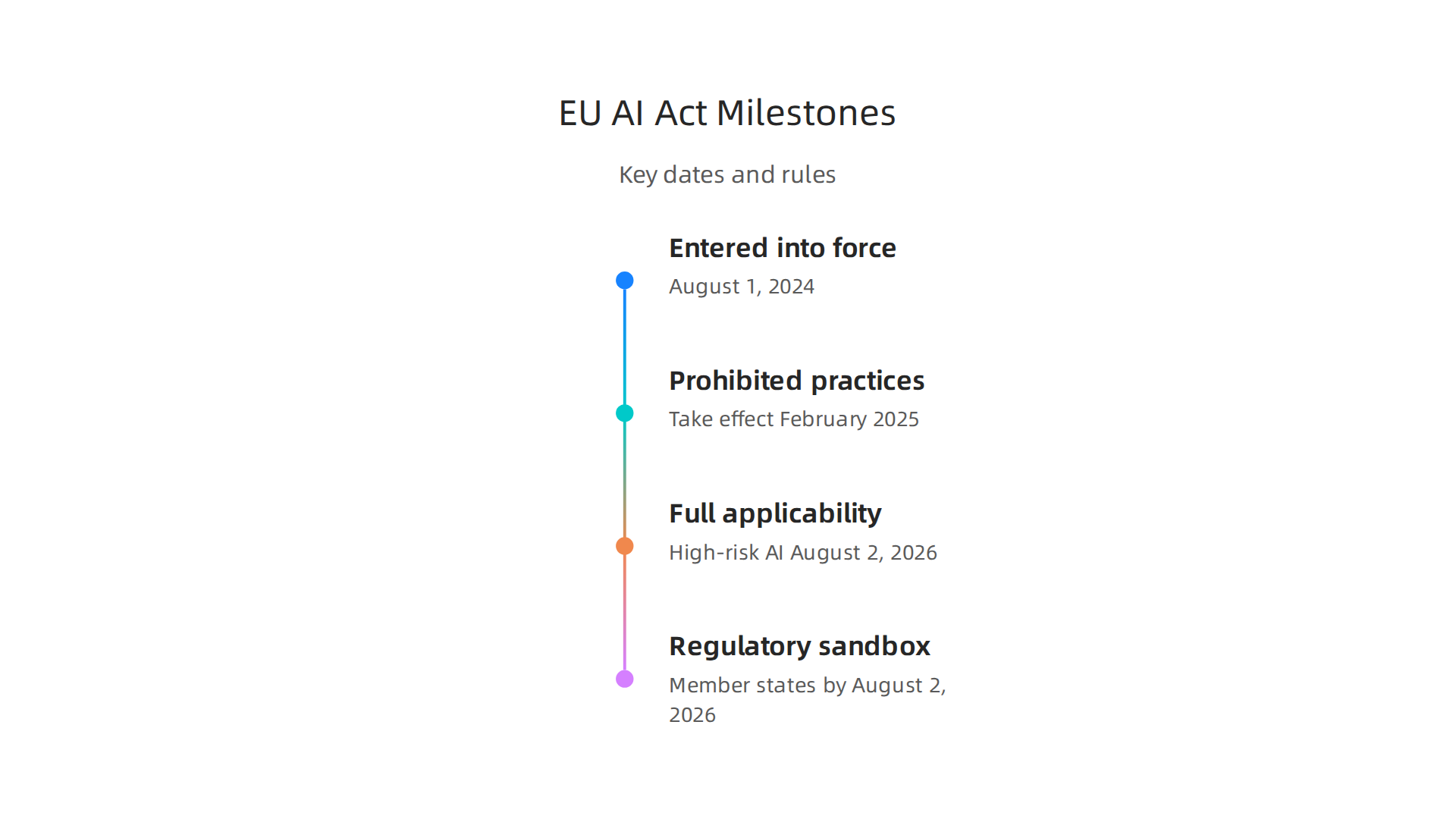
Here are the key dates and rules you need to know:
| Milestone | Date |
|---|---|
| EU AI Act entered into force | August 1, 2024 |
| Prohibited AI practices take effect | February 2025 |
| Full applicability for high-risk AI | August 2, 2026 |
| Each member state must create a regulatory sandbox | By August 2, 2026 |
The European Commission has a helpful overview of the AI Act if you want to dive deeper.
And for US companies doing business in Europe, there is a useful guide on EU AI Act compliance. This matters because the EU rules are now setting a global benchmark that others are copying.
The US Takes a Different Path
The United States is taking a different approach. Instead of one big federal law, there are multiple efforts happening at the same time.
On one side, there are executive orders from the White House. In 2023, President Biden signed an executive order on AI that focused on safety and security. More recently, a 2025 executive order tried to block states from creating their own "onerous" AI regulations. According to the Crowell report, this order threatens states with lawsuits if their laws go beyond national policy.

On the other side, individual states are pushing ahead anyway. California, Colorado, and others are writing their own AI rules. This creates a patchwork that companies must navigate carefully.
If you want to understand how this impacts specific areas, check out our deep dive on how text to video artificial intelligence policy is changing in 2026.
The UK and China Offer Two More Models
The United Kingdom has chosen a lighter, more business-friendly approach. It focuses on guiding principles rather than strict laws. The idea is to encourage ai development without slowing innovation.
China, by contrast, has gone aggressive. It already has rules on algorithmic recommendations, deepfakes, and generative AI. The government requires companies to register their AI models and get approval before releasing them to the public.
What This Means for You
The big takeaway is simple. You cannot ignore these rules. Whether you are building an AI product, investing in one, or just using AI tools at work, the rules affect you. And they change fast.
That is why staying informed matters more than ever. The ai overview is shifting all the time. To keep up without spending hours reading dry legal text, subscribe to The Deep View Newsletter. It delivers clear daily AI updates to your inbox so you always know what is happening.
Privacy and Data Sovereignty in a Connected World
Just like AI rules, data privacy laws are changing fast in 2026. And if you handle customer data, you probably feel the pressure. Twenty states now have comprehensive privacy laws in effect this year. That is a huge jump from just a few years ago. Let us look at what is happening across the globe.
Europe Tightens the Screws on GDPR
The EU’s GDPR has been around since 2018. But 2026 is a big year for enforcement. New rulings from the Court of Justice of the European Union are changing how companies must handle data transfers and consent. The Freshfields data law trends report points to expanding AI oversight and new limits on data transfers as the key themes this year.
What does this mean for you? If your company moves data across borders, you need to watch these rulings closely. The penalties are not getting smaller.
US Privacy Laws Are a Patchwork in 2026
Over in the United States, there is still no single federal privacy law. Instead, states are leading the charge. And 2026 is a record year.
California, Virginia, and Colorado have led the way with their own privacy laws. Now in 2026 they are joined by Indiana, Kentucky, and Rhode Island where new consumer data privacy laws took effect on January 1, according to the LP Legal overview. California keeps updating its rules too. And Connecticut just passed Senate Bill 1295 which lowers the bar for which companies must follow the law. As this Shumaker article explains, the new bill takes effect on July 1, 2026.
The result? A patchwork. Companies doing business in multiple states must track 20 different laws.

The Smith Law article says data privacy risk is increasing in 2026 even as the pace of new legislation slows. That means enforcement is the new focus.
To stay compliant, check out the Osano US Data Privacy Laws Survival Guide.

And the IAPP State Privacy Legislation Tracker helps you keep up with every bill in real time.

Data Sovereignty Goes Global
China, India, and Brazil are also pushing strict data sovereignty rules. These countries want data about their citizens to stay inside their borders. That creates real headaches for global companies.
For example, if you run a cloud service used by customers in Brazil, you may need servers inside Brazil. Same for India. And China’s rules are even tighter. The Baker Data Counsel year-end review offers insights on what to watch going forward.
This all ties back to ai development too. Because AI models need lots of training data. And if you cannot move that data across borders, your AI projects slow down.
How to Stay Ahead
The information technology landscape is shifting fast. Between US state laws, European GDPR updates, and global data sovereignty demands, keeping up is a full-time job.
That is where the ai overview from a trusted source helps. The Deep View Newsletter delivers clear daily updates so you never miss a critical change. It helps busy professionals like you stay informed without the noise.
And if you want to understand how frontiers in artificial intelligence connect to privacy rules, check out our piece on how AI background noise removal raises tough privacy and policy questions for leaders. It shows how even small AI tools can trigger big privacy concerns.
Cybersecurity: From Compliance to Resilience
Privacy rules matter a lot. But in 2026, cybersecurity incidents are forcing leaders to think differently. Compliance alone is not enough anymore. The shift is toward resilience. That means preparing for attacks, not just checking boxes.
Major Breaches Shook 2026
The year is already full of big incidents. According to the ACI Learning blog, some of the biggest cyber breaches of 2026 include the Stryker cyberattack, a massive 149 million credential exposure, the Brightspeed ransomware attack, and Nike’s internal data leak. That is a lot of big names hit hard.
And the attacks are not just on private companies. In March 2026, the European Commission itself was targeted. A cyberattack hit its cloud infrastructure and took down the Europa web platform, as reported by the CSIS Significant Cyber Incidents tracker. If government institutions can fall, anyone can.
Policy Makers Are Responding
These attacks are driving new regulations. In Europe, the EU AI Act officially becomes fully applicable on August 2, 2026, as stated on the official European Union page. That means high-risk AI systems now face strict rules. Any company using AI in cybersecurity tools must comply.
In the United States, the White House issued an executive order in late 2025 to limit state level AI regulation. The goal is to create a national AI policy. But as the Crowell article explains, this order threatens to sue states that pass “onerous” laws. So we have a tug of war between federal and state rules.
The Shift Toward Proactive Resilience
Here is the thing. Even with all these rules, breaches keep happening. The World Economic Forum Global Cybersecurity Outlook 2026 report shows that cyber leaders are less confident about their defenses than last year. That is a scary trend.
So the smart move is to shift from compliance to resilience. Instead of just meeting legal minimums, you need to assume a breach will happen.
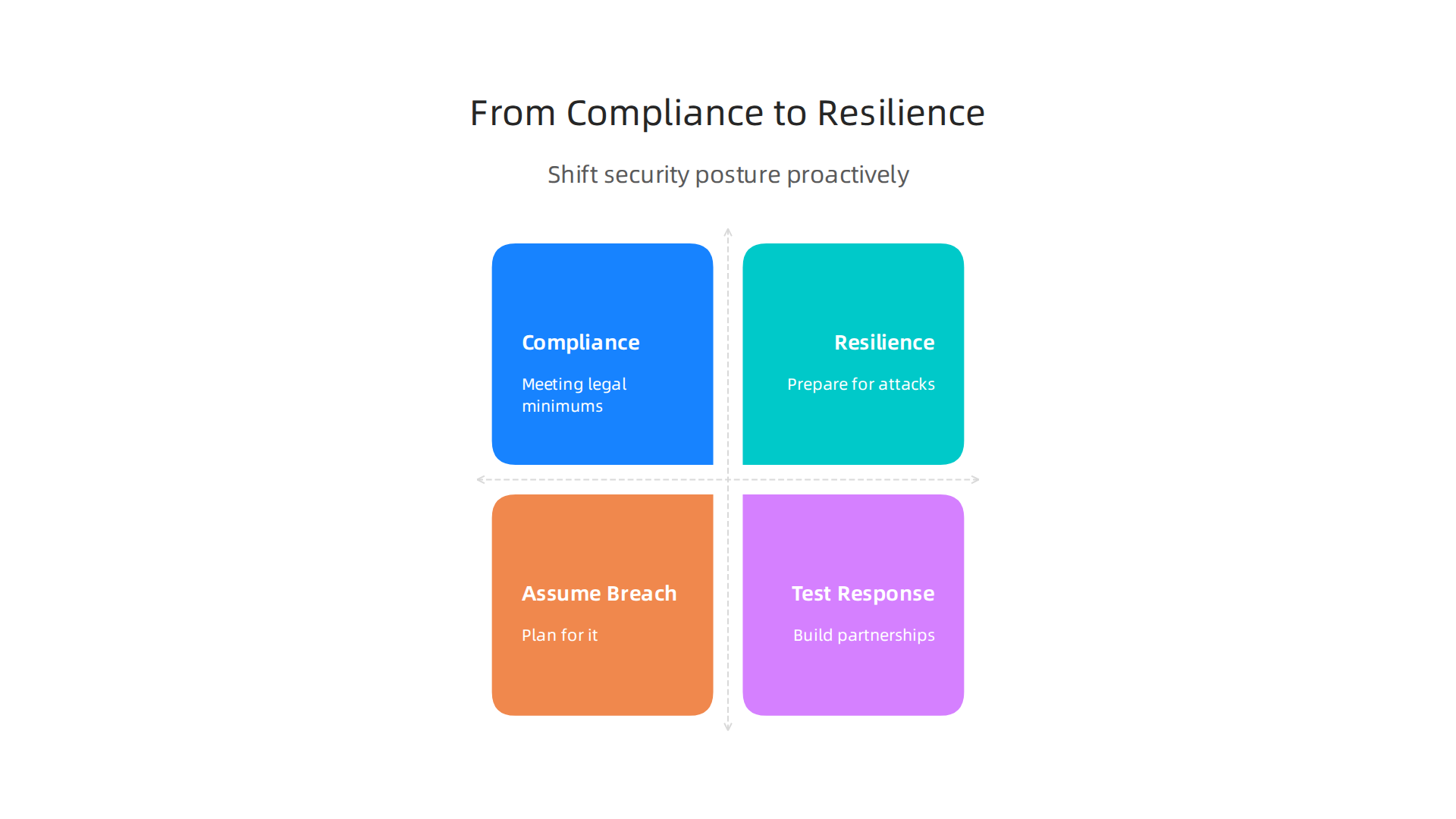

Plan for it. Test your response. Build partnerships with other organizations and government agencies.
One big reason is the rise of AI powered attacks. SentinelOne reports that agentic phishing attacks will make up over 42% of all global breaches in 2026. That is nearly half. These attacks use advanced AI to trick people. The frontiers in artificial intelligence are helping attackers get smarter faster.
So ai development is a double edged sword. It helps defenders too. But you need to stay on top of the latest threats and defenses.
How to Stay Resilient
Keeping up with all this takes effort. You need a clear ai overview of what is changing every day. That is where the Deep View Newsletter comes in. It delivers daily updates on AI and tech policy so you never miss critical shifts. It helps busy professionals understand the threats and rules shaping information technology today.
And if you want a deeper look at how new AI regulations are forming, check out our article on how artificial superintelligence is driving a new wave of regulations in 2026. It connects the dots between advanced AI and the policies trying to govern it.
Resilience starts with knowledge. Stay informed. Stay ready.
Competition, Antitrust, and the Digital Economy
While cybersecurity and privacy are grabbing headlines in 2026, another huge story is playing out in the world of competition. Governments are finally taking big steps to make sure digital markets stay fair. If you run a startup, invest in tech, or just use Google or Amazon every day, these changes matter.
Europe Leads with the Digital Markets Act
The European Union’s Digital Markets Act (DMA) has been around for a few years. But 2026 is a big year for enforcement. By May 3, 2026, the European Commission had to complete its first formal review of the law, as reported by Tech Policy Press. This review will shape how the DMA works going forward.
The DMA targets the biggest platforms known as “gatekeepers.” Think Google, Apple, Meta, and Amazon. The goal is to stop them from abusing their power. For example, the European Commission is already enforcing rules that force these companies to open up their platforms to smaller competitors. You can read the official details on the European Union’s Digital Markets Act page.
The DMA is not just a European thing. It is becoming a global model. Other countries are watching closely.
The UK Joins the Fight
Across the English Channel, the United Kingdom has its own new law. The Digital Markets, Competition and Consumers Act (DMCC) took effect in early 2026. It gives UK regulators strong tools to go after Big Tech companies that hurt competition. The law also sets up a special unit focused on digital markets.
This means companies operating in both Europe and the UK now have to follow two similar but different sets of rules. That is a lot of complexity.
US Antitrust: Old Cases, New Ideas
Over in the United States, things are moving too. The Federal Trade Commission and Department of Justice keep pushing antitrust cases against Big Tech. The Google search monopoly case and the Amazon seller practices case are still going. And in 2026, new legislation is being proposed in Congress.
Some lawmakers want to update antitrust laws for the digital age. Others want to block mergers more aggressively. The tug of war between federal and state regulators, which we saw in the AI regulation space, is also happening here. The Hausfeld bulletin on regulating AI between the DMA and competition law explains how these efforts connect.
What This Means for Startups and Investors
Here is the good news. All this regulation creates opportunities. When gatekeepers are forced to open up, smaller companies get more room to grow. Startups can access data and distribution channels that were locked before.
But there is a flip side. The rules are complex and keep changing. Investors need to factor in regulatory risk. A startup that relies heavily on a Big Tech platform could be hit hard if the rules shift.
The best strategy is to stay informed. You need a clear picture of how competition policy is evolving. That is why getting daily updates is so valuable. The Deep View Newsletter delivers straight talk on all the policy changes, from DMA enforcement to US antitrust fights. It helps you see the big picture in minutes.
If you want to understand how AI is driving even more regulations, check out our article on how artificial superintelligence is driving a new wave of regulations in 2026. It connects the dots between advanced tech and the rules that shape markets.
The digital economy is being rewritten. Make sure you know the new rules.
Strategic Implications for Business and Investment
So you are a business leader, an investor, or maybe a founder building the next big thing in information technology. You have watched this whole article unfold – the AI Act, privacy laws, cybersecurity mandates, and antitrust battles. It is a lot.

But here is the real question: what do you actually do with all this?
2026 is turning into the busiest year ever for privacy and AI governance, according to the IAPP. That is not just a headline. It means every decision you make about product features, data handling, and market expansion now has a regulatory cost attached.
The best businesses will treat these policy shifts not as a burden, but as a strategic advantage. Here is a simple framework to help you think about it.
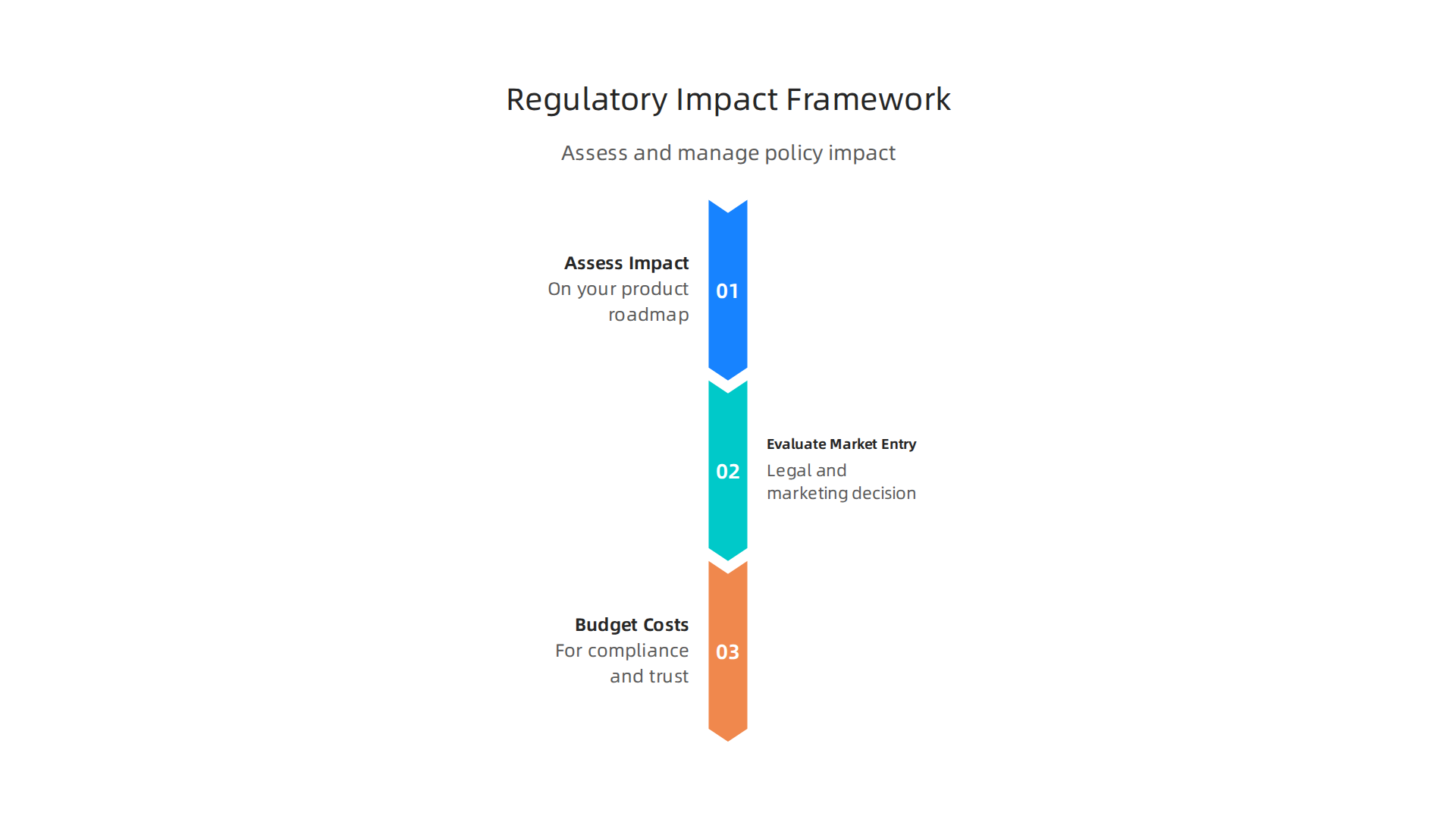
A Framework for Regulatory Impact
First, assess the impact on your product roadmap. If you are building an AI feature, ask yourself: is it considered high-risk under the EU AI Act? Will it need a conformity assessment? The Deloitte Tech Trends 2026 report shows that leading companies are moving from experimentation to real impact by embedding compliance early.
Second, evaluate market entry. The DMA and UK DMCC mean that accessing European users is no longer just a marketing decision. It is a legal one. If your business model depends on using data from a gatekeeper platform, you need to plan for changes. The S&P Global 2026 trends report highlights that regulatory complexity is a major factor in go-to-market strategy.
Third, budget for compliance costs. These are not optional. From hiring privacy officers to building transparency tools, the costs add up. But they also create trust. And trust is a competitive moat.
Expert Recommendations for Leaders
The experts at Plante Moran emphasize that AI, data security, and compliance are the top focus areas for tech companies in 2026. The key is to be proactive, not reactive.
- Monitor policy daily. Set up alerts for DMA enforcement actions, state AI laws, and FTC guidance. The landscape shifts fast.
- Engage early. Don’t wait for a fine. Talk to regulators, join sandboxes, and participate in public consultations.
- Build internal expertise. Have someone on your team who understands both the technology and the regulation. That person is gold.
The bottom line: the frontiers in artificial intelligence and digital competition are being redrawn right now. A solid ai overview of the global regulatory picture can save you months of costly mistakes.
That is why staying informed is your best move. The Deep View Newsletter delivers a clear ai development briefing each day, cutting through the noise so you can focus on building.
If you want to dive deeper into one specific area, check out our article on how artificial superintelligence is driving a new wave of regulations in 2026. It connects the dots between cutting-edge tech and the rules that will shape your future.
Strategic implication number one: know the rules. Strategic implication number two: use them to your advantage.
Summary
This article breaks down the biggest information technology policy shifts of 2026 and explains what they mean for companies, founders, investors, and policy watchers. It covers four pillars—AI governance, data privacy, cybersecurity, and digital competition—and shows how governments have moved from reactive to proactive rulemaking. You’ll get a regional comparison (EU’s binding AI Act, a patchwork of US federal and state actions, a permissive UK approach, and strict Chinese controls), plus the practical fallout from stricter privacy and data‑sovereignty rules. The piece also describes the rising cost of cyber incidents and the shift from mere compliance to resilience planning. Finally, it gives a framework for strategic responses—product roadmap reviews, market entry assessments, and budgeting for compliance—so readers can turn regulatory change into a competitive advantage. After reading, you’ll understand the key dates, the main risks, and the immediate steps to keep products and investments on the right side of 2026 policy.