
Why SMBs Must Adopt Digital Business Models Now
In 2026, the world of business is changing faster than ever before. For small and medium-sized businesses, often called SMBs, it’s really important to keep up. Moving your smb business online is not just a good idea anymore; it’s a must. Digital business models offer exciting new ways for an SMB business to grow.
Think about it: moving online can cost less than having a big physical store. This means you can save money while still reaching many more people. You can find customers not just in your town, but all over the country, or even the world. This broad reach opens up so many chances for new sales and growth. Many people are looking for good business ideas that can start small and grow big online. Embracing digital tools can help you find your best small business to start and make it thrive.
However, there are some tricky parts too. Businesses face new rules from the government, especially around things like artificial intelligence (AI) and how to keep customer information safe. There are also technical challenges, like making sure your website works well and that your online tools talk to each other. And the market itself is always changing. It can be hard to know what digital tools to use and how to use them best. For example, knowing how to master AI for presentations can really boost your business success and profits.
Staying informed about these changes is key for any smb business owner.
To get clear daily AI updates and help navigate these complex areas, you should consider subscribing to The AI Newsletter Worth Reading.
According to new data from the U.S. Census Bureau, businesses are already seeing how much AI is changing things. Large companies with many employees are using AI more and more, but smaller companies are catching up fast, showing how important these digital steps are for all kinds of businesses today and in the future Research Spotlight – AI In Business: Small Firms Closing In.
Assess Market Fit: Select Digital Business Ideas That Match Your Strengths
After understanding why an SMB business needs to go digital, the next big step is choosing the right idea. It’s like picking the perfect seed to plant so your business can grow strong. You want to make sure your digital business idea fits what people need and what you are good at. This is called market fit.
Find Out What People Want
To find a good business idea, you need to see what people are looking for. What problems do they have that your business could solve online?
For example, in 2026, many small business ideas are about using AI, helping people with tech, or offering services that don’t cost much to start. These kinds of businesses can be launched with very little money, sometimes under $3,000 to get going Top small business opportunities this year emphasize digital modernization, AI consulting, and service-based work with minimal upfront investment.
You can look at what other businesses are doing, but also listen to what customers say they wish they had. Online communities, like those on Reddit, can even help small business owners find out what people are talking about and what they need. Reading these chats can give you great ideas for what kind of small business to start. Think about local needs too; maybe a nextdoor business in your area could offer online classes or a unique delivery service.
Quick Checks for Your Idea
Once you have a few good business ideas, it’s smart to check them quickly before you put in too much time or money. Here’s a simple list to help you decide:
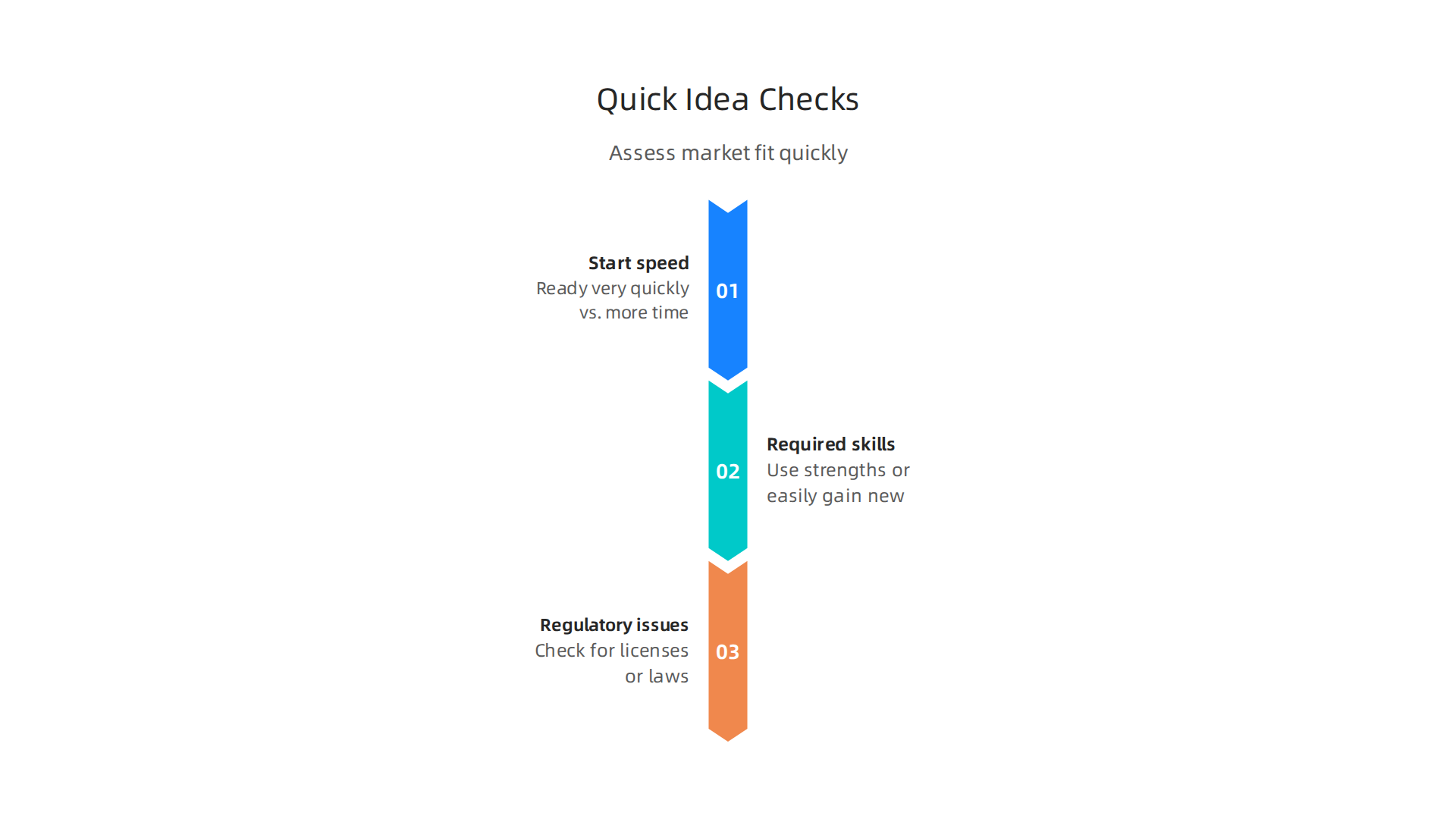
- How fast can you start? Some digital businesses, like setting up an online store for handmade goods, can be ready very quickly. Others, like creating a complex app, take more time. Try to pick something that lets you start small and learn along the way.
- What skills do you need? Think about what you or your team are good at. Do you need to learn new things, like how to use special software or how to talk to customers online? Pick an idea that uses your strengths or where you can easily gain new skills.
- Are there any tricky rules? Some businesses have more rules than others. For example, if you plan to offer health advice online, there might be certain licenses or laws you need to follow. Always do a quick check to see if your chosen business idea has any special rules. Also, think about the best legal setup for your new venture, as choosing the right business structure can protect your assets and help with taxes.
By checking these things, you can pick a digital business idea that is not only exciting but also smart and practical for your smb business to succeed.
Picking the right digital business idea is just the start. Next, your smb business needs to understand the rules and risks of doing business online. It’s like learning the traffic laws before driving a new car. Knowing about policy, compliance, and potential risks helps keep your digital business safe and growing.
Key Rules Digital SMBs Must Watch
When you move your business online, you start dealing with important rules in a few key areas:
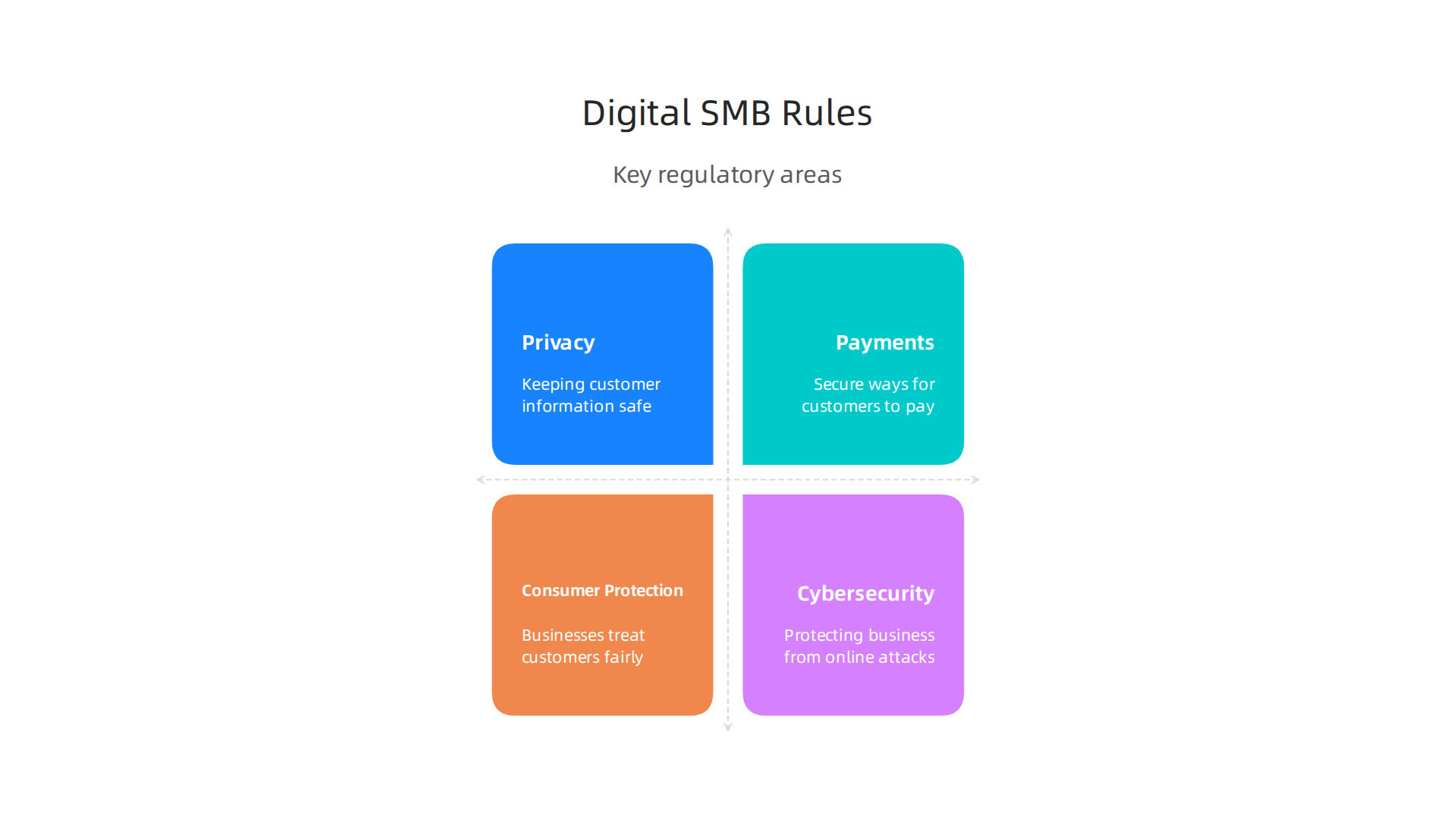
- Privacy: This is about keeping customer information safe. When you collect names, emails, or payment details, you have a big job to protect that data. Laws like the ones about data privacy tell you how you must handle this information. It’s crucial for any digital business to have a clear plan for privacy. For example, the FTC shares useful tips on protecting your small business from online threats, especially around Data Privacy Day, which falls in January 2026 Recognize Data Privacy Day by protecting your small business from cybercriminals.
- Payments: If you sell things online, you need to use secure ways for customers to pay. There are rules about how online payments work to protect both you and your customers from fraud.
- Consumer Protection: These rules make sure businesses treat customers fairly. This means being honest about your products or services, having clear return policies, and handling customer complaints well.
- Cybersecurity: This is about protecting your business from online attacks, like hackers trying to steal data. Even a small smb business can be a target, so you need to take steps to keep your systems secure.
Easy Steps for Small Teams to Stay Compliant
Many smb businesses don’t have a big legal team. But don’t worry, you can still take important steps to stay safe and follow the rules.
- Know Your Data: First, find out what kind of customer information you collect, where you keep it, and why you need it. Make a simple list.
- Write a Privacy Policy: Create a simple, easy-to-understand privacy policy for your website. This tells customers how you use their data. There are many templates online that can help you get started.
- Train Your Team: Even if it’s just you, or a few people, make sure everyone knows how to handle customer data safely and what to do if they see something suspicious. Simple training on strong passwords and recognizing fake emails goes a long way.
- Use Secure Tools: Choose online tools and services that are known for being secure. This includes your website host, payment processors, and email services. Look for features like "two-factor authentication" which adds an extra layer of security when you log in.
Understanding and managing these policies and risks can feel big, but it’s a key part of making your digital business strong. Staying updated on these topics helps your business adapt and grow. If you’re looking to dive deeper into how policies affect tech, including AI, privacy, and cybersecurity, there are resources available to help you navigate these changes. To stay on top of the latest trends and policy shifts impacting the digital world, consider exploring further insights into Tech Policy 2026: How to Navigate AI, Privacy, Cybersecurity, and Antitrust Changes.
Staying informed is one of the best ways to protect your business. For daily insights and analyses on AI and technology policy that can help you navigate this complex landscape, get clear daily AI updates from The AI Newsletter Worth Reading.
After making sure your digital shop is safe and follows the rules, the next big step for your smb business is picking the right way to make money. It’s not just about having a good business idea; it’s about finding a smart business model that works well online. You want to pick something that can grow and bring in profits for your small team.
Business Models: Profitable Digital Ideas for SMBs (Practical Examples)
In 2026, many good business ideas for digital companies focus on smart online tools and services. Starting these types of businesses can have low costs. For example, many trending small business ideas this year, like AI consulting or digital products, can start with as little as $500 to $3,000. Some tech support and service-based models even require under $1,000 to get going Top small business opportunities this year emphasize digital modernization, AI consulting, and service-based work with minimal upfront investment. This makes it easier for an smb business to launch without needing a lot of cash upfront.
Here are some practical digital business ideas that are proving to be quite profitable:

- Online Marketplaces: Think about connecting buyers and sellers for a specific type of product or service. This could be a local marketplace for handmade goods, or a platform for people to offer unique digital skills. You earn money by taking a small fee from each sale.
- Subscription Microservices: Offer a small, useful digital service for a recurring monthly fee. This could be a tool that helps local businesses manage their social media, or a simple online scheduling system. The key is to solve a common problem for a certain group of people.
- Niche E-commerce: Instead of selling everything, focus on a very specific type of product. This could be eco-friendly pet supplies, special learning tools for kids, or unique home decor. You build a loyal customer base by being the expert in that niche.
- B2B Micro-SaaS (Software as a Service): Create a simple software tool that helps other businesses. This could be an AI tool that writes short social media posts, or a program that helps small businesses keep track of customer feedback. Many of these AI-focused businesses can launch for under $5,000 and bring in good project revenue Small business ideas for 2026 focus on AI, digital products ….
Monetization and Unit Economics to Evaluate Before Launch
Once you have a good business idea, you need to think about how it will make money. This is called monetization. There are a few main ways a digital smb business can earn income:
- Subscription: Customers pay a regular fee, like monthly or yearly, to keep using your service or accessing your content. This is great for software, online courses, or content platforms Business Apps Making Money in 2026: 10 Types + Build Cost.
- Commission/Marketplace: You take a percentage of each sale that happens on your platform. This works well for connecting people who offer services or products.
- One-time purchases: Customers buy a digital product, like an e-book, a template, or a single piece of software, just once.
It’s also really important to understand "unit economics" before you launch. This simply means looking at how much it costs you to provide one service or sell one product, compared to how much money you make from it. For a digital smb business, this might mean thinking about:
- How much does it cost to get one new customer?
- How much money does that customer bring in over time?
- What is your profit after all costs for each sale or service provided?
Knowing these numbers helps you see if your good business ideas will actually be profitable and sustainable. If you are still looking for the perfect business idea, thinking about how policy creates powerful entrepreneur ideas for 2026 startups might spark some inspiration. Once you have an idea, you’ll also want to think about mastering business name ideas for brand success in 2026.
Now that you have a great business idea and a name, the next big step is letting people know about your smb business. This is called digital marketing and getting new customers. When you don’t have a lot of money to spend, it’s smart to focus on ways that give you the most back for your buck. Many small businesses aim to spend less than $50,000 per year on marketing, with typical monthly costs ranging from $2,500 to $12,000 Small business marketing budget statistics for 2026.
Digital Marketing & Customer Acquisition on a Budget
In 2026, there are many smart ways for an smb business to get customers without spending too much. The key is to pick a few good ways and do them really well.
High-ROI Channels for SMBs in 2026
- Search Engine Optimization (SEO) and Local Search: This means making sure your business shows up high in search results when people look for things you offer. For many small businesses, local SEO is very important. This includes setting up your Google Business Profile, which helps people find you when they search for businesses near them. Local SEO is a low-cost option that can bring real results 2026 Digital Marketing Reality Check: Small Businesses.
- Email Marketing: Sending emails to people who want to hear from you is still one of the best ways to get customers. For every dollar you spend on email marketing, you can get a lot back. It is known as one of the highest-return channels for small businesses What Marketing Tactics Offer the Best ROI in 2026?.
- Social Media Niches and Short-Form Video: Instead of trying to be everywhere, pick one or two social media places where your ideal customers spend their time. Short videos on platforms like TikTok and Instagram are very popular right now. These can be fun, quick ways to show off what your business does.
- Content Marketing: Writing helpful blog posts, guides, or making videos that answer common questions for your customers can bring people to your website. This builds trust and shows you are an expert.
- Referral Programs: Ask your happy customers to tell their friends about your business. You can even offer them a small thank you for each new customer they bring in. This is a very powerful way to grow because people trust recommendations from friends.
- Creator Partnerships: Working with people who have a lot of followers online (sometimes called influencers or creators) can help you reach new groups of customers. You don’t always need to pay a lot of money; sometimes you can offer your product or service for free in exchange for a mention.
- Understanding Your Audience: Before you start any marketing, spend time learning about your customers. Where do they hang out online? What problems do they need solved? Tools like Reddit can even offer Small Business Reddit Unlock Growth Market Insights to help you understand what people are talking about and what they need.
How to Track Early Customer Acquisition Metrics and Optimize Spend
It’s not enough to just do marketing; you need to see if it’s working.
- Measure What Matters: Keep an eye on how many new customers you get from each marketing effort. Tools like Google Analytics 4 (GA4) can help you see where your website visitors come from and what they do.
- Test and Learn: Try different ads or messages to see which ones work best. This is called A/B testing. For example, change one small thing in your ad, like the picture or the words, and see which version brings in more customers. Doing this regularly can improve how well your marketing works by a lot 2026 Small Biz ROI Strategies for Marketers.
- Focus Your Efforts: Instead of trying to do a little bit of everything, focus on mastering 3-5 marketing ways that give you the best results. This helps you get better at them and make sure your money is used wisely Small business marketing: the complete execution guide for 2026. You can also think about using Creatify AI Explained for creating engaging content faster.
By picking smart marketing channels and watching your results closely, your smb business can get new customers and grow, even with a small budget.
After you have a strong plan to find new customers, the next big step for your smb business is thinking about how it will grow. This means looking at how you fund things, whom you work with, and whether to hire people full-time or bring in outside helpers. These choices are very important for making your good business ideas even bigger without running out of money.
Funding, Partnerships, and Scaling: When to Outsource vs. Build
As your smb business starts to grow, you’ll reach a point where you need more hands or more tools. This is where you decide if you should "build" by hiring new staff or "outsource" by using contractors, platforms, or other companies.
Deciding to Outsource or Hire
When your business needs more help, think about these things:
- Cost: Hiring a full-time employee means paying salary, benefits, and taxes. This can be expensive. Using a contractor or a service might cost less in the short run.
- Flexibility: Contractors or outside services can be used only when you need them. If your business has busy and slow times, outsourcing gives you more freedom.
- Expertise: Sometimes, you need a special skill that your current team doesn’t have. It might be faster and easier to hire an expert for a specific project than to train someone new.
- Control: When you hire someone full-time, you have more control over their work and how they fit into your team. This can be important for your company culture.
Many small businesses find that outsourcing certain tasks, like marketing or bookkeeping, helps them grow without big upfront costs. If your business needs continuous, day-to-day help and you want someone fully dedicated to your company, then hiring might be the better choice. It also depends on your business structure and how you want to choose the right business structure.
How Partnerships and Platforms Help You Grow
Working with other businesses or using special online tools (platforms) can also help your smb business grow faster. This is especially true if you don’t have a lot of money to invest right away.

- Online Sales Platforms: If you sell products, using an e-commerce platform can let you reach many more customers than just selling from a physical store. In 2026, platforms like Shopify are very popular because they are easy to use and help businesses of all sizes sell online My Picks for the 6 Best E-Commerce Platforms of 2026. Other good options include Square Online, Wix, and BigCommerce, depending on what your smb business needs Best Ecommerce Platforms for Small Business in 2026.
- Working with Partners: You can team up with another business that offers something different but useful to your customers. For example, a bakery might partner with a coffee shop. This helps both businesses get more customers.
- Staying Safe Online: When you use online platforms or work with outside companies, it’s super important to keep your customer’s information safe. The FTC has advice on protecting your small business from cybercriminals, which is a key part of using partners and platforms wisely.
These partnerships and tools help your business grow without having to build everything from scratch. It’s about working smarter, not just harder.
Finding Money to Grow
At some point, you might need more money to expand. This is called funding. There are many ways to get funding, from taking out a small business loan to working with investors. Knowing when and how to seek funding is key for scaling up your smb business. You can learn more about how to secure regional startup funding to help your local business thrive.
Making smart choices about who does the work, which tools you use, and how you get money will help your smb business grow strong and steady.
Stay ahead in the fast-paced world of technology and policy. The AI Newsletter Worth Reading delivers clear daily AI updates directly to your inbox.
To help your smb business grow strong and steady, choosing the right tools is very important. This means picking the best online platforms, payment systems, and making sure everything is built with privacy in mind. This whole setup is called your "technology stack."
Choosing Your Business Platforms
When you think about your online presence, you’ll hear about "hosted" and "headless" platforms. For most small and medium businesses (smb business), a hosted platform is often the easiest choice. These platforms, like many popular e-commerce sites, give you everything you need in one package. They handle the website, payments, and even security for you. This means less work on your end, letting you focus on your good business ideas.
On the other hand, a headless platform separates the "front end" (what customers see) from the "back end" (where you manage products and orders). This gives you a lot more control and flexibility to make your site look and work exactly how you want. However, it usually needs more technical skill or help from experts. For a quick launch, a hosted platform is generally the Best Ecommerce Platform for Small Business in 2026 because it makes it simple to get started and sell your products or services.
Picking Payment Processors
Collecting money from customers needs a reliable and safe payment processor. These are companies that handle credit card payments and other online transactions. When choosing one, think about:
- Fees: How much do they charge for each sale?
- Security: Do they keep customer payment info safe?
- Ease of use: Is it easy for your customers to pay and for you to manage?
- Compliance: Do they follow all the rules for handling money?
It is important that your payment systems follow current rules, like the upcoming transaction rules (PSR) for Europe by late 2027 or early 2028, to avoid problems later on. A good payment service provider will help you with this compliance automatically. You can learn more about these changes in The complete guide to PSD3 and PSR.
Privacy-by-Design and Your SMB Business
"Privacy-by-Design" means thinking about customer privacy right from the start when you build your business technology. It’s not something you add later. For any smb business, this means:
- Only collect what you need: Don’t gather more customer information than necessary.
- Keep data safe: Use strong passwords and secure systems to protect information.
- Be clear with customers: Tell them what data you collect and how you use it.
- Give control: Let customers have a say in their data, like being able to delete it.
This approach not only protects your customers but also helps you follow important data privacy laws. Many small businesses can achieve data privacy compliance without spending a lot of money by taking practical steps such as mapping the data they collect and using secure tools, as highlighted in guides on How Small Businesses Can Achieve Data Privacy Compliance. Having a plan for Privacy Governance for Small Businesses is key to making sure your business stays safe and trustworthy.
Your Minimal Viable Technology Stack for a Quick Launch
To get your smb business online quickly and efficiently, here’s a basic "minimal viable stack" to consider:
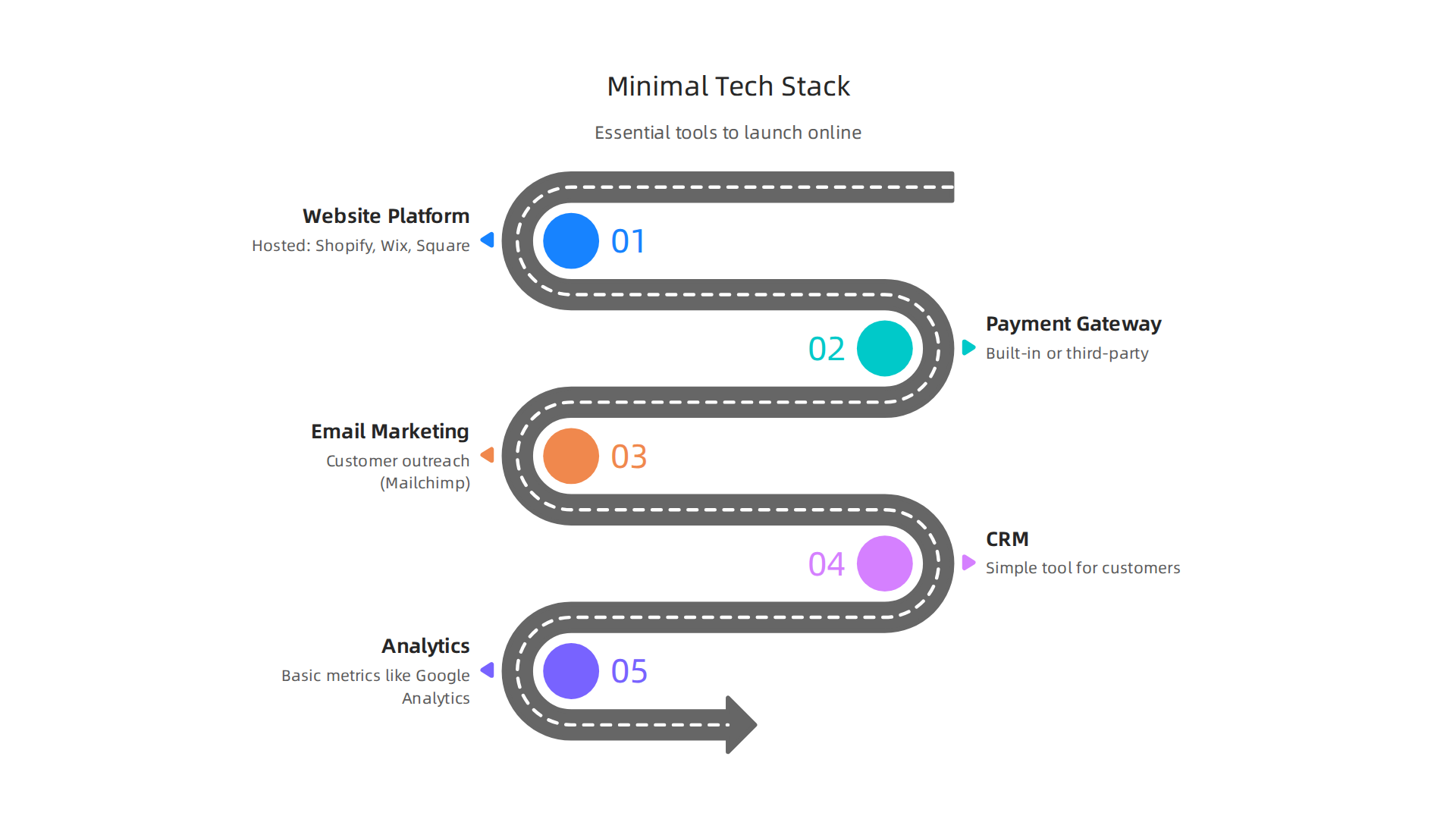
- Website/E-commerce Platform: A hosted solution like Shopify, Wix, or Square Online. These are great for online stores or service bookings.
- Payment Gateway: Built right into your chosen platform (e.g., Shopify Payments, Square Payments) or a trusted third-party like Stripe.
- Email Marketing Tool: To talk to your customers (e.g., Mailchimp, Constant Contact).
- Customer Relationship Management (CRM): A simple tool to keep track of customer interactions if your business needs it.
- Basic Analytics: Tools like Google Analytics to see how people use your website.
Building this kind of technical foundation for your smb business also means thinking about the future, like how to manage your AI Infrastructure 2026 Navigating Cost, Security, and Compliance as your business grows. Getting these core technology pieces right from the start sets up your business for smooth growth and keeps your customer data safe.
Building this kind of technical foundation for your smb business also means thinking about the future, like how to manage your AI Infrastructure 2026 Navigating Cost, Security, and Compliance as your business grows. Getting these core technology pieces right from the start sets up your business for smooth growth and keeps your customer data safe. But how do you really know if your smb business is growing and what steps to take next? That’s where measuring your progress comes in.
Measuring Growth: KPIs, Dashboards, and Next Steps
Once your business is set up with the right technology, the next big step is to watch how it’s doing. You need to know what’s working and what’s not. This is where "Key Performance Indicators," or KPIs, come in. These are important numbers that tell you if your business is healthy and growing.
Key Numbers Every SMB Business Should Track
From day one, there are a few important numbers that can help you see if you have good business ideas and if they are making money.
- Customer Lifetime Value (LTV): This is how much money you expect a customer to spend with your business over their whole time buying from you. Knowing this helps you see how valuable each customer is.
- Customer Acquisition Cost (CAC): This is how much money it costs you to get one new customer. You want your LTV to be higher than your CAC.
- Churn Rate: This number tells you how many customers stop using your service or buying your products over a certain time. A lower churn rate is always better.
- Conversion Funnels: This shows you the steps customers take from first learning about your business to making a purchase. You can see where people might be leaving before buying. For instance, how many people visit your website versus how many actually buy something.
You can gather and look at these numbers using simple tools like Google Analytics, which we mentioned earlier, or even spreadsheets. Making these numbers easy to see, perhaps on a simple "dashboard," helps you quickly understand your business health.

Recent data from the U.S. Census Bureau helps show the ongoing business conditions and projections for companies like yours, providing a bigger picture of business trends in 2026 Business Trends and Outlook Survey Data Release.
Setting Up a 90-Day Growth Experiment
To truly grow your smb business, you can try short "experiments." Think of these as small tests to see what makes your business better. Here’s how to do a 90-day growth experiment:
- Pick one goal: Maybe you want to get more people to sign up for your email list, or you want to sell more of a specific product.
- Come up with an idea: What new thing could you try? Maybe a special offer, a new ad on social media like a small business Reddit post, or a change to your website.
- Set a time limit: For this plan, you’ll run your test for 90 days.
- Measure it: Use your KPIs to see if your idea made a difference. Did more people sign up? Did sales go up for that product?
By setting clear goals and watching your numbers closely, you can see if your new idea is working. This is a smart way to test new things without spending too much time or money on something that might not work.
Scaling What Works
After your 90-day experiment, look at the results. If your idea worked and helped your business grow, then it’s time to "scale" it. This means doing more of what worked.
For example, if a certain ad brought in many new customers at a good CAC, you might put more money into that ad. Or, if a change to your website made more visitors buy something, you would keep that change and maybe even try something similar on other parts of your site. This way, you focus your efforts on strategies that have already proven to be effective for your smb business. Learning how to build your business based on these kinds of insights is a part of having a good strategy. If you need more general strategic guidance, consider how you might Build Your AI Advantage to improve your business processes.
Summary
This article explains why small and medium businesses (SMBs) must adopt digital business models immediately and how to do it practically. It covers how to choose ideas that match your strengths and test them quickly, plus a simple checklist for startup speed and regulatory risks like privacy, payments, and cybersecurity. You’ll find concrete digital business model options (marketplaces, micro‑SaaS, niche e‑commerce) and guidance on monetization and unit economics so you can judge profitability. The piece outlines low‑cost customer acquisition tactics—SEO, email, short video, creator partnerships—and how to track CAC, LTV, churn, and conversion funnels. It shows when to outsource versus hire, which platforms and payment processors to pick, and how to build a minimal viable tech stack. Finally, it gives a framework for 90‑day growth experiments and scaling what works so SMBs can grow faster without breaking the bank.