

Why starting a company still matters – and what this guide will do for you
Starting a new company in 2026 can feel like a big puzzle. Maybe you have a great idea, but you’re not sure where to begin.

It’s true that setting up a new business comes with its own set of challenges. You need to figure out if your idea is truly good, handle all the legal paperwork, find money to get started, make sure people actually want your product or service, and follow all the rules. It can feel like a lot to take on, especially if you’re a busy professional.
But here’s the thing: starting a company still matters a lot. It lets you bring new ideas to life, solve problems for people, and build something that is truly yours. Many people dream of doing a startup company, and with the right steps, it’s very possible.
This guide is made for you, the busy professional, who wants to learn how to start a company without getting lost in too much detail. We know your time is important. That’s why we’ll give you a clear, step-by-step roadmap to guide you through the process.
We will cover the most important steps to starting a business, like:
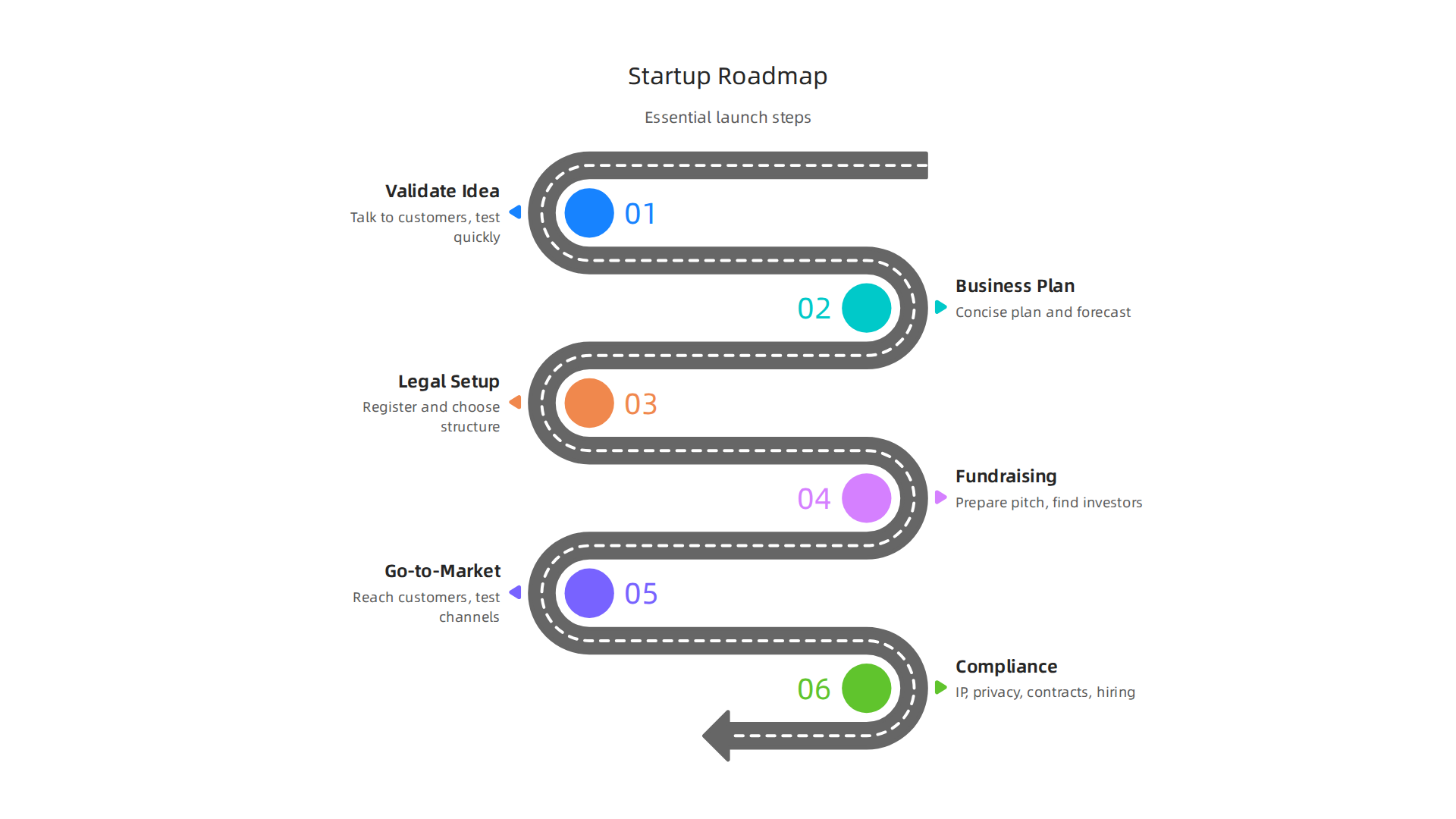
- Checking your idea: How do you know if your business idea is a winner? You need to make sure there’s a real need for what you want to offer. You can even use free templates to help validate your business idea and see if it makes sense to move forward Free Business Validation Templates | Lean Canvas 2026. To help with this, you might also want to explore The 7 Steps to Choosing a Business Niche for 2026 Profit.
- Getting legal stuff right: This means choosing the right business structure and making sure you follow all the government rules from the start. The IRS even offers a helpful Checklist for starting a business to make sure you do not miss anything important.
- Making a plan: A simple startup company business plan helps you think through how your business will work, grow, and make money.
- Finding money: We’ll talk about different ways to get funding for your new startup company.
- Reaching your customers: How do you make sure your product or service finds the right people?
This guide will give you trustworthy advice to help you do a startup company, from your first idea to getting your business up and running. If you’re looking for even more daily insights into how technology and policy changes can affect new businesses, especially in AI, consider subscribing to The AI Newsletter Worth Reading. It provides clear updates that can help you stay ahead.
1) Validate the idea: customer problems, early testing, and commitment
When you want to know how to start a company, the very first thing to do is make sure your idea is a good one. This isn’t just about having a cool idea. It’s about seeing if people actually need and want what you offer.

If you want to do a startup company that lasts, you need to solve a real problem for real people.
Understand the Problem and Your Customers
Think about what problem your business idea will fix. Who has this problem? These are your target customers. For example, if you want to sell a new type of healthy snack, your customers might be busy parents looking for quick, nutritious options for their kids.
It’s important to really get to know these people. What do they struggle with? What makes them happy? What would make their lives easier? The better you understand their needs, the better you can make a product or service that they will love and pay for.
Test Your Big Ideas Early
Every new startup company begins with some guesses. You might guess that people will pay for your snack, or that they will find your new delivery service easy to use. These guesses are called "assumptions." The smart way to do a startup company is to test these assumptions early, especially the biggest ones that could make or break your business.
Don’t wait until you’ve spent a lot of time and money building everything. Instead, find simple, low-cost ways to see if your guesses are right. This way, you learn fast and can change your idea if needed. This step is a key part of the steps to starting a business without wasting effort.
Easy Ways to Test Your Idea
There are many simple methods to check if your idea will work. These don’t cost much money:
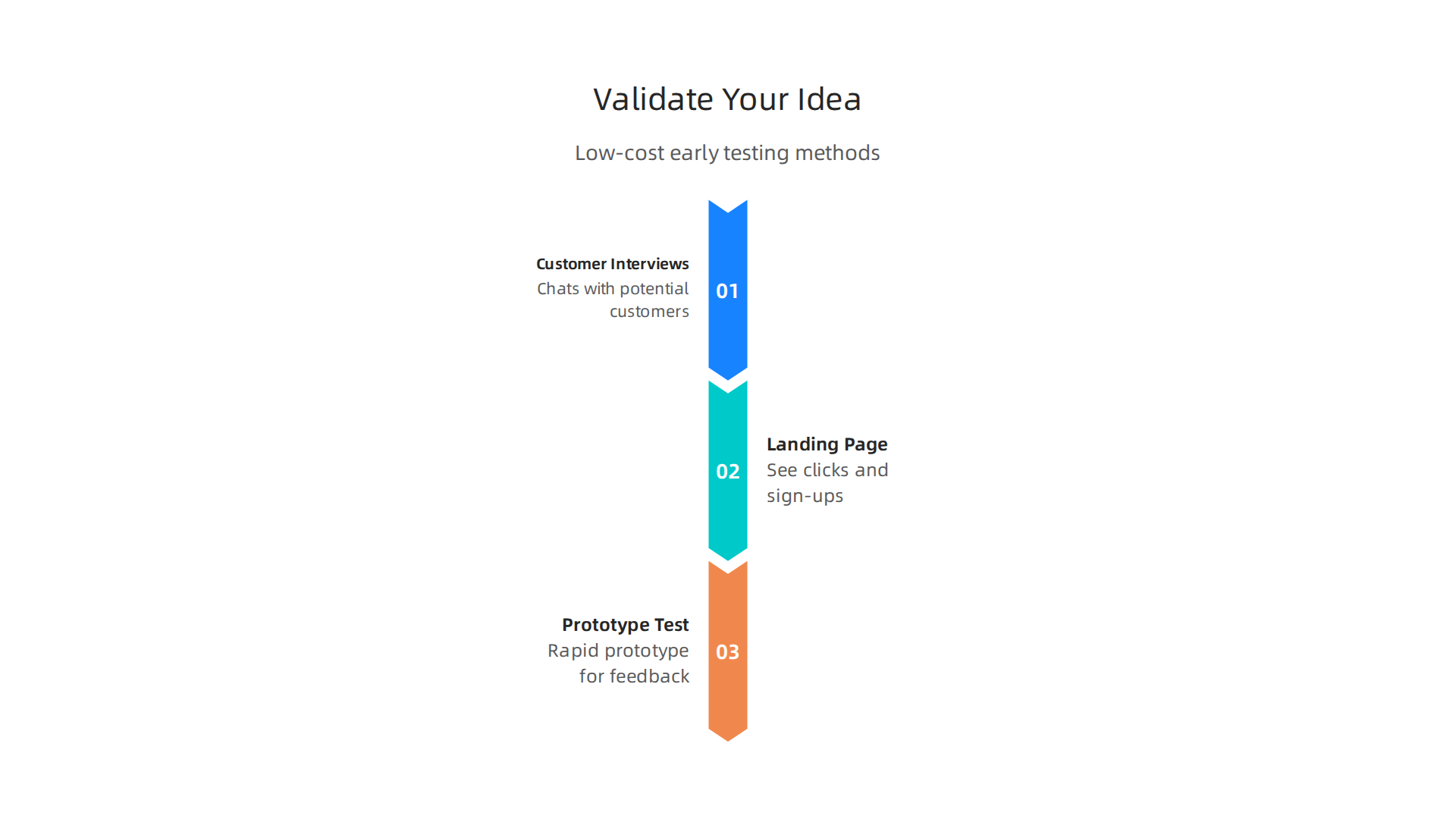
- Talk to People: Have chats with your possible customers. Ask them about their problems and what they think of your idea. This is called customer interviews. You’re not selling, just learning.
- Build a Simple Web Page: Create a very basic website that explains your product or service. You can see how many people click on it or sign up to learn more. This shows if there’s early interest.
- Make a Quick Try-Out Version: This is called a rapid prototype. It’s like a simple drawing, a basic app, or even just telling a story about how your product works. It lets people give feedback before you build the real thing.
Using tools like a Business Idea Validation Template (Free Word) can help you keep track of your findings and decide if your business idea is strong enough to move forward. By taking these smart steps early on, you build a strong foundation for your business.
After you have a good idea and have tested it a bit, the next step in how to start a company is to write down your plan. You do not need a huge, long document. A simple, one-page business plan can work wonders, especially for a new startup company. It helps you see the big picture and makes sure everyone on your team is on the same page.
The Power of a One-Page Business Plan
A one-page business plan is a short summary of your business idea. It helps you think clearly about what you’re doing and why. This simple plan should include a few key things:
- Value Proposition: What special thing are you offering that makes your customers’ lives better? This is the core benefit of your product or service.
- Customer Segments: Who are your ideal customers? Get specific. You talked about this in the last step.
- Revenue Model: How will your business make money? Will people pay once, or subscribe monthly?
- Key Performance Indicators (KPIs): These are the most important numbers that show if your business is doing well. For example, how many new customers do you get each month? Or how much money do you make per customer?
You can find many helpful guides and One-Page Lean Business Plan templates to help you put all these thoughts onto a single page. Thinking about this also helps you in mastering business name ideas for brand success in 2026 as you refine your brand identity.
Planning Your Money: Financial Forecasts
No startup company business plan is complete without thinking about money. This does not mean you need to be a finance expert. You just need some basic ideas about how money will flow in and out of your business. This is called a financial forecast.
Here are the main parts you should look at:
- Revenue Scenarios: How much money do you expect to make? Think about different cases: a good case, a bad case, and the most likely case. This helps you prepare for anything.
- Burn Rate: This is how much money your company spends each month more than it brings in. For instance, pre-seed startups in 2026 might spend an average of $25,000 to $75,000 more than they earn each month, while Series A companies burn even more, ranging from $200,000 to $600,000 monthly.
- Runway: This tells you how long your business can keep running before it runs out of money, based on your burn rate. Many investors like to see that a startup has enough money to last 18 to 24 months. However, the median funded startup in 2026 often holds only 12 to 15 months of Startup Runway Statistics 2026. Knowing your runway helps you know when you might need more money.
Getting these basic financial ideas down early is a key step in how to do a startup company successfully. It helps you make smart choices and gives you a clear picture of your business’s health. You will also need to consider choosing the right business structure as you build out your business plan to ensure you’re compliant and efficient from the start.
Now that you have your business plan and financial ideas ready, the next big step in how to start a company is picking its legal clothes. This means choosing the right legal structure for your business and making it official by registering it. This choice is super important because it affects how you pay taxes, how much risk you take on, and even how easy it is to get money from investors.
Picking Your Business’s Legal Clothes
There are a few common ways to set up a startup company. Each one has its own good and bad points for you as the owner and for people who might want to invest money.
- Sole Proprietorship: This is the simplest kind of business. You and your business are seen as one and the same. It’s easy to set up, but if your business gets into trouble, your personal money and things could be at risk. This is often not the best choice for a startup company looking to grow big or get investors.
- Partnership: If you start a business with one or more people, you might form a partnership. Like a sole proprietorship, partners can be personally responsible for the business’s debts. Tax rules for a partnership often mean the business itself does not pay income tax, but profits and losses are shared among partners who report them on their own taxes LLC filing as a corporation or partnership.
- Limited Liability Company (LLC): This is a very popular choice for many small businesses and startups. An LLC gives you what’s called "limited liability." This means your personal belongings, like your house or car, are usually protected if your business has problems or debts. Profits and losses typically "pass through" to the owners’ personal tax returns, meaning the LLC itself doesn’t pay corporate income taxes. You will need to apply for an EIN, which is like a social security number for your business, and pay fees to register it with your state Starting an LLC in 2026: Step-by-Step U.S. Guide.
- Corporation (C-Corp): A corporation is a separate legal entity from its owners. This means it offers the strongest protection for your personal assets. Corporations are often the go-to choice for startups that plan to get a lot of investment money, like from venture capitalists. However, they have more rules and paperwork. C-Corps pay their own taxes, and then owners also pay taxes on profits they receive, which is sometimes called "double taxation." A C-Corp’s corporate tax rate is a flat 21% in 2026, and they are taxed separately from the owners 2026 Business & Pass-Through Tax Rules.
- S-Corporation (S-Corp): This is a special type of corporation that can avoid the "double taxation" problem. It lets profits and losses pass through to the owners’ personal tax returns, similar to an LLC. But S-Corps have strict rules, like limits on how many owners they can have.
It’s really important to weigh the pros and cons of each. You can even choose to have an LLC but ask the IRS to tax it like a C-Corp, which can be helpful for certain benefits and fundraising goals LLC Taxed as C-Corp: Complete Guide to Form 8832. Make sure you understand the basics of LLC compliance in 2026 no matter which structure you choose.
Your Company Registration Checklist
Once you pick your legal structure, it’s time to make it official. Here’s a simple checklist to help you register your business:
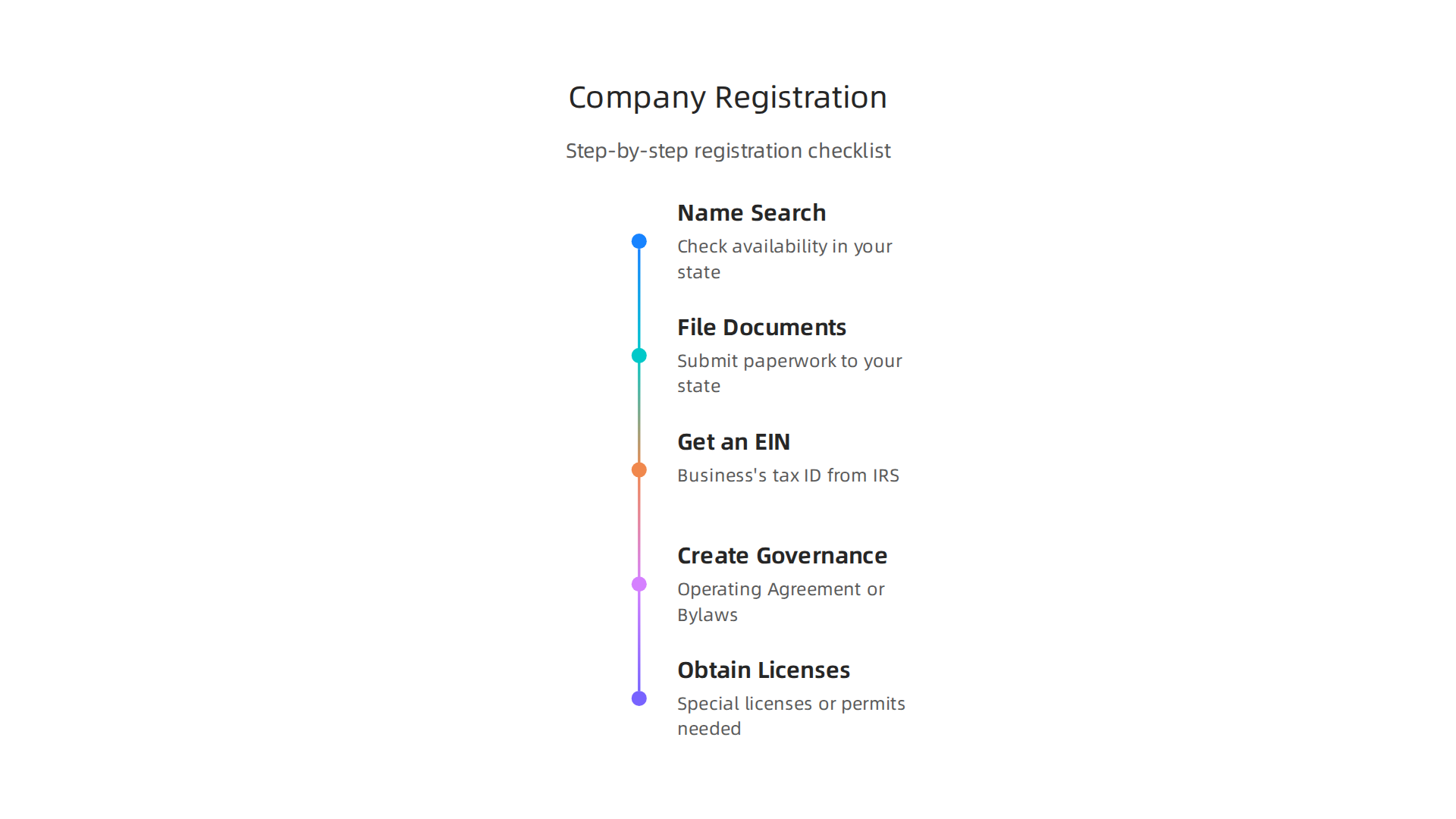
- Name Search: Before anything else, check if your chosen business name is available in your state. You usually do this through your Secretary of State’s office. You want a name that hasn’t been taken.
- File Registration Documents: This involves submitting paperwork to your state. For an LLC, it’s usually called "Articles of Organization." For a corporation, it’s "Articles of Incorporation." These forms make your business a legal entity. Many states, like California and Texas, have specific forms and fees for different business types Forms, Samples and Fees – California Secretary of State. Some states even let you file online for faster service Starting a Business.
- Get an EIN: The Employer Identification Number (EIN) is your business’s tax ID. You get this from the IRS, and you’ll need it for opening a bank account, filing taxes, and hiring employees.
- Create Governance Documents:
- For LLCs: Write an "Operating Agreement." This document outlines how your LLC will be run, who owns what, and how decisions are made.
- For Corporations: Create "Bylaws." These are the rules for how the corporation will operate, including how board meetings happen and how shares are issued.
- Obtain Licenses and Permits: Depending on your type of business and where you operate, you might need special licenses or permits from local, state, or federal agencies.
Getting these steps done right is crucial for anyone wondering how to do a startup company the correct way. It sets a strong legal foundation for your future growth and success. This careful planning is one of the most important steps to starting a business.
After setting up your business’s legal structure, the next big piece of the puzzle for how to start a company is finding money to make your dreams happen. This part is about getting the funds you need to build and grow your startup company. Without enough money, even the best ideas can struggle. This means knowing where to look for cash and how to talk to people who might give it to you.
Finding Money for Your Startup
There are different ways to get money for your business. The best path depends on your type of startup, how much money you need, and how much control you want to keep.
- Bootstrapping: This simply means funding your business with your own money or money from early sales. It gives you full control and helps you save money, but it might slow down your growth.
- Angel Investors: These are wealthy individuals who invest their own money into promising new businesses. They usually invest smaller amounts than bigger funds, often in the very early stages. They can also offer valuable advice.
- Seed Funds and Venture Capital (VC) Firms: These are companies that specialize in investing in startups. They often invest larger amounts of money, looking for big returns. Seed funds are for very early-stage startups, while venture capital firms might invest in later stages like Series A or B. In 2025, the median seed round size reached about $4 million, showing how much money is available for early ventures Startup Fundraising Stats 2026: VC Trends.
- Grants: Some businesses, especially those in science or social good, can get grants. This is money you don’t have to pay back, often from governments or foundations.
- Accelerators: These programs give startups a small amount of money, office space, and lots of advice over a few months. In return, they usually take a small part of your company.
Getting Ready to Talk to Investors
Once you know where you might look for money, you need to prepare how you’ll present your startup company. This is a crucial step in how to do a startup company right.
1. Create a Pitch Deck: Think of a pitch deck as a story about your business, told through slides.

It needs to be clear and exciting. Here’s what usually goes into it:
- The Problem: What big issue are you solving for customers?
- The Solution: How does your product or service fix that problem?
- Market Size: How many people or businesses need your solution? How big is the opportunity?
- How You Make Money: Your business model, or how you plan to earn cash.
- Your Team: Who are the people behind the idea, and why are you the right ones to make it happen?
- Money Needed: How much money are you asking for, and how will you use it to grow? Investors also want to know your "runway" – how long your current cash will last. Most investors like to see at least 18 months of runway Startup runway and burn rate benchmarks by stage in 2026. The average "burn rate" (how fast startups spend money) for a seed-stage company is about $125,000 to $175,000 per month in 2026 67 Essential Startup Statistics for 2026: Funding, Success.
2. Make an Outreach Plan: After your pitch deck is ready, you need to find and talk to investors.
- Networking: Go to events, meetups, and conferences where investors might be.
- Introductions: Ask people you know for warm introductions to investors. A direct intro is often better than a cold email.
- Online Platforms: Some websites and platforms help connect startups with investors.
Knowing these steps to starting a business and getting the right support can make all the difference. For more detailed insights into attracting the right financial partners, learn how to secure startup funding in 2026 with platform verification and policy.
Staying informed on the fast-changing world of technology and policy is also key for any founder.
Get clear daily AI updates from The AI Newsletter Worth Reading.
After working to secure money for your startup company, the next important step is to build what you promised. This means creating your product or service in a smart way. It’s a key part of how to do a startup company and grow it.
5) Build an MVP and iterate with user feedback
When you want to build a new product or service, you do not need to make it perfect right away. Instead, a smart way to begin is to build an "MVP." MVP stands for Minimum Viable Product. Think of it as the simplest version of your idea that still solves a core problem for people. It has just enough features to work and to let you learn from real users.
For example, when Dropbox started, they didn’t build a full product. They just made a simple video to show how it would work. This video helped them get many people interested without building anything yet Running Lean GTM Sprints. The idea is to find the smallest version of your product that can still prove your main idea or "hypothesis" How a Startup Launched an MVP in 90 Days | GainHQ Case Study. This approach is part of what’s called the "build-measure-learn" loop, where you make something, see how people use it, and then learn from that to make it better Onni Vitikainen.
Why Start with an MVP?
Building an MVP is one of the most important steps to starting a business. It helps you save time and money. Instead of spending months or years building something nobody wants, you build a small part, show it to people, and see if they like it. This way, you can test your business idea quickly. If people don’t like it, you can change your plan without losing too much. Many startups fail because their product doesn’t fit what people actually need, which is called "poor product-market fit" MVP Testing: How to Validate Your Product (2026). Talking to at least 10 possible users before you even build helps a lot with success MVP Development Statistics 2026: Cost, Timeline, and Success ….
Listen to Your Users and Make Changes
Once your MVP is out there, the real learning begins. You need to set up ways to get feedback from people using it. This means looking at:
- Metrics: Simple numbers that tell you how people are using your product. Are they clicking where you expect? Are they staying on the page?
- User Sessions: Sometimes, you can even watch (with permission, of course) how people use your product to see where they get stuck or what they enjoy.
- Talking to Users: Ask them directly what they like, what they don’t, and what they wish your product could do. Aim to interview a few users every week to learn fast How to Find Product Market Fit (2026 PMF Strategy Guide).
This feedback helps you decide what to build next. You take what you learn and use it to make your startup company’s product better. This process of making small changes and improvements is called "iterating." It’s like a loop: you build, you measure, you learn, and then you build again, but better. This feedback-driven way of making a product is very common for startups Loop-Engineering/case-studies/startup-pmf-loops.md at main – Fastly.
When enough users say they would be "very disappointed" if they couldn’t use your product anymore (often around 40%), that’s a good sign you’ve found a "product-market fit" MVP Statistics 2026: What the Data Says About Building Lean.
By building an MVP and constantly listening to your users, you can make sure your startup company builds something truly valuable. This is how you create a strong foundation for your business and prepare for growth. It’s a critical part of how policy creates powerful entrepreneur ideas for 2026 startups. Learning to adopt digital business models can further help your small and medium business achieve sustainable growth.
After you’ve built your first simple product (your MVP) and know people like it, the next big step is to figure out how to sell it. This is called your "go-to-market" (GTM) strategy. It’s all about finding the best ways to reach your customers and grow your startup company. Think of it as your roadmap for getting your product from your hands into the hands of your first happy users. Knowing your GTM plan is a key part of how to start a company successfully.
Choosing Your Sales Path
There are different ways a startup company can sell its product or service. The best path depends on who your customers are.
- Direct Sales: This means your team talks directly to customers to sell. It’s often good for big, complex products where a personal touch is needed.
- Channel Partners: Sometimes, another business can help you sell your product. They might already have the customers you want to reach. This could be a reseller, an agent, or another company that adds your product to theirs.
- Product-Led Growth: For some products, the product itself does most of the selling. People try it for free, love it, and then decide to pay. Think of apps you use every day that let you start for free. This is great for products that are easy to use and understand on their own.
Low-Cost Ways to Find Early Customers
When you’re first figuring out how to do a startup company, you don’t have a lot of money to spend on big advertising campaigns. That’s why smart startups use "low-cost growth experiments" to find their first customers. This means trying small, cheap things to see what works best. For example, you might create a simple webpage about your product and run small ads to see if people click on it and sign up for updates Which three low-cost marketing experiments should …. You could also offer a pre-order or a special pilot program to your early fans to get them to commit How to Validate a Business Idea Quickly and Cheaply: 7 Low …. The goal is to learn what messages and channels bring in customers without breaking your budget. This kind of testing is part of a "lean GTM model" that focuses on testing one buyer problem with one clear path to conversion SaaS GTM on a Tight Budget: 5 Lean Experiments Today.
Keeping Your Customers Happy
It’s not just about getting new customers; it’s also about keeping them happy. Once you have early users, make sure you listen to their feedback and continue to improve your product. Good service and a product that keeps getting better will make people stick around. This is a very important part of any startup company business plan. A "go-to-market pilot program" can help you test your strategy before you go full-scale Go-to-Market (GTM) Pilot Programs. These careful steps to starting a business ensure you’re building a solid base for future growth. To understand the difference between being busy and truly growing your business, check out Busyness vs Business How Entrepreneurs Achieve Real Growth.
To keep up with all the new ideas and policies that affect startups, especially in fast-changing areas like technology and AI, staying informed is key. Get clear daily AI updates from The AI Newsletter Worth Reading.
When you learn how to start a company, getting customers is just one part of the puzzle. Another big step is making sure your startup company follows all the rules. This means dealing with laws about your ideas, how you handle customer information, and how you hire people.

These legal steps are super important for building a strong foundation.
Early Rules to Follow
Right from the start, a new business needs to think about "compliance." This just means making sure you follow the laws. Here are some early rules you’ll want to get right:
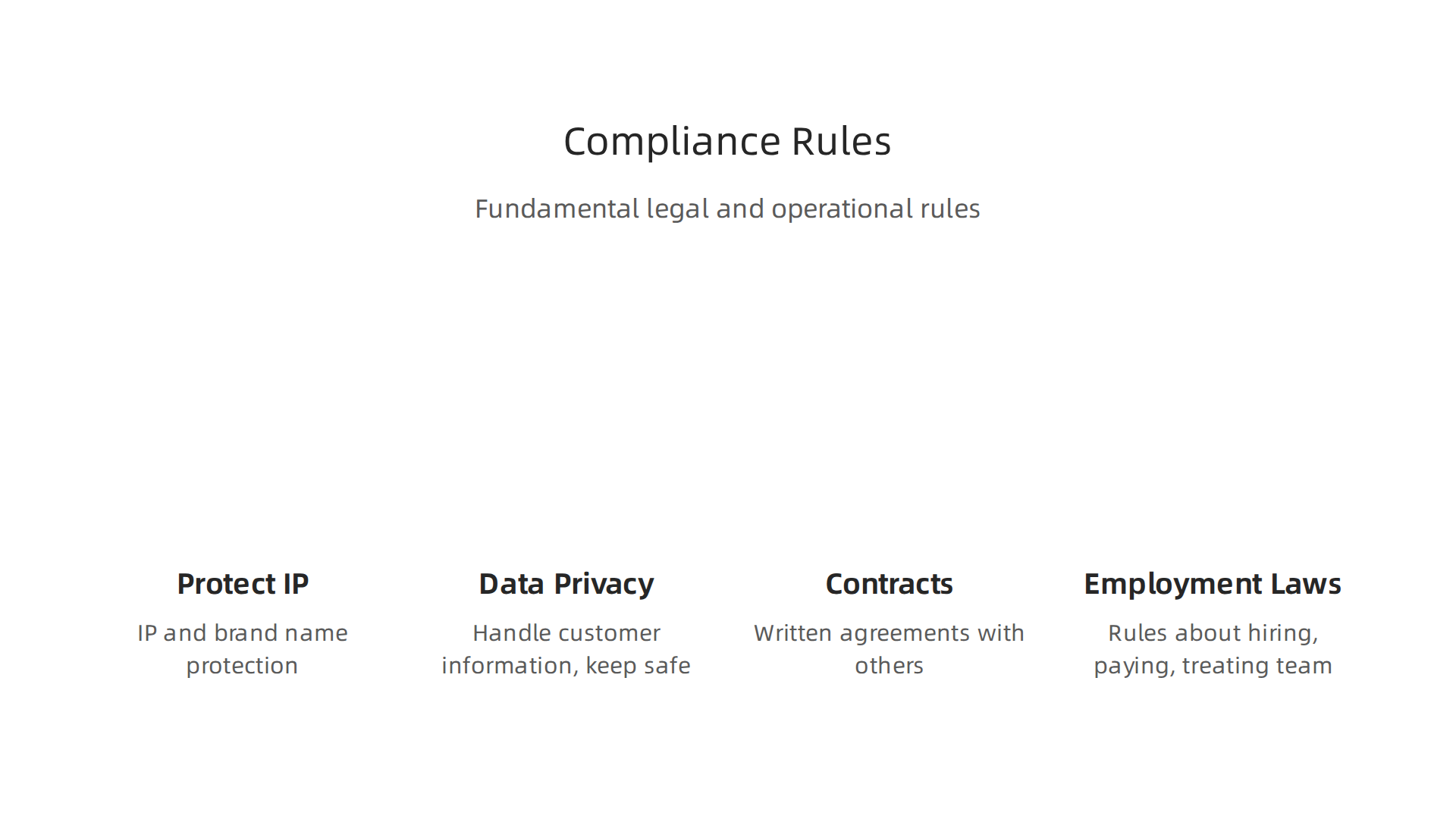
- Protecting Your Ideas: This is called Intellectual Property (IP). It means taking steps to protect your brand name, special product ideas, or unique ways of doing things. You don’t want someone else to steal your great ideas.
- Data Privacy: In 2026, how you handle customer information is a huge deal. You need to tell people what data you collect, how you use it, and keep it safe. Laws like GDPR and CCPA mean you must have a clear privacy policy and get people’s permission for their data. A good resource for understanding these rules is a Legal Guide to Privacy and Data Security 2026.
- Contracts: As you work with others, you’ll need written agreements. These "contracts" make sure everyone knows their part and what to expect. This includes agreements with co-founders, partners, and early customers.
- Employment Laws: If you plan to hire people, you need to follow rules about how you hire, pay, and treat your team. This includes things like how you classify workers (full-time, part-time, contractor) and having clear workplace rules. Checking a Startup Legal Checklist: Formation Through Series A (2025) can help you cover these early legal bases.
Understanding these steps to starting a business is key to avoiding problems later. It’s part of your larger startup company business plan.
Growing Your Team and Keeping Things Safe
As your startup company grows, you’ll hire more people. This is exciting, but it also means more rules to follow. You’ll need clear hiring plans and ways to make sure everyone follows your company’s rules. This protects both your business and your employees. For example, knowing about LLC compliance 2026 new regulations every limited liability company should know becomes very important. Having good rules in place for how you handle data and company secrets is also super important as your team gets bigger. Keeping up with Tech policy 2026 how to navigate AI privacy cybersecurity and antitrust changes helps you stay ahead. This way, you can grow your company without running into legal trouble or big operational issues.
Summary
This guide walks a busy professional through the essential steps to start a company in 2026, from checking whether your idea solves a real customer problem to launching and growing a viable business. It explains how to validate demand with low‑cost tests and customer interviews, then turn lessons into a concise one‑page plan and basic financial forecasts (revenue scenarios, burn rate, runway). You’ll learn how to pick and register the right legal form—LLC, S‑Corp, or C‑Corp—complete necessary filings, and prepare governance documents and permits. The article covers practical funding options (bootstrapping, angels, seed/VC, grants, accelerators), how to craft a clear pitch deck, and tips to secure startup financing. It shows why building an MVP and using user feedback are critical to achieve product‑market fit, and outlines lean go‑to‑market experiments to find early customers. Finally, it highlights early legal needs—IP, data privacy, contracts, and employment rules—so you can scale without avoidable compliance risk.