
Why digital twin technology matters now – a concise primer
Imagine having a perfect computer copy of something real, like a factory, a city, or even a human body. This copy acts just like its real-world twin. That’s the basic idea behind digital twin technology, and in 2026, it is changing how many parts of our world work. A digital twin is a special kind of computer model that uses lots of information to mirror a physical object or system, allowing us to test ideas and see what might happen in the future without touching the real thing. NASA, for example, once described it as a way to simulate a vehicle or system using the best available models and real-time updates to match its real-life counterpart [https://faculty.eng.ufl.edu/sandip/wp-content/uploads/sites/681/2026/02/hcc25.pdf].
This powerful digital twin technology is becoming a key part of many AI applications. It’s not just a fancy idea anymore. It’s a real tool that helps people make smart choices.
Here’s why digital twin technology is so important right now:
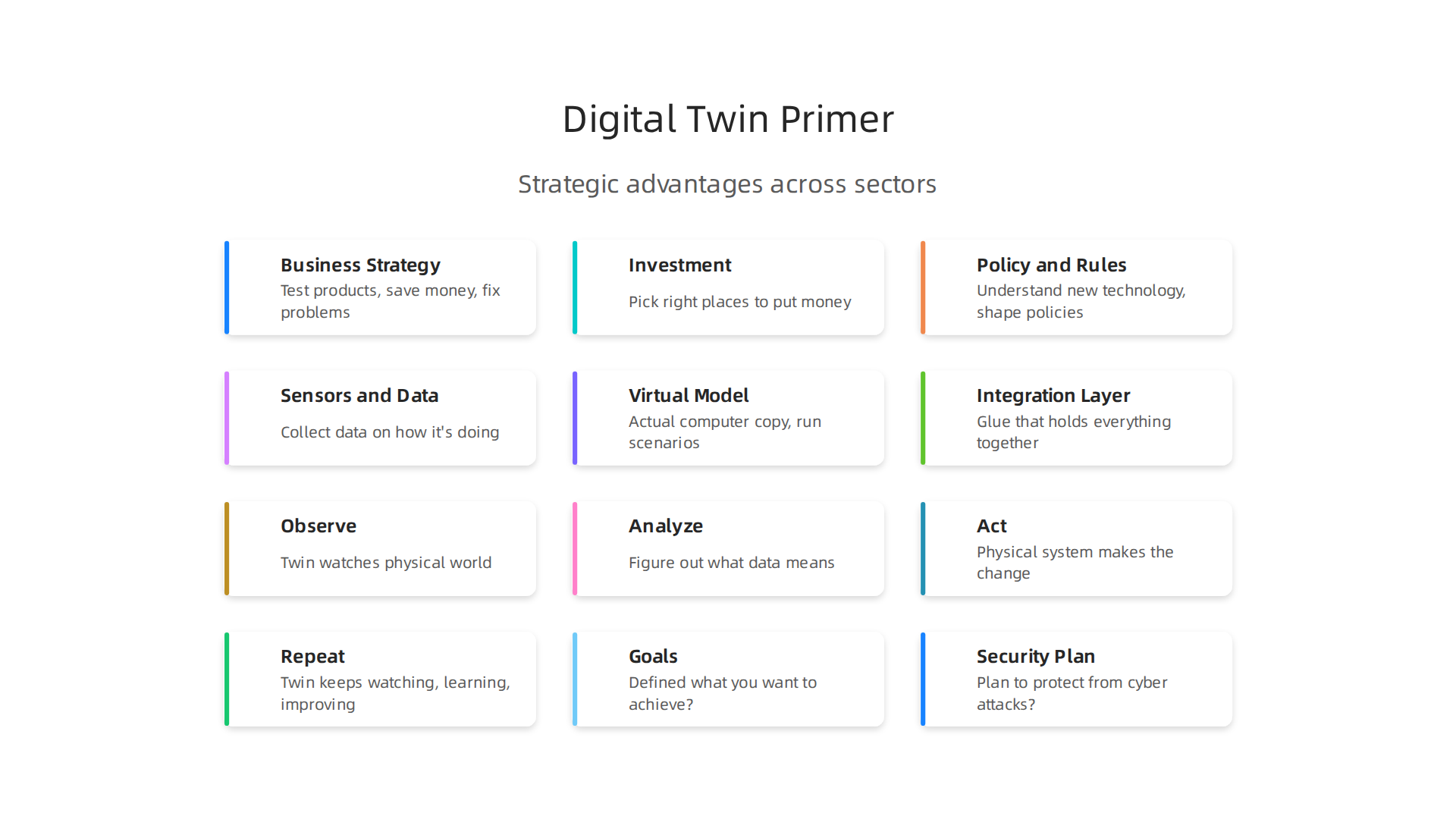
- For Business Strategy: Companies can use digital twins to test new products or changes in a safe, virtual space. This helps them save money, fix problems before they happen, and make things better for their customers. It helps businesses understand how changes will affect their operations before making big moves in the real world.
- For Investment: Knowing how technology will grow helps investors pick the right places to put their money. Digital twins show a clear path for new ideas and growth, especially when paired with advancements in AI.
- For Policy and Rules: Governments and leaders need to understand new technology to make good rules. Digital twins let them see how changes in a city, like new traffic patterns or energy systems, might work. This helps shape smarter policies for everyone. If you’re keen to understand how new tech concepts get defined for policy, you might find our guide on Mastering Definitions and Corporate Forms for Effective Tech Policy helpful.
But with all this new power comes important questions that leaders are thinking about in 2026:
- Regulatory Questions: What new laws do we need to make sure digital twins are used fairly and safely? Who checks that these virtual models are correct?
- Ethical Questions: What happens if a digital twin of a person or a sensitive system is created? Who owns the data it collects? How do we make sure it’s not used to harm anyone?
- Operational Questions: How do we keep these digital copies updated and secure? What if the real world changes and the digital twin doesn’t? How do we prevent mistakes in the digital world from causing problems in the real one?
These are big topics, and understanding digital twin technology is crucial for anyone involved in setting rules, planning business, or making investments in today’s fast-moving tech world.
Get clear daily AI updates from The Deep View Newsletter. The AI Newsletter Worth Reading
Building on the idea of a virtual copy, let’s dive deeper into what makes a digital twin work. At its heart, digital twin technology connects the real world with the digital world. It’s more than just a computer model. It’s a living, breathing digital reflection that changes as its physical twin changes.
What Makes a Digital Twin?
A true digital twin has a few key parts that work together:
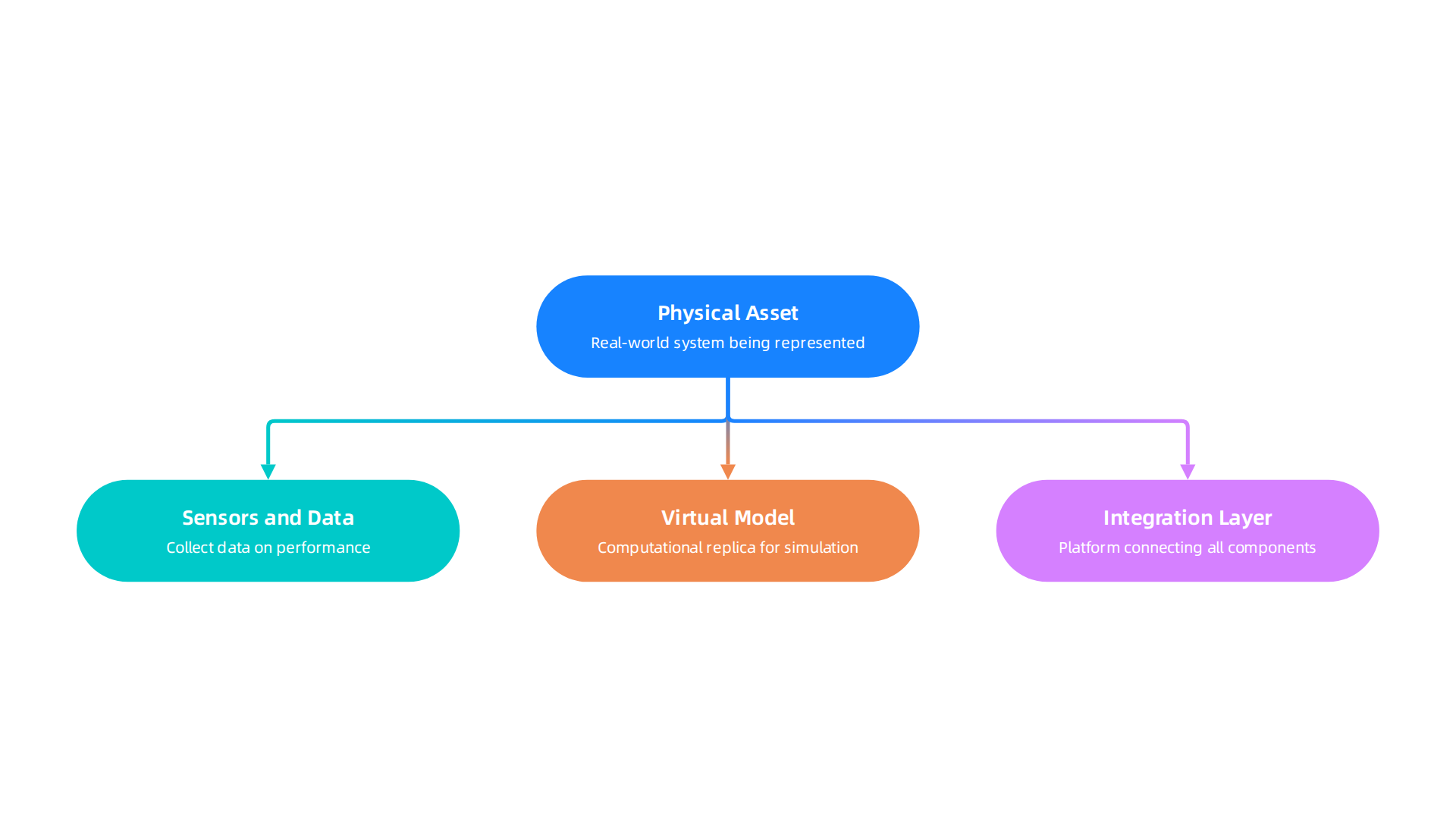
- The Physical Asset: This is the real thing you want to copy. It could be a machine, a building, a whole factory, or even a city. Think of it as the original blueprint.
- Sensors and Data: To keep the digital copy updated, we need information from the real world. Sensors are like the eyes and ears of the physical asset. They collect data on how it’s doing, its temperature, how fast it’s moving, and so on. This data is then sent to the digital twin. One research paper noted that a digital twin is a virtual representation dynamically updated with data from its physical twin Digital Twin Graph Formulations.
- The Virtual Model (or Simulation): This is the actual computer copy. It uses the data from the sensors to show exactly what’s happening with the physical asset in real time. It can also run "what if" scenarios. For example, you can test how a machine would handle more work without actually pushing the real machine too hard.
- The Integration Layer: This is like the glue that holds everything together. It’s the system that makes sure the data flows smoothly between the physical asset, the sensors, and the virtual model. It lets experts and even other AI applications interact with the digital twin. This is where many of the best AI platforms come into play, helping manage all this complex information.
Different Kinds of Digital Twins
Digital twin technology isn’t just one thing. It comes in different types, depending on what it’s trying to copy or manage.
- Product Digital Twins: These are digital copies of individual products, like a new car engine or a specific piece of machinery. They help companies design better products, predict when parts might break, and offer better customer support.
- Process Digital Twins: Instead of a single object, these twins copy an entire process. Imagine a factory’s assembly line. A process digital twin can show how each step works, where delays might happen, and how to make things faster or more efficient. This is very useful for businesses looking to use advanced evolv technology to streamline operations.
- System Digital Twins: These are bigger. They copy complex systems made of many parts that work together, like a power grid or a hospital. They help manage how different parts interact and ensure the whole system runs smoothly. The University of Maryland even provides a unified taxonomy for various digital twin categories used in transportation and communication systems Digital Twins in Intelligent Transportation.
- City-Scale Digital Twins: These are the largest kind, creating a digital copy of an entire city. They can help city planners manage traffic, energy use, and even emergency responses. They allow officials to test new ideas for city improvements in a safe, virtual space before making big changes in the real world.
As digital twin technology grows, we also see different "maturity levels." This means how advanced and complete a digital twin is. Some are simple copies, while others are very smart, able to predict problems and even make decisions on their own. These complex models often rely heavily on advanced AI infrastructure to function effectively, making them a crucial part of how we build AI securely and compliantly. To learn more about how different AI technologies fit together, you might want to explore guides on AI infrastructure 2026 or how to build AI securely and compliantly.
Understanding these parts and types helps us see how digital twin technology can be used in so many different ways to improve our world in 2026.
Understanding these parts and types helps us see how digital twin technology can be used in so many different ways to improve our world in 2026. Now, let’s look at how all these pieces fit together behind the scenes.

Technical Stack and Data Flows: From Sensors to Simulation to Decision
Making a digital twin work needs a lot of clever tech, almost like building a super smart robot that lives in a computer. It starts with getting information from the real world and ends with making good decisions.
How Data Moves In
First, data needs to come from the physical thing into its digital copy. This happens in a few ways:
- Sensors: These are tiny devices that collect all kinds of information. Think of them as the eyes, ears, and thermometers of the physical asset. They measure things like temperature, pressure, how fast something is moving, or if a part is wearing out.
- Data Ingestion: This is the process of taking all that raw data from the sensors and getting it ready for the digital twin. It’s like sorting mail before you read it.
The data can flow in two main ways:
- Real-time Streaming: This means data is sent constantly, as it happens. Imagine a live video feed; you see things right away. This is super important for things that need quick responses, like monitoring a self-driving car or a power grid.
- Batch Processing: This means data is collected over a period, then sent all at once. It’s like saving up your emails and checking them twice a day. This works well for things that don’t need instant updates, like checking how much energy a building used last month.
The Brain of the Twin: Models and Simulations
Once the data is inside the digital world, it goes to the virtual model. This model is like the "brain" of the digital twin. It uses the incoming data to:
- Mirror Reality: Show exactly what’s happening with the physical object right now.
- Run Simulations: Test different ideas. You can ask "what if" questions without touching the real thing. For example, "What if we make the factory line run 10% faster?" The simulation can show the possible outcomes. This predictive ability is a core feature of a digital twin, as it allows for informed decisions based on physical models and sensor updates Simple Design Approach for Shared Digital Twins.
Making Smart Choices with Closed-Loop Controls
The coolest part of advanced digital twin technology is its ability to help make decisions, sometimes even on its own. This is called "closed-loop control."
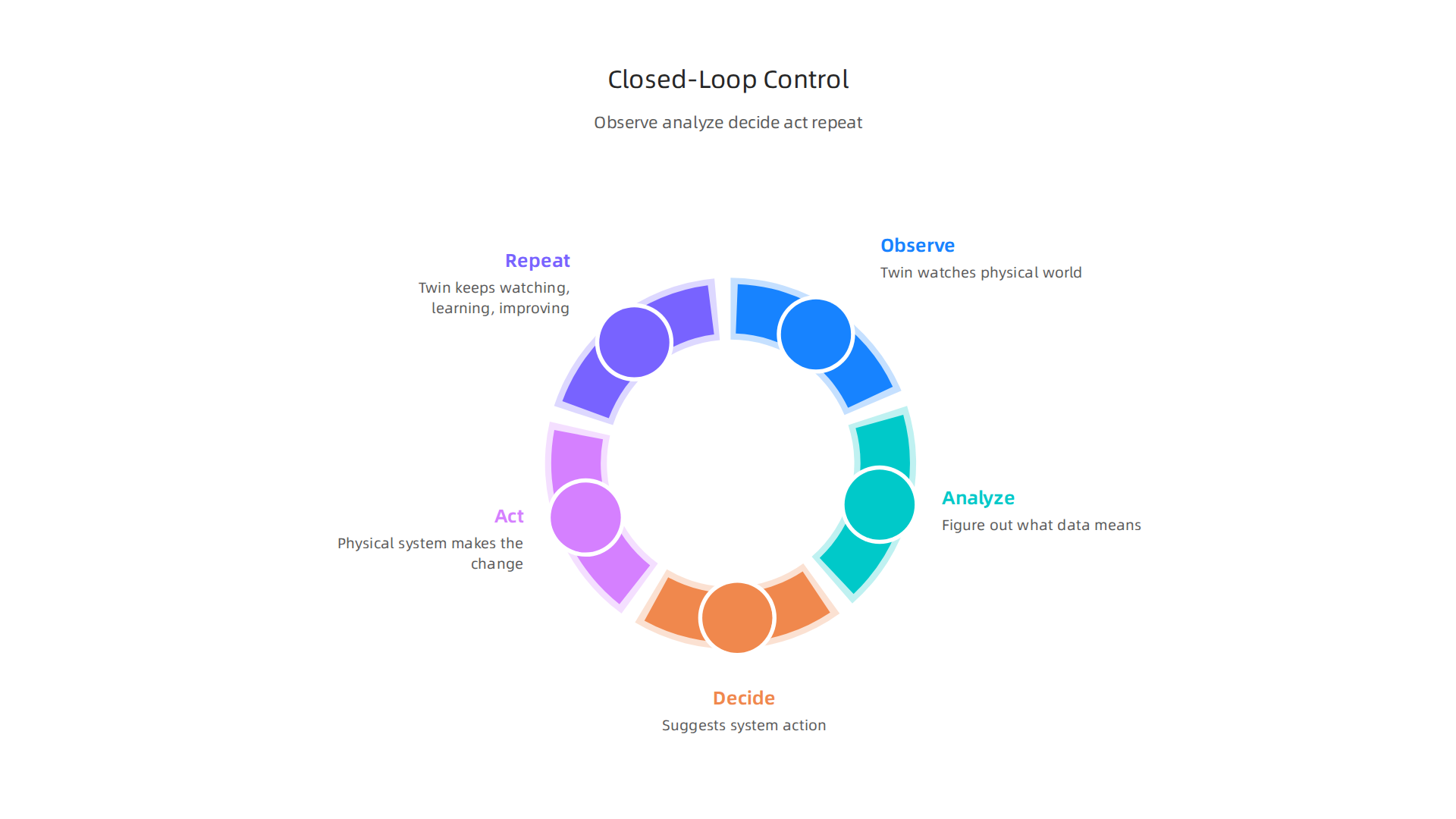
- Observe: The digital twin watches what’s happening in the physical world using sensor data.
- Analyze: It uses its models and AI to figure out what the data means, finding problems or chances to improve.
- Decide: Based on the analysis, it might suggest actions or even tell the physical system what to do.
- Act: The physical system then makes the change. This feedback loop helps optimize operations without human intervention.
- Repeat: The twin keeps watching, learning, and making things better.
This level of automation is transforming industries, often supported by powerful AI applications.
Facing Challenges: Getting Everything to Talk
Even with all these benefits, building digital twins can be tricky. One big challenge is getting different systems and devices to talk to each other smoothly.
- Interoperability Challenges: This is like trying to get people who speak different languages to work together without a translator. Different sensors, software, and platforms often don’t use the same rules for sharing data.
- Standards Gaps: We need common rules and standards that everyone can follow. Without them, it’s harder to connect different parts of a digital twin system.
Many companies are working on these issues, creating robust platforms that act as translators and organizers. These might include various advanced evolv technology solutions or frameworks from the best AI platforms to help everything connect.
How AI and Machine Learning Help
Artificial intelligence (AI) and machine learning (ML) are key to making digital twin technology smarter.
- Better Predictions: AI can look at huge amounts of data and spot patterns that humans might miss. This helps the digital twin make more accurate predictions about when a machine might break or how a system will react.
- Automated Decisions: As mentioned with closed-loop controls, AI can learn to make routine decisions without needing a person to approve every step.
- Learning and Adapting: AI and ML allow the digital twin to learn over time. The more data it gets, the smarter it becomes, constantly improving its models and suggestions. These AI-powered capabilities are changing how we interact with technology and how organizations manage their assets. To stay up-to-date on how AI is shaping our world, consider subscribing to The AI Newsletter Worth Reading for clear daily updates.
The way digital twin technology brings together physical reality and digital intelligence, powered by AI and robust data flows, makes it a truly revolutionary tool in 2026. These integration patterns are becoming essential for businesses using keystone technologies to stay competitive. If you want to dive deeper into how AI shapes policy and business, our Artificial Intelligence Series Guides Decision Makers Through AI Policy.
Now, let’s look at how this powerful digital twin technology is helping many different industries right now in 2026.

Companies are seeing real money saved and better ways of working thanks to these smart virtual copies.
Manufacturing: Making Factories Smarter
In factories, digital twin technology is a game-changer. Imagine a virtual copy of an entire production line or even just one machine. This digital twin helps factory managers watch everything in real time. They can see if a machine is getting too hot or working too slowly, and fix problems before they cause big delays. This is called predictive maintenance. Many companies using digital twins have cut unplanned machine downtime by 65% and boosted how much they use their assets by 62% in 2026, leading to big cost savings through smarter maintenance and testing What’s behind the digital twin investment surge in 2026?.
This technology also helps test new ideas for making things faster or better without stopping the real factory. In fact, adoption of digital twins in advanced manufacturing is almost at three out of four companies this year State of Digital Twins in Manufacturing 2026 — Data Report. It’s a key part of modern manufacturing, helping businesses become more efficient.
Energy: Powering Up Efficiency
For energy companies, digital twin technology helps manage big power plants and wide-reaching grids. By having a digital copy of a wind farm or an oil rig, engineers can predict when equipment might need fixing, making sure power keeps flowing without interruption. This helps them run things better and safer. It’s like having a crystal ball for huge power systems. Energy utilities are among the top industries using these solutions in 2026 Digital twin tech landscape for manufacturing 2026.
Healthcare: A New Way to Care
In healthcare, digital twins are starting to change how doctors help people. We’re seeing "digital twins" of hospital buildings used to manage space and equipment better. There’s also a move towards creating digital twins of human organs or even whole bodies to help doctors plan surgeries or test new medicines safely in a virtual world Full article: A new era for digital twins: progress and industry adoption. This lets them try out treatments and see how a patient might react before doing anything in real life. Hospitals and other healthcare places are high-priority areas for digital twin use in 2026 What Do Digital Twins Hold for 2026: From Visualisation to ….
Smart Cities: Building Better Futures
Digital twin technology is also making our cities smarter. Imagine a digital copy of an entire city, showing everything from traffic patterns to energy use in buildings. City planners can use this to test new road designs, plan for emergencies, or manage resources like water and electricity more effectively. It helps them see how changes might impact the city before any real-world building begins, helping create better public services and infrastructure. Learning about Why Field AI Matters Across Every Industry in 2026 can shed more light on these city-level AI applications.
Across all these areas, digital twin technology, often paired with powerful Top AI Tools 2026 Strategic Guide for Business and Policy Leaders and smart AI applications, is moving from small test projects to full-scale operations. This shows that digital twins are not just a cool idea anymore. They are becoming keystone technologies that help companies and cities work better, faster, and smarter in 2026. This growth signals a big change in how we manage our physical world using digital tools.
As digital twin technology grows and changes how we work, it also brings up new questions about rules and fair play.

This means governments and companies need to think carefully about how to use these smart virtual copies safely and properly. Here’s a look at the important rules and ideas that come with digital twin technology in 2026.
Protecting Your Information
One of the biggest concerns with digital twin technology is data privacy. Digital twins collect a lot of real-time information about people, places, and things. For example, a digital twin of a city might track how many people are in certain areas or how much water is being used. If this information isn’t handled carefully, it could be misused or fall into the wrong hands. Governments are working on rules to make sure this data is kept private and secure, much like how general data protection laws work today.
Keeping Things Safe Online
Cybersecurity is another big topic. Imagine if a digital twin of a factory or a hospital was hacked. This could cause serious problems in the real world. Making sure these virtual systems are safe from cyber attacks is super important. Experts are focused on building secure designs and development for digital twins to prevent bad actors from causing harm Digital twins: secure design and development.
Also, organizations like NIST are sharing important tips on how to keep these systems trustworthy and safe NIST Releases NIST IR 8356 – NIST CSRC.
Fair Play in the Market
With new technologies, it’s always important to think about competition. How can we make sure that big companies don’t get all the advantages from digital twin technology, leaving smaller businesses behind? Governments want to create rules that help everyone, not just a few powerful groups, use and develop these tools. This helps keep the market fair and lets new ideas bloom.
Government’s Role and Public Projects
Governments themselves are big users of digital twin technology. They use it for things like managing transport systems, planning cities, and even national infrastructure. Because public money is often used for these projects, there are rules about how these "public procurement" projects are chosen and managed. For example, the UK has a National Digital Twin Programme that aims to boost the country’s skills in this area and connect data from different parts of its infrastructure National Digital Twin Programme (NDTP). This shows how governments are actively getting involved in shaping how digital twins are used for the common good.
Rules Across Borders
Digital twin technology is global, but rules about privacy and security can be very different from one country to another. This creates challenges for companies that work all over the world. They need to understand and follow many different sets of rules, which can be hard. There’s a push to find common ground or ways to make these cross-border challenges easier to handle.
To stay on top of how these important rules and technologies are developing, it’s wise to keep learning. For more detailed insights into the challenges of navigating new technology rules, check out our guide on Tech Policy 2026: How to Navigate AI Privacy Cybersecurity and Antitrust Changes.
As digital twin technology continues to grow and combine with advanced ai applications, the rules around them will also keep changing. Staying informed is key for businesses and governments alike.
Want to get clear daily AI updates and understand how new rules affect technology?
The AI Newsletter Worth Reading
As digital twin technology continues to grow and combine with advanced ai applications, the rules around them will also keep changing. Staying informed is key for businesses and governments alike. Now, let’s look closer at the possible problems and how to keep these smart virtual copies safe and fair.
Risks, ethics, and cybersecurity for digital twins
Digital twin technology comes with great power, but also big responsibilities. When we make virtual copies of real things, we open up new ways for things to go wrong. It’s important to understand these risks, think about what’s fair, and make sure everything is safe from cyber attacks.
Hidden Dangers: Data Leaks and Unfairness
Even though we talked about data privacy before, digital twins can make these issues trickier. Because they collect so much real-time information, there’s a higher chance of this private data getting out. Imagine a digital twin of a city or even a person. If that data isn’t locked down tight, it could show very personal details.
Another hidden danger is something called "model bias." This happens when the information used to build a digital twin is not fair or complete. For example, if a digital twin used to plan city services is only trained on data from one type of neighborhood, it might make bad suggestions for other areas. This can lead to unfair outcomes or services that don’t help everyone equally.
New Ways for Attacks: Adversarial Attack Surfaces
Digital twin technology creates many new spots where hackers might try to break in. Experts call these "adversarial attack surfaces." It’s like adding more doors and windows to a house, which means more places someone could try to force their way in. For instance, attackers might try to "poison" the data that feeds into a digital twin, making it give wrong information Digital Twin Security: A 2025 Playbook for Protecting…. They could also try to hijack the twin to control the real-world system it represents. Some studies even show that the way digital twins are made can expand the places where attacks can happen From attack surface to security asset: a systematic review of Dual-Role….
New threats can include trying to replicate identities through employee digital twins, which is a new type of cybercrime Identity Replication via Employee Digital Twins. Also, digital twins have special features like linking many devices (IoT) and controlling things from far away. These unique parts need special attention when thinking about cybersecurity Security and Trust Considerations for Digital Twin Technology. Keeping these systems safe is a huge part of how to build AI securely and compliantly in 2026.
Weaknesses in the Supply Chain
Think of a digital twin as being built from many different parts, like a fancy puzzle. Each piece might come from a different company or creator. If one of those pieces has a hidden flaw or is not secure, it could make the whole digital twin system weak. This is called a "supply chain vulnerability." Ensuring that every part, from the sensors that collect data to the best ai platforms that run the twin, is secure is crucial.
Rules for Control and What to Do When Things Go Wrong
Because of these risks, clear rules are needed for who is in charge of digital twins and how they are used. This includes setting up strong "governance controls" which are like a set of guidelines and checks to make sure everything runs properly and fairly. This involves thinking about how to manage these new, evolv technology systems.
It’s also vital to have a plan for "incident response." This means knowing exactly what steps to take if a digital twin is attacked or if its data is misused. Having a quick and clear plan can help fix problems fast and limit any damage. This is a key part of making sure AI infrastructure 2026 navigating cost, security, and compliance is robust.
Ethical Review: Making Fair Choices
Beyond security, we need to think about the "ethics" of digital twin technology. This means asking important questions like:
- Is this digital twin being used in a way that is fair to everyone?
- Are the decisions it helps make good for society?
- How can we make sure it doesn’t harm anyone?
"Ethical review practices" are ways for teams to check these things before and during the use of a digital twin. This helps make sure the technology is used responsibly and aligns with our values. It’s about ensuring AI ethics and performance evaluation are always part of the plan. This thoughtful approach helps us get the most out of digital twin technology while keeping everyone safe.
Now that we understand the careful thought needed for digital twin technology to be safe and fair, it’s time for leaders to think about how to actually use it. For executives, this means making smart choices about how to get this technology, manage it, and ensure it follows all the rules.
Practical guidance for executives: assessment, procurement, and regulation-ready implementation
Making digital twins work well in your company means having a clear plan. Leaders need to decide if they should build their own digital twin systems, buy them from another company, or work with a partner. They also need to be ready for the changing rules and laws that come with new technologies.
A Smart Way to Decide: Build, Buy, or Partner?
When thinking about using digital twin technology, one of the first big questions is: do we make it ourselves, buy it ready-made, or team up with someone?
- Building Your Own: This means creating a digital twin system from scratch. It gives you full control and can be custom-made for your exact needs. But it takes a lot of time, money, and skilled people. It’s usually best for companies that have strong tech teams and very special needs that no ready-made solution can meet.
- Buying a Solution: Many companies sell digital twin software and services. This can be faster and sometimes cheaper, especially for common uses like checking on equipment or managing buildings. Reports show that digital twin adoption is growing fast, with many businesses already seeing big benefits in 2026 by buying solutions that help with things like reducing unplanned downtime by 65% What’s behind the digital twin investment surge in 2026?.
- Partnering Up: This means working with another company that specializes in digital twin technology. They might help you build a custom solution or adapt their existing tools to your business. This can give you the best of both worlds: some customization without having to do all the heavy lifting yourself. This approach can also bring in expert knowledge and speed up how quickly you can start using the technology.
To pick the right path, you need to look closely at your company’s goals, its current tech skills, and what kind of budget you have.
Getting Ready for New Rules: Regulatory Risk
Digital twin technology, especially when combined with powerful ai applications, is still quite new, and the rules around it are always changing. Leaders must think about "regulatory risk," which means the chance that new laws or rules could affect how you use your digital twin.
To manage this, it’s smart to:
- Stay Informed: Keep up with new laws and rules about data, privacy, and AI in your industry.
- Talk to Experts: Work with legal teams or consultants who know about tech laws.
- Design with Rules in Mind: Build your digital twin systems in a way that makes it easier to follow future rules.
For example, countries like Canada are already setting up ways to help unlock digital twins, showing the push for clear guidelines UNLOCKING DIGITAL TWINS IN CANADA.
Smart Buying: Procurement Tips
If you decide to buy digital twin technology, getting it right is key. Here are some procurement tips:
- Start Small: Begin with a small project to test the waters. Once it works well, you can use it more widely across your company Digital Twins in Procurement | Zycus.
- Look Beyond Price: Think about how well the system fits your needs, how easy it is to use, and how good the company’s support is.
- Ask Clear Questions: When asking companies to bid on your project, be very clear about what you need the digital twin to do. This helps avoid problems later. You want to make sure the purpose, trust, and function are well defined in any request for proposal How to Build a Digital Twin RFP That Prevents Scope Creep.
- Check for Expertise: Look for vendors who truly understand digital twin technology, not just those who use the buzzwords. This is especially true when it comes to best ai platforms that power these systems.
A strong procurement strategy begins with understanding your existing workflows, data sources, and any compliance risks before choosing a solution Strategic roadmap for digital twin procurement.
Important Paperwork: Contractual Clauses for Data and IP
When buying or partnering for digital twin technology, the contract is very important. It should clearly state:
- Who Owns the Data: Digital twins create a lot of data. Make sure your contract says who owns this data and who can use it. You want to make sure your company keeps control of its information.
- Intellectual Property (IP): If any new ideas or special software are created during the project, the contract should spell out who owns these "intellectual property" rights.
- Security and Privacy: The contract should include strong promises about how the vendor will protect your data and follow privacy rules.
Your Checklist for Being Ready
To make sure your digital twin technology is strong and ready for anything in 2026, here’s a simple checklist for executives:
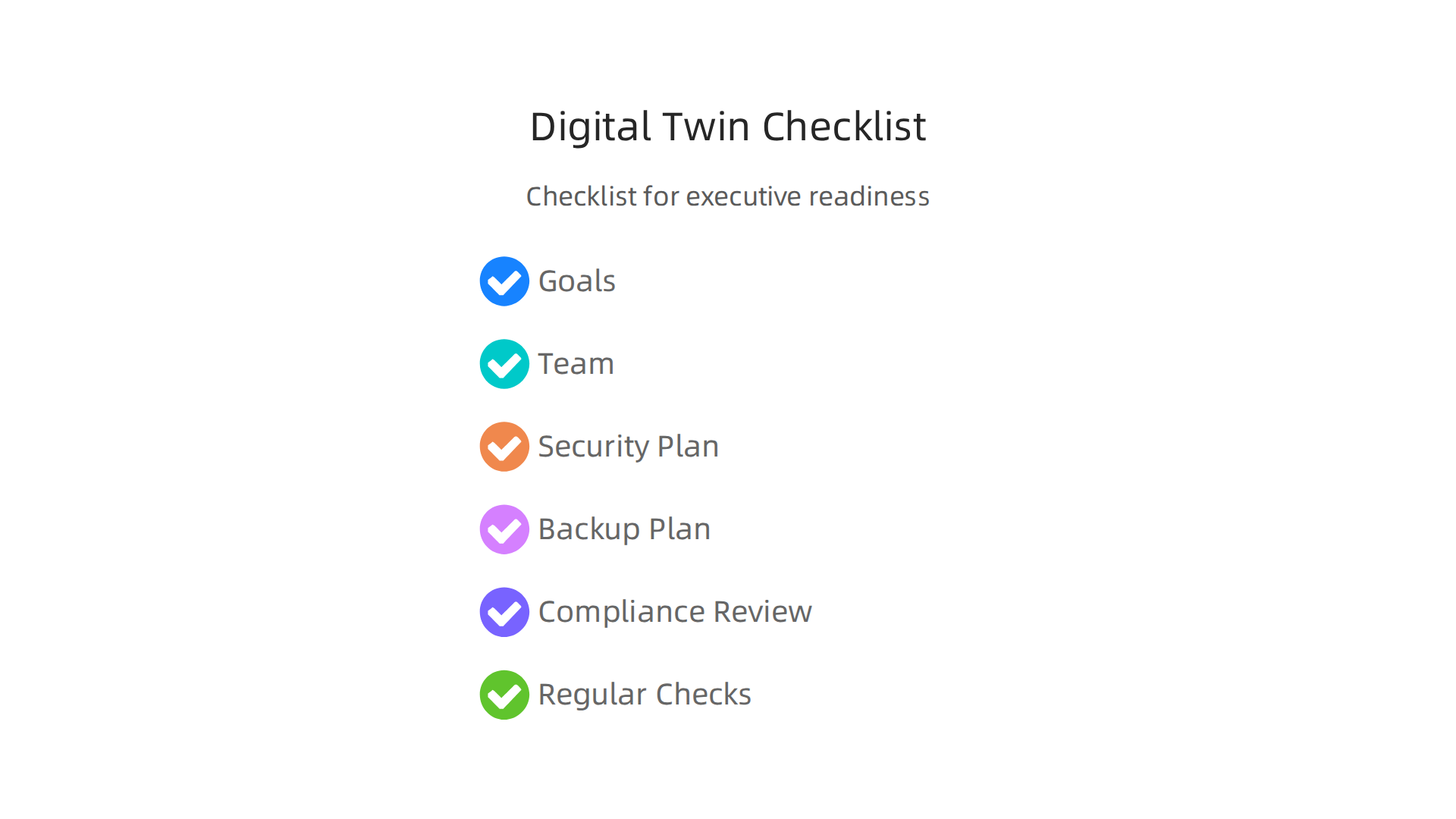
- Goals: Have you clearly defined what you want the digital twin to achieve?
- Team: Do you have the right people in place to manage and use the technology?
- Security Plan: Is there a clear plan for how to protect the digital twin from cyber attacks?
- Backup Plan: What happens if something goes wrong? Do you have a plan to fix it?
- Compliance Review: Have you checked that your digital twin use follows all current and upcoming laws?
- Regular Checks: Plan to regularly review how the digital twin is working and if it still meets your needs and the rules.
By following these steps, executives can make sure their investment in digital twin technology brings real value and stays safe. It’s about careful planning and staying updated in a fast-changing world of evolv technology.
Ready for more insights into the fast-paced world of AI and technology policy? Get clear daily AI updates from The AI Newsletter Worth Reading.
Summary
This article is a concise primer on digital twin technology in 2026, explaining what digital twins are, how they work, and why they matter for business, government and investors. It breaks down the technical stack — from sensors and data ingestion to simulation models and closed‑loop controls — and shows how AI and machine learning improve prediction and automation. The piece surveys different twin types (product, process, system, city-scale) and highlights practical industry uses in manufacturing, energy, healthcare and smart cities, including concrete efficiency and downtime improvements. It also covers the main risks: data privacy, expanded cyber attack surfaces, supply‑chain vulnerabilities and model bias, and it outlines governance, procurement and contractual issues executives must address. Readers will learn how to choose build vs buy, what to include in contracts and security plans, and how to stay regulation-ready as rules evolve. Overall, the primer prepares decision-makers to evaluate, procure, and govern digital twin projects responsibly and effectively.