
Introduction
The race to build the smartest AI is moving faster than almost anyone expected. In 2026, frontier AI models are beating human experts on many of the toughest tests we have. Take Humanity’s Last Exam, a benchmark designed to be extremely hard for machines. In just one year, the top models jumped 30 percentage points in their scores, according to the Stanford HAI 2026 AI Index Report. That kind of progress is both exciting and a little scary.
But here’s the thing. No single model wins everything. GPT-5.4 leads in coding and tool use. Claude Opus 4.6 writes the most natural prose. Gemini 3.1 Pro tops reasoning benchmarks. And Grok 4 competes closely in coding. The smartest AI today depends on what you need it to do. That makes things complicated for anyone trying to set rules or make business decisions.
If you are a policy professional or an executive, you face a real challenge. The technology is changing every few months. New models, new capabilities, and new risks keep popping up. You need to understand what these systems can actually do, where they fall short, and how regulations are evolving to keep up. Generic news coverage just doesn’t give you the depth you need.
This article gives you a clear, data-driven roadmap for 2026. We will look at the current AI capabilities that matter most. We will cover the economic impact, the regulatory landscape, and specific steps you can take. Whether you are shaping policy or making strategic bets, this guide will help you navigate the smartest AI systems of the year.
And if you want to stay ahead of the curve every day, you can get clear daily AI updates from the Deep View Newsletter. It is built for professionals like you who need actionable insights without the noise.
The rest of the article will dive deep into the benchmarks, models, and trends that define the smartest AI in 2026. Let’s get started.
The Cutting Edge: Defining the ‘Smartest AI’ in 2026
What does it really mean to call one AI model the smartest in 2026? The honest answer is that no single model wins everything. Different systems excel at different kinds of work. And the tests we use to measure intelligence are changing fast.
Right now, four frontier labs are leading the pack: OpenAI, Google DeepMind, Anthropic, and xAI. Each has a flagship model with real strengths.
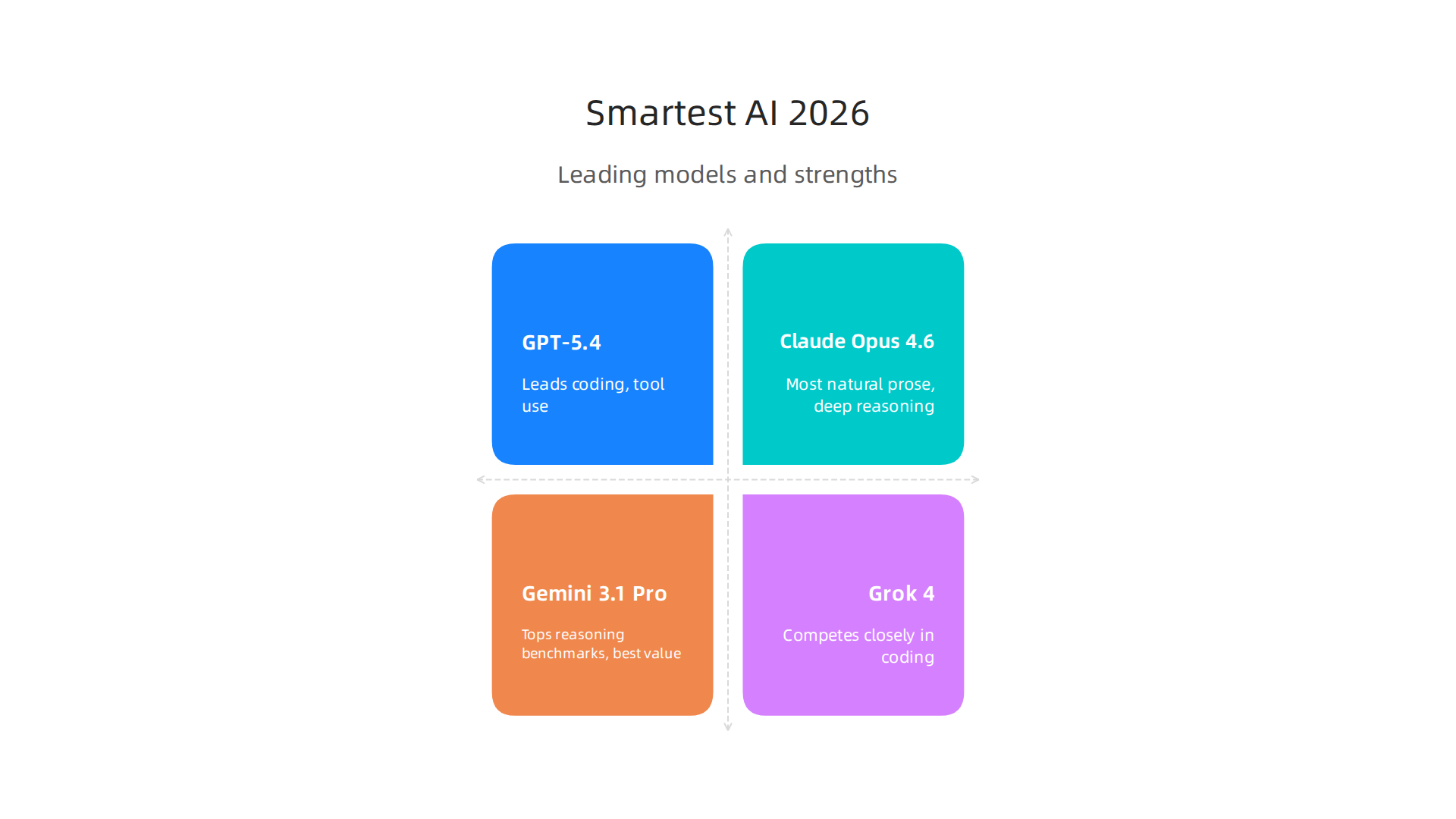
On coding benchmarks, Grok 4 from xAI and OpenAI’s GPT-5.4 trade the top spot. In a detailed comparison of the top LLMs in March 2026, Claude Opus 4.6 ranked first overall for deep reasoning and coding quality, while GPT-5.4 had the broadest production ecosystem. Gemini 3.1 Pro offered the best value for most teams.
These differences matter a lot. If you need to fix a tough software bug, Grok 4 or Claude Opus 4.6 might be your best choice. If you need fast, reliable tool use at scale, GPT-5.4 is the go-to. And if you want the strongest pure reasoning scores, Gemini 3.1 Pro leads on tests like GPQA Diamond with 94.3%.
But here is the twist. The old benchmarks that used to separate models are now useless. Every frontier model scores above 88% on MMLU, so the differences are just noise. Newer tests like Humanity’s Last Exam and ARC-AGI-2 are replacing them. On those harder tests, even the best AI models still fall far behind human experts. Top models hit only about 35% on Humanity’s Last Exam, while human domain experts average around 90%. That gap shows we are not near artificial general intelligence yet.
Does that mean progress is slow? Not at all. Frontier models gained 30 percentage points on Humanity’s Last Exam in a single year. And on computer-use tasks like OSWorld, accuracy jumped from about 12% to over 66%, closing in on human performance.
What about the Chinese labs? They are in the mix too. Companies like Alibaba and DeepSeek now sit in the top tier of the Chatbot Arena Elo ratings, right alongside the US labs. The race is no longer just an American story.
To understand how these rapid model advances affect regulations, it helps to know how earlier architectures like GPT-3 still drive AI policy today. Where models come from shapes where rules are headed.
So the smartest AI in 2026 depends completely on what you ask it to do. No single model is best at everything. And the goalposts keep moving as benchmarks evolve. In the next section, we will look at how these systems are being used in the real world and what that means for your decisions.
Economic Ripple Effects: How Frontier AI Reshapes Industries
The smartest AI systems of 2026 are not just beating benchmarks. They are reshaping entire industries, and the ripple effects on the economy are huge.

Let’s look at the numbers.
AI investment is now a major driver of economic growth. According to the St. Louis Fed, AI-related spending contributed over one percentage point to US real GDP growth in the first three quarters of 2025. That is more than the dot‑com boom delivered at its peak. And in 2026, this momentum is still building. The Vanguard Group projects that the US has up to a 60% chance of hitting 3% real GDP growth in the coming years, fueled largely by AI infrastructure and adoption. Globally, the International Monetary Fund shares a similar view. Their experts argue that AI can lift global growth significantly if productivity gains are realized.
So which sectors feel it most? The big four are tech, healthcare, finance, and manufacturing. In tech, generative AI assistants are already cutting software development time by roughly 26%. In healthcare, multimodal AI models help doctors read scans faster and suggest treatments. Banks use AI for fraud detection and personalized advice. And in manufacturing, AI‑powered robots are optimizing supply chains and reducing downtime. These changes are real and happening right now.
But what about jobs? This is the part that makes people nervous. The Stanford HAI 2026 AI Index Report shows that employment for software developers ages 22 to 25 has dropped nearly 20% since 2024. Employer surveys say one‑third expect workforce reductions in the year ahead, especially in service operations, supply chain, and software engineering. That is the displacement side.
On the flip side, new job categories are emerging. Roles like AI prompt engineers, AI compliance officers, and model risk managers barely existed a few years ago. Entire teams are now needed to oversee AI safety, regulation, and deployment. For a deeper look at which jobs are at risk and which are growing, check out this analysis of AI job displacement statistics and the policy roadmap for 2026.
The bottom line? Frontier AI is already adding to GDP and boosting productivity in key industries. But the human cost is uneven, and staying ahead of these changes requires constant learning.
To keep up with how AI is reshaping the economy day by day, consider getting daily updates from The Deep View Newsletter. It delivers clear, actionable intelligence straight to your inbox so you never miss a shift that matters to your work or your career.
The Regulatory Landscape: AI Governance Frameworks Around the World
As AI reshapes the economy at breakneck speed, governments around the world are racing to build rules that keep up. The smartest AI systems of 2026 face a patchwork of regulations, with each major region taking a different approach.
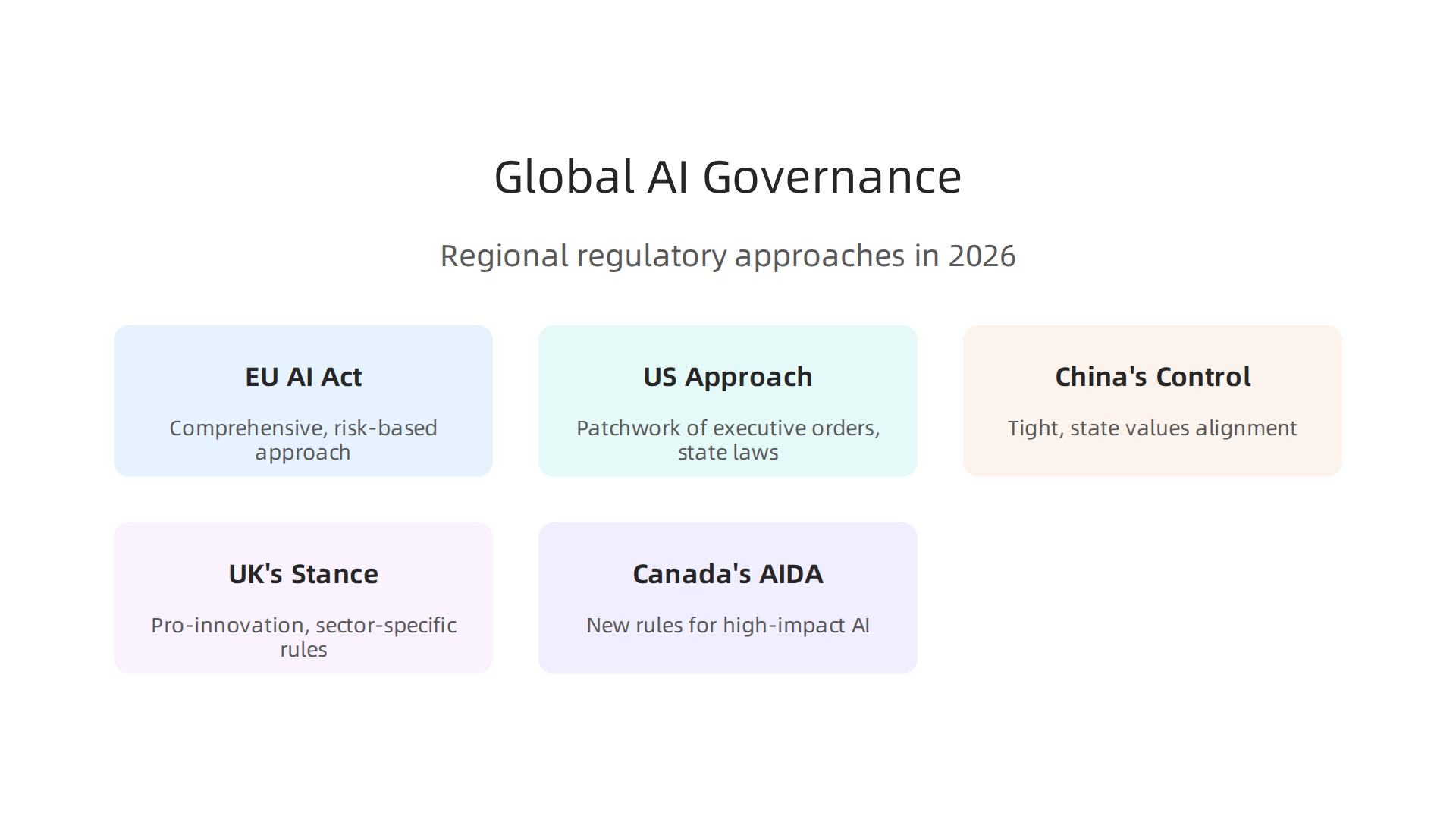
The European Union leads the pack with its AI Act, the first comprehensive AI law anywhere. Full enforcement started on August 2, 2026, for most rules. The EU AI Act takes a risk-based approach. Low-risk AI faces light rules. High-risk AI systems must pass strict checks. And unacceptable AI practices are banned entirely.
If your company builds or uses AI in the EU market, you must now follow these rules. For high-risk AI, you need to conduct risk assessments, keep detailed technical docs, and ensure human oversight. You also have to register your system in an EU database. The penalty for getting it wrong is steep: up to €35 million or 7% of global annual turnover. For a full breakdown of what these requirements mean, check out the complete overview of the EU AI Act in 2026 from Barradvisory.

For general-purpose AI models like the ones powering the smartest AI chatbots, there are new obligations too. You must label AI-generated content, publish summaries of your training data, and follow EU copyright rules. The official implementation timeline from the European Commission shows exactly when each rule takes effect.

Across the Atlantic, the US takes a different path. There is no single federal AI law yet. Instead, the White House has issued several executive orders on AI safety and security. Federal agencies like the FTC and FDA are issuing their own guidance for specific sectors. And many states are passing their own laws. Colorado, for example, passed a law on algorithmic discrimination. This patchwork creates challenges for companies trying to comply across all 50 states. For a deeper look at how these shifting rules affect the workforce and hiring, read this analysis of AI tech jobs in 2026 and how regulations reshape them.
Elsewhere in the world, China has taken a tight control approach. Its regulations require AI systems to align with state values. Content generation rules are strict. Recommendation algorithms must be registered. And deep synthesis tools face tough transparency rules.
The UK has chosen a lighter touch. Its pro-innovation stance encourages AI development while asking regulators in each sector to apply existing laws. Canada is moving forward with its Artificial Intelligence and Data Act, which would create new rules for high-impact AI systems.
For policy professionals tracking all these moving pieces, staying informed is a full-time job. The way different countries regulate AI will shape where the smartest AI gets built, deployed, and used for years to come.
Geopolitical Stakes: AI, National Security, and Global Power Dynamics
The race for the smartest AI is about far more than better chatbots or faster code. It is a high stakes competition for national power, economic control, and military advantage.

In 2026, the United States and China are locked in a fierce technological rivalry that touches everything from chip manufacturing to cyber defense.
The United States currently holds a slight lead in frontier AI research and model performance. But China is closing the gap fast through cost efficient models, massive data reserves, and deep integration of AI into its economy. As Treasury Secretary Scott Bessent stated recently, the biggest risk on AI is China getting ahead of the US. That concern now ranks above safety and job displacement in Washington’s thinking.
To preserve its edge, the US has tightened export controls on advanced semiconductors and chip making tools. The Biden and Trump administrations both pursued policies that restrict China’s access to the most powerful computing hardware. At the same time, the US is racing to build domestic supply chains for AI infrastructure. For a deeper look at how these national security policies affect companies building the smartest AI models, read this analysis of Palantir Technologies’ national security role and AI governance.
The military side of this competition is equally intense. Both countries are integrating AI into autonomous systems, cyber warfare tools, and battlefield decision support. China has openly stated its goal to use AI for both defensive and offensive military capabilities. The Pentagon is deploying AI to analyze intelligence, manage drone swarms, and protect critical infrastructure from cyberattacks. As one expert put it, in a kinetic conflict where both militaries wield AI, mere muscle could tip the scales. To understand why the US national security establishment now treats frontier models as strategic assets, check out this analysis from the Diplomat that explains Trump’s new AI order raises the stakes in the US-China tech competition.
International governance efforts are trying to keep up. The Global Partnership on AI (GPAI) continues to promote responsible AI development among member nations. The United Nations has formed an AI advisory body to explore global norms and standards. Follow up meetings from the Bletchley Declaration, signed in 2023, have focused on managing risks from the most advanced models. But the US and China often take different approaches to regulation, which makes global consensus difficult. The US favors a deregulatory, innovation first stance, while China pushes for state led governance and alignment with its values.
These geopolitical tensions will shape where the smartest AI gets built, who controls the underlying chips, and which countries set the rules for years to come. For policy professionals tracking these fast moving developments, staying informed is critical. Get clear daily AI updates from The Deep View Newsletter, covering the global technology competition and its policy implications in real time.
Ethical Frontiers: Privacy, Bias, and Digital Rights in an AI World
As this global power race unfolds, a quieter but equally urgent battle is taking shape right in our daily lives. It is the fight over what ethical rules the smartest AI must follow.
Even the most powerful models can carry hidden flaws. Bias is one of the biggest.
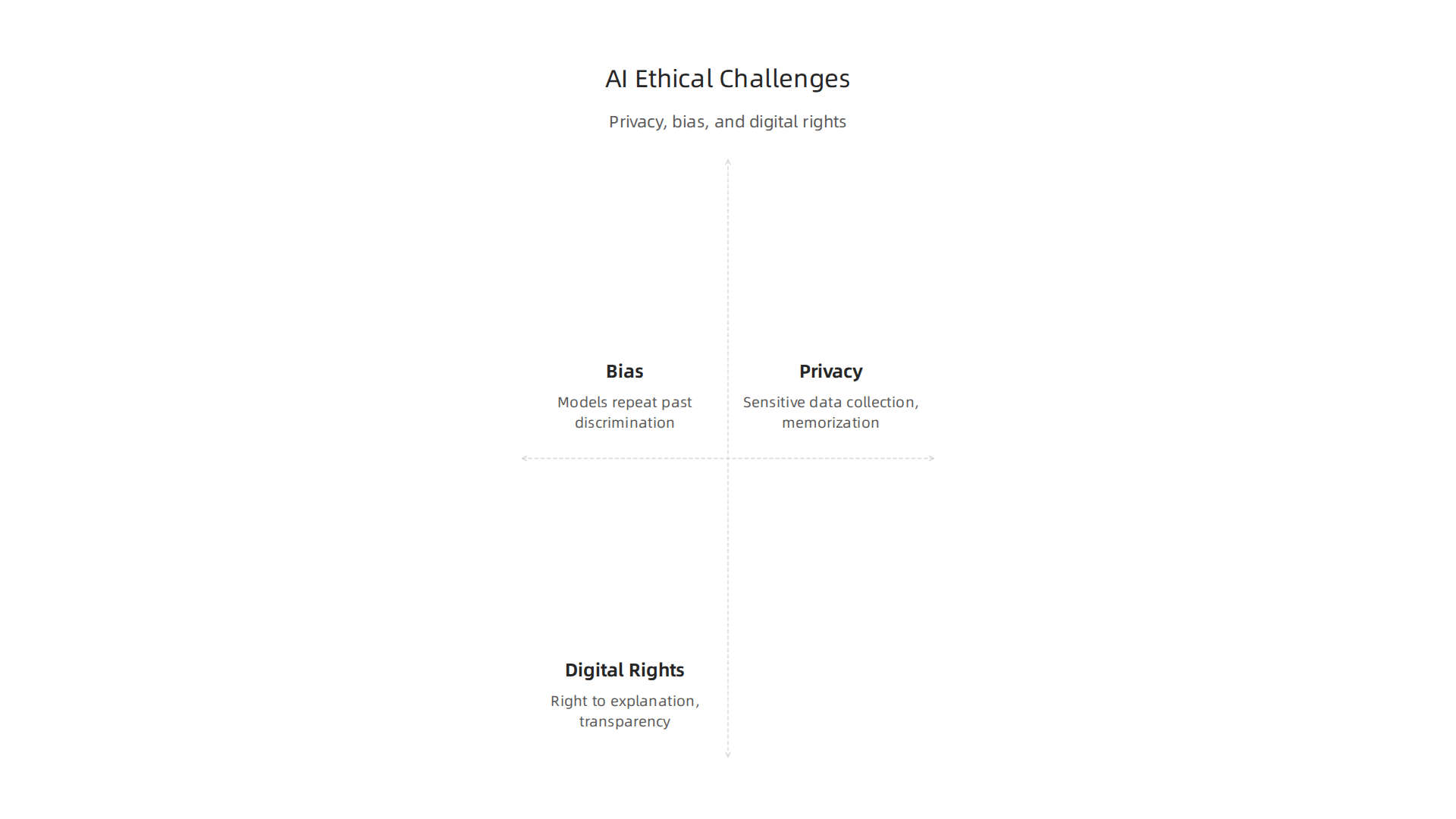
If an AI is trained on data that reflects past discrimination, it will learn and repeat those patterns. You have already seen examples in hiring tools that favored men over women or in lending algorithms that charged higher rates to certain neighborhoods. These problems do not go away as models get smarter. In fact, the larger the training dataset, the more hidden bias it can contain. To build systems that work fairly for everyone, organizations must constantly audit their data and correct for these blind spots. The top ethics issues with AI really start with data bias and the urgent need for rigorous testing.
Privacy is another front. The smartest AI needs vast amounts of data to learn. That data often includes personal details, conversation history, and even your voice or face. When a multimodal AI processes everything it sees and hears, where does your information end up? Models can memorize pieces of training data and accidentally reveal sensitive facts about real people. As privacy concerns grow, companies must be clear about what data they collect and give you real control over how it is used.
Digital rights are becoming just as important as physical ones. You deserve to know why an AI made a certain decision about your loan, your job application, or your medical care. This is called the right to explanation. In 2026, regulations in Europe and elsewhere are pushing for algorithmic transparency. Slow adoption of these protections means structural risks like bias and opacity remain entrenched. Citizens and policymakers alike need to make sure AI systems are transparent and accountable.
These ethical challenges do not exist in a vacuum. They connect directly to the geopolitical and regulatory issues we have already explored. For a better understanding of how these privacy questions apply to emerging technologies, look at these privacy implications of AI background noise removal for professionals. The smartest AI can only earn our trust if it respects our boundaries every step of the way.
Strategic Playbook: How Leaders Can Prepare for the AI Policy Future
Knowing these ethical challenges is just the first step. The real question is what you do about them. In 2026, leaders who prepare for the AI policy future will have a clear advantage. The rules are changing fast, and being ready means less risk and more opportunity.
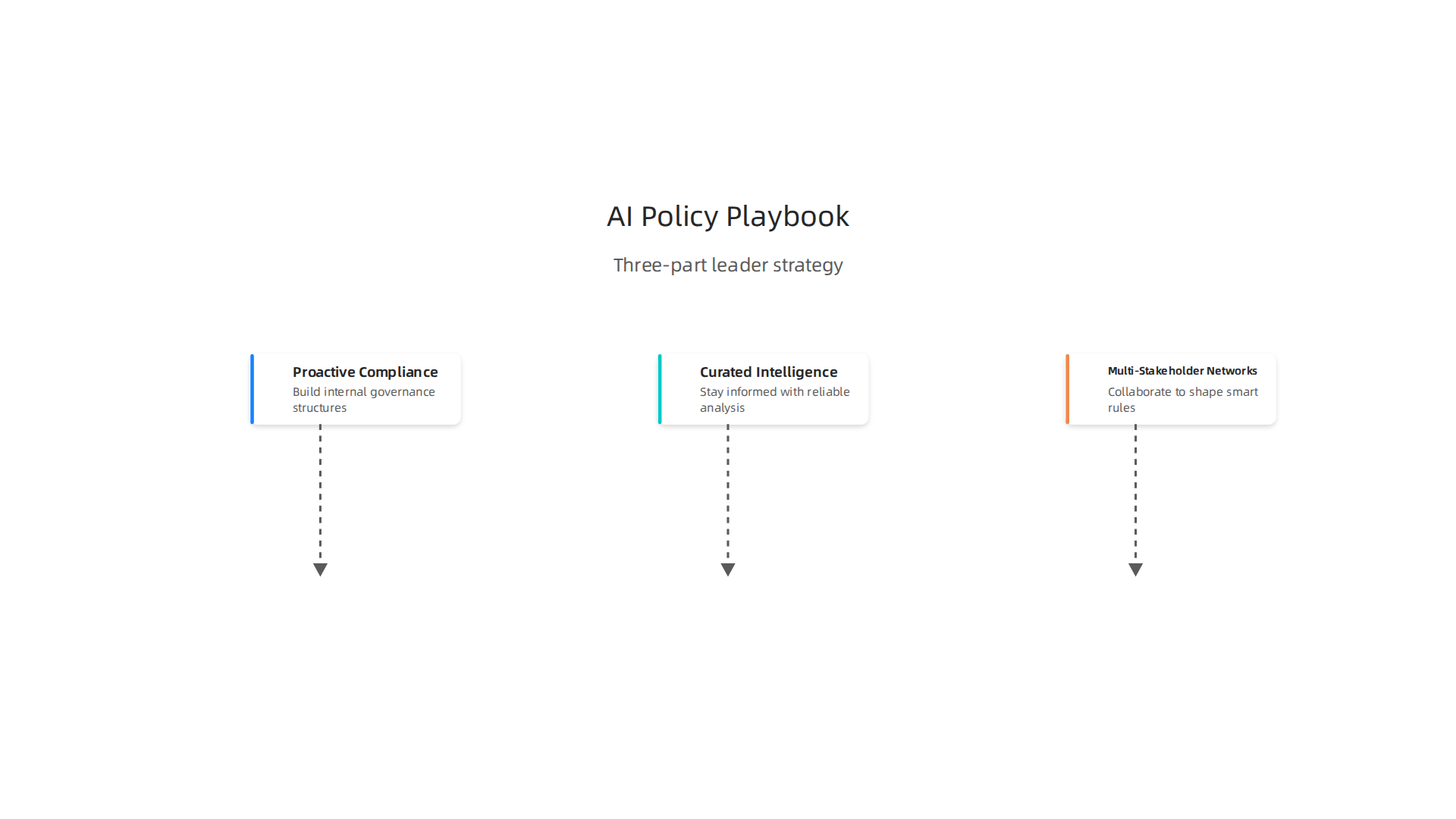
Here is a three-part playbook to help you stay ahead.
1. Build Proactive Compliance Frameworks
You cannot wait for regulations to hit your desk. The EU AI Act moves toward full enforcement in August 2026, and similar laws are emerging in other regions. Organizations need internal governance structures that map every AI system and classify its risk level. According to a detailed guide on the EU AI Act in 2026, high-risk systems require risk assessments, detailed documentation, human oversight, and ongoing monitoring. Fines can reach 35 million euros or 7 percent of global annual turnover. Building a governance framework now lets you spot issues before regulators do. Even the smartest AI needs clear rules and accountability to be trusted.
2. Stay Informed with Curated Intelligence
The policy landscape shifts almost weekly. New executive orders, proposed laws, and enforcement actions pile up fast. You cannot read everything. That is why leveraging curated intelligence sources matters. Reliable analysis helps you cut through the noise and focus on what actually affects your work. For example, this tech news analysis for policy professionals turns daily headlines into actionable policy intelligence. It saves you hours of sifting through raw data. For even quicker updates, subscribe to The AI Newsletter Worth Reading. It delivers clear, daily AI news straight to your inbox so you never miss a critical change.
3. Collaborate Through Multi-Stakeholder Networks
No single organization can shape AI policy alone. The best way to influence smart rules is to join forces with others. Regulatory sandboxes are a great example. The EU AI Act requires each member state to set up at least one AI regulatory sandbox by August 2026. These sandboxes let companies test multimodal AI and generative AI assistants under real regulatory supervision before full launch. Participating in such programs helps you shape future standards and build trust with regulators. Industry coalitions, public-private partnerships, and policy networks also give you a seat at the table where decisions are made.
By combining proactive compliance, smart information sources, and active collaboration, you turn policy uncertainty into a strategic advantage.

The leaders who start today will define how the smartest AI is governed tomorrow.
Summary
This article maps the fast-changing landscape of the "smartest AI" in 2026, explaining why no single model wins across every task and which systems lead in coding, reasoning, and tool use. It reviews how benchmarks are evolving—older tests are saturated while harder exams like Humanity’s Last Exam reveal remaining gaps—and shows concrete performance numbers and recent gains. The piece then examines economic ripple effects, including productivity boosts, sector winners (tech, healthcare, finance, manufacturing), and real job impacts alongside emerging roles. It summarizes the fragmented global regulatory environment—from the EU AI Act’s risk-based rules and fines to US sectoral guidance and China’s control model—and flags geopolitical and national security stakes. Ethical concerns such as data bias, privacy exposure, and the right to explanation are highlighted as central challenges. Finally, the article gives a practical three-part playbook for leaders: build proactive compliance, use curated intelligence, and engage in multi-stakeholder collaboration to turn policy uncertainty into advantage.