
Introduction
Something big is happening in the world of artificial intelligence. It is not just about new chatbots or better image generators. A new kind of competition is taking center stage: the artificial intelligence olympiad.
These global events bring together young students to solve real AI problems.

They test machine learning, data analysis, and ethical thinking. In 2026, the International Olympiad in Artificial Intelligence (IOAI) saw over 100 countries register for its third edition, which will be held in Astana, Kazakhstan, from August 2 to 8.
Governments and top universities are paying close attention. Schools like Harvard and MIT hosted the USA North America AI Olympiad 2026 Round 2, with nearly 200 students competing on campus. That event even included sessions from MIT Admissions. This shows that these competitions are not just academic exercises. They are becoming strategic tools for shaping future AI talent and influencing technology policy.
How a country prepares its next generation of AI experts will affect its ability to regulate, innovate, and compete. If you want to see how public agencies are adapting, read our piece on how AI policy in the public sector is transforming government compliance.
To stay on top of the fastest-moving developments in AI and policy, you can get clear daily AI updates from The Deep View Newsletter.
This article explores what the artificial intelligence olympiad means for technology policy, academic engagement, and international governance. Let us dig in.
The Emergence of the Artificial Intelligence Olympiad: A New Standard?
Think of the International Math Olympiad or the International Science Olympiad. For decades, these competitions have been the gold standard for identifying top young talent around the world. Now, a similar structure is rising for artificial intelligence. The artificial intelligence olympiad follows that same proven model, but instead of solving equations or memorizing biology facts, students train their skills in machine learning, data analysis, and responsible AI design.
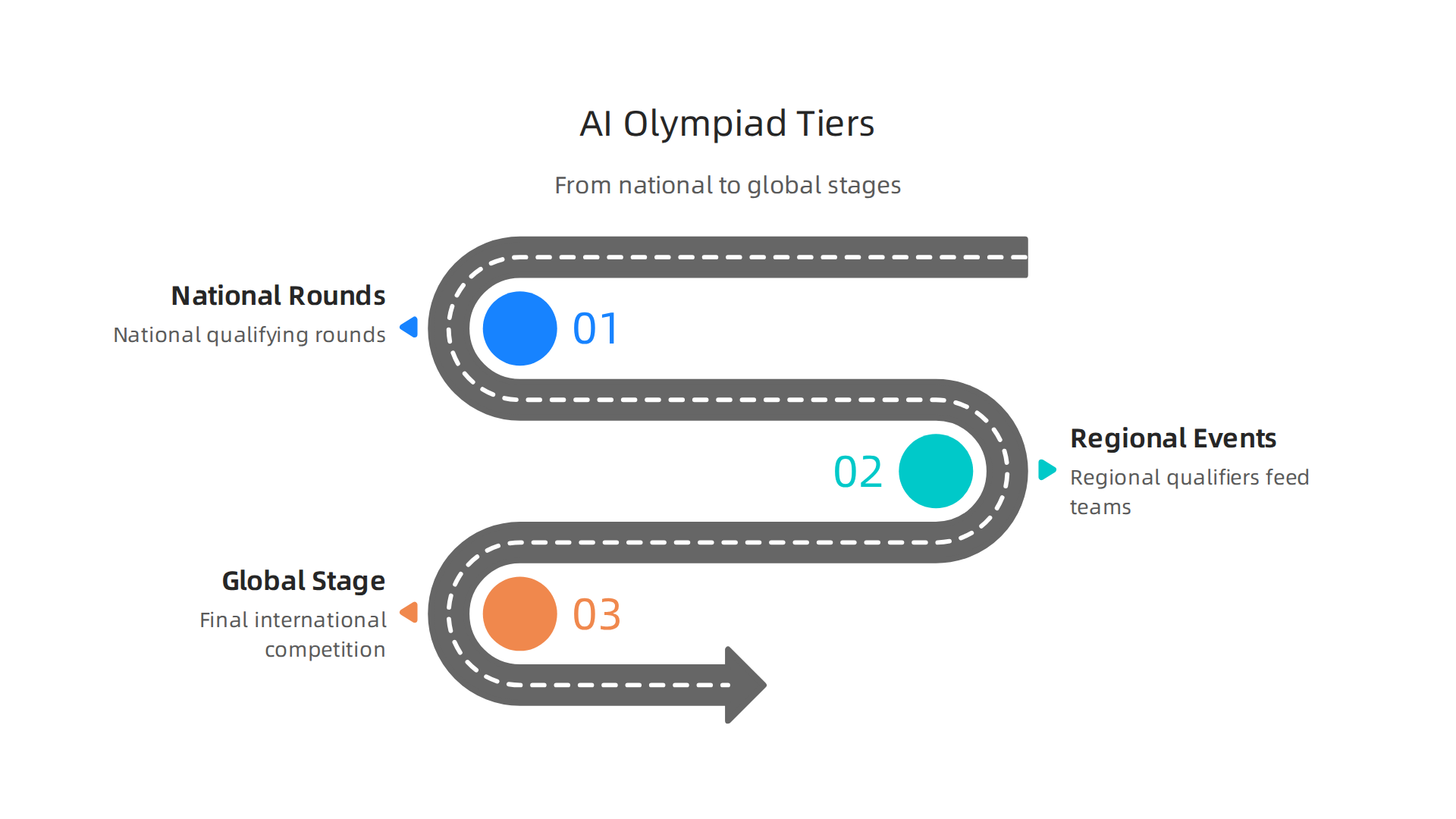
The format is already taking shape. Many countries now run national qualifying rounds, like the National Olympiad in Artificial Intelligence in Singapore, which uses multiple-choice questions and Python programming to select teams. Regional events such as the African Olympiad in Artificial Intelligence and the Asia Pacific Olympiad feed into the final global stage. This layered system mirrors exactly how other top-tier Olympiads work.
The numbers prove this is more than a passing trend. According to the IOAI official site, the 2026 edition in Astana, Kazakhstan, has reached 103 registered countries and territories. That is a huge jump from the first edition and shows that governments everywhere see value in benchmarking their best students against the world.
Why does this matter for policy? Early signals suggest a strong link between Olympic performance and a country’s AI strengths. Nations that invest heavily in AI education and national Olympiad programs tend to also lead in AI regulation and innovation. The involvement of top universities like Harvard and MIT in hosting rounds reinforces this connection. When major academic powerhouses run selection camps and invite students to compete with advanced tasks like transformer models and generative AI, it creates a direct talent pipeline that shapes future policy decisions.
As these competitions mature, they could become a new standard for measuring how well countries prepare their next generation of AI experts. The same way math Olympiad success often predicts research output, AI Olympiad results may soon signal which nations will lead in both technology and governance.
For a deeper look at how these talent pipelines connect to real world workforce shifts, check out our coverage of AI tech jobs in 2026 and how they reshape hiring, skills, and regulations.
Why Governments and Policy Makers Are Investing in AI Competitions
When a country’s students perform well in the artificial intelligence olympiad, the headlines follow. That recognition is valuable far beyond the competition floor. For governments, these events serve two big purposes at once: they find top talent and they build a national brand as an AI leader.
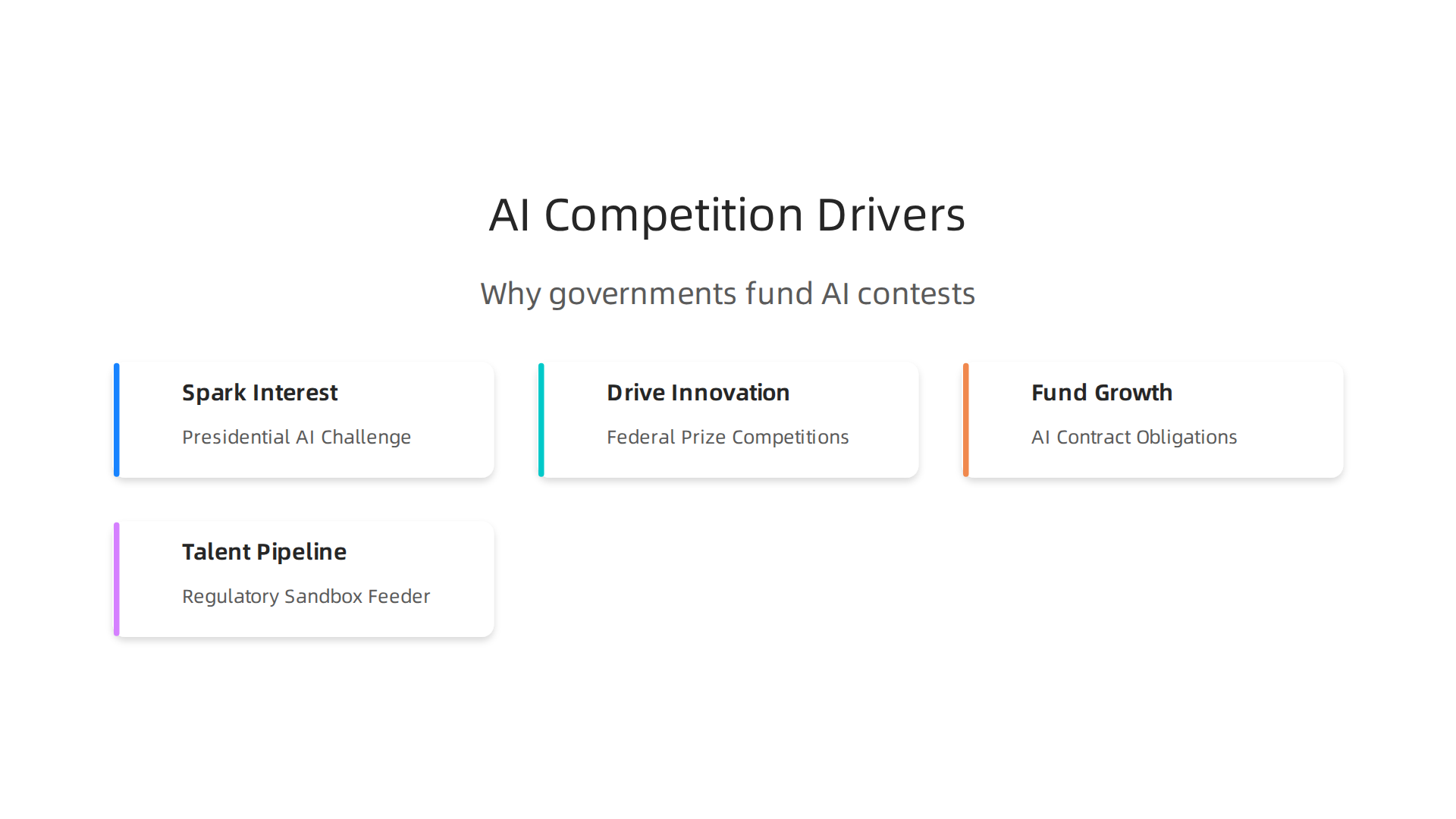
Take the United States as an example. In 2025, President Trump signed an executive order to create the Presidential AI Challenge, a competition designed to spark interest in AI among young Americans. The goal was clear: keep the country ahead in the global AI race. As the White House explained, the challenge aims to "foster interest and expertise in AI technology in America’s youth." That kind of high-level backing shows how seriously policy makers treat these contests as a tool for national competitiveness.
The numbers back it up. According to a 2025 analysis from the Center for Security and Emerging Technology (CSET), federal prize competitions focused on AI and cybersecurity jumped from 17 events worth $5.8 million in 2020 to 27 events worth over $36 million in 2024. That’s a 520% increase in monetary awards in just four years. The Department of Defense led the way, but agencies like Health and Human Services and Energy also got involved. This tells you one thing: governments see competitions as a smart way to drive innovation without writing giant checks upfront.
The connection to national AI strategies goes even deeper. A Brookings Institution report from 2026 showed that federal AI contract obligations grew from $261 million in 2024 to $7.2 billion in 2026. That’s nearly a 1,000% increase. When you pair that kind of spending with competition funding, a pattern emerges. Nations that pour money into AI infrastructure also tend to invest in competitions that train the next generation of workers and researchers.
Here is the really interesting part. Investment in AI competitions often goes hand in hand with regulatory sandbox and innovation zone programs. Think of it this way: you cannot have a successful sandbox without enough skilled people to test ideas inside it. Competitions create a pipeline of talent that fills those sandboxes. For policy makers, the artificial intelligence olympiad becomes a natural feeder system for their broader tech ambitions.
If you want to stay on top of how these government moves shape the AI policy landscape, a daily briefing can help. Subscribe to The AI Newsletter Worth Reading for clear, daily updates on the latest developments.
The Impact on AI Talent Development and University Engagement
Here is where the artificial intelligence olympiad really changes things for students and schools. Universities have started to notice that competition data sets and real-world problems make excellent teaching tools.

Instead of working through old textbook examples, students now train on the same challenges that top competitors face. That shift is powerful.
One study published in Frontiers in Education showed that an integrated AI curriculum combining hands-on projects with competition-style tasks boosted students’ practical skills and critical thinking. The researchers found that when universities weave competition problems into coursework, students not only learn faster but also develop stronger teamwork and ethical awareness. So the artificial intelligence olympiad is not just a contest; it is becoming a blueprint for how AI gets taught.
At the same time, a spot on a winning competition team is becoming a golden ticket in the job market. Top tech companies and research labs now look for competition experience as a strong signal of real ability. A student who placed well in an AI contest proves they can handle pressure, solve messy problems, and work with cutting-edge tools. That kind of proof matters more than a grade on a transcript. As more universities build programs around competition data, the line between learning and competing blurs. For example, the University of Florida holds AI Days with competitions designed to bring student ideas to life, giving participants direct exposure to recruiters and industry partners.
Competition results are also starting to affect university rankings and research funding. Schools whose students perform well in the artificial intelligence olympiad gain attention from grant agencies and corporate partners. That funding then fuels more research and better programs, creating a cycle that lifts the whole institution. If you are a student wondering how to turn competition experience into a career, check out this roadmap to learn AI and build a future-ready career.
The bottom line is clear. The artificial intelligence olympiad is reshaping how universities teach, how companies hire, and how research gets funded. It is no longer just a contest for the best coders. It is becoming a core part of how we train the next generation of AI talent.
Navigating the Regulatory and Ethical Dimensions of AI Competitions
As the artificial intelligence olympiad grows bigger each year, it brings serious questions to the table. Algorithmic bias, data privacy, and the risk of dual-use (where good technology gets used for harmful purposes) are real concerns.

When students train on real-world data sets, who makes sure that data is fair and private? When a competition model can easily be turned into a weapon or a surveillance tool, what safeguards are in place?
The good news is that competition organizers are starting to take these issues seriously. Many now include dedicated ethics and fairness tracks where participants must consider the broader impact of their work. For example, the IJCAI 2026 competition guidelines require submissions to follow strict ethical principles, including responsible data use and fair treatment of sensitive topics. Organizers are encouraged to submit an ethics statement that addresses potential societal harms. This shift means the artificial intelligence olympiad is not just about who builds the fastest model anymore; it is also about who builds the most responsible one.
Regulators are also paying close attention. In 2026, governments around the world are asking whether competition frameworks align with broader AI governance principles. The 2026 Responsible AI Guide recommends that any AI development, including student competitions, follow transparency, accountability, and bias mitigation standards. Some competitions now require participants to document their training data sources and explain how they avoid discriminatory outcomes. That is a huge step forward.
If you want to stay up to date on how ethics rules are changing for AI competitions and beyond, get clear daily AI updates from The Deep View Newsletter. It helps policy professionals and tech leaders track the latest regulatory shifts.
The bottom line is this: the artificial intelligence olympiad is becoming a testing ground not just for technical skill but for ethical thinking. Competitions that ignore these issues risk falling behind. Those that embrace them are helping shape a future where AI is powerful and responsible at the same time.
Case Studies: Ethical Challenges in Recent AI Competitions
Think about a self-driving car competition in 2025. Teams built models that navigated virtual streets, avoiding pedestrians and obstacles. Sounds good, right? But when the simulation data used to train those models was examined, researchers found something troubling. The pedestrian safety scenarios were not realistic enough. Male pedestrians were avoided more often than female ones, and certain skin tones were represented poorly. Questions about fairness and safety in simulation ethics exploded. This is the kind of real-world mess that the artificial intelligence olympiad now has to deal with. It is not just about winning a trophy. It is about proving your model does not cause harm.
Then there are language model competitions. Models that generate text have been asked to produce everything from helpful summaries to harmful content. In recent contests, some models produced biased outputs, toxic language, and even instructions for dangerous acts. Competitors had to show they could prevent such outputs. But not all teams could. These cases have pushed organizers to think harder about how to judge safety alongside performance.
These incidents are leading to a big idea: standardized ethical review boards for every major competition. Instead of each contest making up its own rules on the fly, a neutral board could examine data sources, simulation design, and model behavior before any scores are given. This kind of oversight is already common in academic research. The artificial intelligence olympiad should follow that example. Many organizations are already working on frameworks that could support this. For example, the 8 AI Ethics Trends That Will Redefine Trust And Accountability In 2026 highlight how accountability is becoming non-negotiable in AI development.

And the Ethical Guidelines for AAAI-26 Reviewers show that even top conferences now demand fairness and disclosure from everyone involved.
If you want to understand how these review standards apply to policy and compliance, check out this guide on rigorous artificial intelligence review for policy compliance. It breaks down how regulators are setting the bar.
The message is clear: competitions that ignore ethics will face backlash. Those that build ethics into their DNA will lead the future.
Global Perspectives: Comparing AI Competition Initiatives in the US, Europe, and Asia
Now that we have seen how ethics are shaping individual competitions, let us zoom out. The way different parts of the world run these contests tells you a lot about their bigger goals for the artificial intelligence olympiad and similar events.
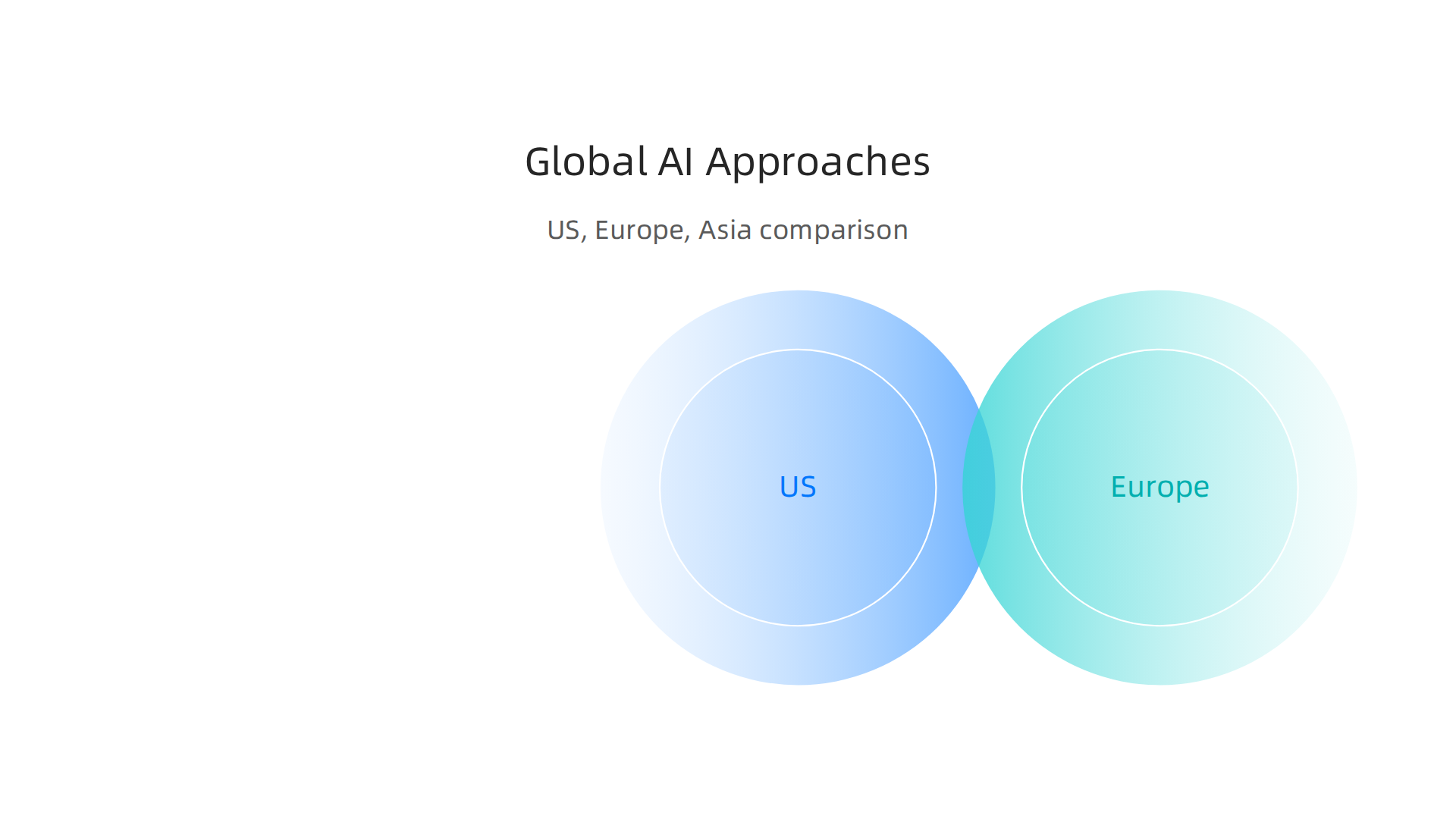
The United States leans hard on public-private partnerships and prize challenges. The government creates conditions for companies and universities to compete, often with huge cash rewards and access to government data. Think of it as a startup culture meets national security. The focus is on speed, scale, and winning the global race for dominance. A detailed comparison of the current US and EU AI strategies shows just how different these approaches have become.
Europe takes a different path. The European Union emphasizes ethics-by-design and making sure every AI system lines up with GDPR and human rights. Competitions funded by programs like Germany’s SPRIND "Next Frontier AI" competition are not just about building the most powerful model. They ask: Is this system trustworthy? Does it respect privacy? This values-first approach can feel slower, but it builds public trust. Many experts think this trust could be Europe’s secret advantage in the long run.
Asia, especially China, Japan, and Singapore, invests heavily in talent pipelines and national championships. These countries run huge, state-backed competitions that identify top students early and give them world-class training. The goal is not just winning one contest. It is building a generation of experts who can lead the field for decades. As one analysis of the US-China AI race notes, China is racing ahead in model efficiency and real-world adoption.
The artificial intelligence olympiad will need to find a way to blend these different styles. And if you want to keep up with how these global policy differences affect AI development, you need a reliable source of daily news. That is exactly what The AI Newsletter Worth Reading delivers, helping you cut through the noise and understand the real moves shaping the industry.
From Competition to Cooperation: International Governance and Standard-Setting
Here is a shift that surprises most people. While countries race to dominate the artificial intelligence olympiad, those same competitions are quietly becoming some of the most effective tools for global cooperation.

Think about what happens when teams from the United States, Europe, and Asia all submit their models to the same challenge. Judges compare results side by side. They spot strengths and weaknesses across different approaches. This process creates something everyone needs: shared benchmarks. Instead of each country hiding its testing methods behind closed doors, these contests produce open standards that benefit the whole field.
The International AI Olympiad is a great example of this cooperative side. Young researchers and experienced experts from dozens of nations gather not just to compete but also to trade ideas about safety, transparency, and reliability. The conversations that happen between rounds often shape how countries approach uncertainty in artificial intelligence and set performance baselines that regulators can trust.
Government agencies have taken notice too. As the CSET analysis of How Prize Competitions Enable AI Innovation shows, federal prize competitions grew from 17 events in 2020 to 27 in 2024, with total monetary awards jumping by over 500 percent. These contests do more than hand out prize money. They help define the technical standards that companies and governments refer to when building or buying AI systems.
This matters because competition outcomes now directly inform international standards for AI safety and performance. The rules that come out of these shared challenges shape everything from model testing protocols to deployment guidelines. Countries that participate get a seat at the table where those rules are written.
For policy professionals and tech leaders trying to track how these global developments affect their work, staying informed is a full-time job. The tech news analysis for policy professionals page breaks down the most important shifts in AI governance so you can focus on what truly matters for your strategy.
And if you want daily updates on how international AI competitions, standards, and regulations are evolving, The AI Newsletter Worth Reading delivers clear, actionable insights straight to your inbox every morning.
The Path to International Guidelines: How Competitions Are Shaping Norms
The shift from competition to cooperation does not stop at shared technical standards. Those benchmarks are now finding their way into official policy documents. When an artificial intelligence olympiad produces a verified performance test for a model, regulators in multiple countries can point to the same result. That shared reference point makes it far easier to agree on what "safe" or "reliable" actually means.
Policy professionals are seeing this happen in real time. Competition outcomes are being cited in national AI strategies and risk classification frameworks.
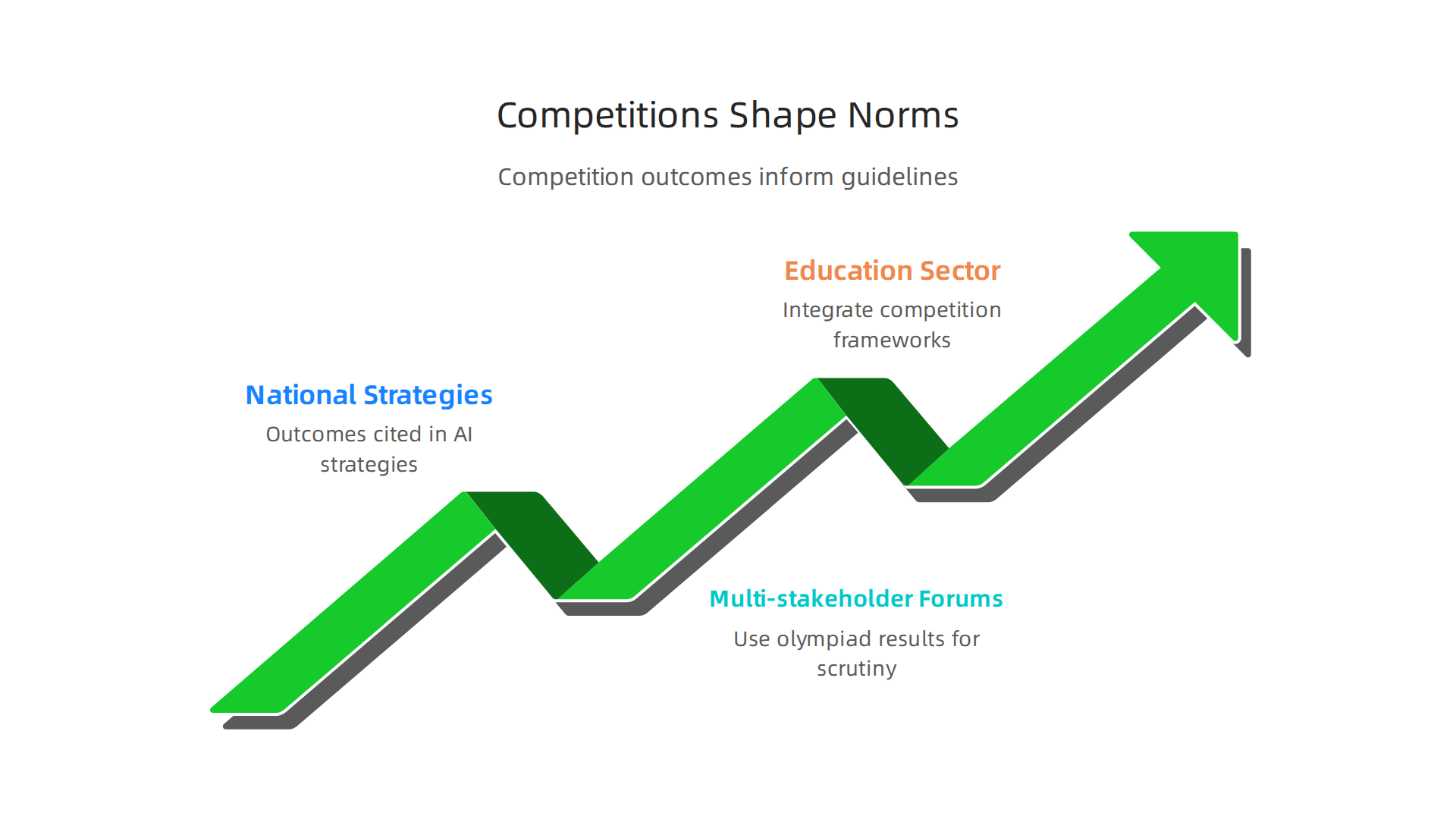
For example, multi-stakeholder forums that bring together government agencies, tech companies, and civil society groups are using olympiad results to decide which systems need extra scrutiny. A model that scores well on a standardized benchmark from an olympiad might fall into a lower risk tier. One that performs poorly or shows unpredictable behavior flags a higher level of concern. This approach directly addresses the challenge of uncertainty in artificial intelligence by replacing guesswork with measured data.
The education sector is also leaning on competition frameworks. As U.S. universities integrate AI into their educational programs, they increasingly use external competition challenges to set learning objectives and assess student work. Those same benchmarks then feed into workforce guidelines and even procurement policies at government agencies.
But challenges remain. If competition designs are not inclusive, the resulting norms will reflect only the priorities of well-resourced teams from wealthy nations. Researchers worry that without careful attention to representation, the benchmarks that become global standards could leave out critical perspectives on fairness, bias, and cultural context. Ensuring that emerging nations and smaller organizations have a seat at the table during competition planning is essential for building guidelines that truly work for everyone.
For leaders tracking how these norms evolve, staying ahead of the latest policy shifts is critical. Our coverage of the biggest IT policy shifts of 2026 breaks down the regulatory movements you need to understand right now.
Summary
The article explains the rise of the artificial intelligence olympiad as a global, multi‑stage competition that trains young people in machine learning, data analysis, and responsible AI design. It covers how national and regional qualifying rounds feed into major events like the IOAI, why governments and top universities invest in these contests, and how competitions create talent pipelines that affect hiring, research funding, and national AI strategies. The piece also examines ethical and regulatory challenges—algorithmic bias, data privacy, and dual‑use risks—and how organizers are adding ethics tracks and standardized review to address them. Case studies show real problems from simulation and language model contests and suggest independent ethics review boards as a solution. Finally, it looks at international differences (US, Europe, Asia) and explains how shared benchmarks from competitions are starting to influence global governance and standards. After reading, you will understand how AI olympiads shape education, careers, and policy, and what steps stakeholders can take to run safer, more inclusive contests.