

A new era of AI competition: what professionals need to know
In 2026, artificial intelligence (AI) is everywhere. It helps us with daily tasks, drives new inventions, and even powers fun games. But there’s a new kind of competition taking shape that goes beyond simple fun: the artificial intelligence olympics.
Think of these "AI olympics" as very important contests. In these events, experts and teams show off their best AI and machine learning creations. These are not just tech showcases. They are high-profile events where companies, universities, and even countries compete to build the fastest, smartest, or most helpful AI systems. For example, the International Olympiad in Artificial Intelligence (IOAI) sets rules for individual and team challenges to push the boundaries of AI abilities IOAI2026 Contest Rules.
These competitions are not just about who wins a medal. They have a huge impact on the real world. The results can decide where big companies invest their money and what new rules governments might put in place for AI. When one country or team develops a super-smart AI, it can lead to other countries wanting to catch up or even surpass them. This drives a kind of geopolitical race in AI and machine learning.
This push for better AI systems also shapes policy. Governments around the world are watching these developments closely. They think about how these powerful AI tools might change society, jobs, and national security. They also look at how to encourage more breakthroughs while keeping AI safe and fair. For instance, the United States Congress has seen calls for an AI Grand Challenges Act of 2026 to guide AI research and development through prize competitions.
Understanding these artificial intelligence olympics is key for professionals.

Whether you work in tech, government, or business, these contests show us where AI is headed. They reveal the next big thing, the next challenge, and the next set of rules we’ll all need to follow. The artificial intelligence olympiad is indeed reshaping global AI policy and talent.
Want to stay on top of the latest AI news and policy changes? Get clear daily AI updates by subscribing to The AI Newsletter Worth Reading.
What people mean by ‘artificial intelligence olympics’ — actors, incentives, and formats
So, what exactly happens in these artificial intelligence olympics? They are more than just friendly games. These events involve key players, big reasons to compete, and different ways to test AI.
Who is playing in the AI competitions?
Many different groups take part in these AI events.
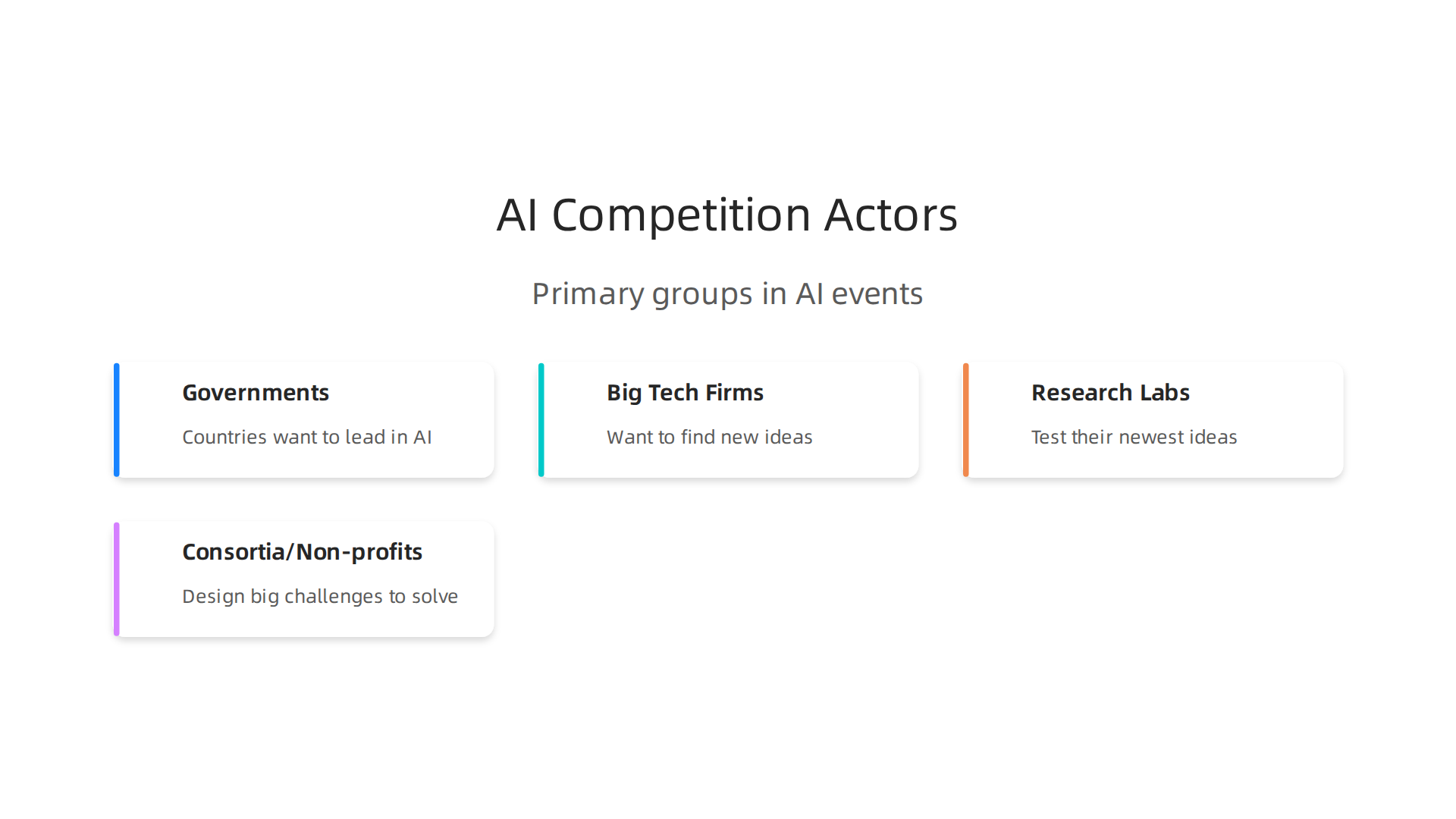
- Governments: Countries want to lead in AI, so their governments often start or fund big contests. For example, Japan’s Ministry of Economy, Trade and Industry and the New Energy and Industrial Technology Development Organization launched the GENIAC-PRIZE 2026 as an AI Contest to push social use of AI.
- Big Tech Firms: Companies like Google often back these events. They want to find new ideas and talent. They also like to show off what their own AI and machine learning tools can do.
- Research Labs and Universities: Smart people from schools and labs worldwide jump into these competitions. They see it as a way to test their newest ideas and get their research noticed. It is also a chance to uncover the influential AI figures and labs driving global AI policy.
- Consortia and Non-profits: Groups like XPRIZE design big challenges to solve major world problems using AI. These groups help bring everyone together.
Why do they compete? (Incentives)
The reasons for joining or hosting these AI contests are huge:
- To push AI further: Competitions challenge teams to create smarter, faster, or more helpful AI systems. This helps improve AI and machine learning overall.
- Big Prizes: Many competitions offer large sums of money. For instance, XPRIZE launched a hackathon backed by Google with a multi-million dollar prize pool in 2026. This kind of money makes people want to compete!
- Finding Talent: Companies and labs look for the best minds during these events. It is a great way to find new people who can build amazing AI.
- Publicity and Funding: Winning or even doing well can bring a lot of attention. This can mean more money for research or new business chances for an AI development company. Experts often discuss the importance of incentives like prizes and grants for successful participation in these events, as highlighted in "AI Competitions and Benchmarks, Practical issues" on arXiv.
- Solving Real Problems: A key goal of many scientific competitions is not just to pick a winner, but to truly address a particular problem or answer a scientific question using AI.
How are the competitions set up? (Formats)
The artificial intelligence olympics come in many forms:
- Benchmarking: These are tests where AI systems are measured against set standards to see how well they perform specific tasks. It is like a standard test for AI.
- Prize Challenges: Teams work to solve a big, complex problem. The first one to find a working solution, or the best one, wins a large prize. The ARC Prize 2026 is one example, challenging agents to perform well across game environments for big rewards.
- National Contests: These are often run by governments to boost AI innovation within their own country.
- Hackathons: Short, intense events where teams build new AI tools or features in a very limited time.
No matter the format, these competitions greatly affect how AI research and development move forward in 2026 and beyond.
Policy and regulatory risks from competition-driven AI acceleration
The artificial intelligence olympics push AI forward very quickly. But this fast race to be the best also brings big worries for governments and people. When AI and machine learning tools grow so fast, it can be hard to make sure they are safe and fair.
What are the main worries?
Faster AI development can make existing problems bigger and create new ones.

Here are some of the key concerns:
- Safety: Imagine an AI system that controls cars or medical tools. If these systems are rushed out because of competition, they might not be fully tested. This could lead to mistakes that harm people. Making sure AI is safe is a top priority for governments, as seen in the National Policy Framework Artificial Intelligence released in March 2026.
- National Security: Countries are using AI for defense. When nations compete intensely in AI, it raises concerns about who has the most powerful or secure AI. There are worries about these advanced systems falling into the wrong hands or being used for harmful acts. Knowing how to build AI securely and follow rules is very important for this.
- Fair Competition: When a few big companies or countries win all the artificial intelligence olympics, they might get too much power. This could make it hard for smaller businesses or new ideas to grow. Governments like the Competition Commission of India have looked into how AI affects market competition to prevent unfair practices, as noted in their Market Study Report on Artificial Intelligence and Competition. The Federal Trade Commission also started looking into big investments and partnerships in generative AI to make sure competition stays fair.
- Data Rules: AI systems need huge amounts of data. How this data is collected, used, and protected is a big deal. Fast AI development can sometimes mean that privacy rules are not kept up with. Laws need to make sure that data is used in a way that respects people’s rights. Rules also need to prevent things like deceptive acts or practices, as noted in a Federal Register document from July 2026.
Why do rules struggle to keep up?
The speed of artificial intelligence olympics means that new AI tools and abilities appear very quickly. Lawmakers and people who write policy usually take a lot longer to create new rules. This means that laws can fall behind.
For example, by the time a new law about AI safety is ready, the technology itself might have already changed in big ways. It is like trying to catch a fast-moving train with a bicycle. This gap between fast tech and slow rules creates risks. Policy professionals need to constantly learn about these changes to make good decisions. Getting up to speed on AI literacy for policy professionals is critical in 2026.
Governments and businesses must work together to create smart rules that can keep up with this fast pace. They need to think about how AI could be used, good or bad, and make rules that protect everyone while still allowing good new ideas to grow. Understanding AI agent governance is key to building systems that are safe and follow the rules. This is also why many groups are working on better ways to measure and compare AI risks, which is part of AI regulation: competition, arbitrage, and regulatory capture.
To stay ahead of the curve in this fast-changing world of AI policy, you need reliable updates.
Get clear daily AI updates from The AI Newsletter Worth Reading.
The fast pace of the artificial intelligence olympics does more than just challenge governments to create new rules. It also greatly changes how AI is built, who builds it, and whether the technology is shared or kept secret. These competitions shape the entire world of AI, impacting where talented people go and how companies decide to develop their AI tools.
Talent, Teams, and the Race for Smart Minds
The race to create the best AI systems means there’s a huge demand for brilliant minds.

The artificial intelligence olympics act like a magnet, pulling top talent from all over the world into a few big research labs and leading tech companies. These elite groups, often backed by a lot of money, become homes for experts in AI and machine learning. This focus helps them make big breakthroughs quickly.
When companies compete, they try hard to hire the best scientists and engineers. This can make it tough for smaller companies or new startups to find the talent they need to grow. The concentration of these smart people in a few places means that new ideas and powerful AI systems, like those you might find at companies working on solutions such as Hive AI or Pathway AI, often come from these well-funded centers.
Open Versus Closed AI Models
Another big effect of the artificial intelligence olympics is how it pushes companies to choose between open-source and proprietary AI models.
-
Open-Source Models: Imagine sharing your best recipe with everyone. That’s a bit like open-source AI. The code and information are made public, so anyone can see it, use it, and help make it better. This can speed up how fast AI develops because many people work together. It can also make AI more accessible for different groups and can help new tools like Toolify AI grow quickly by building on shared knowledge. An open source AI approach drives innovation and helps manage risks through wider scrutiny.
-
Proprietary Models: This is like keeping your special recipe a secret. Companies developing proprietary AI keep their code and methods private. They do this to protect their special ideas and gain a business advantage. They want to be the only ones to offer a certain AI service or product, hoping to make more money from their unique creations. This approach allows them to control their technology fully and protect their investments. However, this competitive choice from open-source options can also affect how proprietary software companies operate, as research on the Impact of Competition from Open Source Software on Proprietary Software shows.
In the artificial intelligence olympics, companies have to weigh these choices carefully. Sharing their AI might mean faster improvements and a bigger community, but keeping it secret could mean more control and a better chance to lead the market. Each choice has its own set of challenges and benefits for the future of AI and machine learning.
When companies pick how they want to make their AI, countries also have their own plans. The excitement around the artificial intelligence olympics means that winning isn’t just about showing off smart tech. It’s also about a country’s power and safety. Governments use different ways to make sure their nation stays ahead in AI and machine learning.
How Countries Boost Their AI Power
Governments see the artificial intelligence olympics as a chance to push their own AI growth. Here’s how they do it:
- Awards and Funding: Countries give special awards or a lot of money to their top AI researchers and companies. This helps these groups create new and better AI systems. It’s like giving a medal to a national sports team to encourage them.
- National Labs: Many countries have special research centers, called national labs. These labs work on important AI projects, often for things like defense, healthcare, or space exploration. They gather smart people to build cutting-edge AI that serves national goals.
- Buying AI Tools: Governments buy AI tools from their own companies. This is called procurement. When the government buys from local companies, it helps those companies grow and create more jobs. It also means the country uses AI systems it trusts. For example, a country might invest in AI similar to what companies like Hive AI or Pathway AI develop, but focused on national needs.
These actions help a country build its own strong base in AI. They want to make sure they have smart AI tools and enough experts for the future. Understanding how countries set up their global tech policy is key to seeing this bigger picture.
The Dangers of AI Competition
While winning the artificial intelligence olympics sounds good, this kind of race can also bring problems between countries.
- Less Sharing (Decoupling): When countries compete hard, they might stop working together. This means they share less information, less research, and fewer technologies. It’s like two teams stopping all talks with each other.
- Export Controls: A country might decide to stop other countries from buying its best AI technology. These are called export controls. The idea is to keep advanced AI secrets safe at home and prevent rivals from getting too powerful. This makes it harder for other nations to access advanced AI, impacting global innovation.
- Strategic Competition: Publicized AI contests can make countries want to be the absolute best, leading to a strong push to get ahead of everyone else. This strategic competition can create tension. Governments look closely at how policy choices affect social welfare when deciding how much to intervene in the AI market, as shown in studies on the impact of policy instruments on social welfare.
These dangers show that the artificial intelligence olympics are not just about who has the smartest algorithms. They are also about big national choices that can change how countries work together, or don’t work together, on a global scale. Keeping up with these changes is important for anyone watching AI develop.
Want to get smart, daily insights on AI and tech policy?
The AI Newsletter Worth Reading
The artificial intelligence olympics can bring big challenges, as we saw. But we can make these contests better. The goal is to design competitions that help new AI ideas grow while also making sure they are safe and good for everyone.
Designing competitions to balance innovation with safety and public interest
To make the artificial intelligence olympics truly helpful, we need to think about how they are set up. It’s not just about who wins, but how they win. This means looking at how we judge the AI, making things clear, and adding safety checks.
Here are some ways to do this:
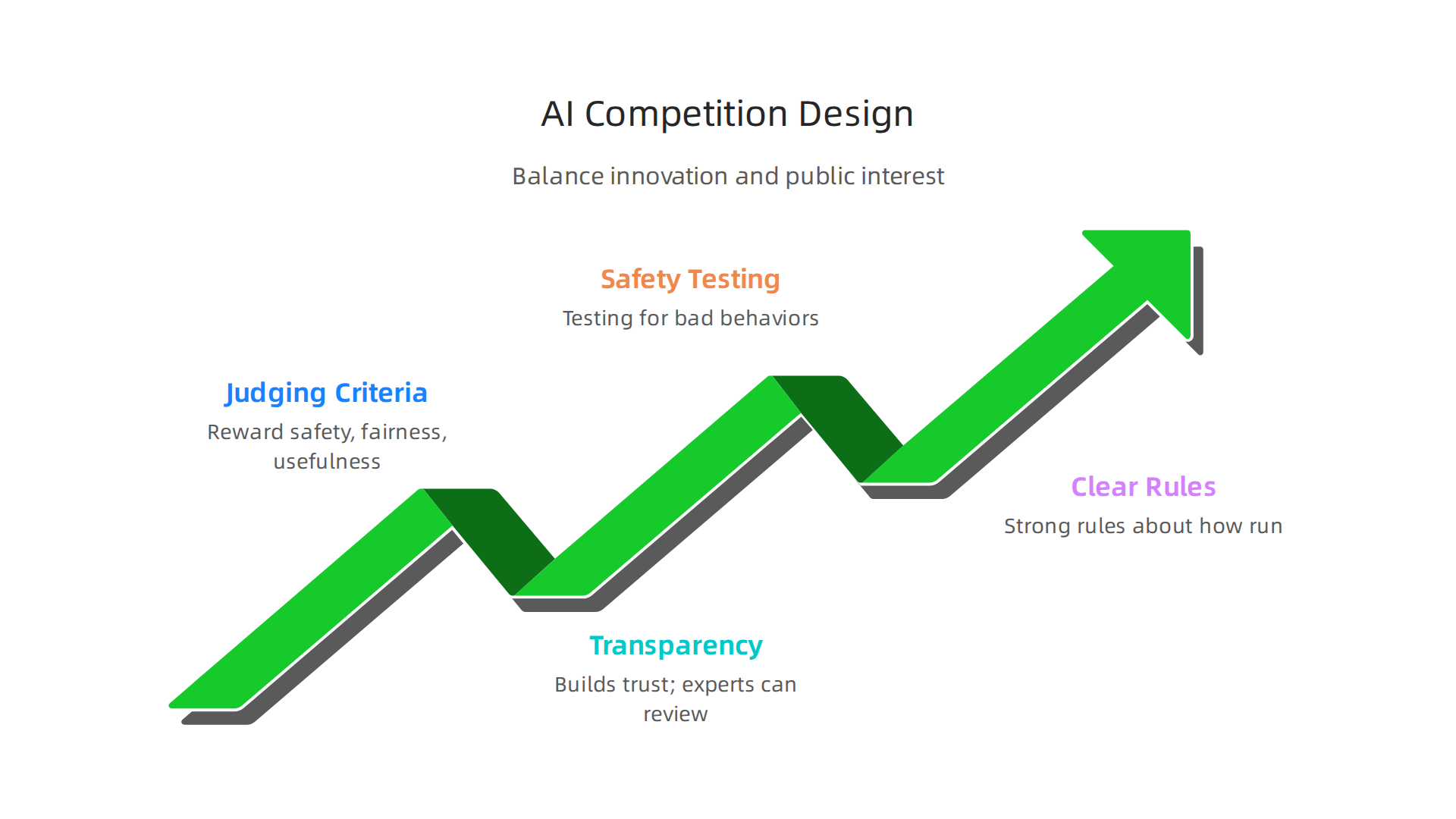
- Change How We Judge: Instead of just looking for the fastest or most powerful AI, competitions should also reward safety, fairness, and usefulness for people. For example, judges could look at how transparent an AI model is, meaning how well we can understand why it makes certain decisions. New research points out that evaluating AI should include things like data and model transparency, along with safety and risk factors A Comprehensive Survey and Classification of Evaluation …. This way, companies like Hive AI or Pathway AI would need to focus on building AI and machine learning tools that are safe, not just smart.
- Be Open and Clear (Transparency): Competitions need to be open about their rules, how they judge, and what safety checks are in place. When everyone knows the rules, it builds trust. It also helps experts look at the AI systems being built to make sure they are not harmful. Transparency is a key part of how we measure AI safety. For instance, the AI Transparency Atlas: Framework, Scoring, and Real-Time … gives important weight to safety evaluation and critical risk when scoring AI systems.
- Add Safety Steps (Safety Gates): Organizers should put in strict safety checks before any AI is widely used. This means testing for bad behaviors and making sure the AI won’t cause harm. Some studies even suggest that more competition could make AI less safe, because companies rush to be first More AI Competition May Mean Less Safety, New University of …. So, having these safety steps is very important. This also helps with Rigorous Artificial Intelligence Review for Policy Compliance.
- Use Good Rules and Oversight (Governance Guardrails): We need strong rules about how AI competitions are run. This means having many different groups involved in making decisions, not just one. For example, governments, AI experts, and public groups should all work together to set the standards. This "dual governance" approach can bring together official rules and feedback from many people to keep AI safe. The International AI Safety Report 2026 highlights the need for threat modeling and capability evaluations to identify vulnerabilities and assess dangerous behaviors. This kind of careful planning helps to create good AI Agent Governance: Building Safe, Compliant, Advanced AI Systems.
By putting these ideas into action, we can make sure that the race to build the best AI also makes our world safer and better for everyone. It’s about finding the right balance between making new things and being careful.
Taking these steps from the artificial intelligence olympics and applying them to your own company is key. Organizations need a clear plan to handle the fast changes in AI. This means looking at how new AI tools might affect your business, making sure you follow the rules, and working with others to create a safer AI future.
Practical steps for organizations: strategy, compliance, and engagement
For leaders in policy, legal teams, investors, and product developers, understanding and planning for AI is a big job in 2026.

Here’s what your organization can do.
A checklist for assessing competition risk
When you think about AI competitions, or even just building your own AI, it’s important to look at the risks. Companies like Hive AI, Pathway AI, or those developing AI and machine learning tools need a solid plan.
Here’s a simple checklist to help your teams assess these risks:
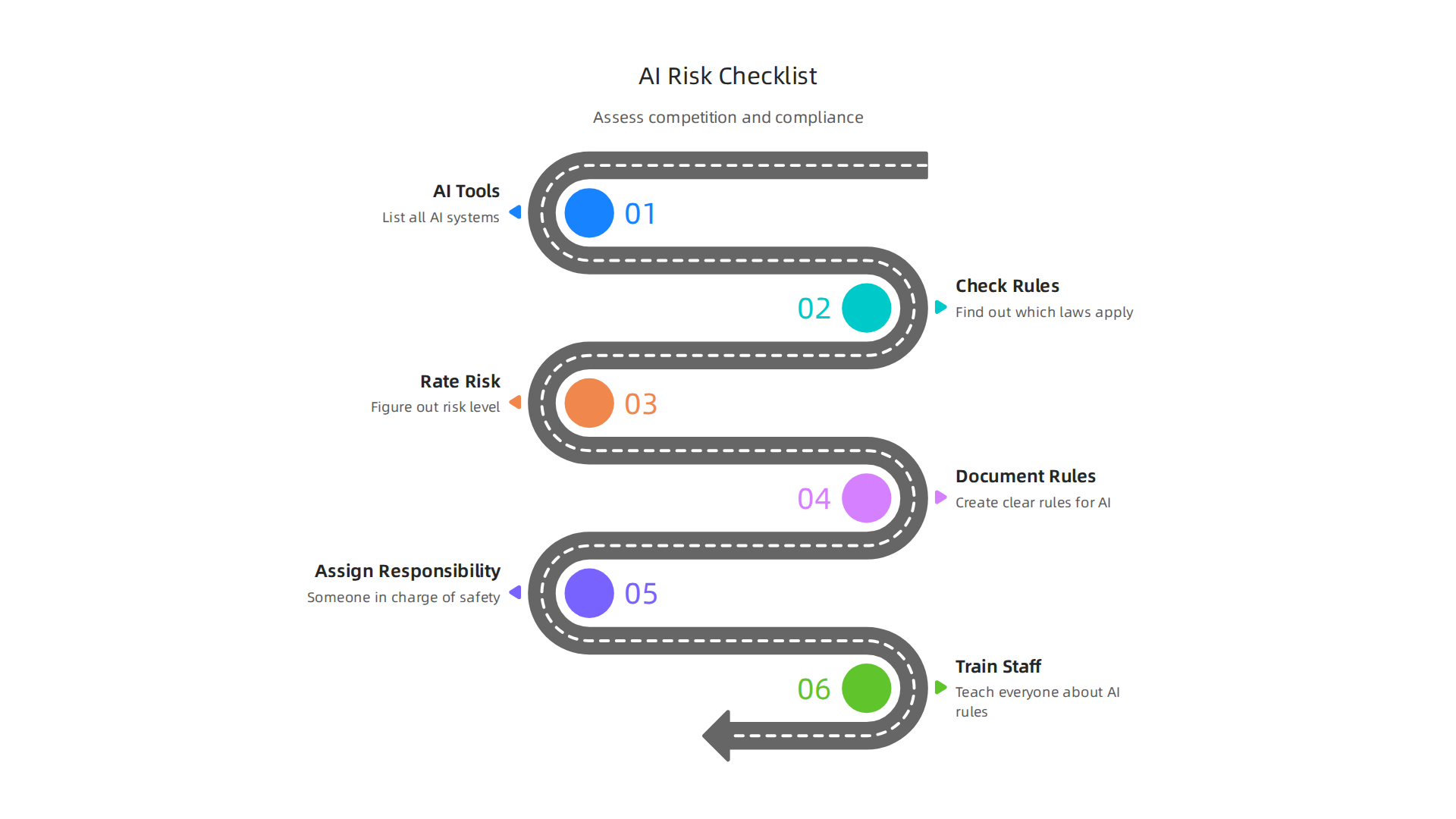
- Know Your AI Tools: Make a list of all AI systems your company uses or plans to use. Understand what data they touch and who is in charge of them. This is the first step in AI Compliance: The 2026 Enterprise Guide.
- Check for Rules: Find out which laws and company rules apply to each AI system. This includes things like data privacy laws or new AI acts, especially in places like the EU. A good place to start is an AI Compliance Checklist 2026: EU AI Act, GDPR, ISO 42001, and ….
- Rate the Risk: Figure out how risky each AI system is. Some AI might just help with small tasks, while others could make big decisions. High-risk systems need more care. The AI Governance Playbook: 47 Practical Guides for Compliance Teams offers help for this.
- Write Down Your Rules: Create clear rules for how your company uses AI. This "AI policy" should explain what’s allowed, what’s not, and how to report problems. A clear AI Governance Checklist (2026) can guide you.
- Assign Responsibility: Make sure someone in your company is clearly in charge of AI safety and compliance. This person or team should oversee everything, from new projects to daily use.
- Train Your People: Teach everyone in your company about your AI rules and the best ways to use AI safely. This helps prevent mistakes and makes sure everyone is on the same page.
By checking these points, you help your company avoid problems and build AI responsibly. This is crucial for any company that wants to Build Your AI Advantage: A Strategic Playbook for Business Leaders in 2026.
Engaging with regulators and competition organizers
Beyond looking inward, organizations also need to look outward. This means talking to the people who make the rules and those who run events like the artificial intelligence olympics.
- Speak Up Early: Don’t wait for rules to be made. Share your thoughts and experiences with government groups and standard-setting bodies. Your real-world insights can help them create better, more practical rules.
- Work Together on Standards: Join groups that are creating technical standards for AI. For example, getting ready for an ISO 42001 Certification Audit shows you are serious about AI management. This helps ensure that the rules are fair and helpful for everyone.
- Offer Ideas to Competition Organizers: If your company, like Toolify AI, is involved in or thinking about AI competitions, share your ideas for making them safer and more focused on public good. Suggest ways to include safety checks and ethical considerations in the rules.
- Learn from Others: Keep an eye on what other companies and countries are doing. Understanding global Tech Policy 2026: How to Navigate AI Privacy Cybersecurity and Antitrust Changes can give you ideas for your own strategies.
By taking these practical steps, your organization can be a leader in making AI both innovative and safe. Staying informed is a continuous effort, and being proactive will help you navigate the ever-changing landscape of AI.
Want to stay on top of the latest in AI and tech policy? Get clear daily updates directly to your inbox.
The AI Newsletter Worth Reading
Summary
The article explains the rise of