

The New Frontier: Why ‘Field AI’ Matters Across Every Industry
AI is not a lab experiment anymore. It is running on factory floors, in hospital diagnostic rooms, and inside financial trading systems. In 2026, artificial intelligence has moved from testing phases into real, everyday work. According to recent research, 88% of companies are now using or exploring AI — a huge jump from just 20% in 2017. That means chances are high that your industry already depends on field AI in ways you might not even notice.
But here is the problem. Keeping up with all this change is exhausting. Decision-makers like you face a flood of news, new regulations, and conflicting advice.

One week a new law passes in the EU. The next week a competitor launches an AI tool that reshapes your market. You need to understand what matters without spending all day reading.
This article cuts through the noise. We will give you a structured, evidence-based look at the most important field AI applications across industries in 2026. Our focus is on what you actually need to know: policy shifts, strategic choices, and how to stay ahead. Whether you work in government, tech, finance, or healthcare, this guide will help you see the big picture without getting lost in the details.
We will also share practical ways to use AI effectively while keeping compliance and ethics in mind. And if you want daily updates on these fast-moving topics, we have a simple recommendation at the end.
Let’s start by looking at where field AI is making the biggest difference right now. If you want a deeper understanding of the technology behind these changes, check out this guide on AI literacy for policy professionals.
It explains the core concepts in plain language.
And to keep getting clear, daily insights on AI and tech policy without the fluff, consider The AI Newsletter Worth Reading.

It delivers what you actually need to know straight to your inbox.
Healthcare: AI in Diagnostics, Drug Discovery, and Patient Care
One of the most exciting places field AI is changing lives is in healthcare. In 2026, hospitals and clinics are using AI to spot diseases faster, find new drugs cheaper, and take better care of patients.
If you want to know how to use AI effectively, healthcare gives some of the best examples.
AI in Imaging and Diagnostics
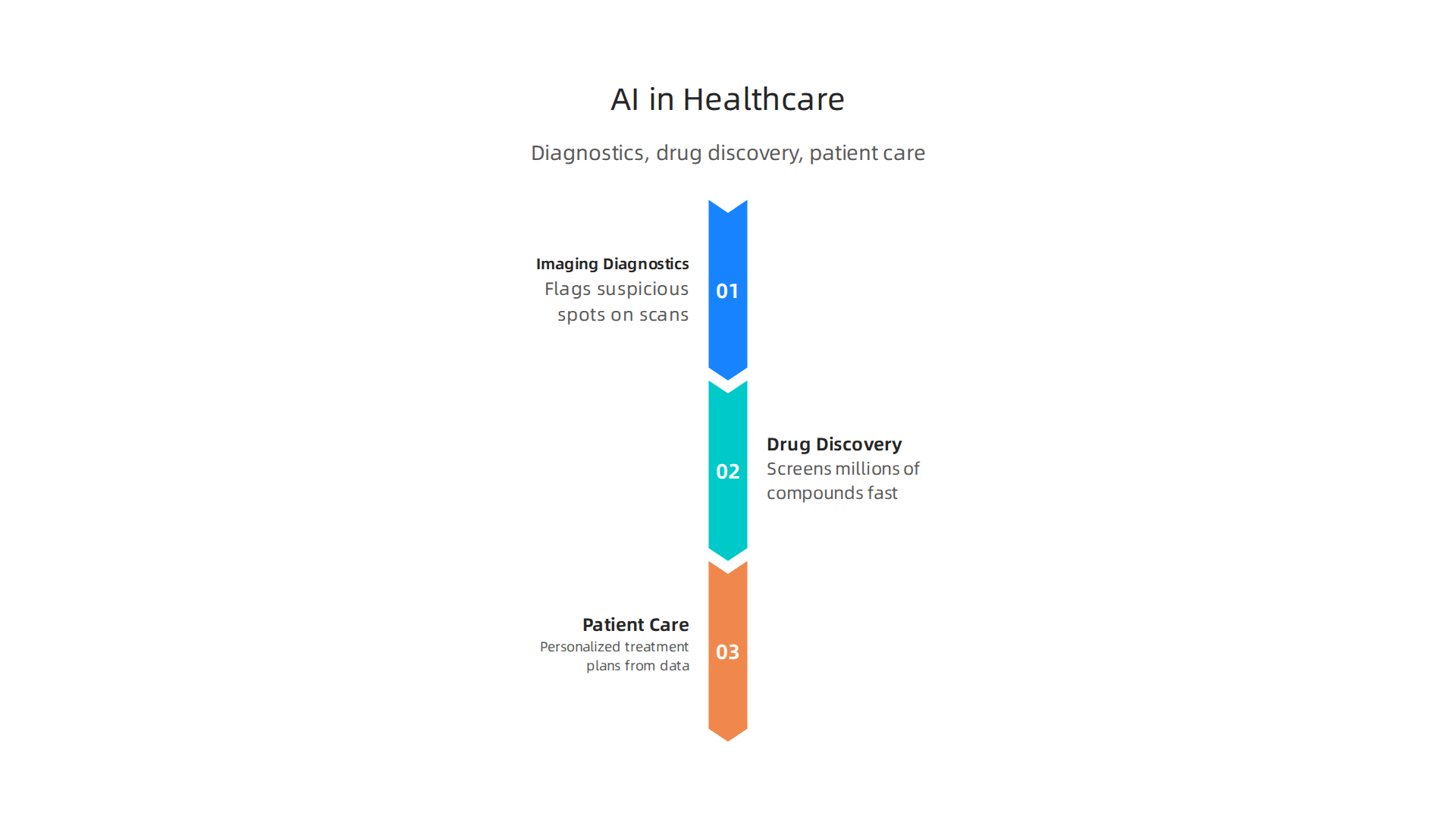
Think about radiology. A radiologist looks at hundreds of images a day. It is tiring work. AI tools now help by flagging suspicious spots on X-rays and MRIs. They do not replace doctors. They give doctors a second pair of eyes that never gets tired.

Some studies show AI can catch certain cancers earlier than humans working alone. This speed saves lives.
The numbers back this up. According to the authoritative 2026 AI Index Report, AI adoption is growing fast across all industries. Healthcare is one of the leaders. Hospitals that use AI for diagnostics see real improvements in both speed and accuracy. That is field AI making a real difference for patients.
Drug Discovery Gets Faster
Finding a new drug used to take over a decade and cost billions. Machine learning models are changing that. AI can screen millions of chemical compounds in days, not years. It predicts which ones might work and which ones will fail. This cuts wasted time and money.
Pharmaceutical companies now use AI automation tools to speed up every part of the pipeline. From finding targets to running early tests. In 2026, several drugs discovered with AI are in clinical trials. That would have been unthinkable just a few years ago. These tools are also creating new AI automation jobs for people who understand both biology and data science.
Better Care for Patients
AI is also helping with direct patient care. Personalized treatment plans use patient data to pick the right therapy for the right person. No more guessing. Virtual nursing assistants check on patients, answer questions, and remind them to take medicine. This frees up nurses for more important work.
If you work in healthcare policy, you need to understand the rules around doctor AI regulation differences. Data privacy and patient safety create unique challenges that do not exist in other industries. The laws are still catching up with the technology.
The key takeaway? Field AI is not a future idea in healthcare. It is here now. It is helping doctors see more, discover faster, and care better. And as adoption grows, the opportunities to learn how to use AI in your own field will only expand.
Finance: Algorithmic Trading, Fraud Detection, and Personalized Banking
Now let’s move from healthcare to finance. The same kind of field AI transformation is happening in banks, trading firms, and insurance companies.
In 2026, finance is one of the top industries for AI adoption. According to a recent study on AI adoption by industry in 2026, professional services and finance lead the pack.
That makes sense when you see what AI can actually do.
Algorithmic Trading Gets Smarter
Trading used to be about gut feelings and phone calls. Now it is about math and speed. AI models analyze huge amounts of market data in real time. They spot patterns no human could see. Then they execute trades in milliseconds. This is not about replacing traders. It is about making better decisions faster.
Risk management is another big win. AI predicts market swings and adjusts portfolios automatically. If a big drop is coming, the system can pull back before the damage hits. That is how to use AI to protect money instead of just chasing gains.
Fraud Detection That Actually Works
Banks lose billions to fraud every year. Old systems flag too many false alarms. Legitimate customers get their cards blocked for no reason. AI changes that.
Deep learning models learn what normal behavior looks like for each customer. When something strange happens, the system catches it. But it also learns to ignore harmless differences. The result? Fewer false alarms and more real fraud caught. Some banks now catch novel fraud patterns within seconds because the AI adapts faster than criminals do.
Personalized Banking for Everyone
Generative AI is changing how banks talk to customers. Instead of reading a generic FAQ, you get answers that match your specific situation. Robo-advisors build investment plans based on your goals and risk level. They adjust as your life changes.
Banks also use AI automation tools to handle routine questions, process loan applications, and send personalized financial tips. This frees up human staff to help with complex problems. It also makes banking faster and cheaper.
Of course, all this new technology comes with rules. Financial regulators are paying close attention. If you work in finance or policy, you need to understand the compliance landscape. Check out this guide on how to navigate AI privacy, cybersecurity, and antitrust changes to stay ahead of the regulations.
The bottom line? Field AI is reshaping finance from the trading floor to your phone. Every part of the industry is getting faster, safer, and more personal. If you want to keep up with these rapid changes, consider subscribing to The AI Newsletter Worth Reading for clear daily updates.
Transportation and Logistics: Autonomous Vehicles and Supply Chain Optimization
You order something online and it shows up the next day. That speed does not happen by accident. Behind the scenes, AI is driving trucks, planning routes, and keeping shelves stocked.

In 2026, field AI is transforming transportation and logistics in big ways.
Autonomous Trucks and Delivery Robots Go Commercial
Self-driving trucks used to be a science experiment. Now they are running real routes. Companies are deploying autonomous trucks on highways for long-haul freight. In cities, last-mile delivery robots roll down sidewalks carrying packages. These vehicles are not replacing all drivers yet. But they are handling the boring, repetitive parts of the job. That frees up humans for harder tasks like navigating tricky local streets or customer service.
The technology is getting safer too. AI sensors and cameras watch the road constantly. They react faster than a human can. The result is fewer accidents and lower fuel costs because the AI drives more efficiently.
Route Optimization and Demand Forecasting
Fuel is one of the biggest costs for any shipping company. AI cuts that cost by finding the best routes in real time. Instead of following a fixed map, trucks adjust based on traffic, weather, and delivery windows. This is a perfect example of how to use AI to save money and time.
Demand forecasting is another game changer. AI looks at past sales, holidays, and even weather patterns to predict how many products each warehouse will need. That means less waste and fewer empty trucks. Companies using these AI automation tools report cutting delivery times by up to 30 percent. Fleet managers also use AI to predict when a truck engine might fail. That way they fix it before it breaks down on the road. Studies show that AI-driven predictive maintenance can cut downtime by 30 to 50 percent, which is huge for keeping goods moving.
Regulations Catch Up to the Technology
All this new tech comes with new rules. In 2026, states and provinces are updating their autonomous vehicle laws. Some require remote safety operators. Others set speed limits for self-driving trucks. If your business relies on autonomous fleets, you need to stay on top of these changes. Check out this guide on AI trends and the governance challenge to understand how policy is shaping what autonomous systems can and cannot do.
The bottom line? Field AI is turning transportation from a cost center into a competitive advantage. Whether it is a robot bringing your lunch or a self-driving truck crossing the country, AI keeps everything moving faster and cheaper.
Manufacturing: Predictive Maintenance and Intelligent Automation
The same kind of transformation is happening on the factory floor. In 2026, field AI is turning manufacturing from a heavy, reactive business into a smart, proactive one.
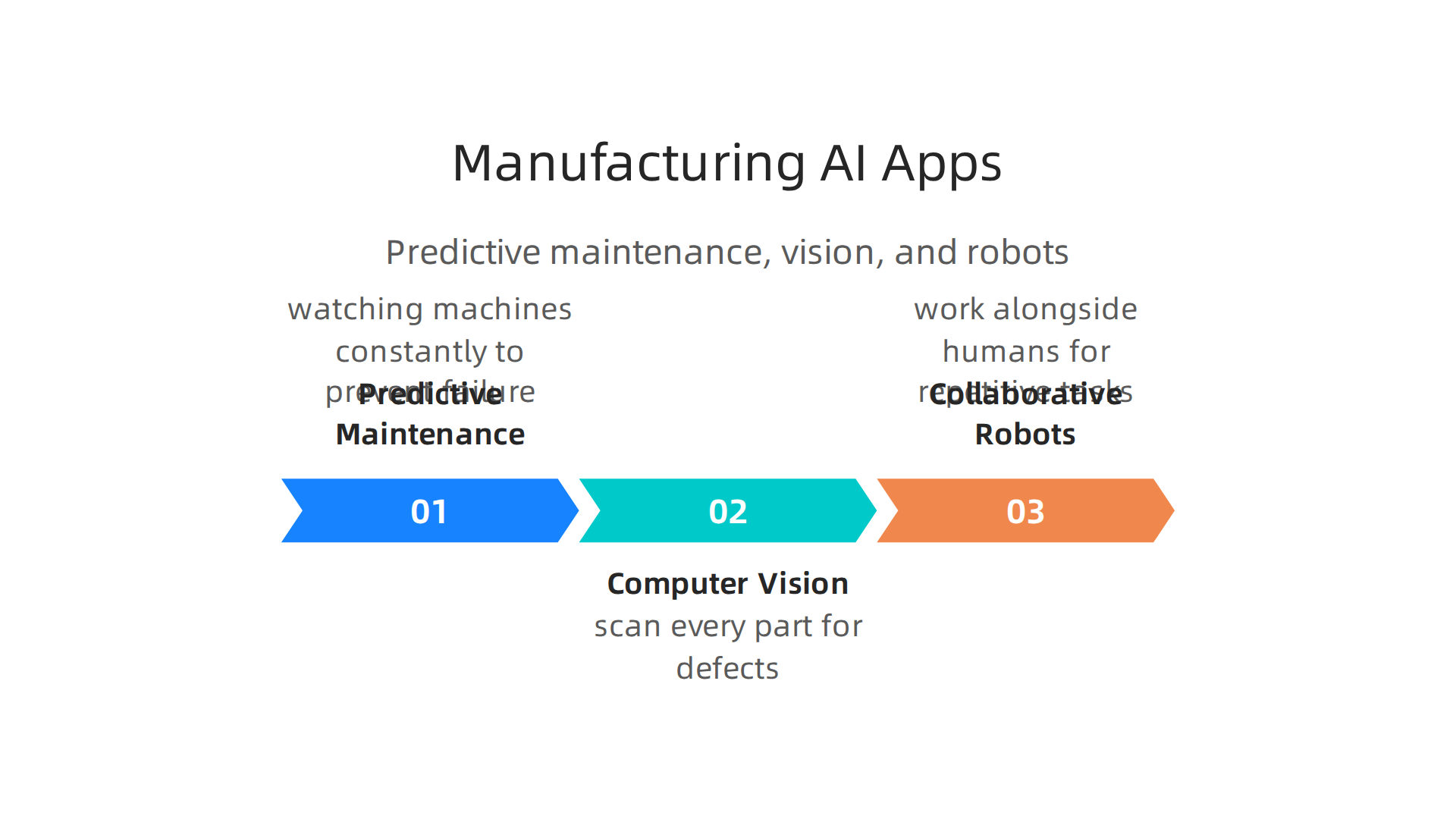
Three big changes are leading the way.
Predictive Maintenance Saves Real Money
Nothing hurts a factory like a machine that stops without warning. A broken conveyor or a failed motor can cost thousands of dollars per hour in lost production. AI solves this by watching the machines constantly. Sensors on motors, pumps, and robots collect data on vibration, temperature, and sound. The AI learns what normal looks like. When something starts to drift, the system sends an alert before the part fails.
This is how to use AI to avoid disaster. Studies show that manufacturers using AI for predictive maintenance cut unplanned downtime by 30 to 50 percent. The ROI is huge too. Companies typically see a 10-to-1 return within 12 to 18 months. If you are curious about the real numbers, check out this breakdown of AI in predictive maintenance and what actually works in 2026.
Computer Vision Spots Defects You Cannot See
The human eye misses things. After eight hours on a line, even the best inspector gets tired. AI-powered computer vision never gets tired. Cameras placed along the assembly line scan every part in milliseconds. They catch scratches, cracks, or misalignments that are invisible to a person. The system rejects bad parts instantly and sends feedback to fix the process upstream.
Manufacturers using these AI automation tools report quality improvements of 20 percent or more. Less waste means lower costs and happier customers.
Collaborative Robots Work Right Next to People
Robots used to be locked in cages for safety. Not anymore. Collaborative robots, or cobots, are designed to work alongside humans. They are lighter, slower, and smarter. AI gives them the ability to adjust in real time. If a worker moves, the cobot moves too. If a part arrives slightly out of position, the cobot adapts its grip.
These cobots handle repetitive tasks like packing, screwing, or welding. That frees up human workers for problem-solving and quality checks. For factory managers wondering about AI automation jobs, the story is not about replacing people. It is about giving them better tools. Cobots handle the boring work so people can do what they do best.
All these changes run on AI systems that keep getting smarter. To stay ahead of the latest developments in factory automation and the rules that come with it, check out this guide on how autonomous AI agents work.
Want to keep up with AI trends across every industry? Get clear daily AI updates from The AI Newsletter Worth Reading. It helps you understand how all these changes affect your business and your career.
Retail and E-commerce: Personalization, Inventory Management, and Customer Service
Now let’s step off the factory floor and into the world of shopping. Retail and e-commerce in 2026 feel completely different thanks to field AI working behind the scenes.
AI Makes Shopping Feel Personal
Remember when online stores showed everyone the same homepage? That feels dated now. Generative AI powers product recommendations that actually match what you want. It studies your past purchases, your browsing habits, and even what shoppers like you buy. Then it suggests items you probably would have missed.
The numbers are hard to ignore. Retailers using AI for personalization see conversion rates climb by 15 to 30 percent. Some see even bigger jumps. One study found that AI-driven personalization delivers an average 26 percent boost in conversions, and mobile personalization drives a 40 percent increase. For a deeper look at the data, read about these 25 Retail Revenue Lift Trends for 2026.
Dynamic pricing is another big win. AI watches demand, competitor prices, and inventory levels in real time. Then it adjusts prices instantly. That means fewer markdowns, less waste, and healthier margins.
Inventory Forecasting Stops Stockouts Before They Start
Few things frustrate a shopper more than clicking "add to cart" and seeing "out of stock." And nothing costs a retailer more than unsold goods collecting dust in a warehouse. AI tackles both problems at once.
Here is how it works. The system watches sales patterns, seasonal shifts, and even local weather data. It predicts exactly how many units of each product a store will need. When stock runs low, the system automatically places a new order. Retailers using these AI automation tools report cutting stockouts by up to 50 percent while reducing excess inventory by 20 percent or more.
This is a clear example of how to use AI to solve a real business headache. Instead of guessing what customers will want, you let the data guide you. The system learns and improves over time, so forecasts get sharper every month.
Chatbots Handle Customer Questions Fast
Customer service is changing fast in 2026. AI chatbots and virtual assistants now handle a huge share of customer interactions. They answer questions about orders, returns, and product details in seconds. No waiting on hold. No repeating yourself.
These bots keep getting smarter too. They understand context and handle complex conversations. If a customer asks about a refund, the bot checks the order, processes the return, and sends a shipping label. All without a human touching it. That means lower costs for the business and faster answers for the customer.
Want to understand how all these AI trends connect and what rules might come next? Read this overview of AI Trends 2026: Multimodal Models, Autonomous Agents, and the Governance Challenge.
Energy and Agriculture: AI for Sustainability, Precision Farming, and Grid Management
Now let’s move from the store shelf to the power grid and the farm field. Field AI is making a huge difference in energy and agriculture too.
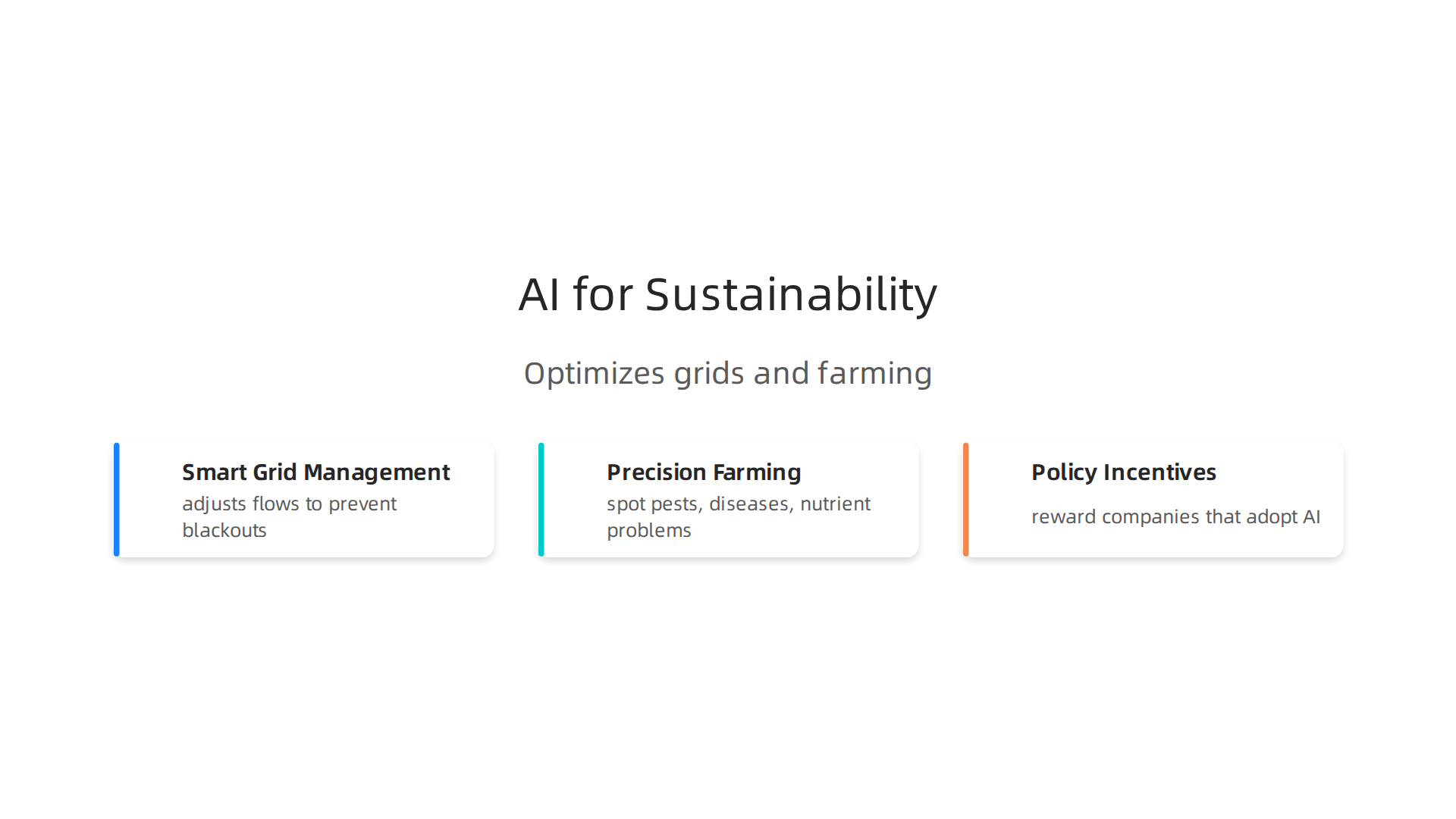
These two sectors face big challenges: climate change, rising demand, and the need to do more with less. AI is stepping in to help.
AI Makes the Power Grid Smarter
The energy grid in 2026 is more complex than ever. Power comes from solar panels, wind turbines, and traditional plants all at once. Balancing supply and demand used to be a guessing game. Not anymore.
AI acts like a "Grand Conductor" for the whole energy system. It watches weather forecasts, usage patterns, and power generation in real time. Then it adjusts flows to prevent blackouts and cut waste. One energy company in the UK now uses ai automation tools to safely carry 15 percent more power on its existing transmission lines. That is a huge gain without building new infrastructure. Learn more about how AI is powering the energy transition from smart grids to fusion.
Renewable energy sources like wind and solar are unpredictable. The sun does not always shine, and the wind does not always blow. But AI predicts these shifts hours ahead and adjusts battery storage or backup power automatically. This keeps the grid stable and slashes the amount of energy that goes to waste.
Precision Farming Feeds the World Smarter

Out in the fields, AI is changing how we grow food. Drones and sensors fly over crops every day. They use computer vision to spot pests, diseases, and nutrient problems before a human eye could see them. Irrigation systems powered by AI deliver water only where and when crops need it. No more wasting water on empty soil.
This is a perfect example of how to use AI for sustainability. Farmers get higher yields with less water, fewer chemicals, and lower costs. The data flows from sensors straight into AI models that learn what works best for each specific field. Over time, the system gets smarter and the farm gets more efficient.
Policy Incentives Speed Up Green AI Adoption
Governments around the world are pushing hard for cleaner energy and smarter agriculture. Carbon credits and tax breaks now reward companies that adopt AI to reduce emissions. The European Commission, for example, recently announced a set of rules and funding to help digitalise the energy system while keeping it sustainable. These kinds of policies make it cheaper and easier for businesses to invest in field AI solutions.
The result is a virtuous cycle. Policy creates demand. AI delivers results. And the planet benefits. For a deeper look at how government rules are shaping this shift, check out this guide on how AI policy in the public sector is transforming government compliance.
If you want to stay ahead of these changes and understand where AI is headed next, get clear daily updates from The AI Newsletter Worth Reading.
Summary
Field AI has moved well beyond labs and is now embedded in real-world operations across healthcare, finance, transportation, manufacturing, retail, energy and agriculture. This article walks through concrete field AI use cases—like AI-assisted diagnostics, algorithmic trading, autonomous trucks, predictive maintenance, and precision farming—and explains the practical benefits such as faster decisions, lower costs, improved safety, and higher quality. It also covers the governance and compliance pressures shaping adoption, from healthcare-specific rules to financial and autonomous-vehicle regulation, and highlights how policy incentives accelerate green and digital transitions. Readers will learn where field AI delivers the biggest ROI, what operational and ethical issues to watch, and how organizations can start using AI tools while managing risk. The guide emphasizes real numbers and outcomes (for example, downtime reductions and conversion lifts) so leaders can make informed strategic choices. By the end, you should be able to spot high-impact AI opportunities in your sector, understand the main regulatory concerns, and take immediate steps toward responsible deployment.