
Why open source AI is a turning point for innovation and policy
Imagine a world where powerful tools are shared freely, letting many people build new and exciting things. That’s what’s happening right now with open source AI. This way of sharing artificial intelligence (AI) models has become a huge deal in 2026. It’s changing how fast new ideas grow and how many people can use advanced AI tools.
Open source AI means that the core parts of AI models, like the smart code that makes a transformer AI work, are made public. Anyone can see them, use them, and even make them better. This open approach helps lots of people and companies create new AI products and services very quickly. It speeds up innovation because everyone can learn from each other. Many see open source AI as a primary source of artificial intelligence innovation today. This broad access means that advanced models aren’t just for big tech companies anymore; smaller teams and even individuals can get involved.
But this great openness also brings some big questions. When powerful AI models are shared widely, how do we make sure they are safe and secure? What if someone uses these tools in a bad way? These worries have created a big debate between those who love open innovation and those who are more concerned about safety.
Because of these concerns, governments around the world are now working on new rules for AI. For example, the European Union’s AI Act, which began to enter into force in 2024 and will be fully in effect by August 2026, sets clear guidelines for what kinds of AI systems can be used according to the European Union’s digital strategy. The goal is to manage risks while still allowing good things to come from AI. In the United States, the government is also focused on increasing trust in AI and has released policies that suggest checks for even free, open source AI models to make sure they are fair and safe. This shows that the future of AI will involve a careful balance between being open and being responsible.
Staying updated on these fast changes in AI and policy is crucial for any professional.
Get clear daily AI updates from The AI Newsletter Worth Reading.
Why open source AI matters now: access, innovation, and ecosystem effects
Continuing from how important it is to keep up with AI changes, let’s look at why open source AI is such a big deal right now. It’s not just about sharing code; it’s changing how fast new things are made, who gets to make them, and how businesses work.
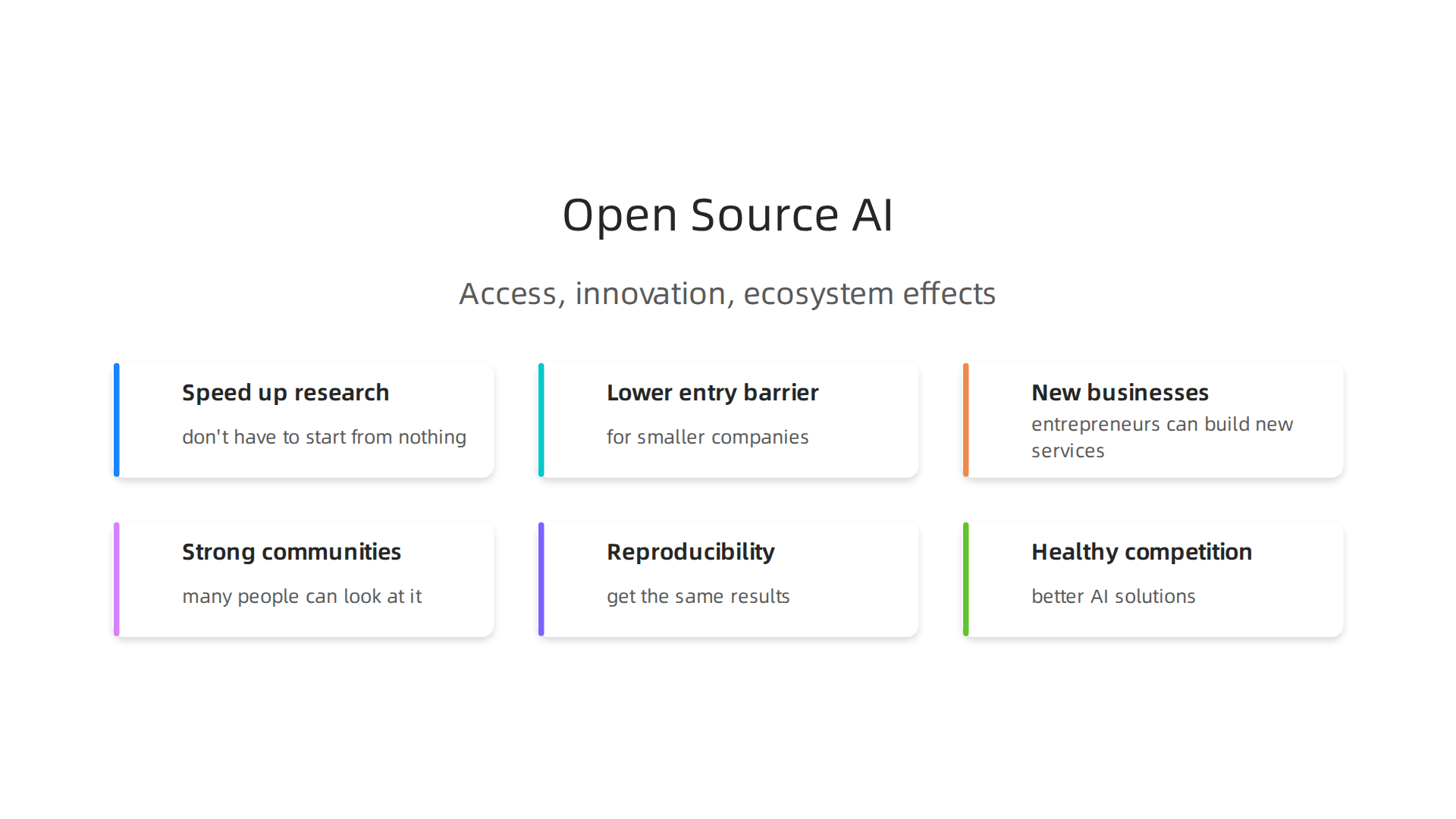
First, open models really speed up research. When scientists and developers share their AI models freely, others don’t have to start from nothing. They can take what’s already there and make it better or use it for new things. This helps ideas grow much faster. Think of it like building with LEGOs instead of making every single brick yourself. This also lowers the entry barrier for many people. Smaller companies, university teams, and even individuals can use powerful AI tools that used to be only for big tech giants.

This means more people can join in and create.
This openness also helps new kinds of businesses to start. With tools like open source AI readily available, entrepreneurs can build new services and products very quickly. They don’t need to spend lots of money and time developing their own AI from scratch. This makes the whole AI world more diverse and exciting, leading to many new choices for everyone.
Another huge benefit is how open source AI creates strong communities. When code is shared, many people can look at it, test it, and find ways to improve it. This group effort helps make AI models better and safer. It also brings more transparency, meaning people can see exactly how an AI system works. This is super important for building trust in AI.
A big part of this trust comes from something called reproducibility. This means that if someone else follows the same steps, they should get the same results from an AI experiment. Open source AI makes this much easier because all the code and data are often shared. In fact, research shows that when code and data are available, it greatly boosts the reproducibility in machine learning-based research. Studies show that between 2014 and 2024, papers sharing both code and data jumped from 11% to 64%, marking a big change towards open and reproducible AI research practices.
This open approach also changes how companies compete. Instead of a few big players holding all the best AI, many companies can now use and build on the same core tools. This healthy competition means better AI solutions and services for everyone. It shows why open source AI is still a primary source of artificial intelligence innovation, shaping the future of AI for the better.
While open source AI brings many good things, like new ideas and strong communities, governments and other groups are also creating rules about how it should be used. These rules are important for safety and fairness, and they shape the future of AI. Understanding these policies is key for anyone working with or affected by open source AI in 2026.
Overview of Regulatory Approaches
Around the world, different countries are coming up with their own ways to manage AI. These rules can affect open source AI in many ways, from how it’s made to how it’s used. We’re seeing different approaches, like setting standards for code, using special licenses, and even controlling who can export certain AI tools.
For example, the European Union has passed the EU Artificial Intelligence Act. This law first started in August 2024 and will be fully in place for most parts by August 2026. It’s the first big law of its kind and focuses on how risky an AI system might be. The good news for open source developers is that many open source AI systems are outside the main rules of this Act. However, if an open source AI system is used in a way that is banned, or if it’s considered high-risk, then it does fall under the rules. The European Commission has even given guidelines on transparency obligations for certain AI systems under the AI Act to help make things clear.
Over in the United States, the approach is a bit different. While there isn’t one big AI law like in the EU, the government is putting out guidelines and recommendations. For example, federal agencies are told to do their homework on open source large language models to make sure they follow fair AI rules. There’s also talk about U.S. Open-Source AI Governance that looks at how to control the export of open model parts and prevent hidden issues in foreign open source AI. The US has also laid out its America’s AI Action Plan and a National Policy Framework Artificial Intelligence which shape how open source AI is seen and used.
What This Means for Open Source Releases
These different rules mean that people creating and using open source AI need to pay close attention. What’s allowed in one country might be restricted in another. Many organizations and projects are now creating their own policies about how to work with AI, especially when AI helps create code. You can see how many groups are creating policies in the Generative AI Policy Landscape in Open Source report.
For those who develop open source tools or use them in their businesses, it means being aware of:
- Licensing: Making sure the licenses for open source models fit with the rules in different places.
- Export Controls: Understanding if certain advanced AI models or their parts can be shared or used across borders.
- Risk Management: Knowing if an open source AI system could be seen as high-risk by regulators and what extra steps might be needed. You can learn more about managing these risks by looking at how to build AI securely and compliantly.
All these new rules are still forming, and they can change quickly. Staying up to date with the latest policy news is essential to make sure open source AI continues to be a powerful engine for innovation while also being safe and fair for everyone.
Want to keep up with the fast-changing world of AI policy?
The AI Newsletter Worth Reading
Different rules for open source AI mean that staying informed is key. Beyond just policies, open source AI is also changing how scientists and researchers work together. It helps them make discoveries that are easier to check and build upon. This is really important for pushing forward the future of AI in a way everyone can trust.
Open Source AI and the Research Ecosystem: Reproducibility, Benchmarks, and Collaboration
Open source AI helps researchers in big ways. It lets them see how AI models are built, use them, and improve them together. This way of working helps make science more open and speeds up new discoveries.
Making Research Reproducible
One of the biggest gifts of open source AI is that it helps make research "reproducible." This means that if one group of researchers does an experiment with an AI model, another group can follow their steps and get the same results. To do this, researchers need to share their code, data, and how they set up their experiments. Open source tools make sharing easy, which is a core part of being able to check and trust research findings. In fact, studies show that when papers share their code and data, they are much more likely to be fully or partly reproduced by others. This helps improve how we test and prove AI ideas, as noted in research on Reproducibility in Machine Learning-based Research. The trend toward better sharing of code and data has grown a lot, showing a clear shift toward more open AI research over the past years, according to a report on The Shift Toward Open and Reproducible AI Research.
Sharing Benchmarks and Tools
Open source also allows for "shared benchmarks." Think of these as common tests or challenges that different AI models can try to solve. When everyone uses the same tests, it’s easier to compare how well different open source AI systems work. For example, many models, like advanced transformer AI, are tested on these public benchmarks. This helps everyone see which approaches are best and makes the primary source of artificial intelligence knowledge stronger.
Working Together and Growing
When AI tools are open source, many people can work on them at the same time. This leads to better ideas and faster progress. Universities, small companies, and even individual experts can team up to make AI models better. This teamwork means that new discoveries build on old ones, which is great for the overall future of AI. To learn more about how different professionals contribute to this field, you might want to explore mastering AI research roles.
The Challenges Ahead
Even with all the good things, open source AI research faces some challenges. Because so many people are working on different parts, standards can sometimes get mixed up. It can also be hard to compare research when everyone uses slightly different ways to test their AI. We’re also seeing some private companies starting to offer their own special ways to evaluate AI, which might make things less open over time. Despite these hurdles, the power of open source to make AI research more open and collaborative is a huge win for everyone.
Open source AI offers many benefits, but it also brings some serious concerns, especially about security, safety, and protecting ideas. When AI models and their building blocks are easily shared, it’s a bit like leaving the blueprints for a powerful machine out in the open. This can lead to unwanted problems.
Security, Safety, and IP: Risks Introduced by Open Source AI
Having open access to advanced AI tools, like those built on transformer AI, comes with risks. While it helps good researchers, it also means bad actors could use these powerful models for harmful things. Researchers have warned that open source AI models are open to criminal misuse, for example, by creating fake images or videos (deepfakes) or even helping with cyberattacks. This makes it hard to control who uses these tools and for what purpose, as noted in research on The Global Security Risks of Open-Source AI Models.
Sometimes, bad code or hidden problems can be found in open source AI models. This creates a "supply chain risk." Think of it like a faulty part in a common engine that many different cars use.

If that part has a problem, it affects many cars. In 2025, a study found many malicious models hiding in big online places where AI code is shared, showing how easy it is for harmful code to spread. These kinds of problems can make AI systems break down or act in unexpected ways, which is a big safety worry. Experts are constantly tracking these issues, with new reports coming out in 2026 about Top AI Security Vulnerabilities to Watch out for in 2026.
Another big challenge is about intellectual property (IP). This refers to who owns the ideas and creations that go into an AI model. With open source AI, it can sometimes be unclear how licenses work. Licenses are like rules that say how you can use, change, and share the code. If these rules are not clear, it can lead to legal problems or make it hard for businesses to protect their own special AI tools or data. Companies that put a lot of money and effort into building unique AI might worry about their ideas being used without proper credit or payment. Ensuring your AI is built both securely and legally is vital for businesses today.
The "dual-use" nature of open source AI also creates challenges. This means that a single AI tool can be used for both good things (like finding cures for diseases) and bad things (like developing new weapons). Because the code is open, it’s difficult to stop people with bad intentions from changing and using these tools for harm. This makes it crucial for everyone involved in the future of AI to think carefully about how to manage these risks. To understand how to make sure your AI projects are safe and follow the rules, it’s helpful to learn about how to build AI securely and compliantly.
Staying informed about these fast-changing risks is really important for anyone working with or affected by AI.
Get clear daily AI updates from The AI Newsletter Worth Reading.
Business Strategies: Adopting Open Source AI While Managing Regulatory and Competitive Risk
Given the fast-moving landscape of AI risks, businesses need smart plans to use open source AI safely and effectively. It’s not just about stopping bad things from happening, but also about finding ways to grow and get ahead. Companies in 2026 can indeed use open source AI to their benefit if they set up the right rules and systems.
Building Strong Guardrails for Open Source AI
To start, companies must put clear rules in place. This is called "governance." Good governance means making sure everyone knows how to use AI tools responsibly. It helps businesses manage risks related to security, privacy, and intellectual property. Many organizations are now creating formal plans, like an AI Risk Management Framework | NIST, to deal with these challenges. These plans often include:
- Setting clear policies: Rules for how employees should use, change, and share open source AI. This helps avoid legal troubles linked to unclear licensing, which we talked about before.
- Checking AI models carefully: Before using any open source AI, companies should thoroughly check it for hidden problems or bad code. This is a key part of managing the "supply chain risk" where faulty parts can affect many systems.
- Picking trusted partners: When working with outside companies for AI services, it’s very important to pick vendors who are reliable and follow good security practices. Businesses should use tools like an AI Vendor Risk Assessment: 50-Point Template for 2026 to make sure they are choosing wisely. This process helps ensure that any outside help with open source AI aligns with your company’s safety goals.
- Keeping up with rules: Governments worldwide are making new rules about AI. Businesses must keep track of these laws to make sure their use of open source AI follows all requirements. Being up-to-date helps avoid fines and keeps trust with customers.
Establishing these controls helps businesses use open source AI responsibly, turning a potential risk into a solid foundation for innovation. For a deeper look at setting up these frameworks, consider exploring Academic Foundations Guide Strong AI Governance.
Gaining an Edge with Open Source AI
Beyond just managing risks, companies can actually turn open source AI into a competitive advantage. Here’s how:
- Faster Innovation: Open source AI gives companies access to the latest tools and ideas very quickly. Instead of building everything from scratch, they can use existing powerful models, even those based on transformer AI, and customize them for their own needs. This means they can create new products and services faster than competitors who rely only on closed, private systems.
- Community Power: The open source world is full of smart people sharing ideas and helping each other. By joining these communities, businesses can get help with problems, learn new things, and even influence the direction of future AI tools. This collective brainpower is a huge benefit.
- Attracting Top Talent: Many skilled AI developers love working with open source projects. Companies that embrace open source AI can attract these talented people who want to contribute to widely used tools and be part of a vibrant community. This is a smart way to Build Your 2026 AI Workforce Strategy and stay competitive in the talent market.
By carefully planning their approach, businesses can safely adopt open source AI and use it as a powerful tool for growth and staying ahead in 2026. This allows them to tap into a global resource that can become a primary source of artificial intelligence innovation for their operations.
Global Dynamics: Geopolitics, Cross-Border Collaboration, and the Future of Open Models
However, the global nature of open source AI also brings a complex set of challenges. In 2026, the world sees rising geopolitical tensions, which means countries are more focused on their own national security. This thinking shapes how open models are made and shared. For example, some governments might put rules, like export controls, on advanced AI technologies. This can limit how certain open source AI tools move between countries, affecting where and how these models are developed and used globally.
These national security concerns mean that companies and researchers often have to be careful about who they work with and what kind of AI they share. This can make it tricky to keep the spirit of openness alive for technologies like advanced transformer AI, which relies on shared effort to grow.
Working Together for a Shared AI Future
Despite these challenges, there are many chances for different countries and groups to work together. This "cross-border collaboration" is key to keeping the good things about open source AI strong. It helps everyone benefit from shared ideas and faster progress. Many groups are now focused on "standards harmonization," which means trying to agree on common rules for how AI is built, used, and governed.

This makes it easier for different systems to work together safely.
For instance, global organizations are actively discussing how to manage AI safely and fairly. The United Nations has a Roadmap for Global Dialogue on AI Governance to bring many different groups to the table. Also, groups like MOSAIC are forming to create shared Global AI Security Standard Organizations. These efforts show that working together across borders is vital.
This teamwork helps open source AI remain a powerful primary source of artificial intelligence innovation. It also helps manage the new rules and expectations around AI. Such "multi-stakeholder governance" involves governments, businesses, academics, and regular people all having a say in the future of AI. This way, the benefits of open development can still be enjoyed by many, ensuring that policy keeps up with the rapid pace of technology.
To understand these complex global shifts and how they impact technology, it’s helpful to stay informed.
Get clear daily AI updates from The AI Newsletter Worth Reading.
Summary
Open source AI has become a major driver of innovation in 2026 by making advanced models, code, and tools widely available to researchers, startups, and enterprises. The article explains how this openness speeds research, lowers barriers to entry, improves reproducibility through shared code and benchmarks, and builds active communities that accelerate progress. It also lays out the trade-offs: widely shared models raise real concerns about misuse, supply-chain vulnerabilities, intellectual property questions, and dual-use risks. Policymakers in the EU, US, and elsewhere are responding with different rules—most notably the EU AI Act and a patchwork of U.S. guidance—so developers and companies must pay attention to licensing, export controls, and risk classification. The piece shows what organizations should do next: adopt governance frameworks, vet open models, choose trusted partners, and monitor evolving rules. Readers will come away able to assess benefits versus risks and take practical steps to use open source AI safely and strategically.