
Why a dedicated artificial intelligence series is essential now
The world of artificial intelligence (AI) is changing super fast in 2026. New AI tools and ideas pop up every day. This quick change makes it really hard for people who make big decisions, like leaders and lawmakers, to keep up.

They need to understand what’s happening so they can make good rules and plans. But here’s the thing: many decision-makers don’t have a strong background in science or even how AI really works. A study from 2026 showed that less than 15% of global policymakers have direct experience with advanced data science or AI ethics, even though these technologies are everywhere now
Policymakers’ Data Gap: 15% Ready for AI in 2026. This creates a big gap in understanding.
This fast pace and lack of deep knowledge mean that the decisions made today about AI have huge impacts on our future. We are talking about everything from how our jobs change to how our privacy is protected. Without clear understanding, there’s a risk of making choices that don’t help people or even cause problems. For example, knowing how the "AI brain" works, or how to make AI tools have "interactive intelligence" with humans, is key to writing good policies. This is why a special learning path, like this artificial intelligence series, is so important right now. It helps bridge that knowledge gap.
This dedicated artificial intelligence series is made to help leaders and policy professionals learn about AI in a clear and useful way. It will take complex technical details and tricky rules and turn them into easy-to-understand ideas. Our goal is to give you structured lessons and practical tips that you can use right away. You’ll learn not just what AI is, but also how it affects policy, business, and society. We want to help you make smart choices that guide AI for the good of everyone. If you’re a policy professional looking to boost your understanding, we have a guide on AI literacy for policy professionals that can help.
Stay ahead with clear, daily updates.
Ready to dive deeper into the world of AI and policy?
The AI Newsletter Worth Reading
Who needs this series? Mapping the audience and use cases
This special artificial intelligence series is not just for one type of person. It’s for anyone who makes important choices about how technology shapes our world.

Our goal is to make sure you learn AI in a way that helps you do your job better.
Let’s look at who will get the most out of this learning path:
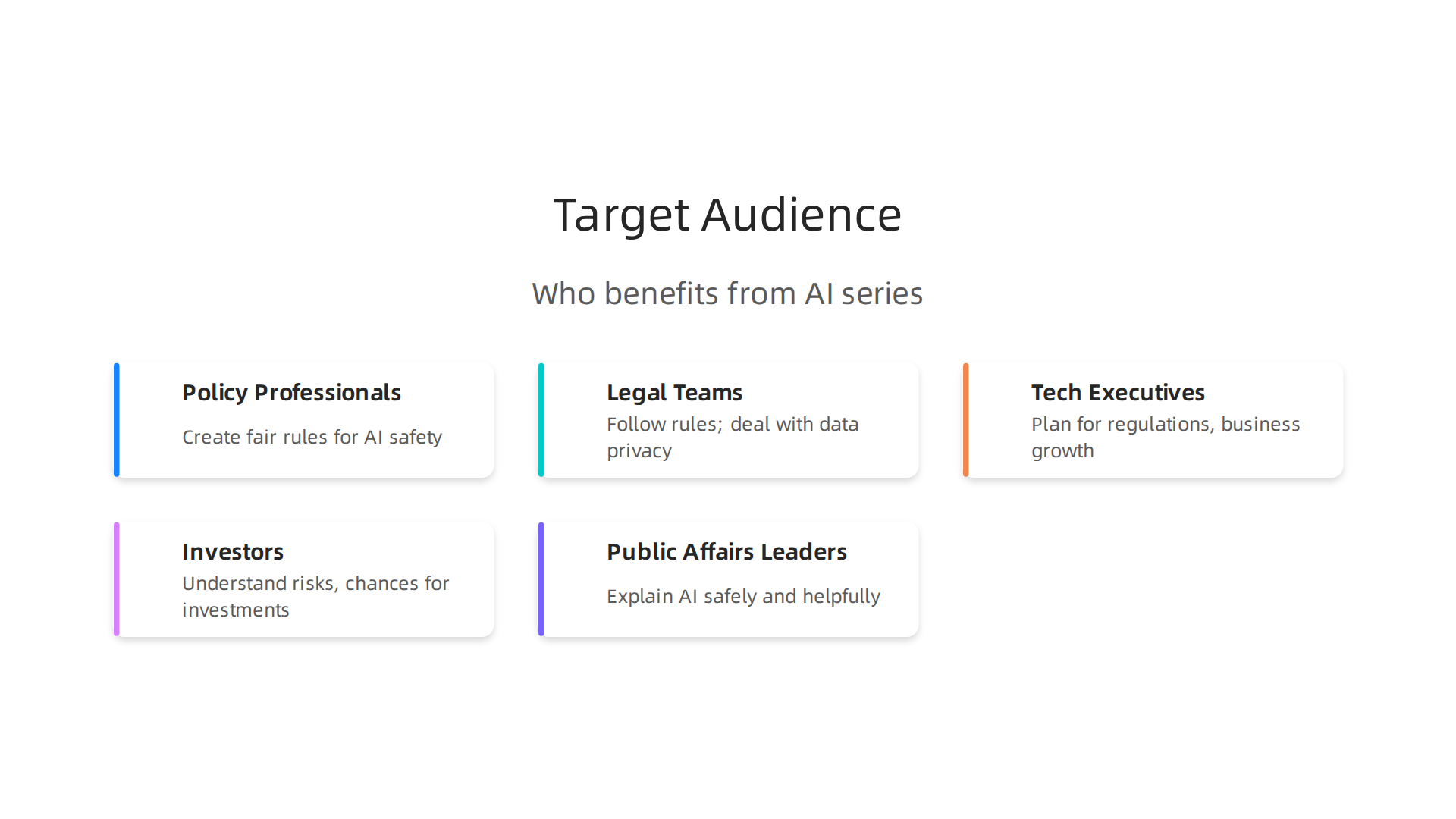
- Policy Professionals: These are people who work in government or groups that help make laws. They need to understand AI to create fair rules. This helps with things like new laws for AI safety or figuring out how AI impacts daily life. Many policy workers feel they need more training. In fact, a 2026 report showed that nearly two out of three leaders see a gap in AI skills in their teams, especially in the public sector where only 18% of workers felt they had enough AI training in a recent European survey
BETTER POLICYMAKING IN THE AGE OF AI.
- Legal Teams: Lawyers and legal experts need to know about AI. They help companies follow the rules and deal with new challenges like data privacy or how an "AI brain" makes decisions. Understanding how to check AI for policy compliance is key for them.
- Tech Executives and Founders: Leaders in tech companies must plan for the future. They need to know how AI regulations will affect their products and business growth. This series helps them make smart moves, so their companies stay strong and follow the law. Learning about tech policy 2026: global comparison of AI regulations across the US, EU, China, and beyond can give them a big advantage.
- Investors: People who put money into tech companies need to know what risks and chances AI brings. Our artificial intelligence series helps them understand the market better and make good investment choices.
- Public Affairs Leaders: These leaders talk to the public and government officials for their companies. They need to explain what their AI does and why it’s safe and helpful. This series helps them speak clearly about complex AI topics.
How this series helps you
This artificial intelligence series teaches you practical ways to use your new knowledge:
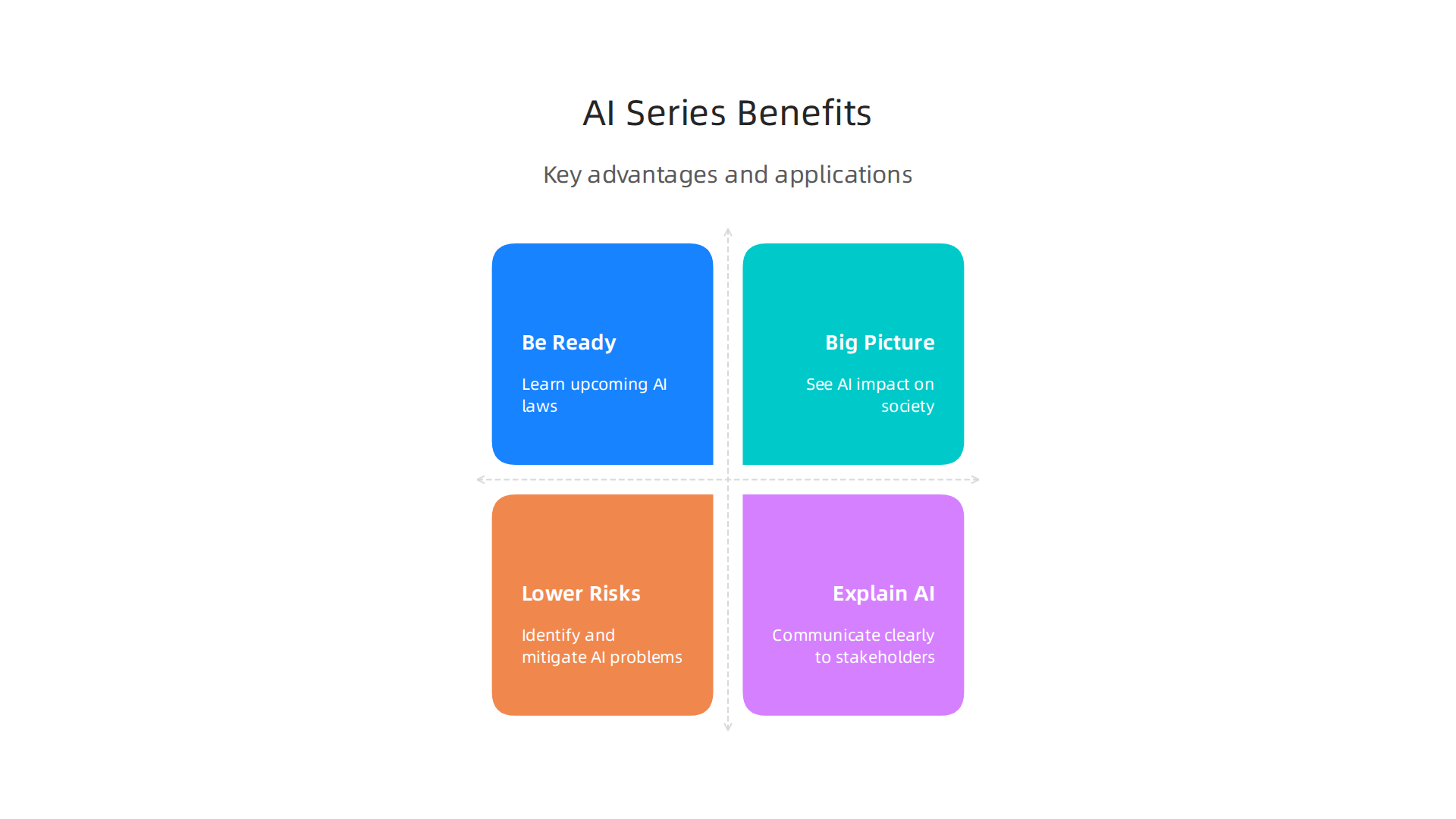
- Be Ready for New Rules: You’ll learn what’s coming next in AI laws. This means you can get your organization ready before new rules even start. A 2026 report found that only 49% of professionals are truly AI literate, meaning they use AI but still have big knowledge gaps AI Literacy Report 2026: What 1,017 Assessments Reveal – AISA. This series helps close that gap.
- See the Big Picture: You’ll understand how AI changes business, jobs, and society. This helps you make plans that fit the real world and guide AI for everyone’s good.
- Lower Risks: AI can have hidden problems with fairness, privacy, or security. This series teaches you how to spot and fix these risks before they become big issues. It’s all about building AI securely and compliantly.
- Talk About AI Better: You’ll learn to explain AI to different groups, from your team to lawmakers. This is important for getting everyone on the same page about new technology and its benefits. It will improve your interactive intelligence when talking about AI.
By understanding these things, you’ll be much better at handling the fast-moving world of AI.
To help you get better at handling the fast-moving world of AI, our special artificial intelligence series is built on a clear learning plan. We make sure you learn AI skills through core lessons and paths that fit your job. This way, the knowledge you gain is truly useful. The way we teach is designed especially for grown-ups, focusing on what helps you most in your work, as experts suggest for effective design for adult learners.
Core Modules: What You Will Learn
Our curriculum is broken down into important parts, or "modules," that cover all sides of AI.
Here’s what you will study:
- Technical Foundations: This module is where you start to understand AI. You’ll learn what AI is, how it works, and some basic ideas behind it. It’s like learning the ABCs of how an "AI brain" processes information. This helps you grasp the main points without needing to be a computer scientist.
- Governance & Regulation: Here, we dive into the rules and laws that guide AI. You’ll learn about policies that keep AI safe and fair, both now in 2026 and in the future. Understanding academic foundations guide strong AI governance is key for anyone involved in setting or following rules.
- Privacy & Security: This part of the artificial intelligence series teaches you how to keep data private and safe when using AI. It’s about protecting sensitive information and making sure AI systems are secure from bad actors.
- Economic Impacts: We explore how AI changes jobs, businesses, and money matters. You’ll see how AI affects the economy and what big trends are happening because of it.
- Ethics: This module helps you think about the right and wrong ways to use AI. We discuss fairness, being open about how AI makes decisions, and making sure AI serves everyone in a good way.
Learning Paths for Your Role
We know that different jobs need different types of AI knowledge. That’s why our artificial intelligence series offers special learning paths.
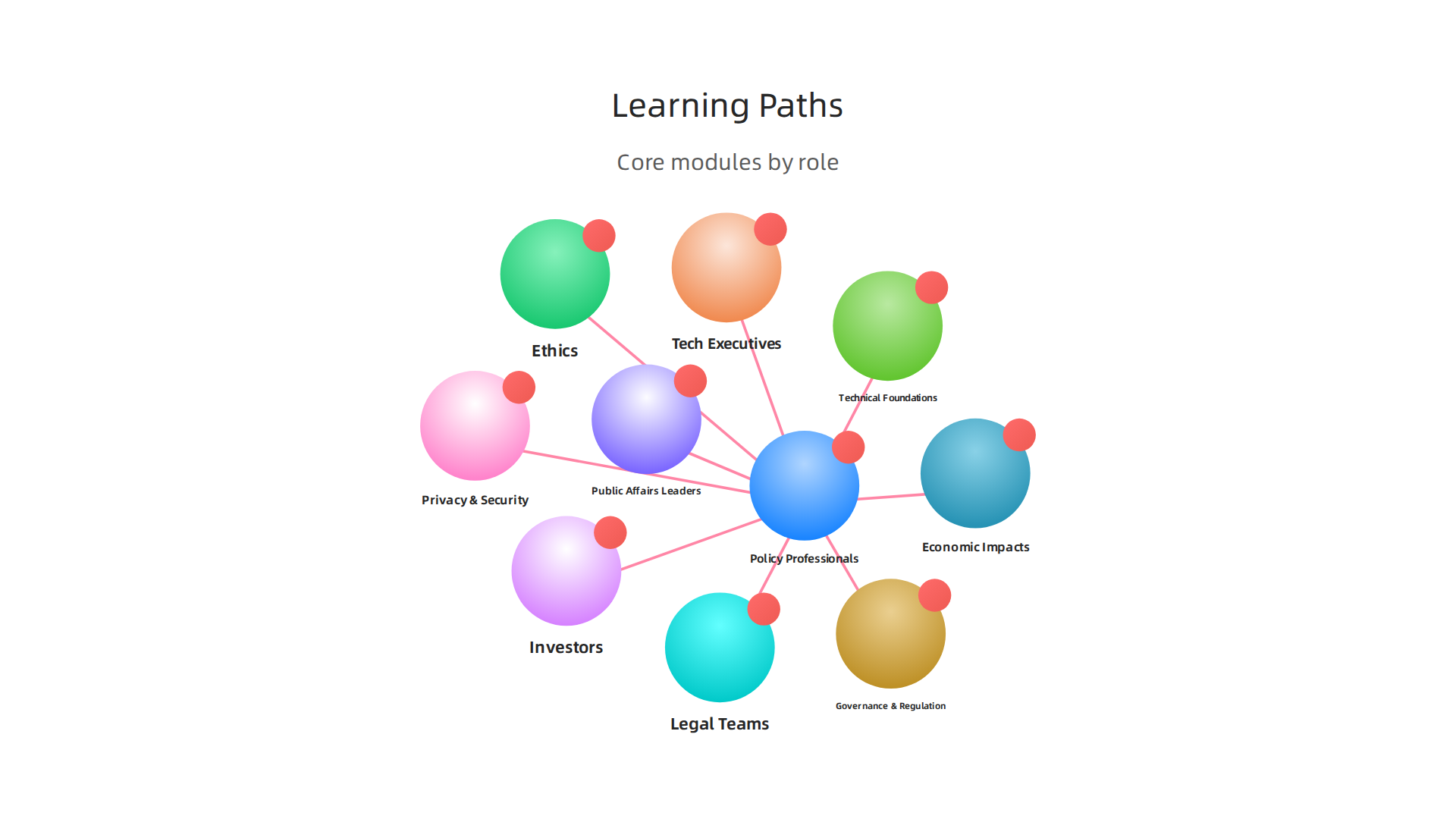
These paths combine our core modules to give you the most important information for your specific role:
- For Policy Professionals: Your path focuses on AI governance, rules, and ethical questions. You’ll learn how to shape laws and policies for AI.
- For Legal Teams: This path zeroes in on AI laws, data privacy rules, and making sure companies follow them. You’ll be ready for new legal challenges in the AI world.
- For Tech Executives and Founders: You’ll learn about the technical basics of AI, how it changes business, and what new rules mean for your company’s plans and growth.
- For Investors: Your path helps you understand the economic changes AI brings, the risks involved, and where to find good chances to invest.
- For Public Affairs Leaders: This path teaches you how to talk clearly about AI ethics and how AI can help people. You’ll learn to explain complex AI ideas to the public and government in an interactive way.
No matter your job, this series helps you gain the specific AI understanding you need to succeed in 2026 and beyond.
Our artificial intelligence series goes even deeper into certain modules so you truly understand all sides of AI.

Let’s look closely at the regulatory, privacy, and security parts. These areas are super important for anyone working with AI in 2026.
Deep Dives: Regulatory, Privacy, and Security Modules Explained
These modules are key to knowing how to use AI responsibly and safely.
Regulatory Deep Dive
In this part of the artificial intelligence series, you will learn all about the rules for AI. It covers three main things:
- Legislation Mapping: This is like drawing a map of all the new laws and rules that affect AI. You’ll learn how these laws are made, which government groups are in charge, and how they change over time. It helps you see how different laws fit together to control AI. This means you learn AI is constantly evolving with new rules.
- Enforcement Mechanisms: After laws are made, someone has to make sure people follow them. This section teaches you about the groups that check on AI use and what they do if rules are broken. It also covers what happens when companies don’t follow the rules, like fines or other actions.
- Compliance Pathways: This is about how companies and groups can make sure they are following all the AI rules. You will learn the steps to take to be compliant, like setting up good internal policies and checking your AI systems regularly. It’s important to have a rigorous artificial intelligence review for policy compliance to avoid problems.
Privacy & Security Deep Dive
Next, our artificial intelligence series helps you understand how to keep information safe when using AI. This module looks at:
- Data Governance: When AI uses a lot of data, it’s very important to manage that data well. This means knowing where the data comes from, who can use it, and how long it’s kept. You’ll learn the best ways to handle data to respect privacy. This keeps sensitive information safe from being used incorrectly by an AI brain.
- Risk Assessment: Before using any AI system, you need to find out what problems could happen. This module teaches you how to look for dangers, like if the AI could make mistakes or be unfair. It also shows you how to figure out how big these risks are and what to do about them.
- Incident Response: Sometimes, even with the best plans, things can go wrong. An "incident" could be a data leak or an AI system acting in an unexpected way. This section teaches you what steps to take if something bad happens. It’s about how to quickly fix the problem, lessen the damage, and learn from it. Learning how to build AI securely and compliantly a step by step blueprint is vital for this. In 2026, understanding tech policy and how to navigate AI privacy, cybersecurity, and antitrust changes is more critical than ever.
After diving deep into the rules, privacy, and security of AI, the next step in our artificial intelligence series is to turn that knowledge into real plans. It’s not enough to just know the rules; you need to use them to guide your business. This is where frameworks for impact assessment come in handy. They help you figure out how new policies will affect everything you do.

Translating learning into strategy: frameworks for impact assessment
Learning about AI is like building a strong foundation. Now, we’ll show you how to build the house. This part of the artificial intelligence series helps you use what you’ve learned about AI to make smart choices for your company. You’ll get practical tools to see how new rules might change your daily work, your plans for new products, and where you put your money.
How to Evaluate Policy Impacts
Think of a framework as a clear roadmap. When new AI rules come out, you need to know how they will affect your company. These frameworks give you a step-by-step way to look at how these changes impact three key areas:
- Operations: This means your everyday work. Will your team need to do things differently? Will your AI brain need new checks? For example, new data privacy laws might mean you have to change how you collect and use customer information. Understanding the basics of Impact Assessment 101 can help you get started with this kind of review.
- Investments: Where should you put your company’s money? If a new rule makes one type of AI development very risky or expensive, you might decide to invest in another area. You need to know if new AI policies will make your planned projects more or less valuable.
- Product Roadmaps: This is about the new products or services you plan to build. Will a new rule stop you from launching a certain feature? Or will it open up new chances for an interactive intelligence product that follows all the rules perfectly?
By using these frameworks, you learn AI’s policy landscape isn’t just a list of things you can’t do. It’s also a guide for smart growth.
Making Sense for Decision-Makers
Once you’ve done all this homework, you need to share what you found with the people who make big decisions for your company, like the board members. They need clear and simple information to act on. This section teaches you how to take all the complex technical and legal details you gathered and turn them into easy-to-understand summaries.
It’s like translating a very long, complex book into a short, clear report. You will learn to:
- Combine technical details: This means taking information about how your AI systems work and showing how policy changes affect them.
- Explain legal inputs: You’ll simplify legal terms and policy documents into plain language, explaining what they mean for your business.
- Create regulatory strategies: This is about making a plan for how your company will deal with new rules. It includes ideas for staying compliant and even how to talk to lawmakers. This is critical for driving policy decisions. You can learn more about driving policy decisions with AI ethics and performance evaluation.
This way, everyone in your company, from engineers to top leaders, can work together to make sure your AI plans are strong and follow all the rules in 2026.
Stay ahead in the fast-paced world of AI. Get daily insights and analysis delivered right to your inbox.
The AI Newsletter Worth Reading
Once you’ve outlined your company’s AI plans and shared them with leaders, the next step in this artificial intelligence series is to check how well those plans are truly working. It’s not enough to just have a roadmap; you need ways to measure if people understand the rules and if your company is truly ready for what’s next in AI. This is where different ways to check impact, get certified, and track success come in.
Measuring impact: assessments, certifications, and KPIs
To really know if your hard work on AI policy is making a difference, you need to measure it. Think of it like a school test for your company’s AI knowledge. This helps ensure everyone from the newest team member to the CEO understands the important rules that keep your AI brain running smoothly and safely in 2026.
How to Check What Everyone Knows
There are several smart ways to see if your team truly understands the AI rules and guidelines:
- Knowledge Tests: These are like quizzes to see how much people have learned from their training. They can cover new data privacy rules or how to use AI fairly. These simple tests help confirm that when you learn AI, the knowledge sticks.
- Scenario Analyses: This is where you give your team a made-up problem related to AI and ask them what they would do. For example, "What if our interactive intelligence system accidentally shared private customer data?" This helps them practice making good decisions before a real problem happens. Many government agencies offer guidance on how to carry out these kinds of analyses for policy impacts, ensuring teams are well-prepared for real-world situations. You can find more details on support and guidance for impact analysis.
- Tabletop Exercises: These are like mock drills for a big AI policy challenge. Key people from different parts of your company sit together to walk through a potential crisis or a new rule, deciding how they would react step-by-step. This helps find any weak spots in your plan before they become real issues.
These assessment methods help confirm that your team has a solid grasp of AI policy. To truly learn AI means being able to apply the knowledge in real situations.
Getting Certified for AI Readiness
Beyond internal checks, there are also ways to get formal proof of your company’s or your team’s understanding of AI policies.
Certification options are special programs that show outside experts agree you’ve met certain standards. For example, you might get a certification for understanding how to handle data responsibly with AI, or how to build AI tools in a fair way. These certifications can cover everything from how policies are assessed to how programs are put into action. Training courses like these can offer impact evaluation and assessment certification. Having certified team members proves your commitment to smart and safe AI practices. Many programs use methods like certification exams or expert panels to evaluate knowledge and readiness, providing a strong measure of success in policy implementation and training. More information on various assessment methods, including certification exams, can be found in resources about programmatic evaluation.
Key Measures for Success (KPIs)
To see if your training programs are truly effective, you need to track specific numbers, known as Key Performance Indicators (KPIs). These KPIs connect directly to your company’s bigger goals and help you measure the real impact of your AI policy work.
Here are some important KPIs to consider for your AI policy training programs:
- Compliance Incidents: This measures how often your company accidentally breaks an AI rule or policy. A lower number means your training is working well, and your team is following the guidelines.
- Policy-Readiness Metrics: How quickly can your company adjust when new AI laws come out? This might include how fast you update your AI systems, or how quickly your team completes new training. These metrics show if your workforce is ready for upcoming policy changes, helping you build your 2026 AI workforce strategy for policy compliance.
- Employee Feedback: What do your employees think about the training? Are they learning what they need to know? Happy and informed employees are more likely to follow the rules and contribute to a compliant AI environment.
By keeping an eye on these KPIs, you can see the direct results of your efforts. They show you where your training is strong and where it might need more work, helping your company stay ahead in the fast-changing world of artificial intelligence.
Measuring how well your team understands AI policies is a great start. But the world of AI moves super fast. What’s new and important today might change tomorrow. So, keeping your training and information fresh is just as important as the first lesson. This means your artificial intelligence series of training should always be up to date and easy for everyone to use.
Keeping AI Content Fresh
To make sure your company’s AI knowledge stays sharp, you need a plan for updating materials. Think of it like taking care of a garden. You can’t just plant seeds once and walk away.
- Regular Updates: Your training materials need check-ups. How often should this happen? Some rules change every year, so yearly reviews make sense. For example, some professional programs have a yearly review process or even require continuous professional development to keep skills current, like those for directors and board members who are expected to stay updated on market changes and legal responsibilities in 2026. Other policies might update every few years, like a handbook that gets revised every three and a half years to match a longer certification cycle. A clear schedule for reviewing and updating all AI learning content is key. This is called a "governance cadence," which helps decide when important policy decisions or updates happen. You can make sure your plans have the right cadence by matching how often things change with how quickly decisions need to be made. A good cadence means matching how fast things change, how risky mistakes are, and how often leaders can make choices. For instance, new AI programs might need monthly check-ins because things change so quickly.
- Advisory Boards: Imagine a team of wise people helping you. An advisory board for your AI training would be a group of experts from inside or outside your company. They can look at your training and tell you what’s working and what needs to improve. These experts help make sure the content is correct and covers the most important topics in AI policy.
- Contribution Models: Learning can come from everyone. Your employees who work with AI every day might have great ideas for improving the training. A contribution model means you have a way for them to share their ideas and help make the training better for everyone. This way, the training truly grows with the company’s real-world use of interactive intelligence.
Smart Ways to Learn for Busy People
Many professionals don’t have a lot of free time. So, how do you make sure they can still learn AI and stay informed?
- Microlearning: These are like small, quick lessons. Instead of a long class, you might have a 5-minute video or a short article. This makes it easy for busy people to learn a little bit each day without feeling overwhelmed. It’s an easy way to help them keep up with an artificial intelligence series of topics.
- Briefings: Sometimes, people just need the main points. Short, clear briefings or quick summaries of new AI rules or important updates can be very helpful. These can be shared in an email or a quick meeting.
- Cohorts: Learning in a group can be powerful. A cohort is a small group of people who go through the training together. They can talk about what they’re learning and help each other. This builds a sense of community and makes learning more fun, even when you learn AI remotely. Learning together can also help companies better understand how to drive policy decisions with AI ethics and performance evaluation.
By thinking about how you update your content and how you deliver it, you can make sure your company stays ahead in the fast-changing world of AI. It’s about making sure your team always has the latest and best information to work with.
Want to stay on top of the latest AI trends and policy changes without drowning in information?
The AI Newsletter Worth Reading delivers clear, daily updates straight to your inbox.
Summary
This article explains why a dedicated artificial intelligence series is urgent for 2026 decision-makers and policy professionals, given rapid AI advances and low AI literacy among leaders. It outlines who will benefit—policy teams, legal counsels, executives, investors, and public affairs leaders—and describes clear learning goals such as technical foundations, governance, privacy, economics, and ethics. The series uses role-based learning paths and modular deep dives to translate complex topics into practical policy and business strategies, including compliance mapping, risk assessment, incident response, and impact frameworks. It also covers how to measure progress with assessments, certifications, and KPIs, and how to keep training current through regular updates, advisory boards, and microlearning. By the end, readers will understand how to prepare teams, shape organizational strategy, and communicate AI risks and opportunities to leaders and regulators.