
Why education and information technologies demand policy attention now
Our world is changing fast, and technology is a big part of that. Think about how much we use computers and the internet in schools and for learning. These tools, which we call education and information technologies, are growing very quickly. In 2026, it’s more important than ever to have clear rules, or "policies," for how we use them. These policies help make sure that new technology helps everyone learn better and safely.
The way we use digital tools in schools affects many things. It shapes how students learn, how teachers teach, and even how schools are run. Because these changes are happening so fast, leaders and lawmakers need to pay close attention. They need to make smart choices about how technology is used. For instance, the U.S. Department of Education released important guidance in 2026 to help schools use technology wisely and make good choices about contracts with tech companies. This guidance helps districts and colleges understand the value of different education technology solutions and ensures they follow civil rights rules and manage student data carefully, as noted in a recent report on Education Department moves reshape edtech contracting.
Actually, there are some important balancing acts we need to get right with these new technologies:
- New ideas versus safety and privacy: We want new, cool tools that help students learn, but we also need to make sure they are safe. This means keeping private information, like student data, truly private. For example, when schools use tools with "private ai," they need to know if the student’s data is truly safe.
- National safety versus sharing ideas: Some new technologies might be important for a country’s safety. But we also want researchers and schools to share ideas freely to make things better. Finding a balance here is tricky.
- Fair access versus who can pay: The best new learning tools should be available to everyone, no matter if their school or family can pay a lot. We don’t want great education to only be for those who are rich. This idea of fair access is a big part of the National Educational Technology Plan that the U.S. Department of Education put out in 2024. This plan helps guide states and schools on how to use technology to update learning for all students. Also, the U.S. Department of Education Releases Guidance on Responsible Use of Education Technology offers more details for families and educators.
These are just some of the big questions that show why careful thought about education and information technologies is so important right now.

If you want to stay updated on these kinds of changes, consider checking out the biggest information technology policy shifts of 2026.
Keeping up with all the changes in technology policy can be tough.
The AI Newsletter Worth Reading offers clear daily AI updates to help you stay informed.
Keeping up with all the changes in technology policy can be tough. That’s why it helps to look at the different ways these rules are made and put into action. For education and information technologies, policies come from many places. They include laws, official rules, groups that set quality standards, and how money is spent or "funded." These all work together to decide how schools can use new learning tools.
Think about laws that decide what kinds of programs schools can buy or rules about how student data must be kept safe. These are major ways policies shape how new technology gets used in the classroom. For example, standards bodies help make sure that different tech tools can work together, and that they meet certain levels of quality and safety. When schools buy new learning tools, they follow rules about "procurement" to make sure they get the best value and that the tools are suitable for students. Also, how money is given out, or "funding," often pushes schools to adopt specific types of education and information technologies.
It’s also important to know that rules for technology can be different depending on where you are.

In the U.S., some rules come from the federal government, like the National Ed-Tech Plan Gets First Update Since 2017. But states and even local towns or cities also have their own rules. For instance, while federal plans guide the big picture, state boards play a key role in Connecting the National Educational Technology Plan to State Policy. This means a learning app that is okay to use in one state might not be in another. This difference can make things tricky for tech companies that want to sell their products across borders, or for researchers sharing their findings. When we talk about private ai tools, this becomes even more important. Different places have different ideas about how much private data can be used, and this impacts companies designing these tools. You can learn more about how these rules differ in a global comparison of AI regulations.
Understanding these different layers of policy helps us see how new private ai tools and other education and information technologies are brought into schools. It also shows why it’s so important for schools and tech companies to work together, as covered in a guide to mastering enterprise education partnerships. Navigating privacy and security with AI is a big part of these discussions, as you can read in reimagine home AI navigating privacy security and policy in 2026.
2. Impacts on K–12 education: equity, procurement, and classroom safety
The different rules we talked about earlier have a big effect on schools, especially for kids from kindergarten up to 12th grade. These rules shape what kinds of education and information technologies schools can buy, how they use them, and if all students get a fair chance to learn.
Privacy, Safety, and Buying New Tech
One main impact comes from rules about privacy and safety. Schools must be very careful with student information. This means that companies making private ai tools and other learning software have to follow strict guidelines for how they collect, store, and use data. If a tool doesn’t meet these rules, schools simply cannot buy it, even if it seems useful. For example, policies help guide how schools choose and buy new tools, a process called "procurement." These rules make sure schools get the best, safest, and most effective technology for students. This means vendors have to prove their tools are secure and respect privacy before schools will even look at them.
Classroom safety also means thinking about the content these technologies provide. Some education and information technologies might have built-in filters or monitoring tools to keep students safe online.
Equity and Access for All Students
Making sure every child has a fair chance to learn with new technology is a big deal. This is called equity. Not all students have good internet at home or a computer they can use. So, even if a school buys great new education and information technologies, some students might still miss out.
Here are some things to think about when it comes to fairness:
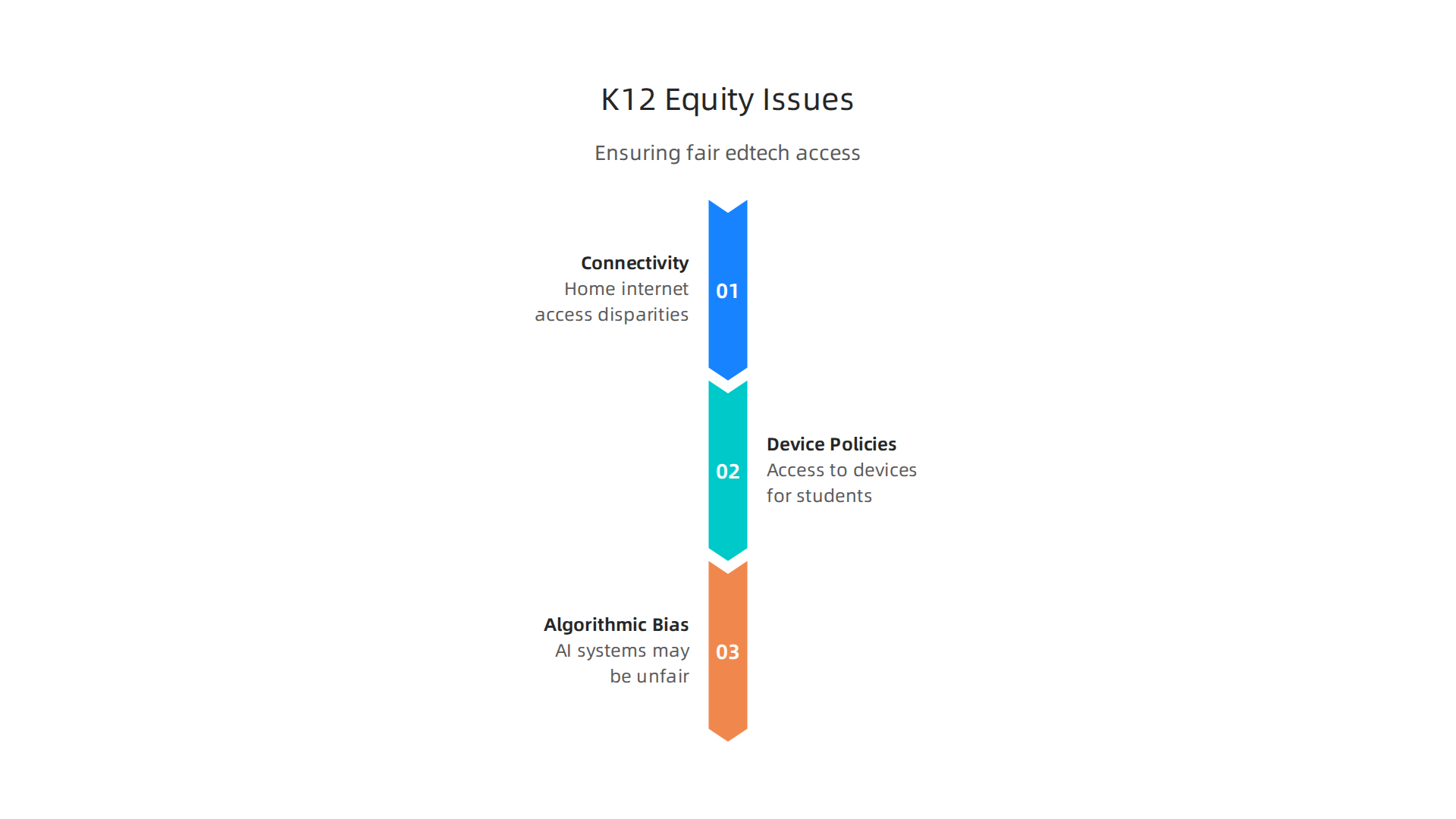
- Connectivity: Do all students have fast internet at home? If not, they can’t use online learning tools as easily.
- Device Policies: Do all students have access to a device, like a laptop or tablet, when they need one? Schools often have rules about borrowing devices or using personal ones.
- Algorithmic Bias: This is a trickier one, especially with
private aitools. Sometimes, the way an AI is made can accidentally be unfair to certain groups of students. For example, if an AI learning program was mostly tested on one type of student, it might not work as well or give fair feedback to others. Experts are looking into how new technologies can bridge the educational divide, especially for personalized learning tools powered by AI Generative AI to bridge the educational divide. We need to make sure these tools help all students equally.
Many people believe in principles like the google ai principles which push for AI to be fair, helpful, and safe for everyone. As more private ai comes into schools, it’s super important to keep equity in mind. Studies continue to show how education technology can affect how fair learning is, especially in places with lower incomes Bridging EdTech gaps. To truly make sure AI tools are fair and safe, clear rules about AI agent governance are needed.
Want to stay on top of all the latest changes in AI and tech policy? Get clear daily AI updates from The AI Newsletter Worth Reading.
3. Higher education and research: open science, IP, and national security considerations
Moving beyond K-12 schools, education and information technologies also play a very important role in colleges and universities, especially in research. Here, the rules get even more complex because we balance the idea of "open science" with concerns about national security and protecting new ideas.
Open Research vs. Security Rules
For a long time, universities have believed in open science, where researchers share their findings freely with others around the world. This helps everyone learn and grow together. However, with new technologies like private ai, governments are becoming more careful. They worry about sensitive research falling into the wrong hands or being used in ways that could harm national security.
This means there’s a trade-off. While universities want to encourage sharing, they also have to follow strict rules called export controls or security reviews for certain research projects.

These rules can limit who researchers can work with, what data they can share, and even what equipment they can use. This impacts how higher education institutions use and manage their education and information technologies for research. For example, some tools might need special licenses or checks before they can be used in certain studies.
Intellectual Property, Data Sharing, and Tech Choices
Another big area of focus is intellectual property (IP). When professors or students invent something new using university resources, who owns that invention? This is where IP rules come in. Universities often have agreements about how new discoveries are protected and shared, especially when working with companies or other countries. These rules affect how data is stored and managed within the university’s systems and what education and information technologies they choose for secure research.
Also, how universities buy their tech tools shapes what research they can do. Procurement choices for higher education, like those related to cloud adoption, are changing, with more institutions embracing digital solutions for their research needs Accelerating Cloud Adoption in U.S. Higher Education. These choices define the "tech stack" or the collection of technologies used for various research activities. Data sharing agreements are also vital, as researchers often need to collaborate across different institutions. These agreements must make sure that data is shared safely and that each partner’s rights are respected. Ethical guidelines, similar to the general google ai principles, guide how these powerful AI tools are used responsibly in research.
These factors make it very important for universities to have clear policies for their research and for the education and information technologies they use. Understanding how national security affects advanced AI systems is also crucial for leaders in this space, as discussed in SVR Intelligence: Understanding National Security AI in 2026.
Moving from how universities handle technology, let’s look at how companies that make educational tools, often called EdTech companies, plan their work. These companies create the education and information technologies that schools and colleges use every day. But they face big challenges with rules and getting their products into the market.
Regulatory Uncertainty and Market Access
For EdTech companies, especially new startups, the rules can be a moving target. Laws about how data is used or how private ai works are always changing. This "regulatory uncertainty" makes it tough for them to plan. What’s allowed today might be different tomorrow, forcing businesses to adapt quickly.
This also means that these companies have "compliance costs." They have to spend money and time to make sure their products follow all the local, state, and even international laws, like the EU AI Act for Education. For example, the Colorado AI Act places special duties on companies making AI tools. These costs can be high, especially for smaller businesses.
Getting products to market, or "market access," depends a lot on meeting these rules. Schools want to buy tools that are safe and legal. According to 1EdTech, a big question in 2026 is not if AI should be used, but "how and under what conditions" it should be used in schools 2026 EdTech Trends: Navigating the Efficacy Reckoning. This means EdTech vendors must show they understand and follow the rules, like privacy impact checks for systems using student data Data Security and Compliance Risk: 2026 Forecast Report. To dive deeper into the varied rules across different regions, consider exploring a Tech Policy 2026: Global Comparison of AI Regulations.
Designing Products for Regulatory Resilience
To handle these challenges, companies must build their products with "regulatory resilience" in mind. This means thinking about the rules from the very beginning of the design process.
Here are some key parts of this:
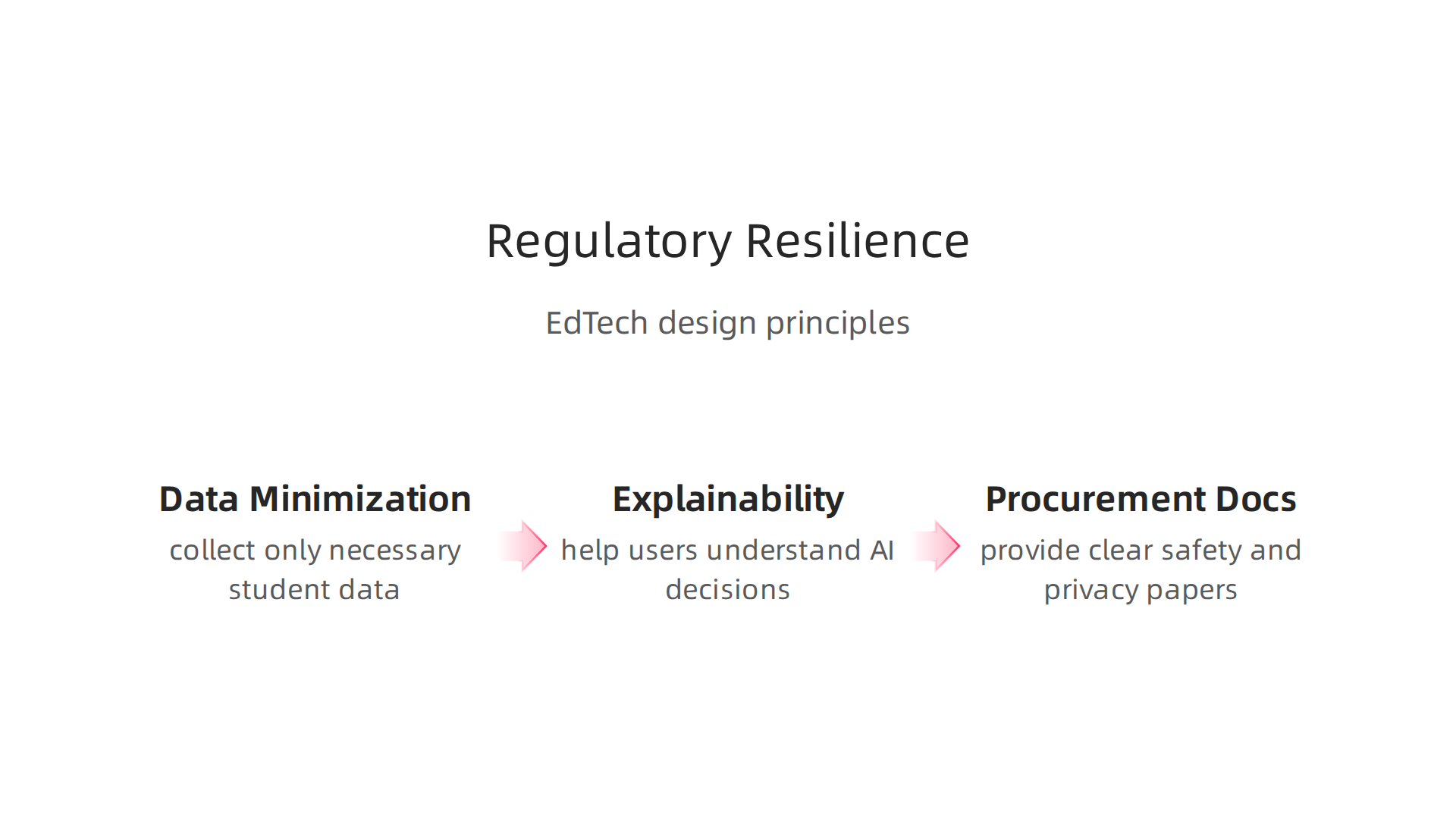
- Data Minimization: Companies should only collect the student data they absolutely need for the product to work. Less data means less risk. This is a core idea in many privacy rules, including those for children’s online safety Generative AI: product safety standards.
- Explainability: It’s important for users to understand how
private aitools make decisions. This helps build trust, especially for educational tools. For more on building trustworthy systems, check out guidance on how to build AI securely and compliantly. - Procurement-Ready Documentation: When schools buy new
education and information technologies, they need clear papers showing that the products meet safety and privacy standards. This "procurement-ready documentation" makes it easier for schools to choose the right tools. New guides in 2026 help simplify the buying process for schools by focusing on safety and evidence-based claims New Ed Tech Procurement Guide Simplifies Purchasing.
By following these ideas, EdTech companies can build better, safer, and more successful education and information technologies for everyone.
To stay ahead of the curve in this rapidly changing environment, leaders need reliable, up-to-date insights on AI and technology policy.
Get clear daily AI updates from The Deep View Newsletter. The AI Newsletter Worth Reading
To build on the idea of making products strong against changing rules, it’s really important for companies making education and information technologies to know that student data is treated very differently from other types of information. It’s not just like any customer data. There are special laws in place to keep students’ details safe.
5. Privacy and student data governance: compliance and operational controls
Student data protection laws are often much stricter than general rules for consumer data. For example, in the U.S., the Family Educational Rights and Privacy Act (FERPA) helps protect student education records. Also, the Children’s Online Privacy Protection Act (COPPA) sets rules for how online services collect info from children under 13 Student Data Privacy Governance for K-12 Districts: COPPA and …. These laws mean schools and EdTech companies must be extra careful. The U.S. Department of Education has resources to help protect student privacy Protecting Student Privacy – Department of Education.
Beyond federal rules, many states also have their own strict student privacy laws. It’s a complex network of rules designed to keep students’ information private and secure, especially when using new education and information technologies. For instance, institutions that work with federal student aid also need to follow data security requirements under the Gramm-Leach-Bliley Act (GLBA) Data Security: K-12 and Higher Education. This shows how layered these rules can be.
To make sure student data is safe, organizations need to set up clear ways of working. These are called operational controls. Here are some key ones:
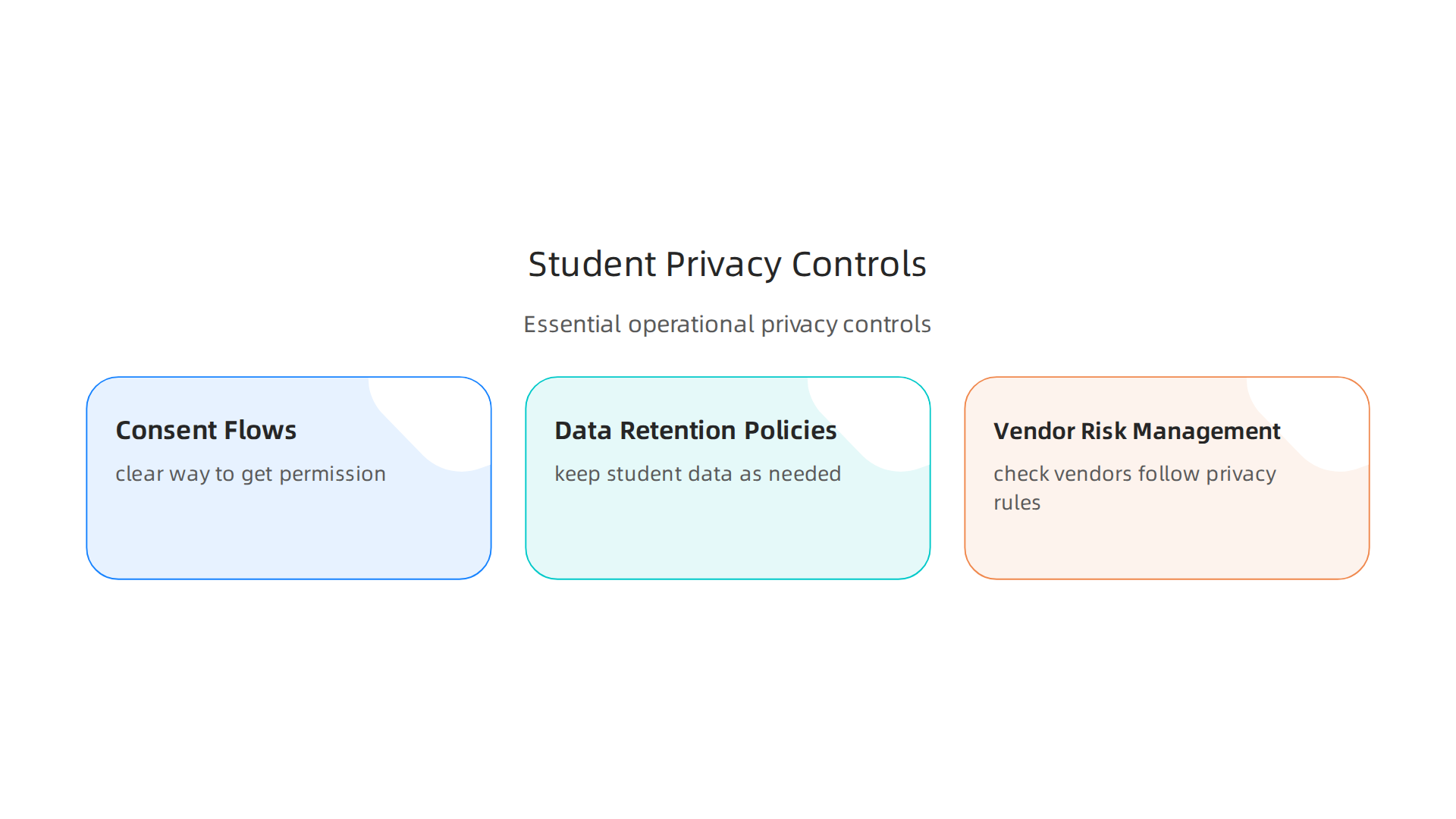
- Consent Flows: Before any student data is collected or used, especially by
private aitools, there must be a clear way to get permission. Often, this means parents must agree for younger students. This makes sure families know what data is being used and why. - Data Retention Policies: Schools and companies should only keep student data for as long as it’s truly needed for educational purposes or as required by law. Keeping data longer than necessary increases risk. Having automated policies helps to make sure data is deleted when it’s no longer needed School Data Governance Software.
- Vendor Risk Management: When schools buy
education and information technologiesfrom outside companies, they need to check that these companies also follow all the privacy rules. This means looking closely at their contracts and making sure they have strong security practices. Groups like CoSN offer helpful Student Data Privacy Guidelines & Tools to help schools manage these checks.
In 2026, with more schools using private ai, it’s even more important to have strong controls for student data. Ensuring secure handling of student data in the age of generative AI is a major focus for many experts Securing Student Data in the Age of Generative AI. By focusing on these controls, schools and EdTech providers can build trust and truly protect students as they learn with new technologies. For professionals looking to understand the core principles of AI governance, exploring Academic Foundations Guide Strong AI Governance can provide valuable context.
The last section talked about how important it is to keep student data safe. Now, let’s look at another big topic in education and information technologies: how to manage artificial intelligence (AI) in schools safely and fairly. In 2026, AI tools are being used more and more in education, so figuring out the rules for them is a key job 2026 EdTech Trends: Navigating the Efficacy Reckoning.
Regulatory Trends for AI in Education
Around the world, governments and groups that deal with education are busy creating new rules for AI. For example, in the European Union, the EU AI Act says that any AI system used in schools must be checked for safety before it can be used EU AI Act for Education — Guide 2026. These rules help make sure AI tools are fair, clear about how they work, and don’t cause any harm to students. It’s also important for schools to have clear plans for who is in charge of how AI is used and how to handle any risks, as highlighted by experts focusing on bridging the AI readiness gap in K12 education Bridging the AI Readiness Gap in K12 Education. Companies that create AI, much like the general principles guiding Google’s AI development, are expected to think about ethical use from the very start. To learn more about different rules, you can read a Tech Policy 2026 Global Comparison of AI Regulations Across the US EU China and Beyond.
Making AI Safe From the Start
Making AI safe means we build protections right into the tools from the very beginning. We call this "safety-by-design."

It means that companies making private ai tools for schools must test them carefully for any risks before students ever use them. They also need to keep checking these tools over time to make sure they stay safe SAFE AI in K-12 schools: A practical guide for administrators.
Part of this safety check involves looking for bias. This means making sure the AI works fairly for everyone, so no student is left out or treated differently because of their background. A report from 2026 points out how important it is to have clear ways to test for bias in AI tools used in education Data Security and Compliance Risk: 2026 Forecast Report – Kiteworks.
Another key step is putting in "guardrails." Think of these as safety fences that stop AI tools, like those for taking tests or getting help from a tutor, from giving out wrong or unhelpful information. The UK has even made product safety standards for AI that focus on making sure these tools are open about how they work and safe for children Generative AI: product safety standards – GOV.UK. If you are interested in how to ensure these systems are secure, check out this How to Build AI Securely and Compliantly.
Staying informed about these fast-changing rules for AI is important for anyone working in tech or education. Get clear daily AI updates from The AI Newsletter Worth Reading.
7. International Comparisons and Cross-Border Challenges
As we’ve seen, making sure AI is used safely in schools is a big job. But this job gets even more complex when we look at how different countries set their own rules. Imagine a company that makes AI tools for schools. If they want to sell their tools in the U.S., Europe, and Asia, they have to follow three or more different sets of rules. This creates a big challenge for businesses in the world of education and information technologies, making it hard to create one AI tool that fits everywhere.
For instance, in 2026, the U.S. Department of Education has put out guidance to help schools use technology responsibly. This guidance gives states and local school districts a lot of freedom to decide how they will manage AI U.S. Department of Education Releases Guidance on Responsible Use of Education Technology in the Classroom. This is different from the European Union, which has stricter laws like the EU AI Act that demand certain checks for AI systems in schools. The United Kingdom also has its own standards for product safety with AI. These different rules mean that private AI developers must be very careful to adjust their tools to each country’s specific needs and laws. Understanding these differences is key for anyone involved in global tech policy. To learn more about navigating global rules, you might find this guide helpful on Navigating Global Tech Systems Policy in 2026.
It’s not just about selling tools, though. Many schools and researchers from different countries want to work together on projects or share what they’ve learned. When they do this, they often need to transfer student data across borders. This can be tricky because each country has its own rules about data privacy. To make these collaborations easier and safer, legal safeguards are put in place. These are like special agreements that make sure data is protected even when it moves from one country to another. Experts also look at how things are done day-to-day to find good ways to reduce any problems, making sure that working together feels smooth and trustworthy. The goal is to let new ideas and research grow while always keeping student data safe. If you’re interested in how to keep AI systems safe and compliant, check out how AI Agent Governance: Building Safe, Compliant Advanced AI Systems can help.
This mix of different rules and the need for safe data sharing show why understanding international standards is so important for the future of education and technology.
Summary
This article explains why education and information technologies (edtech) require focused policy attention in 2026, showing how rapid technological change affects learning, safety, equity, procurement, and research. It outlines the main tensions—innovation versus privacy, national security versus open research, and fair access versus affordability—and describes how laws, standards, funding, and procurement rules shape which tools schools and universities can use. The piece breaks down impacts on K–12 classrooms (student data protection, connectivity, algorithmic bias), higher education (open science, IP, export controls), and EdTech vendors (regulatory uncertainty, compliance costs, design strategies). It emphasizes practical controls like consent flows, data retention policies, and vendor risk management, plus the need for safety-by-design and explainability in AI systems. The article also highlights differing national approaches—U.S. guidance, the EU AI Act, and other country rules—and why cross-border data and market access are challenging. After reading, educators, administrators, and vendors will better understand the policy landscape, what rules to watch, and practical steps to adopt safer, fairer, and procurement-ready edtech solutions.