

Why fintech startups must treat AI policy as a core strategic issue
Imagine you are building a fast-growing tech company that helps people with money. You’re a fintech startup, maybe even a promising one on a YC startup list or looking for Series A funding. You use smart computer programs, called AI, to make things better and faster for your customers. But here’s the thing: the rules for these programs are changing very, very quickly.
In 2026, new rules about AI, how we keep private information safe, how companies compete, and how we stay secure are coming out all the time. This fast change can cause real problems for fintech startups. It can make it hard to run your business and even stop you from getting the money you need to grow. For example, the European Union’s AI Act has many rules that will be fully active by August 2026, and not following them can lead to very big fines 2026 Guide to AI Regulations and Policies in the US, UK, and EU. The U.S. also has new guidance and frameworks for using AI in money services AI Regulations in Financial Compliance.
This article is here to help. It will give founders, people who lead policy, investors, and legal teams clear steps. You will find a roadmap for research and a list of important things to do. All this is so you can understand and handle the tricky rules in 2026. Understanding these changes is key for any tech-focused business, from a small SaaS company to big fintech startups, to stay safe and succeed.

If you want to dive deeper into how different countries are handling these changes, check out our guide on a global comparison of AI regulations across the US, EU, China, and beyond.
To keep up with all the daily changes in AI and technology policy, make sure you don’t miss out.
The AI Newsletter Worth Reading
How recent AI and fintech rules change the startup playbook
The changing rules for AI and money services are a big deal for fintech startups. These new rules affect how these companies build their products, how they get them to customers, and what investors expect from them. Let’s look at the main changes you need to know about in 2026.
Key Regulatory Triggers for Fintech Startups
Here are some important areas where new rules are making waves:
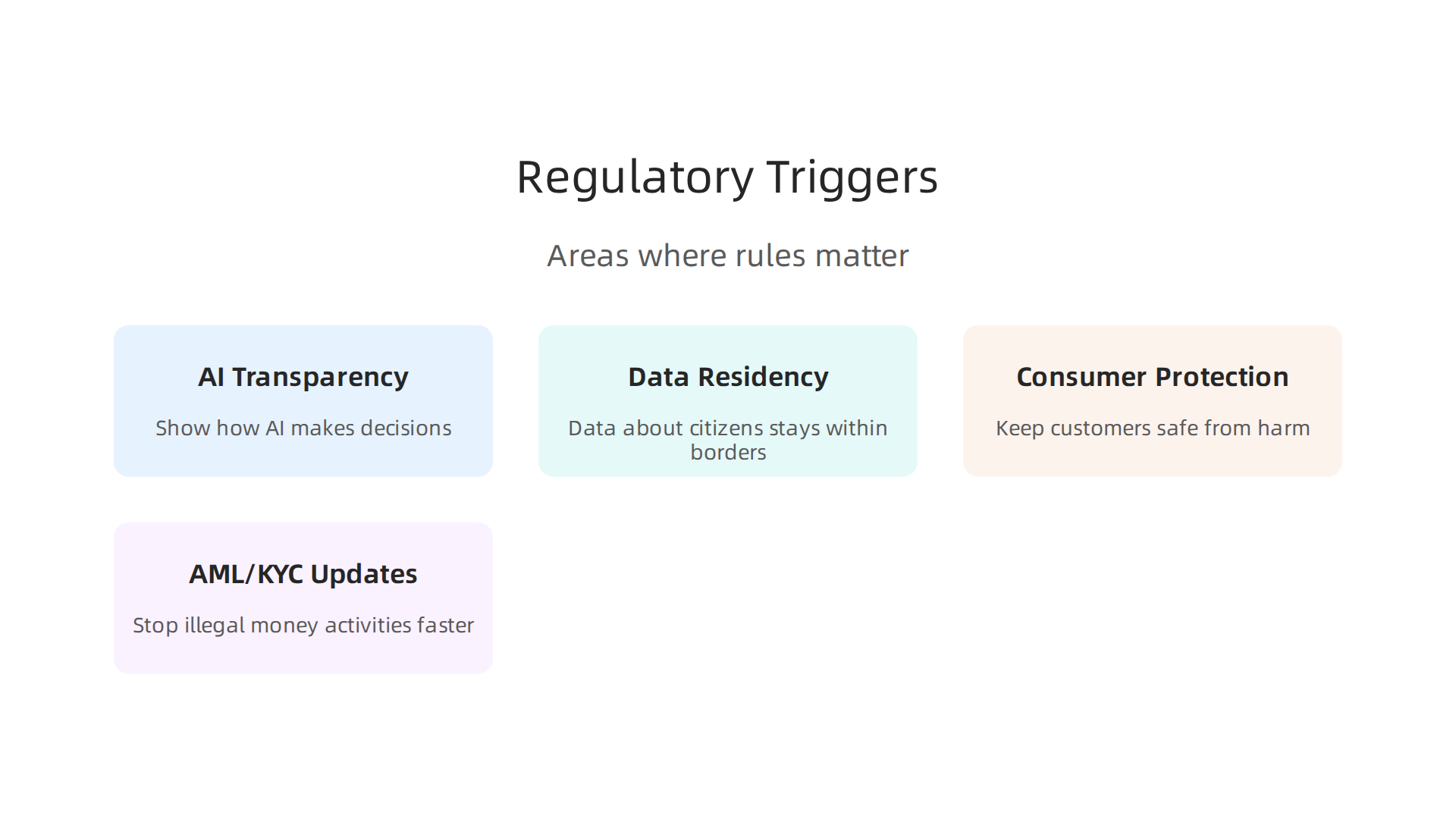
- AI Transparency: This means you must be able to show how your AI makes decisions. For example, if your AI helps decide if someone gets a loan, you need to explain why it made that choice. This helps make sure the AI is fair and not biased. For fintech startups using smart algorithms, being able to explain every step is now a must-have, not just a nice-to-have.
- Data Residency: This rule is about where customer information is stored. Some countries or regions now demand that data about their citizens stays within their borders. This can be tricky for a SaaS company that works all over the world. They might need different computer servers in different places, which costs more money and makes things more complex.
- Consumer Protection: These rules are all about keeping customers safe from harm, bad practices, or unfair treatment. They ensure that AI systems in financial services protect people’s rights and personal data. This includes making sure AI does not trick users or cause financial problems for them.
- AML/KYC Updates: AML stands for Anti-Money Laundering, and KYC means Know Your Customer. These are rules to stop illegal money activities. With AI, these checks can be done faster, but the rules are also getting tougher. Fintech startups must prove their AI tools can correctly spot and report suspicious activities without making mistakes. The demand for accurate AI governance in financial institutions is growing, moving AI from a helpful tool to a necessary part of following rules in 2026 AI regulatory compliance priorities financial institutions face ….
How These Rules Change the Game
These regulatory triggers change how fintech startups operate in several ways:
- Product Development Timelines: Building new products now takes longer. Before, a YC startup list company might quickly launch a new AI feature. Now, they need to spend more time making sure the AI’s decisions are clear, fair, and follow all the data rules. They also need to be ready for the EU AI Act, which will have most rules fully applied by August 2026, especially for high-risk AI systems 2026 Guide to AI Regulations and Policies in the US, UK, and EU. This means more checks and tests, which can slow things down. To handle these new demands, startups need a clear plan for how to build their AI safely and correctly, as outlined in guides for how to build AI securely and compliantly.
- Go-to-Market Strategies: How you launch your product also changes. You can’t just release something and fix problems later. Now, you need strong proof that your AI is safe and compliant from day one. This affects marketing, legal reviews, and how you talk to customers about your technology.
- Investor Expectations: Investors, especially those looking at Series A startups, are now asking tougher questions about how companies handle AI rules. They want to know your plan for following the law and avoiding big fines. Showing you have a solid plan for AI governance can make your fintech startup more attractive to investors. Having good platform verification and policy in place can help secure startup funding in 2026.
In short, these new rules mean that fintech startups need to put policy and compliance at the very heart of their business plans, not just as an afterthought.

It’s clear that fintech startups face new rules in 2026. But these rules are not the same everywhere. Different parts of the world have their own ways of dealing with AI and financial technology. This can make things tricky for a SaaS company that wants to sell its services across borders. Let’s look at the main differences between the US, Europe, and other places.
Rules in the US: Using Old Laws for New Tech
In the United States, there isn’t one big law just for AI. Instead, the US uses its current financial rules to manage AI in finance. This means old rules about fair lending, stopping money laundering, and protecting consumers still apply, even if an AI is doing the work The Emerging Landscape of AI Regulation in U.S. ….
Think of it this way: if a car company makes a new super-fast electric car, the US doesn’t make a whole new "electric car law." Instead, they make sure the new car still follows all the old safety rules for cars. The same idea applies to AI in finance. Groups like the Federal Reserve, FDIC, and OCC work together to give banks and fintech startups guidance on how to use AI safely. By February 2026, many financial institutions worked together to create the FS AI RMF, which is now the main standard for managing AI Artificial intelligence and financial – Funcas.
Rules in Europe: The EU AI Act Takes Charge
Europe has taken a different path with its EU AI Act. This is a big, new law made just for AI. It started becoming real in 2024, but most of its important rules will apply by August 2, 2026, especially for AI systems that are "high-risk" US–EU AI Governance Divergence: Enterprise Compliance Guide.
The EU AI Act is very strict. It sorts AI systems by how risky they are. If your fintech startup uses AI for things like credit scoring or giving loans, that’s considered high-risk. This means you have to follow many more rules. You must show that your AI is fair, safe, and does not hurt people’s rights. Failing to follow these rules can lead to big fines, sometimes as much as 7% of a company’s total sales worldwide AI Regulations in Financial Compliance – Lucinity. This approach is very different from the US, which focuses more on current market rules.
What This Means for Fintech Startups
These different approaches have real effects on fintech startups.
- Choosing a Home Base: If you’re a new company, deciding where to start can be tricky. A YC startup list company might find Europe’s rules clearer but harder to meet at first. The US might seem more flexible, but you still have to navigate many older, separate financial laws.
- Cross-Border Business: For companies looking to grow, dealing with both the US and EU rules is a big challenge. A SaaS company offering payment systems needs to make sure its AI works correctly and legally in both places.

This means designing AI systems that can be explained and changed to fit local rules. This applies to areas like consumer finance, payments, and credit scoring. You have to be ready for different needs in data handling, fairness, and showing how your AI makes decisions.
It’s clear that fintech startups need to really understand these differences. Whether you’re a series a startup looking for funding or a company planning to expand, knowing the rules in each place is key to success in 2026. To keep up with all these changes and learn more about how different countries are handling AI, you might find it helpful to get regular updates.
Get clear daily AI updates from The AI Newsletter Worth Reading. You can also learn more about how to Navigate Global Tech Systems Policy In 2026.
As we’ve seen, understanding the different rules for AI in finance is very important for fintech startups trying to make their mark. This understanding isn’t just for following the law; it also deeply affects how much money companies can raise and how investors see their future.
Funding and Investor Expectations
In 2026, the world of funding for fintech startups is always changing. While total global investment in fintech grew from $95.5 billion in 2024 to $116 billion in 2025, there are some shifts happening Global analysis of fintech funding. For example, funding into fintech startups reached $56.8 billion in 2025, but the first five months of 2026 show a slower pace, putting the year on track for about $41.7 billion Fintech. This means that while there’s still a lot of money, investors are becoming more careful.
When rules about AI are unclear or keep changing, it makes investors nervous. They worry about how new laws might affect a SaaS company or a series a startup using AI in finance. This worry can make a startup seem less valuable. If an investor isn’t sure if an AI system will be allowed next year, they might not want to put as much money into it now. This policy uncertainty often leads to lower valuations during fundraising rounds.
Due Diligence and Risk Assessment
To feel more secure, investors now do very thorough checks, called due diligence, before putting money into fintech startups. They want to know exactly how a company’s AI systems follow the rules. This includes looking at things like:
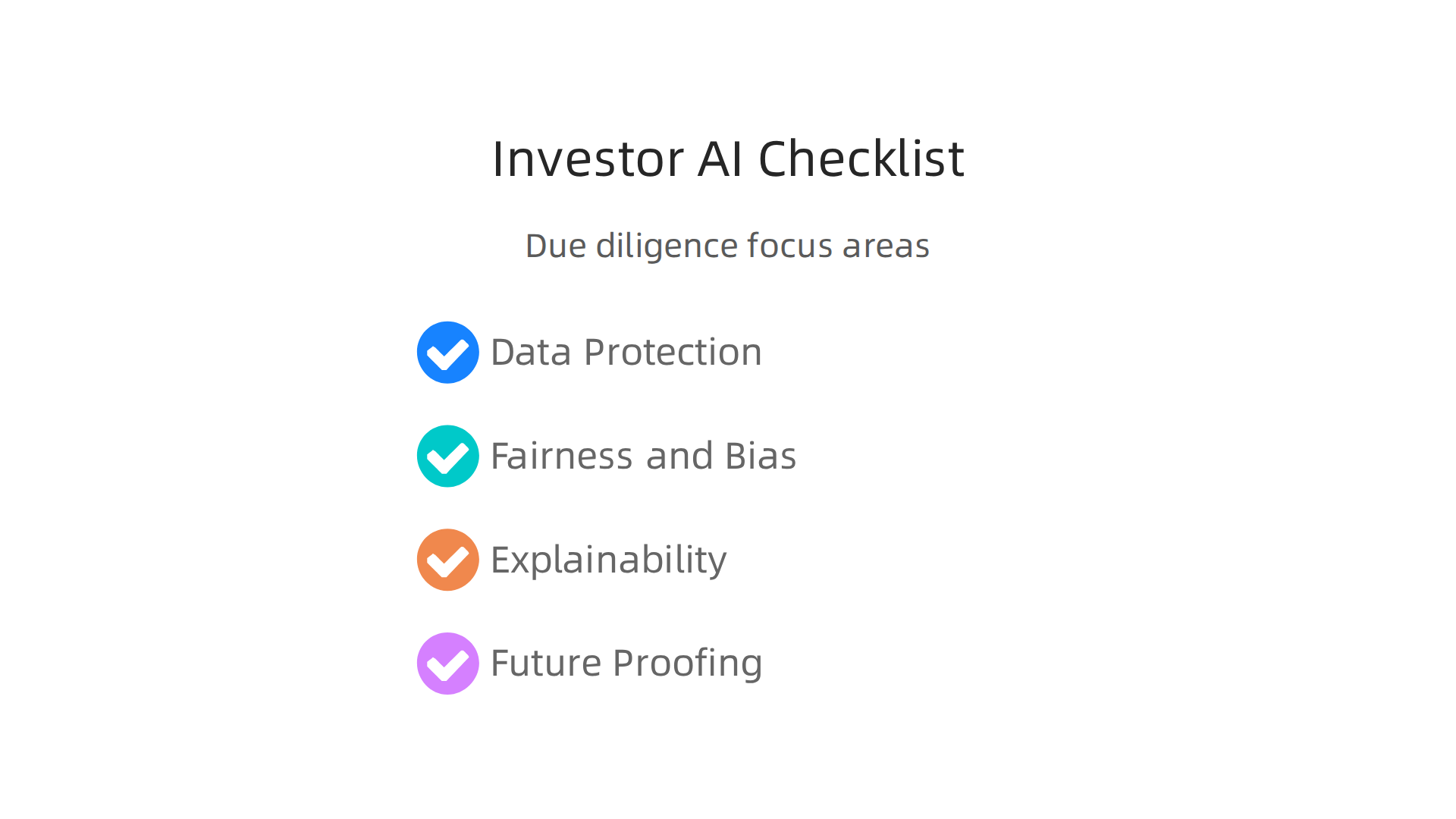
- Data Protection: How well does the AI protect customer information? Are there strong technical safeguards in place? Investors might use an Example Diligence Checklist for AI Investments to check these details.
- Fairness and Bias: Does the AI treat everyone fairly, or does it have hidden biases that could lead to legal problems?
- Explainability: Can the company clearly show how its AI makes decisions? This is especially important in regulated areas like credit or insurance.
- Future-Proofing: How easily can the AI system be changed to meet new rules that might come out in the future?
These checks help investors understand the risks. If a YC startup list company can’t show that its AI is safe and follows rules, investors might ask for special conditions in their funding agreements, called term-sheet covenants. These conditions might say the startup needs to fix certain compliance issues or face penalties.
What Investors and Founders Should Probe
Both investors and founders need to ask tough questions early in the fundraising process.
For Founders:
- Can you clearly explain your AI’s decisions to someone who isn’t a tech expert?
- How do you test your AI for fairness and bias regularly?
- What plans do you have to adapt your AI if new regulations appear?
- Have you gotten legal advice on AI compliance in all the countries where you operate or plan to operate?
For Investors:
- What are the worst-case scenarios for this AI if new rules come out?
- How much would it cost to make the AI compliant with stricter regulations?
- Does the team include experts who understand both AI and financial law? You might even consider how an AI development company navigates regulation and opportunity in 2026 to understand best practices.
By asking these questions and doing careful checks, both sides can better understand and handle the policy risks tied to AI in finance.

This careful approach helps fintech startups secure funding and build trust in a fast-changing world.
But how can early-stage fintech startups actually build this trust and show they are responsible? It’s all about having a smart plan for following the rules. This plan helps them grow fast without getting into trouble with regulators or losing investor confidence.
A pragmatic compliance playbook for early-stage fintech AI teams
Building a successful fintech startup often feels like a race. You want to create amazing products quickly. But in 2026, if you use AI, you also need to make sure you are following all the rules. The good news is, you don’t need a huge team or a lot of money to start. You can take small, smart steps to build what we call "minimum viable compliance." This means doing just enough to be safe and responsible, balancing speed with what regulators expect.
Here are some simple steps fintech startups can take right away:
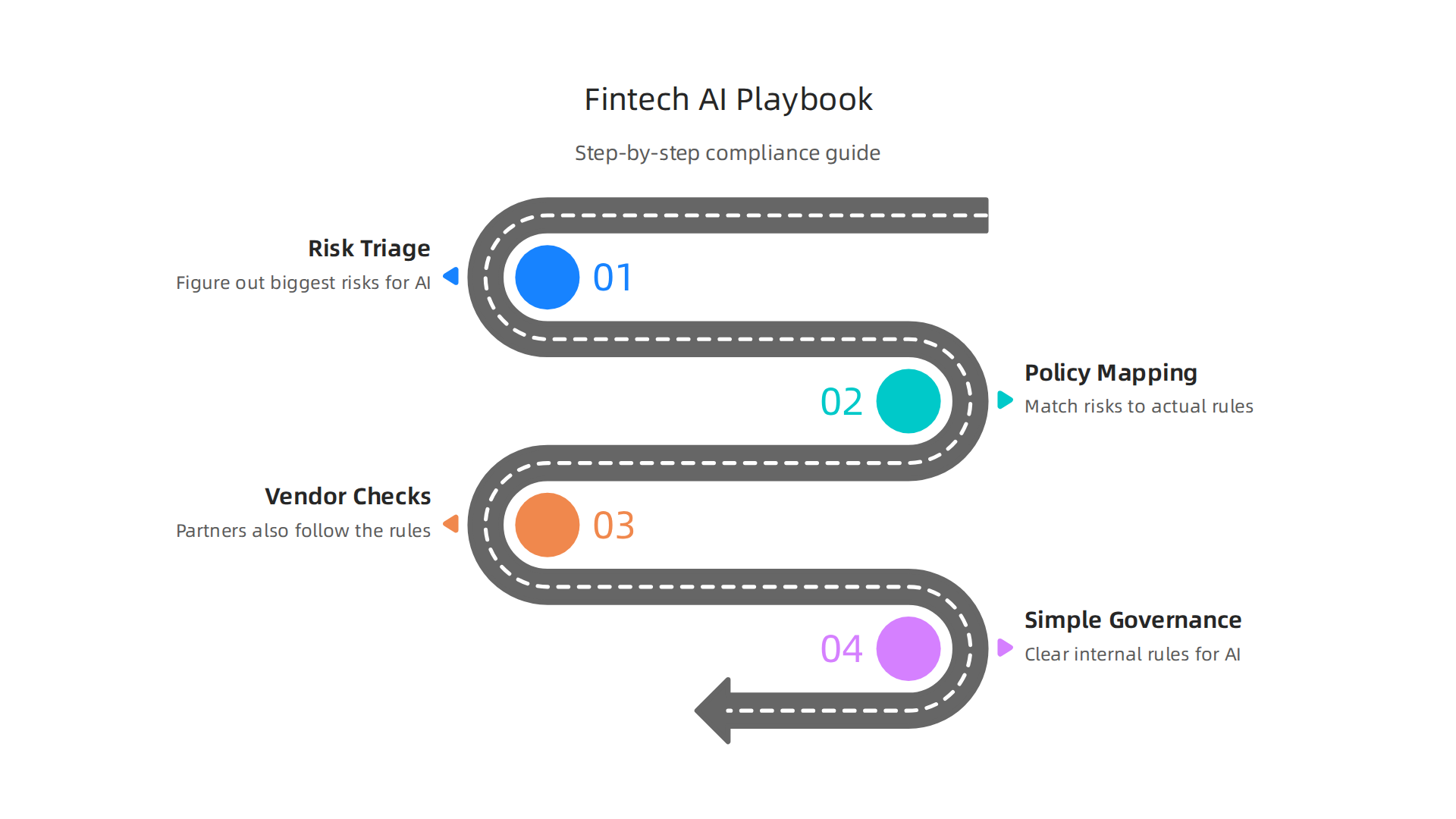
1. Risk Triage: Spotting the Big Dangers
First, figure out what the biggest risks are for your specific AI product. Think about where your AI handles sensitive customer data or makes important financial decisions.
- Identify regulated activities: What financial services do you offer? Lending, payments, insurance? Each has its own rules.
- Know your boundaries: Which laws apply to you? For example, rules about privacy or fair lending might be more important than others.
- List all your tech tools: Keep a simple record of all the AI tools and software you use. This helps you know what you need to keep track of.
A good way to start is to map out your obligations and find any gaps in your current setup, as highlighted in a practical guide for product teams in 2026 Fintech Compliance in 2026: A Practical Guide for Product Teams.
2. Policy Mapping: Knowing Your Rules
Once you know your big risks, match them to the actual rules.
- Write down policies: Create simple, clear rules for how your team uses AI. For example, "AI must always explain its decisions to customers."
- Check local laws: Are you operating in different countries? Each place might have different rules for AI in finance. Make sure your policies cover them. You can use a general guide to understanding regulations for fintech leaders FinTech Regulatory Compliance Guide 2026.
This step helps ensure your SaaS company or series a startup doesn’t accidentally break a rule.
3. Vendor Checks: Trusting Your Partners
Many fintech startups use AI tools or services from other companies. It’s super important that these partners also follow the rules.
- Ask questions: Before you use a new AI tool, ask the vendor how their AI follows privacy laws, checks for fairness, and explains its decisions.
- Get it in writing: Make sure your agreements with vendors say they are responsible for their AI’s compliance.
- Download a checklist: Tools like the 2026 Fintech Compliance Checklist can help you check what needs to be in place.
4. Simple Governance: Rules for AI Use
Even with a small team, you need clear internal rules for how AI is built and used.
- Who is in charge? Decide who on your team is responsible for AI compliance. Even if it’s just one person, they need to sign off on compliance questions.
- Regular checks: Set up a simple plan to check your AI systems regularly. Do they still work as expected? Are they still fair?
- Train your team: Make sure everyone who uses or builds AI understands the rules. This is crucial for any YC startup list company hoping to grow quickly and safely.
To help build your AI securely and compliantly, consider exploring resources like how to build AI securely and compliantly to understand best practices.
By taking these steps, fintech startups can show investors and regulators that they are serious about being responsible. This builds trust, reduces legal risks, and can even make it easier to get funding. It’s about being smart and proactive, not waiting for problems to happen.
Want to stay informed about the latest AI policy and compliance news?
The AI Newsletter Worth Reading
Get clear daily AI updates from The AI Newsletter Worth Reading.
After setting up your basic rules, the next big step for fintech startups is to bake compliance right into how you design your products and handle data. This means thinking about privacy, how your AI makes decisions, and getting customer permission from the very start. It helps you avoid problems and shows everyone you are a responsible SaaS company.
Product design, data governance, and privacy-by-design for fintech AI
It’s smart to build your AI products with careful thought about how they will be used and what data they touch. This way, you don’t have to fix big problems later. It’s like building a house with strong foundations for safety and privacy, rather than adding them on at the end.
1. Design for Privacy and Clear Explanations
When building AI tools for finance, especially if you are a series a startup looking to grow, you need to think about these three things:
- Privacy-by-Design: This simply means planning for privacy from day one. Only collect the customer data you truly need. Make sure it’s kept safe and used only for what you said it would be used for. For example, if your AI helps people save money, it only needs to see their spending habits, not perhaps their health records.
- Explainability: Can your AI explain why it made a certain financial decision? If a loan application is denied, the customer needs to know the reason. Design your AI so it can give clear, simple explanations. This builds trust and meets rules about fairness.
- Consent: Always get clear permission from your customers about how their data will be used. Make sure your consent forms are easy to understand and allow customers to choose what they are comfortable with. They should know what they are saying "yes" to.
2. Keep Good Records for Audits and Investors
It’s super important to write down all your decisions about how your AI is built and how it uses data. This is often called "documentation" or "data governance."
- Document Everything: Keep a detailed record of how your AI models work, what data they use, and why certain design choices were made. Think of it as a playbook for your AI. This helps if regulators ever come calling to check your systems. To dive deeper into managing data, explore this guide on Unpacking Tech Data: A Policy Professional’s Guide for 2026.
- Audit Trail: Having good documentation means you can show exactly what happened, step by step, if there’s ever a question. This makes it easier for audits and proving your AI is fair and compliant. A clear process for review, like a Rigorous Artificial Intelligence Review for Policy Compliance, is key.
- Investor Confidence: When fintech startups can clearly show they have a strong plan for compliance and data handling, it makes investors feel much safer. They know their money is going into a responsible company, which is a big plus for any YC startup list company looking for funding. Many investors use checklists to check on AI investments, as highlighted in an Example Diligence Checklist for AI Investments from 2025.
By focusing on these design and documentation steps, fintech startups can build a strong foundation of trust and responsibility right from the start. This not only keeps you safe from regulatory problems but also makes your business more attractive to customers and investors.
After building strong foundations for privacy and clear explanations in your AI products, fintech startups often dream of growing bigger by serving customers in other countries. But going global means facing new rules and risks. It’s like having a great recipe, but each new kitchen has its own special oven and ingredients. This part talks about how to expand carefully.
Cross-border expansion: jurisdictional risks and operational controls
When a fintech startup decides to expand into other countries, there are special things to think about. Each country has its own laws about money, data, and how businesses work. Ignoring these can cause big problems.
What to think about when expanding to other countries
Expanding your business across borders means you need to weigh some important things:
- Getting the Right Licenses: Just like you need a driver’s license to drive, you need special business licenses to offer financial services in different countries. What works in one place might not work in another.
- Where Data Lives (Data Residency): Many countries have rules about where customer data must be stored. For example, some laws say that data from people in Europe must stay on computer servers within Europe. This is called data residency. You need to know these rules so you don’t break them unintentionally. You must map out every cross-border data flow and identify where personal data goes to comply with these rules, as highlighted in one guide for Fintech Singapore PDPA Cross-border Data Transfers. Experts also recommend finding out your highest-risk data flows, especially for data from places like the EU or Canada, and making sure contracts specify where data is stored and processed to avoid problems in 2026, according to a report on Data Residency in 2026.
- Local Partners: Sometimes, you might need to team up with a local business in a new country. They understand the local market and rules better. This can make entering a new place easier.
- Risk of Legal Trouble: If you don’t follow the local rules, your fintech startup could face fines or legal action. It’s important to understand the laws of each country you enter to avoid these risks.
Smart ways to manage risks
Luckily, there are ways for fintech startups to manage these challenges and make cross-border expansion smoother.
- SaaS Setup: If your business uses Software-as-a-Service (SaaS), you can set up your system so it follows different rules for different regions. This means your software knows to handle data differently depending on where your customer is.
- Region Flags in Your Software: You can use special "flags" or settings within your software to mark data by region. This helps make sure that, for example, EU customer data only goes to systems in the EU. This kind of Data Sovereignty for Financial Services is key to compliance.
- Clear Contracts: Have very clear contracts with any partners or service providers in other countries. These contracts should spell out who is responsible for what, especially when it comes to data and following laws. These agreements are becoming more detailed, as explored in discussions around Technology Transactions Across Europe, the Middle East, and the United States. Clauses about how data is transferred across borders and breach notifications are critical in contracts for 2026, a guide on Cross-Border Contracts in 2026 explains.
By being smart about these things, even series a startups on a yc startup list can expand their reach without stepping into too many legal traps. It helps reduce the cost and headache of following rules in many different places. To learn more about navigating the changing world of technology regulations, you might find Navigating Global Tech Systems Policy in 2026 helpful.
For professionals who need to stay on top of the latest in AI and tech policy, getting daily insights is a must.
Ready to get smarter about AI and technology policy? The AI Newsletter Worth Reading delivers clear updates straight to your inbox.
After looking at how to manage risks when expanding into new countries, it’s clear that your fintech startup needs a strong internal setup. This means having good rules for how decisions are made, hiring the right people, and making sure your company can easily handle new policy changes. It’s about building a strong core so your business can bend, not break, when things shift.
Governance, hiring, and building organizational resilience to policy change
To keep up with fast-changing laws and new technologies like AI, fintech startups need a clear plan for how they run things. This includes how decisions are made and who is responsible for what.
Setting up smart governance
Good governance means having simple, clear rules for decision-making, especially when policies change quickly. For a fintech startup, this involves:
- Making a clear structure: Decide who has the final say on legal and policy matters. This helps your team act fast and avoid delays. Building a strong AI governance system is key for new compliance rules in 2026, as noted in expert discussions about Building AI governance for the next compliance era.
- Being ready for changes: Create ways to quickly understand new laws and adjust your business. This helps your company stay on the right side of the rules without getting bogged down.
Bringing in the right talent
Hiring the right people is very important for fintech startups looking to grow and stay compliant. You need experts who understand both technology and the law.
- Compliance and policy experts: These roles help your fintech startup follow all the rules. In 2026, there’s a big demand for people who know about risk, compliance, and AI, according to a Fintech Talent Report: Risk, Compliance & AI Roles in Demand.
- AI governance professionals: With more AI tools being used, finding people who can manage AI risks and ensure ethical use is crucial. There’s a growing need for these roles in financial services, highlighting a Compliance Hiring Gap Emerging Now. You can also learn how to Build Your 2026 AI Workforce Strategy for Policy Compliance.
- Security specialists: These experts protect customer data and your systems, which is vital for trust and meeting privacy laws.
Embedding policy intelligence
It’s not enough to just have a few experts. Everyone in your fintech startup should understand how policy affects their work.
- Train your teams: Teach product designers, engineers, and business leaders about policy rules from the start. This helps them build products that are compliant by design.
- Easy access to information: Make it simple for teams to find out about new policies and how they apply. This way, policy intelligence becomes a natural part of daily work, not a roadblock. Learning how to Build AI Securely and Compliantly: A Step-by-Step Blueprint can guide your teams.
By setting up good governance, hiring skilled people, and sharing policy knowledge widely, your fintech startup, whether a young series a startup or one hoping to be on a yc startup list, can be strong and ready for any future changes. This kind of careful planning helps reduce problems and keeps your business growing safely in 2026 and beyond.
Summary
This article explains why AI policy must be treated as a core strategic issue for fintech startups in 2026. It walks founders, legal teams, and investors through the regulatory landscape—highlighting major triggers like AI transparency, data residency, consumer protection, and AML/KYC—and compares the divergent approaches in the US and EU. The piece offers a pragmatic, lightweight compliance playbook (risk triage, policy mapping, vendor checks, simple governance) and concrete product guidance such as privacy‑by‑design, explainability, and documentation for audits. It also covers cross‑border expansion risks, how regulation affects fundraising and investor due diligence, and how to hire and structure governance to stay resilient. Readers will learn practical steps to reduce legal risk, win investor confidence, and scale responsibly while adapting to fast‑moving AI rules.