

Why ‘persona company’ matters now: a concise policy-first framing
In 2026, you might hear more and more about a "persona company." What does this mean? It points to a new kind of business that relies heavily on digital profiles of people, often called "personas." A persona is like a detailed picture of a person or entity, made from lots of data. It helps companies understand who their users are and what they might want or do [^1^]. These personas are now at the very heart of how many modern businesses work, especially with the rise of smart AI tools.
Many companies today gather huge amounts of identity-linked data to create these detailed personas. They use this data to power new products and services driven by artificial intelligence. Imagine AI systems that get better at their jobs through constant AI training, learning from these personas to personalize everything from shopping experiences to healthcare suggestions. This is where AI automation truly shines, making services smarter and faster. An identity verification service called Persona, for example, helps businesses confirm who their users are and manage their identity information [^2^].
But here’s the thing: as companies build and use these powerful personas, they create a tricky balancing act. On one side, there’s the drive for new ideas and growth. On the other side are important concerns about people’s privacy and their rights over their own digital identities

[^3^]. These policy tensions mean we need clear rules.
Understanding these new challenges is key for anyone involved in tech. This guide will help policy teams, legal experts, investors, and company leaders see the risks and make smart choices. It’s all about navigating the fast-changing world where data, AI, and identity meet.
If you want to stay on top of daily AI updates and understand how they impact policy, make sure to check out The AI Newsletter Worth Reading.
[^1^]: Persona – Use Case Tree Method
[^2^]: Persona (identity verification service)
[^3^]: Enterprise Business Models Leveraging Self-Sovereign Identity: Towards a User-Empowering Me2X Economy
What is a ‘persona company’? Definitions, taxonomy, and why precision matters
The term "persona company" is becoming more common in 2026, but it actually covers different kinds of businesses. To make good rules and help companies act correctly, we need to be very clear about what we mean. Not all companies that deal with digital profiles are the same.
Let’s look at the main types:
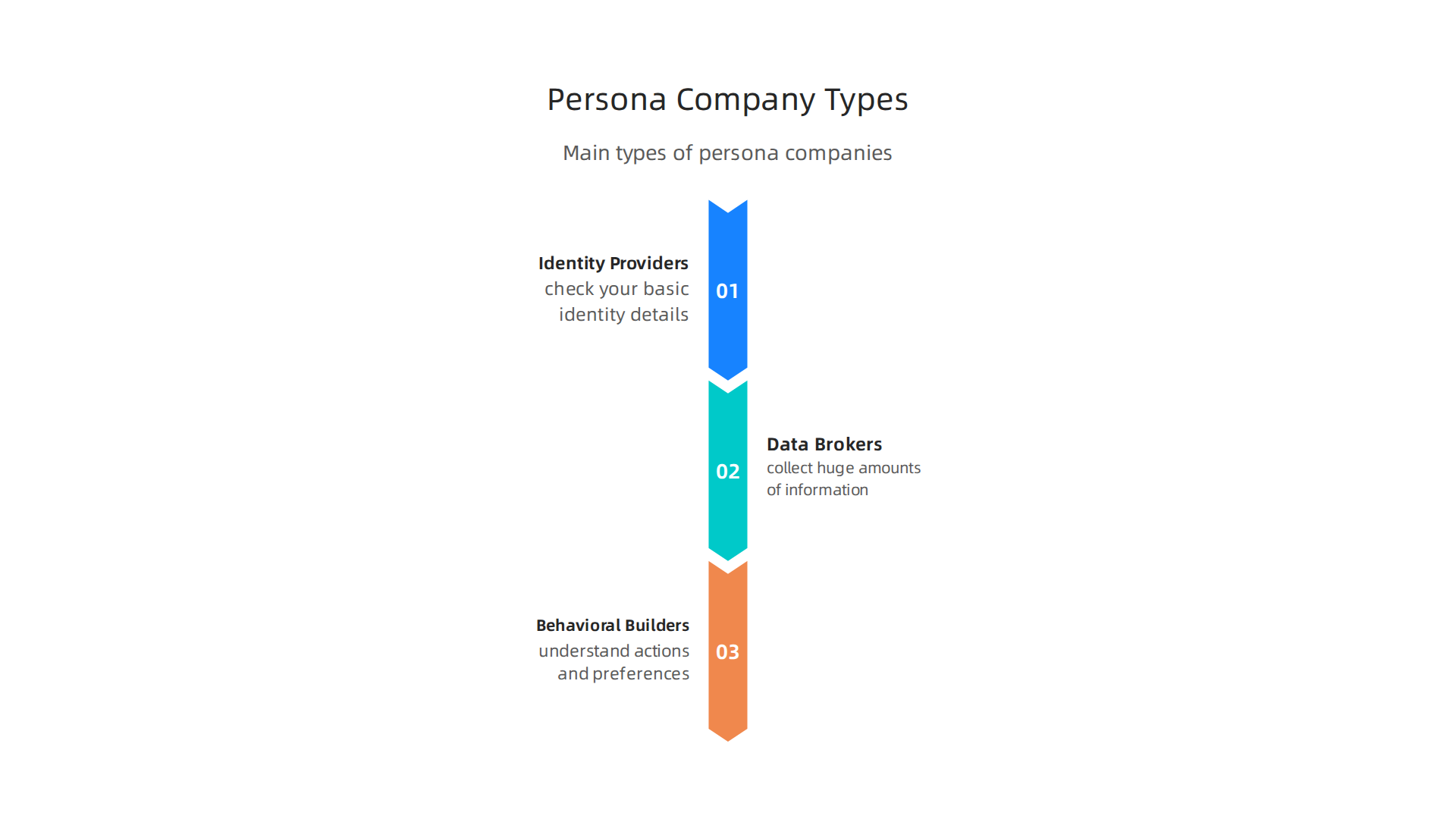
- Identity Providers: These companies help make sure you are who you say you are. They check your basic identity details. For example, a service might confirm your name and age when you sign up for something new. They focus on proving identity.
- Data Brokers: These businesses collect huge amounts of information about people from many places. They then build detailed profiles or personas and sell them to other companies. These profiles can be used for things like advertising. Think of them as information wholesalers.
- Behavioral and Psychographic Persona Builders: These companies go deeper. They don’t just know who you are, but they try to understand how you act, what you like, and even how you think. They use data to guess your interests, habits, and what you might do next. This is where a lot of modern AI automation comes in, using these deep personas to make services super personal.
To understand these businesses better, we can use a simple way to sort out their practices, sometimes called a persona taxonomy Persona Taxonomy – Use Case Tree Method.
- Data Sources: Where does the information come from? It could be from your online browsing, things you buy, apps you use, or even public records. To learn more about this, you can read our guide on unpacking tech data a policy professionals guide for 2026.
- Profiling Methods: How is this information put together? Companies use special computer programs, often powered by AI, to find patterns in your data and create a picture of you.
- Inference Layers: This is when a company takes the data it has and makes smart guesses about you. For instance, if you watch many cooking videos, they might guess you like to cook. These guesses help them predict your future actions.
- Commercial Uses: How are these personas used to make money? This could mean showing you ads for things you might like, suggesting products, or even feeding the personas into AI training systems to improve other services.
Why does it matter if we are so precise with these definitions? It’s simple, actually. Clear definitions are super important for a few big reasons.
First, for regulation and enforcement, if we don’t have clear words for what a "persona company" does, it’s very hard to write good rules or make sure companies follow them. Different types of persona activities need different kinds of rules. For example, in 2026, regulators are looking closely at how AI uses personal data. The Hong Kong Privacy Commissioner for Personal Data, for instance, completed checks in 2026 to see how companies handle AI and data privacy, especially with the rise of autonomous AI systems, which are sometimes called agentic AI.
Second, for corporate governance, clear definitions help companies understand their responsibilities. They need to know what data they can collect, how they can use it, and how to protect people’s privacy. When these rules are clear, companies can manage risks better and build trust with their users. Understanding these terms is a key part of mastering definitions and corporate forms for effective tech policy.
When we talk about persona companies, it’s important to know exactly how they get and use information about people. It’s a complex process where many pieces of data are gathered, linked together, and then used by smart computer programs, often called AI systems. These systems build detailed pictures of us, which are the "personas" we’ve been discussing.
How Data Is Collected and Linked
Imagine a puzzle where each piece is a bit of information about you. Persona companies collect these pieces from many places.
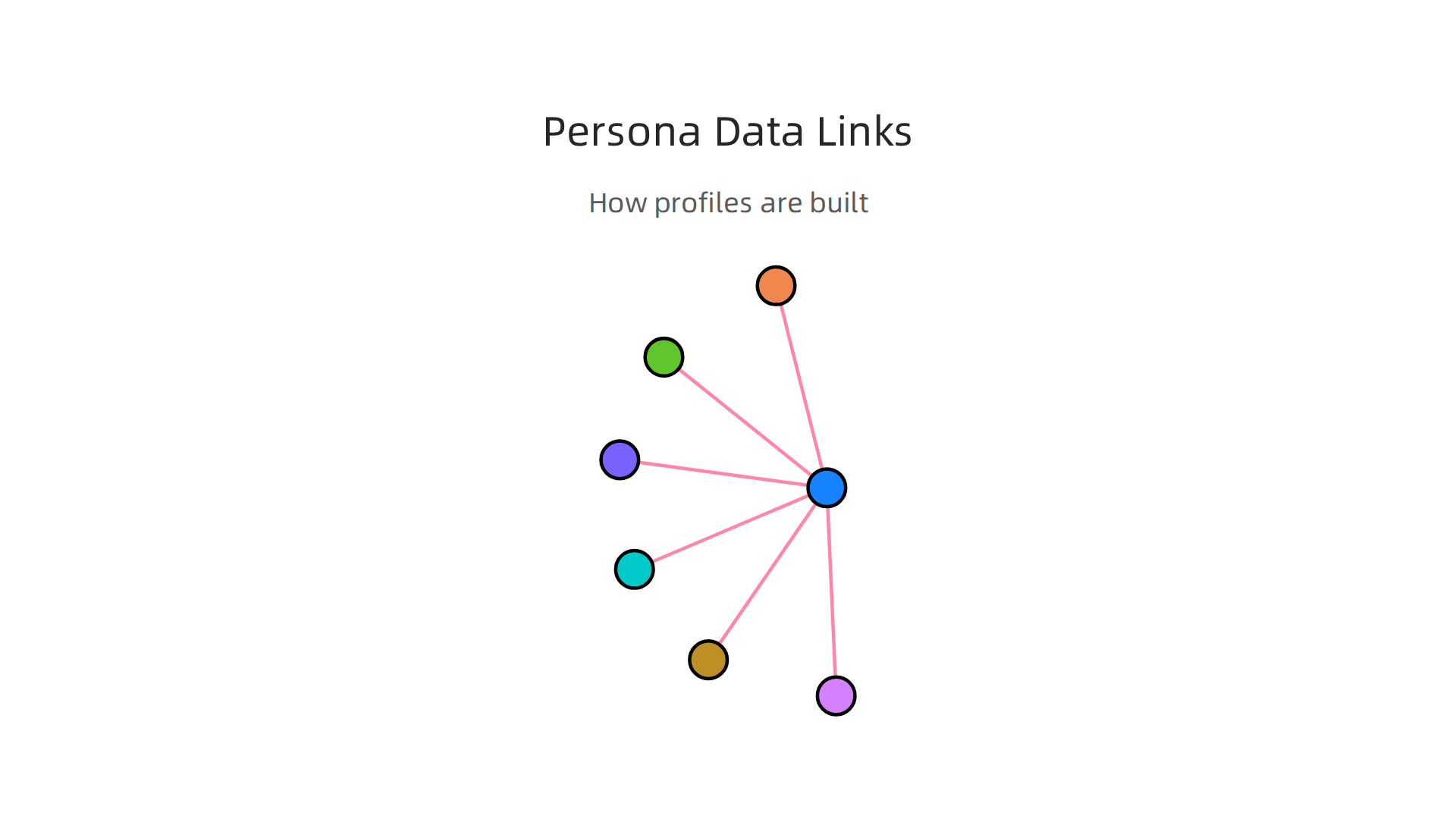
- Your Basic Identifiers: This is direct information, like your name, email, phone number, or a special ID number on your device. These pieces are often the first step in connecting data to you.
- What Computers Guess About You: These are called "inferred attributes." If you watch many videos about cats, a system might guess you love cats. If you often buy eco-friendly products, it might guess you care about the environment. These guesses help create a deeper profile, almost like an AI YOU Town: Make Friends and Money with Your Digital … kind of digital double.
- Connecting Your Devices: Have you ever seen an ad on your phone for something you just looked at on your computer? That’s "cross-device linking." Companies use smart ways to figure out that your phone, tablet, and computer all belong to the same person. This helps them build a fuller picture of you, no matter what device you are using.
- Buying More Information: Sometimes, a persona company will buy more details about you from other places, like data brokers. This is called "enrichment from third-party sources." They add this new data to what they already have to make your persona even more complete.
How AI Creates Personas
Once all this data is gathered, AI systems get to work. They use special techniques to create these detailed personas.
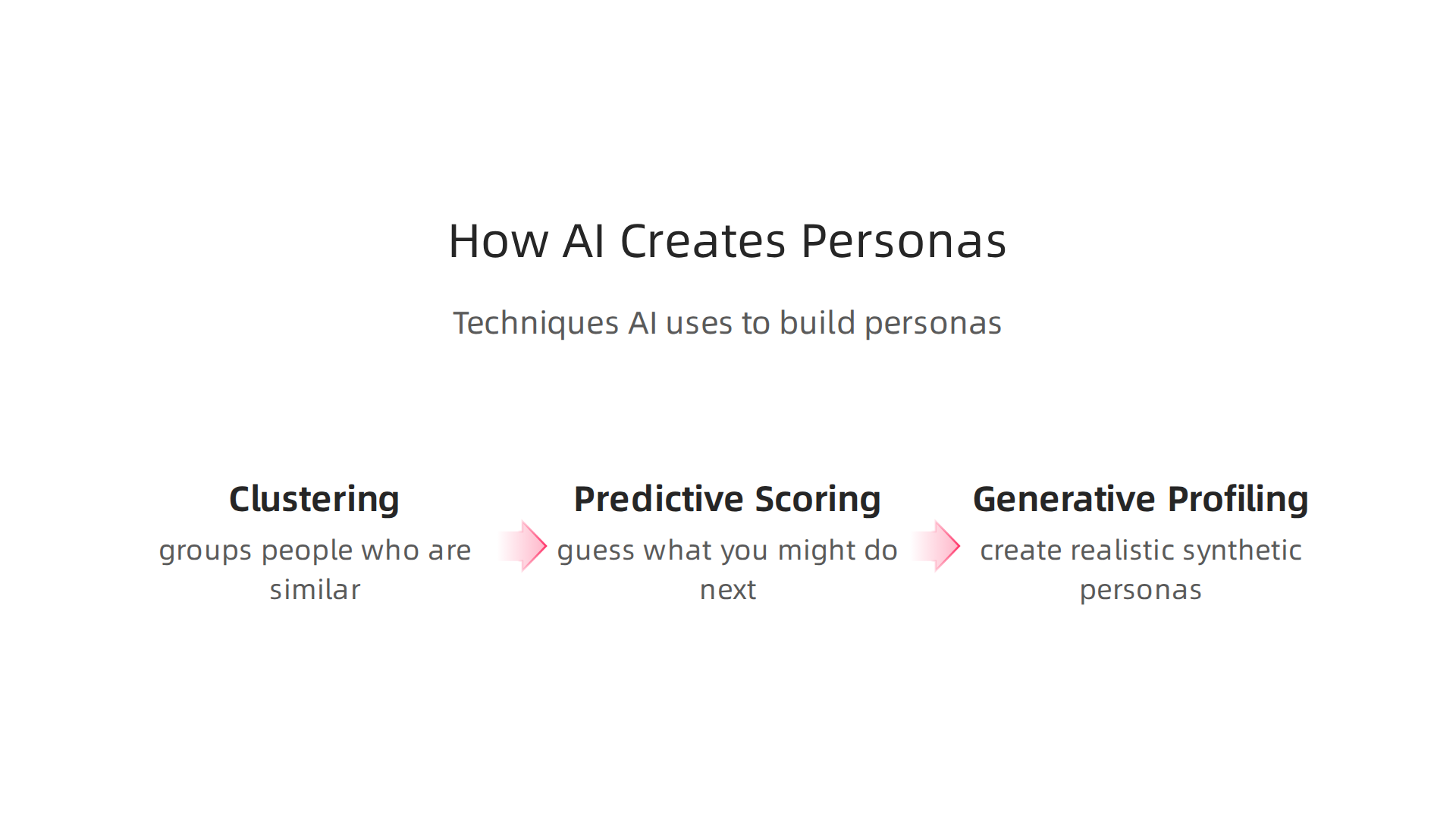
- Grouping People (Clustering): AI looks for patterns in the data and groups people who are similar. For example, all people who like action movies and video games might be put into one group. This helps companies understand general trends and target groups.
- Predicting What You’ll Do (Predictive Scoring): AI can guess what you might do next. Will you buy a new car? Are you thinking about changing jobs? These systems give you a "score" for different actions. This is key for things like showing you just the right ad at the right time.
- Making New Fake People (Generative Profiling): Some advanced AI, using generative techniques, can even create "fake" but realistic personas. These are not real people but look like they could be. They are used for AI for Persona Research and Creation, for example, to test new products or services without using real people’s data.
The Risks: Re-Identification and Sensitive Guesses
While persona companies aim to provide better services, there are big risks too.
- Re-identification: Even if your personal information is removed and data is made "anonymous," there’s a chance you could still be identified. This is called re-identification risk. It means someone could piece together different bits of anonymous data and figure out who you are anyway, as explained in research on Unifying Re-Identification, Attribute Inference, and Data … – arXiv. This is a big privacy concern.
- Sensitive Inference: AI systems can make guesses about very private things, like your health status, your political views, or your financial situation. This is called sensitive inference. If these sensitive guesses are wrong, or if they fall into the wrong hands, they can cause serious problems. Policy professionals need to understand these dangers to protect people better. To learn more about the rules around these technologies, exploring tech policy 2026 how to navigate ai privacy cybersecurity and antitrust changes can be very helpful.
The risks of knowing too much about people, especially through re-identification and sensitive guesses by AI, are a big worry. Because of this, governments and big groups around the world are working hard to make rules. In 2026, we see new laws and guidelines being put in place to control how persona companies collect, link, and use data, and how AI systems make decisions about us.

Different Rules for Different Places
It’s like a patchwork quilt of rules across the globe. Some places focus on protecting your basic personal data, while others are making rules just for AI.
- Data Protection Laws: Many countries have strong data protection laws. These laws say how your personal information can be collected, stored, and used. They often require companies to ask for your permission to use your data for profiling and to tell you what data they have. They also set strict rules for linking data from different sources. For example, some rules consider profiling a "high-risk processing activity" that needs special care, as noted in guidelines for Governing Automated Decision Making in the Public Sector.
- AI-Specific Rules: On top of general data laws, many governments are creating rules just for AI. These new rules often focus on making AI fair, safe, and transparent. They might ask for details about how an AI system was trained, what data it used, and how decisions are made. For instance, the US has developed the Artificial Intelligence Risk Management Framework, which helps organizations manage the risks that come with using AI. Other guidelines even talk about the careful adoption of new types of AI, like agentic AI services, to keep privacy safe.
Key Differences and Enforcement
The way these rules work can be very different. In some places, a government agency might have the power to fine a persona company a lot of money if they break the rules. In other places, the rules might be more like helpful suggestions than strict laws.
For example, the European Union has very strict laws that cover almost all data use, including building personas and using AI. They focus on giving people more control over their own data. In the United States, there’s a mix of state-level laws and federal guidance. This can make it tricky for companies to know what they should do. You can learn more about how different countries handle these things in a global comparison of AI regulations.
Challenges for Companies
For any persona company that works in many countries, following all these different rules is a huge challenge. What’s perfectly fine in one country might get them into trouble in another. This means they have to be very careful with their data collection, how they use ai training, and how they manage their systems. This also affects ai automation efforts, as automation needs to be compliant with varying standards.
Companies need to build their products and services so they can easily adjust to different legal needs. This often means working with lawyers and policy experts to stay on the right side of the law everywhere they do business. Understanding how an AI development company navigates regulation is vital for success in this changing landscape.
To keep up with all the fast changes in technology policy and AI rules, stay informed.
Get clear daily AI updates from The AI Newsletter Worth Reading.
Now, let’s look at why these rules are so important. When a persona company collects and uses data to build profiles about people, it can lead to real problems. These problems can affect individuals deeply and even harm society as a whole.
Harms to Individuals
When a persona company creates a "digital persona," which is a model of an individual based on collected data, it can cause several personal harms. This digital model tries to stand in for a real person, as some experts describe a digital persona.
- Discrimination: Imagine a persona company uses your data to guess things about you. If these guesses are wrong or unfair, you might be treated differently. For example, you could be denied a loan, a job, or even housing because an AI system linked to your persona profile made a bad prediction.
- Reputational Damage: If a persona company’s data about you is incorrect or used out of context, it can hurt your good name. In 2026, companies are more worried than ever about risks to their reputation, and individual reputations can also be damaged by wrong data, as noted in a Global Reputational Risk Readiness Survey 2024/25.
- Loss of Control: People might feel like they have no say over how their personal information is used. This can take away your freedom to decide what others know about you.
- Unwanted Targeting: You might receive ads or messages that feel invasive because a persona company has figured out your habits or weaknesses. This "micro-targeting" can make people feel watched or manipulated.
Harms to Society
Beyond individual problems, persona company practices can also hurt society.
- Too Much Power in a Few Hands: If only a few big persona companies control most of the data and AI tools, they gain a lot of market power. This can make it hard for new companies to compete and can lead to less choice for everyone.
- Chilling Effects: When people know their every action online is being recorded and analyzed to build a persona, they might stop sharing their true thoughts or exploring new ideas. This can make online spaces less open and diverse.
- Affecting Public Talk: Persona profiles can be used to send very specific political messages to certain groups. This might sway opinions unfairly and make it harder for people to have fair discussions, which is important for a healthy democracy.
Technical Risks
Many of these harms happen because of how data is handled. Even when data is made anonymous, there’s always a risk of:
- Re-identification: This is when supposedly anonymous data can be linked back to a real person. Researchers talk about how re-identification can lead to others guessing private details, like health issues or voting choices. Companies constantly work to prevent this, but it remains a tricky challenge. Understanding how to avoid disclosure is a big part of protecting privacy, as detailed in a Roadmap for Disclosure Avoidance.
- Inference of Sensitive Attributes: This means an AI system can guess private things about you from information that seems harmless. For example, a system might look at your online chats and guess your personality traits or health conditions.
AI traininghelps these systems learn to make these guesses, and persona inference aims to estimate these traits from your digital history. If these guesses are wrong or used to make unfair decisions, it’s a big problem. This is also a concern forai automationbecause automated systems might act on these inferred sensitive attributes without human review.
To learn more about how data is processed, you can look into Unpacking Tech Data a Policy Professionals Guide for 2026. Addressing these risks is key to fair and safe AI. It also means thinking about the ethics of these systems. For more on that, consider exploring Driving Policy Decisions with AI Ethics and Performance Evaluation.
Practical Compliance Strategies for Organizations Building or Using Personas
After understanding the risks of digital personas, organizations, especially any persona company, need clear plans to follow the rules. In 2026, many new laws and guidelines help direct how data is used. Putting these rules into daily operations is key to building trust and avoiding problems.
Turning Rules into Actions
Organizations must make sure their everyday work follows the latest privacy laws. Here’s how:
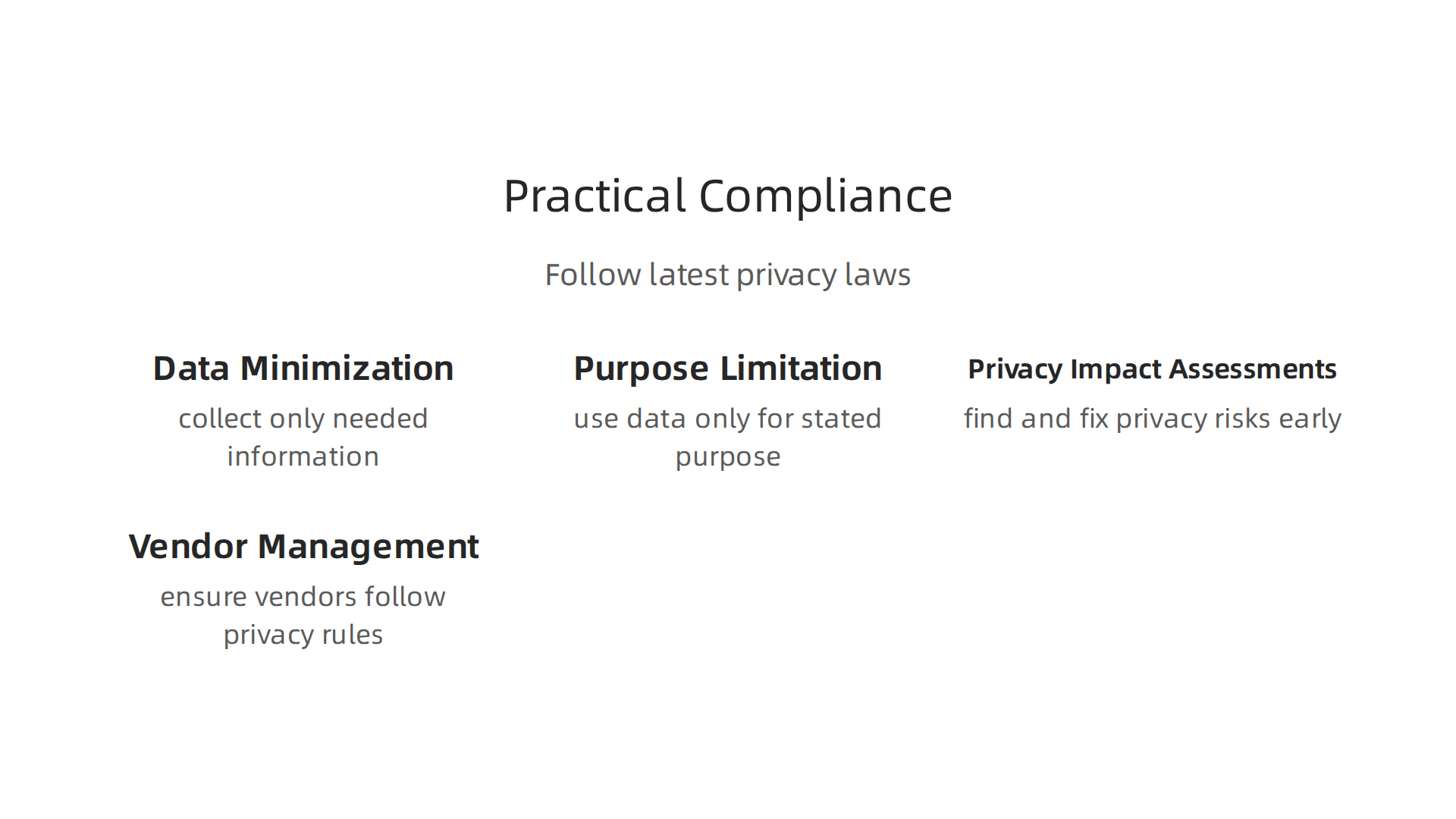
- Data Minimization: This means only collecting the information you truly need for a specific purpose. Don’t gather extra data just in case you might use it later.
- Purpose Limitation: Use the data only for the reasons you told people you would. For example, if you collect data for product improvement, don’t then use it for unrelated marketing unless you get new permission. Guidelines for using artificial intelligence stress the importance of data minimization.
- Privacy Impact Assessments (PIAs): Before starting any new project that uses personal data or builds personas, do a check. A PIA helps you find and fix privacy risks early on. Many US states are now raising the bar on risk assessments for things like profiling and biometric data.
- Vendor Management: If you work with other companies that handle your data or help build personas, make sure they also follow strong privacy rules. You are responsible for who you share data with.
Technical Steps for Safety
Beyond just following the rules on paper, companies need to use smart technical tools to keep data safe.
- Anonymization and De-identification: This involves removing or changing information so it cannot be linked back to a specific person. However, with
AI trainingand advanced guessing, making data truly anonymous is harder than ever. New rules, like those from the EU, are now stricter, requiring a three-test standard because of AI inference attacks. - Access Controls: Limit who can see sensitive data. Only people who absolutely need access for their job should have it. This is often called the "principle of least privilege," meaning assigning only the minimum access required for each role. This applies to both human access and automated systems performing
ai automation. - Transparency: When you use AI, especially advanced systems or an
agentic ai definitionwhere AI acts on its own, people should know they are interacting with an AI. - Identity Governance: This is about keeping track of who has access to what data and why. Companies are investing in identity governance to reduce risk and meet compliance demands.
For a complete guide on how to safely develop and use AI systems, companies can look to the Artificial Intelligence Risk Management Framework provided by NIST. These strategies are important for any company building or using personas, ensuring they do so responsibly.
If you’re interested in building AI securely and ensuring compliance, there’s a helpful resource on how to build AI securely and compliantly. For deeper insights into how organizations can perform careful checks on their AI systems, explore a guide on rigorous artificial intelligence review for policy compliance.
To stay updated on these complex topics and receive daily insights on AI and technology policy, consider subscribing to The AI Newsletter Worth Reading. It’s a great way to keep pace with the fast-changing world of tech policy.
When a company uses digital personas or ai training, leaders and investors need to look closely at how these tools affect the business. This means thinking about future changes in rules and how they might impact the company’s value or how it sells its products.
Checklist for Executives and Investors
Before putting money into a persona company or using a new persona-based product, here are some important questions to ask:
- How is data handled? Does the company collect only the necessary data? Is it used only for the stated reasons? These are key steps in following privacy laws.
- What privacy checks are in place? Has the company done checks to find and fix privacy risks before starting new projects that use personal data or create personas? Many places in the US are now asking for more careful checks, especially for things like looking at data patterns or using biometric data in 2026, as noted in a 2026 Data Security and Privacy Compliance Checklist.
- How is data made private? Are there strong ways to hide who the data belongs to? This is extra important now because
AI trainingcan sometimes guess people’s identities even from "anonymous" data. The EU has even made its rules for making data anonymous stricter to fight against AI inference attacks. - Who can see the data? Does the company have strict rules about who can access sensitive information? This applies to both people and
ai automationsystems. - What’s the plan for new rules? How will the company adapt if privacy laws change? This includes understanding the impact of new rules on how data is linked and used.
- Are there risks from advanced AI? If the company uses an
agentic ai definitionwhere AI acts on its own, are there clear rules and checks to make sure it acts responsibly and follows privacy? - What are the financial risks? Investors often ask about a company’s financial model, spending, and how it plans to use funds, but they also need to consider legal and privacy risks when doing startup due diligence.
How Rules Change Business Value
New rules can really shake up how much a business is worth or how it operates. For example:
- Higher Costs: Following new privacy laws can cost a lot of money. This can lower profits and, in turn, reduce how much the company is valued.
- Changes in Strategy: If a company can no longer collect or use data in the same way, it might have to change how it reaches customers or develops new products. This could mean a big shift in its plans.
- Reputation Problems: If a company doesn’t follow the rules, it can face fines and lose trust from customers. This kind of reputational risk can hurt a business much more than just a money fine.
Signals for Board-Level Attention
Some signs should make top leaders and investors pay very close attention:
- New Laws are Coming: If new laws about data, AI, or privacy are announced, especially in key markets, this needs immediate review.
- Reports of Issues: When other companies in the same industry have problems like data breaches or fines, it’s a warning sign.
- Public Concerns: A change in how the public feels about AI or data use can quickly affect a company’s brand.
- High-Risk Scores: Companies should regularly check their own risks. If the risk level for regulatory or geopolitical issues goes up to "High" or "Critical," as some reports suggest for 2026, it needs special planning. For example, a Corporate Risk Profile for 2024-27 might show high impacts for possible risks.
Being ready for these changes is key for any company, especially those heavily involved with AI and data. Understanding how policy affects innovation and business models is crucial for success, and you can explore more on how policy creates powerful entrepreneur ideas.
Governance, Transparency, and Rights Protections: A Pragmatic Set of Best Practices
To really get ready for new rules and make sure your business stays strong, especially if you’re a persona company working with ai training and digital tools, you need clear plans. This means setting up good ways to manage your AI, being open about how it works, and making sure it respects people’s rights.
Strong Governance Structures
First, every company should have a group of people from different parts of the business who look at AI use. This might be a special committee or review board. Their job is to check new AI projects, like those that create digital personas, to make sure they follow all the rules and ethical guidelines. Also, bringing in outside experts for regular checks, called external audits, can help find problems early. These audits are very important for advanced AI systems, especially those with an agentic ai definition, where AI acts more on its own. They help ensure these systems work as intended and do not cause harm. Building a solid framework for how AI is managed is key, as highlighted in a review of principles for effective AI governance.
Transparency and Explainability
Being clear about how your AI works builds trust and helps reduce risks. This means telling people when they are interacting with ai automation, not a human. It also means explaining how decisions are made by AI systems, especially when those decisions affect customers. Companies should create easy-to-understand reports about their AI’s impacts. This kind of transparency reporting is becoming a standard practice for many businesses in 2026, helping them avoid problems with regulators and keep a good name. For example, a 2026 Transparency Report on Foundation Model Impacts shows how important it is to publicly share information about AI systems.
Protecting Rights and Engaging Stakeholders
When designing AI, it is best to set up systems so that privacy and user rights are protected from the very beginning. This includes making sure that default settings in your products favor privacy and that users can easily control their data. It’s also vital to talk with different groups of people, known as stakeholders. This means getting feedback from customers, privacy experts, and even public interest groups. Listening to these groups can help you understand concerns and make sure your AI tools are fair and helpful to everyone. Following these kinds of best practices helps protect individuals and their data throughout the AI lifecycle, from collecting information to training and using AI, according to a guide on AI best practices. Knowing how to build AI tools responsibly is essential, and you can learn more about how to do this by reading about how to build AI securely and compliantly.
Summary
This article explains the rising concept of a "persona company": businesses that create detailed digital profiles of people by gathering, linking, and inferring data, often to power AI-driven products. It defines different persona company types (identity providers, data brokers, behavioral persona builders), shows how data sources and AI methods produce personas, and explains why precise definitions matter for regulation and corporate governance. The piece highlights major risks—re‑identification, sensitive inference, discrimination, reputational harm, and market concentration—and surveys the patchwork of global rules now shaping how personas can be collected and used. It then gives practical compliance strategies (data minimization, PIAs, vendor controls, access governance), technical protections (de‑identification, transparency, least privilege), and a checklist for executives and investors to spot legal and financial vulnerability. Finally, the article recommends governance structures, transparency practices, and stakeholder engagement as pragmatic steps to reduce harm while allowing safe innovation with persona-driven AI.