

Introduction: Why Words Matter More Than Ever in Tech Policy
Have you ever called someone "tech savvy" and wondered what you actually meant? You are not alone. This little phrase gets thrown around in job descriptions, policy papers, and everyday conversations. But here is the problem. Nobody can agree on what it really means.
The Oxford dictionary defines "tech savvy" as having a good knowledge of modern technology, especially computers. That sounds simple enough. But when you dig deeper, the definition starts to slip through your fingers. Does it mean you can send an email? Does it mean you code in your sleep? Or does it land somewhere in between?
This vagueness matters more than you might think. Technology policy relies on precise language. When lawmakers write rules about AI, data privacy, or online safety, they often borrow terms from everyday speech. A word like "tech savvy" looks harmless. But ambiguous terms can lead to misregulation. If a policy assumes everyone is tech savvy, it might overlook people who need extra protections. If a job listing asks for tech savvy candidates, hiring managers and applicants are left guessing.
Take a look at how professionals define it. One source explains that tech savvy means having the right skills and intuitive knowledge to operate devices effectively. Another argues that the term is practically a pejorative for Millennials, describing it as a collection of skills that build efficiencies. And in 2026, the conversation has shifted again. Employers now ask for digital fluency and AI literacy on top of basic tech comfort.
So where does that leave us? The phrase "tech savvy" has become a shortcut that nobody reads the same way. That is why this article exists. We will provide a clear, research-backed framework for understanding tech terminology and its implications. Because when policy professionals, executives, and everyday citizens use the same words with the same meanings, smarter decisions follow.
Want to stay ahead of the rapidly evolving tech policy landscape? The AI Newsletter Worth Reading delivers clear daily updates on AI and technology policy directly to your inbox.

It is the easiest way to turn complex regulatory shifts into actionable intelligence.
First, let us unpack the exact definition of tech savvy and why it keeps changing on us.
What ‘Tech Savvy’ Means in 2026
If you opened a job description today and saw "tech savvy" listed, what would you think it asks for? In 2026, the answer is not as simple as knowing how to use a computer. The phrase has evolved far beyond its dictionary roots.
The Oxford dictionary still defines tech savvy as having a good knowledge of modern technology, especially computers. But that definition no longer tells the full story. Today, being tech savvy means something deeper. It means you can learn new tools quickly, adapt when software changes, and think critically about whether a technology is the right fit for the task at hand.
A 2026 analysis on LinkedIn breaks down the difference clearly. The article explains that employers now look for three layers of ability: digital literacy (using common tools), digital fluency (switching between tools with ease), and AI literacy (understanding how AI works and where human judgment is still needed).
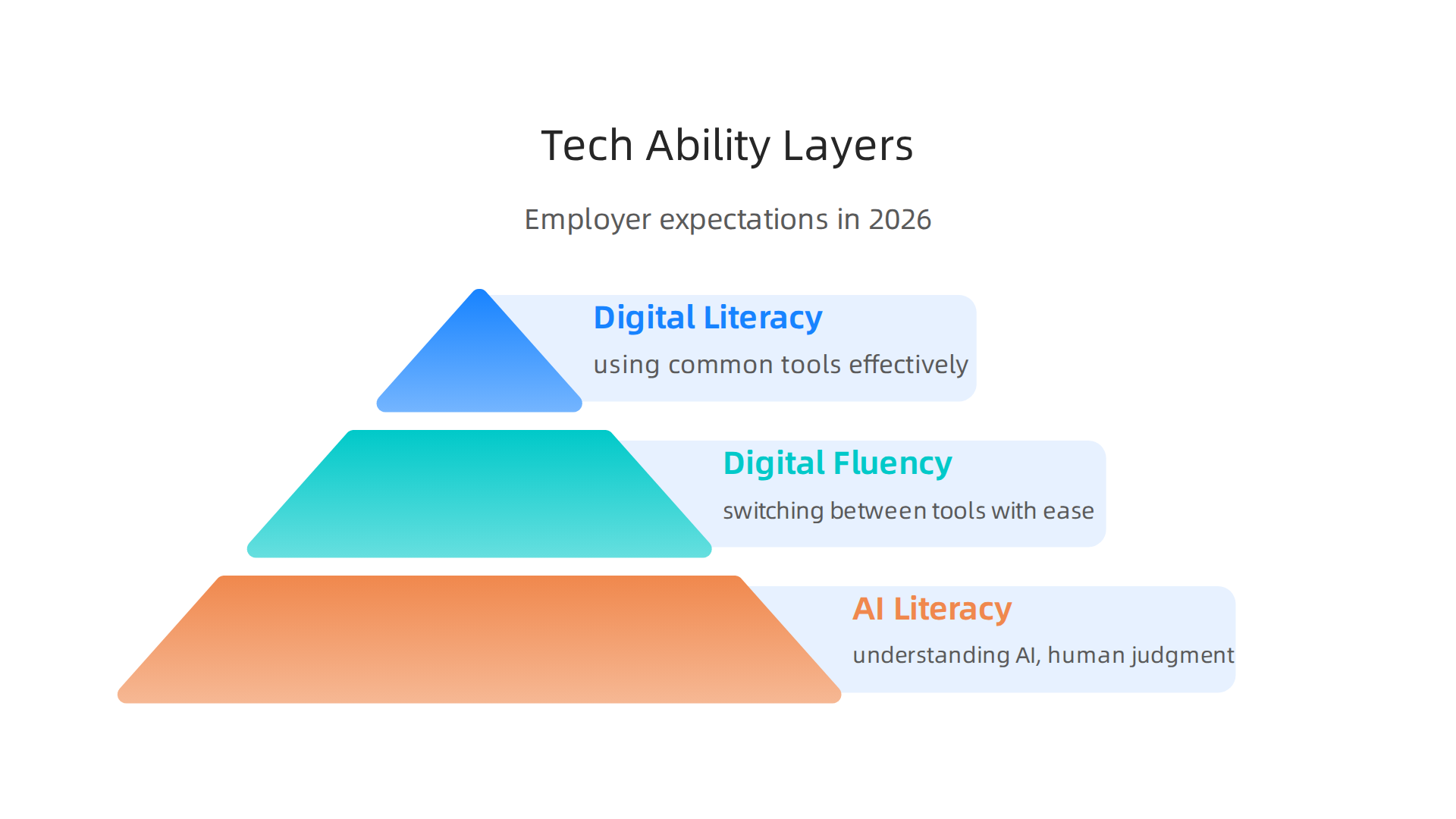
In other words, the tech savvy meaning in 2026 is about comfort, adaptability, and smart decision-making around technology.
This shift matters for policy professionals and executives alike. When a regulation uses the term "tech savvy" without a clear definition, it creates room for misinterpretation. A worker who can send emails and browse the web might be called tech savvy, but that same label could also describe someone who builds machine learning models. The gap causes confusion in job descriptions, hiring, and even public policy.
A more precise understanding helps everyone communicate expectations. Instead of saying "tech savvy," you can specify what you actually need: basic digital literacy, intermediate system navigation, or advanced AI fluency.
For a deeper look at how these definitions affect AI governance and compliance, check out this guide on rigorous artificial intelligence review for policy compliance. It shows exactly why precise language is critical when regulators write rules about emerging technology.
The Subtle Differences Between ‘Tech‑Savvy’ and ‘Digitally Literate’
Let’s say you are writing a job description for a policy analyst. You ask for "digital literacy." Your hiring manager thinks that means someone who can write a report in Word and send emails. But the candidate you interview can do that and also knows how to spot misinformation, navigate privacy settings, and understand how algorithms influence what people see. Who is right?
This confusion happens all the time. The truth is that being tech-savvy and being digitally literate are not the same thing. One is about practical hands-on ability. The other is about deeper understanding and responsible use.
Think of tech-savvy as the "how." A tech-savvy person can pick up a new app and figure it out quickly. They are comfortable exploring unfamiliar tools without needing a manual. They have mental models of how systems work files, networks, security. They use spreadsheets for real analysis and collaborate well in cloud tools. As one breakdown explains, tech-savviness involves comfort with unfamiliar tools, productive use of professional software, and basic security hygiene like strong passwords and recognizing phishing attempts.
Digital literacy is the "why" and "should I." It includes the ability to evaluate online information critically, understand how data is collected and used, and act ethically in digital spaces. UNESCO defines digital literacy as the ability to access, manage, understand, integrate, communicate, evaluate, and create information safely through digital technologies. That goes far beyond knowing how to click buttons. It involves recognizing misinformation, protecting your privacy, and understanding the broader impact of technology on society.
A common mistake is to assume that growing up with smartphones makes someone automatically digitally literate. It does not. A person can be very good at using social media yet have no idea how their personal data is being sold to advertisers. True digital literacy requires critical thinking about the digital world, not just technical skill.
For policy professionals, this distinction matters more than ever. If a regulation uses "tech-savvy" when it really means "digitally literate," the training programs and compliance expectations that follow will miss the mark. A law that demands "digital literacy" for government contractors should mean workers understand algorithmic bias, data protection, and ethical use of AI not just that they can send emails.
Getting the language right leads to better workforce planning, clearer job descriptions, and smarter policy. When you know the difference, you can write rules that actually achieve what you intend.
To see how these definitions apply to real government compliance challenges, read this guide on how AI policy in the public sector is transforming government compliance. It shows exactly why precise terms matter when regulators write rules for emerging technology.
And if you want to stay ahead of the latest developments in AI policy and digital skills, get clear daily AI updates from The Deep View Newsletter. It helps professionals like you keep the big picture in focus without wading through noise.
Key Synonyms in Tech Policy: Fluent vs. Versed vs. Capable
Now that we have a clear picture of what tech-savvy really means, let’s look at the specific words we use to describe different levels of tech ability. In policy writing and job descriptions, every word carries weight. Using the wrong synonym can create confusion about expectations.
Three terms show up a lot in policy language: tech-fluent, tech-versed, and tech-capable. They sound similar, but they mean different things.
-
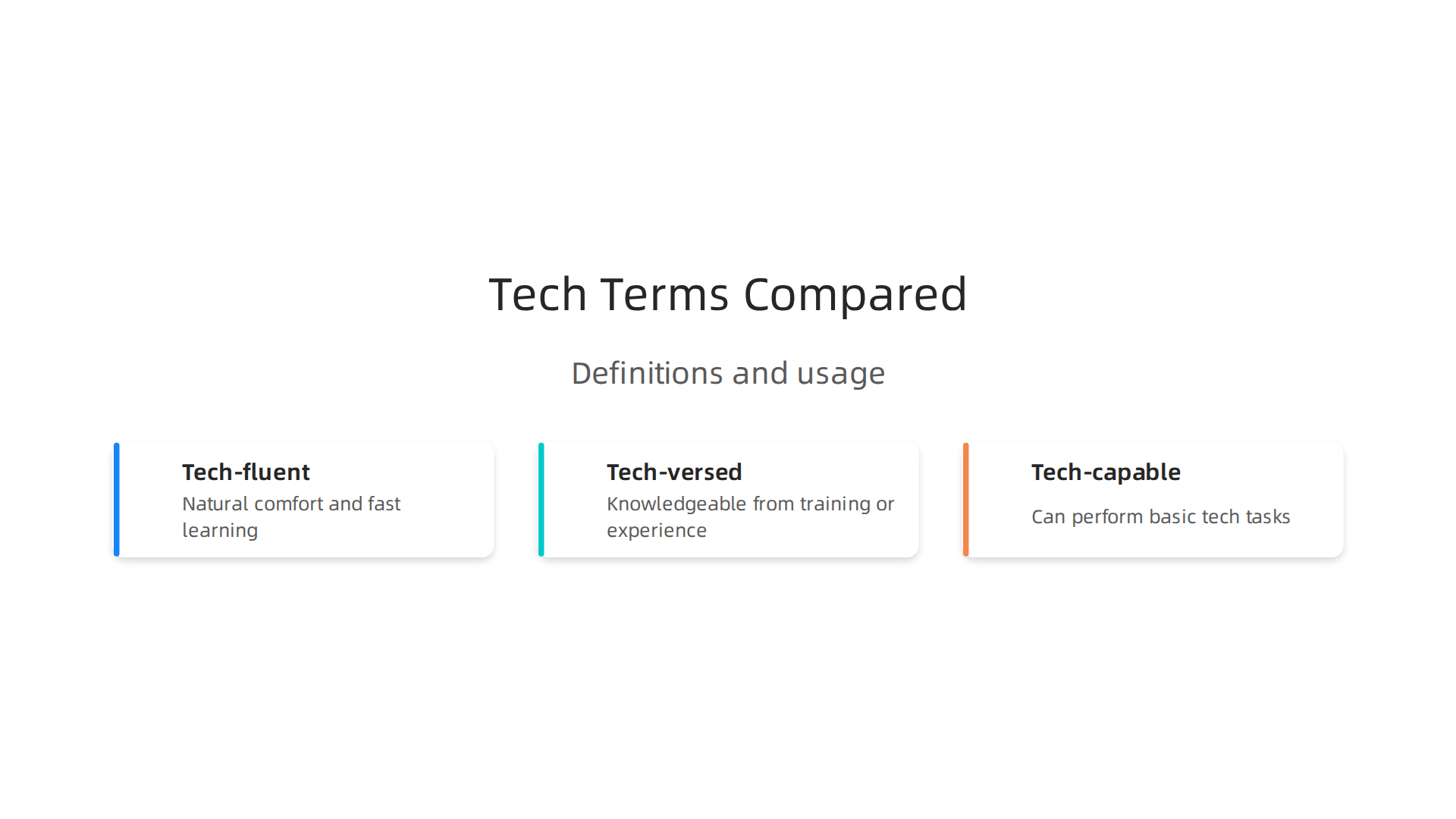
Tech-fluent suggests a high level of comfort and ease. A fluent person can adapt to new tools quickly and use technology almost as naturally as a language they speak well. This term implies deep, transferable skill.
-
Tech-versed means someone has knowledge and experience. They may not be naturally fluent, but they have studied or worked with technology enough to understand how it works and use it well. This term fits someone who can learn a system through training.
-
Tech-capable is the broadest term. It simply means a person can complete basic tech tasks. They can send emails, use a browser, and run common software. It does not imply comfort with change or deep understanding.
Here is a quick table to see the differences at a glance:
| Term | What It Means | Best Use in Policy |
|---|---|---|
| Tech-fluent | Natural comfort, fast learning, transferable skills | Roles requiring constant adaptation, like AI policy analysts |
| Tech-versed | Knowledgeable from experience or training | Positions where familiarity with specific systems is needed |
| Tech-capable | Can perform basic tech tasks | Entry-level or general roles where fundamental skills are enough |
Choosing the right synonym can make or break a regulation or job description. If you ask for "tech-fluent" when you only need "tech-capable," you might scare away qualified candidates. If you ask for "tech-versed" when you really need fluency, you miss the mark on skill level.
One common myth is that growing up with screens makes someone automatically tech-fluent. But research shows that familiarity with consumer apps does not equal real competence. As the differences between tech-savvy and digital native are explained, the reality is that transferable skills come from active learning, not passive use.
For policy professionals, precise language helps avoid confusion. When drafting rules for government contractors or writing job postings for tech policy roles, using the right synonym for the skill level you need saves time and gets better results.
If you want to see how these distinctions play out in real-world regulations, check out the biggest information technology policy shifts of 2026. It shows exactly how lawmakers are wrestling with these same language choices.
How Precision in Terminology Affects Regulatory Compliance
The same language choices we discussed for job descriptions are even more critical when governments write laws. A regulation that uses a vague term like "AI system" without a clear definition can create giant loopholes. Companies can claim their tool does not count as an AI system simply because the definition is too fuzzy. On the flip side, an overly broad definition can impose heavy compliance costs on small businesses that just use simple automated tools.
Precision matters because regulators, companies, and courts all interpret the same words differently.

For example, the EU AI Act defines an AI system in Article 3(1) as a machine-based system that operates with some autonomy and infers from inputs how to generate outputs. That definition seems clear, but every word in that sentence has been debated. Getting the exact tech savvy meaning of terms like "autonomy" and "inference" is not just a language exercise. It decides whether a software product needs a full conformity assessment or can go to market with minimal checks.
Lawmakers must pick the right synonym tech for each regulatory concept. The wrong choice can lead to enforcement failures or unfair burdens. For a detailed look at how these definitions are structured, the AI Compliance & Governance Glossary 2026 maps over 100 terms across five major frameworks. It shows how one term like "high-risk" carries different obligations under the EU AI Act versus the NIST AI Risk Management Framework.
GDPR enforcement gives us a real example. Early cases under GDPR showed that how you define "personal data" or "automated decision-making" directly changed the outcome. Companies that used vague language in their compliance documents faced bigger fines because regulators could interpret the rules against them. The same principle applies to today’s AI laws. If a regulation says companies must audit "AI decision-making" but does not define what counts as a decision, firms can argue their system only makes recommendations, not decisions.
For anyone writing or following these rules, understanding the nuances of synonyms of technologies is essential. To see how this plays out in government compliance specifically, read about how AI policy in the public sector is transforming government compliance in 2026.
Staying on top of these changing definitions is tough. If you want clear, daily updates on AI regulation and what it means for your work, The AI Newsletter Worth Reading delivers the key insights straight to your inbox.
Decoding Acronyms: AI, ML, LLM, and Beyond
Acronym overload is one of the biggest barriers to clear communication in tech policy. Walk into any meeting about artificial intelligence regulation, and you will hear AI, ML, LLM, NLP, RAG, GAN — the list goes on. People use these terms as if everyone agrees on their meaning. But in reality, many professionals misuse them without realizing it.
Here is the thing: confusing "AI" (artificial intelligence) with "ML" (machine learning) is not a small mistake. AI is the broad field of machines that can perform tasks requiring human-like intelligence. ML is just one subset of AI — a method where systems learn from data without being explicitly programmed. When a policymaker writes a rule that targets "AI systems" but actually means "ML-based systems," the regulation can miss entire categories of technology or overregulate others. Getting the tech savvy meaning right is not optional.
The same confusion happens with large language models (LLMs). Many people say "AI" when they really mean "LLM," like ChatGPT. But an LLM is a specific type of AI model focused on text generation. If a compliance rule requires auditing all "AI decision-making," but only checks LLMs, it might miss a simpler ML model that also makes decisions.
A systematic approach to understanding these acronyms can cut through the noise. Standardized glossaries help teams align on definitions before writing policy. The AI Cyber Glossary from the Health Sector Council provides governance-ready definitions for terms like AI, algorithm, bias, and more. It shows how one clear definition can prevent misinterpretation across an entire organization.
When you take the time to learn the synonym tech for each term and distinguish between related synonyms of technologies, your compliance documents become harder to challenge. Regulators cannot exploit fuzzy language if your team uses precise synonyms tech consistently.
For a deeper dive into how to build this skill, check out our roadmap on how to learn AI in 2026 with a policy focus. It walks through the exact acronyms and concepts you need to master.
Case Study: When Misunderstanding Jargon Led to Policy Mistakes
Imagine a city council votes to ban "facial recognition technology" in public spaces. Sounds clear, right? But the law ends up blocking everything from smartphone photo tags to airport security cameras that scan passports. Worse, it also stops police from using an AI system that matches missing children photos — a tool that never actually identifies faces in real time.
This really happened in several US cities between 2019 and 2022. The core problem was not the technology itself. It was a failure of language.

Lawmakers used "facial recognition" as a catch-all term without understanding the difference between facial detection, facial verification, and facial identification. Each of those is a distinct synonym tech process with different privacy risks. By treating them all the same, the bans created more confusion than clarity.
The same kind of mistake shows up in data transfer disputes. European regulators and US companies spent years arguing over "anonymized data." The EU said data was not truly anonymized if it could ever be re-identified. US companies said their techniques were good enough. So every negotiation became a fight over the synonyms of technologies rather than the actual privacy risk. Companies lost millions in compliance costs because nobody had agreed on what "anonymized" meant.
These cases prove a simple point. When you do not know the tech savvy meaning of a term, your policy will have holes. Regulators can challenge your rules. Courts can strike them down. And the public loses trust.
The most effective way to avoid these failures is to define every key term at the start of any policy document. Use a standard glossary. Train your teams on the exact synonyms tech for each concept. For example, the March 2026 US Tech Policy Roundup from TechPolicy.Press highlights how the White House called for a unified federal standard to prevent a "fragmented patchwork" of state AI laws. That patchwork exists largely because states use different definitions for the same technology.
Want to see how precise language can improve public sector AI rules? Our guide on AI policy in the public sector walks through real compliance examples.
Staying up to date on these language shifts is critical. Get clear daily AI updates from The Deep View Newsletter. It distills the most important policy language changes into a quick read so you never miss a definition shift that could affect your work.
Strategies to Build and Maintain Tech Fluency
Now that you have a reliable source for daily AI updates, the next step is to build real tech fluency so you can avoid the kind of jargon confusion that derails policy and projects. Being tech savvy is not about knowing how to code. It is about understanding the tech savvy meaning of the terms your teams, regulators, and partners use every day.
The most effective strategies involve three things: continuous learning, shared language, and a simple framework to keep you up to date without drowning in information.
1. Curate your learning sources. You do not need to read every tech blog out there. Pick a few high-quality newsletters, glossaries, and expert roundups. For example, the Top 10 Tech Policy Pronouncements for 2026 from ITIF highlights the need for a national AI adoption plan and better digital skills. That kind of focused analysis tells you exactly where the language is shifting.
2. Build a shared lexicon across your organization. When everyone in your company uses the same definitions, you stop arguing about synonyms of technologies and start solving real problems.

Create a glossary for key terms like "facial detection" versus "facial identification." Train your teams to recognize the synonyms tech that cause the most confusion. A simple document with clear definitions can save hours of miscommunication.
3. Use a repeatable three-step framework. Here is one that works:
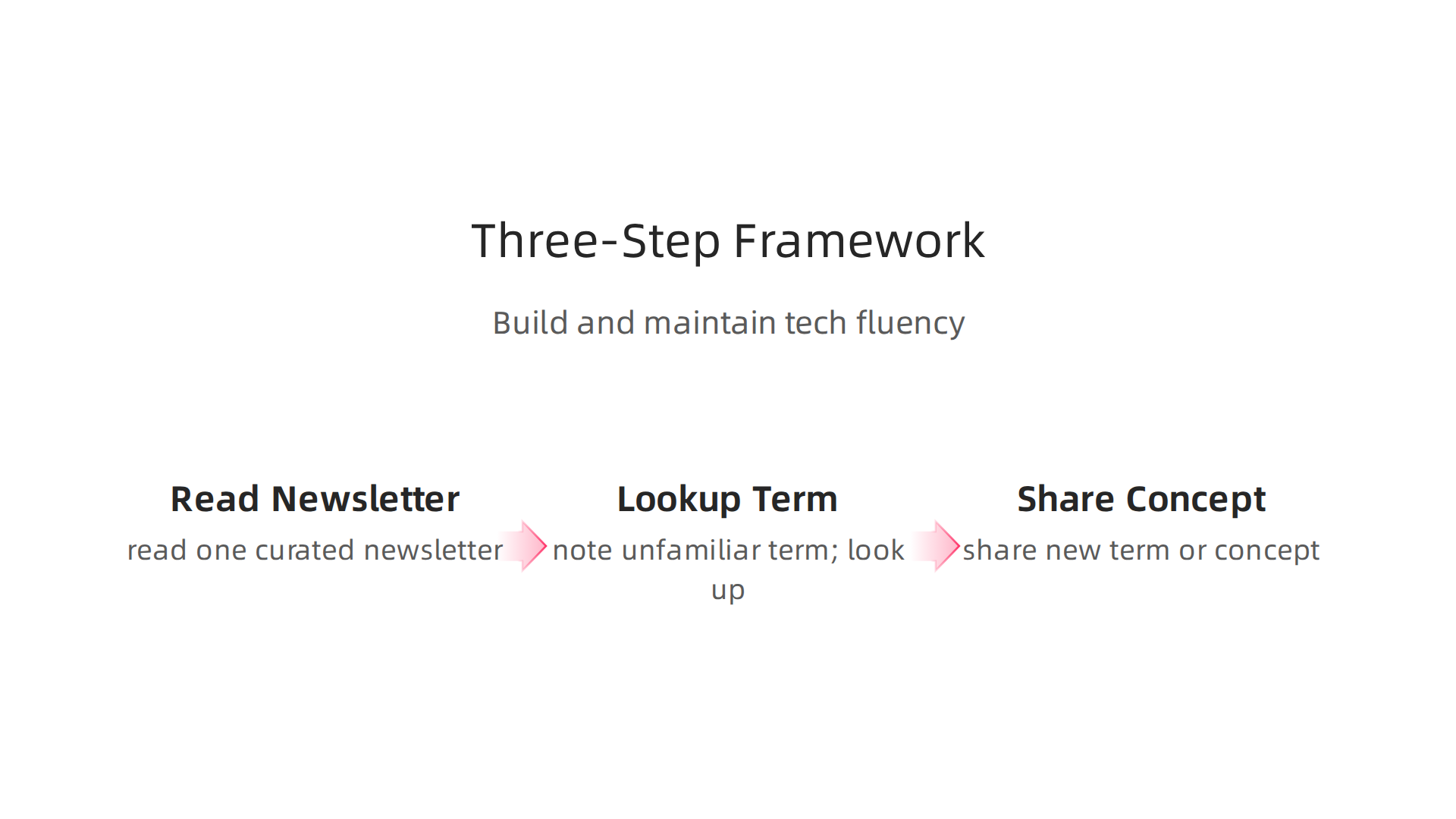
- Step one: Spend 10 minutes each morning reading one curated newsletter.
- Step two: Note any unfamiliar term and look it up in your team glossary.
- Step three: Share one new term or concept in a quick Slack message or team meeting.
That is it. Three small habits that compound over time.
If you want a structured path to learning these concepts, our guide on how to learn AI and build a future-ready career in 2026 walks through exactly what to study and in what order.
The goal is not to become a developer. The goal is to understand the language well enough to ask the right questions, write better policies, and avoid the kind of costly mistakes we saw in the earlier case studies. Tech fluency is a skill you build one definition at a time.
Resources for Policy Professionals to Stay Current
Building tech fluency one definition at a time is smart. But you also need a short list of go-to sources that keep you informed without eating your whole day.

The right resources help you track evolving terminology and understand the tech savvy meaning behind new policy language. When you know where to look, you stop guessing at synonyms of technologies and start reading with clarity.
Newsletters are your quickest win. A daily AI briefing gives you a digest of what changed and why it matters. For example, All Tech Is Human maintains a growing list of 50+ resources for aspiring technology policy professionals that includes newsletters, reading lists, and academic programs. That kind of curated collection saves you hours of searching.
Government repositories are essential for official language. The UC Berkeley Labor Center publishes a comprehensive guide to key laws, bills, and concepts in digital workplace technology. That source lays out the exact terms regulators are using right now, so you can match your own language to theirs.
Blogs and expert analyses fill in the gaps between headlines. The Pluralsight Tech Forecast for 2026 highlights trends like agentic AI and responsible automation, which are spawning new synonym tech terms you need to know. Reading forward-looking reports helps you anticipate what definitions will matter next year.
Make it a habit to check one newsletter, one policy guide, and one trend report each week. That simple routine builds your vocabulary faster than any glossary alone could.
For a steady stream of curated updates, sign up for The AI Newsletter Worth Reading. It delivers clear daily AI coverage straight to your inbox so you never miss a shift in the language policymakers are using. Use it as your anchor source while you explore the other resources above.
Summary
This article explains why precise tech language matters for policy, hiring, and compliance by unpacking how the phrase