

Introduction
Enterprise AI adoption has hit an inflection point in 2026. Nearly 79% of organizations now say they face challenges despite growing investment when trying to move AI from pilot projects into full production. That number jumped sharply from previous years, and it shows something important: Even as excitement about AI keeps climbing, the hard work of making it actually work at scale is far from finished.
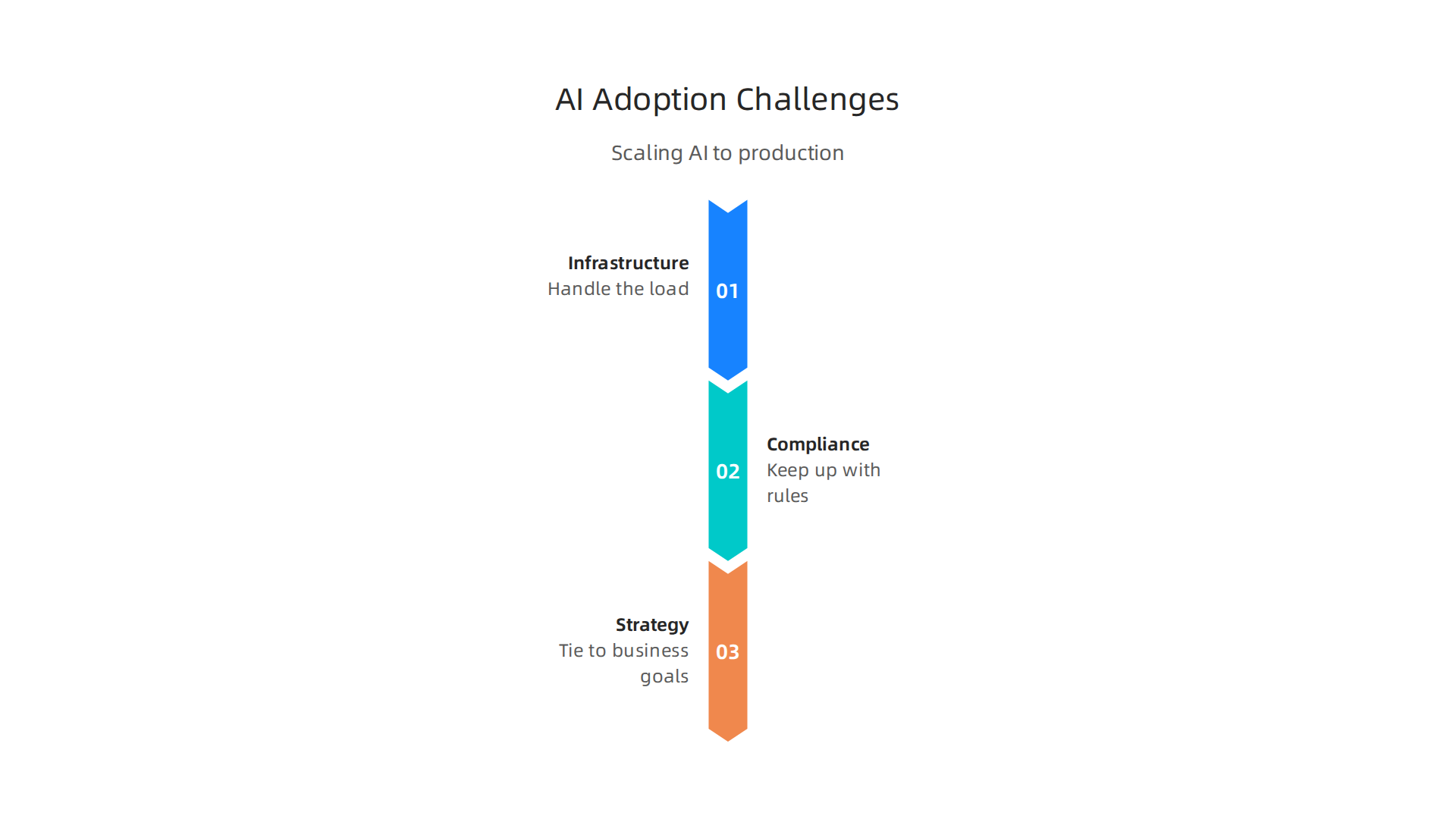
At the same time, companies are pouring money into AI tools, infrastructure, and talent. Over 75% of organizations now use AI in at least one business function. Yet many still struggle to connect their AI ambitions with real, measurable results. The gaps come down to three big areas: infrastructure that can handle the load, compliance frameworks that keep up with changing rules, and a clear strategy that ties AI use to actual business goals.
This is where World Wide Technology steps in. WWT has built a reputation as the kind of partner that helps organizations bridge the gap between AI promise and production reality. Instead of just selling hardware or software, WWT focuses on the full picture. That means the data pipelines, the security layers, the governance models, and the talent strategies that make enterprise AI work.
For policy professionals, executives, and investors trying to make sense of this fast-moving space, understanding what WWT does matters a lot.

The company sits right at the intersection of technology and regulation. It helps clients navigate both the technical side and the compliance side of AI adoption.
This article breaks down WWT’s enterprise AI capabilities, its approach to today’s toughest regulatory challenges, and what it all means for the people making decisions about AI strategy, policy, and investment. We’ll also look at broader trends in enterprise AI adoption so you can see where the whole market is heading.
If you want to stay on top of AI policy and technology developments without drowning in noise, get clear daily AI updates from The Deep View Newsletter. It is one of the best ways to keep your finger on the pulse of what matters in this space. And for more context on how to turn tech headlines into actionable policy intelligence, check out our guide on tech news analysis for policy professionals.
The Enterprise AI Imperative: Why Companies Are Turning to Specialist Partners
By 2026, the era of AI experimentation is ending. Most large companies have moved past pilot projects and are trying to put AI into real production. But here is the tough truth: scaling AI across an entire organization is much harder than testing it on a small team.
A recent survey found that 78% of organizations now use AI in at least one business function, up from just 55% a year earlier. Yet the same research shows that most companies still struggle to turn those use cases into company-wide impact. The skills gap is the number one barrier. Many firms simply do not have enough in-house talent to build, deploy, and maintain AI systems at scale.
This is where specialist partners like World Wide Technology enter the picture. WWT does not just sell AI tools. It acts as an integrator that brings together cloud infrastructure, data engineering, and AI services into one coherent offering. Instead of a company having to stitch together solutions from a dozen different vendors, WWT provides a unified approach.
Think about what that means for an enterprise leader. You know you need to move faster on AI. Your competitors are already deploying AI agents and automating workflows. But your team is stretched thin, and every new regulation adds another layer of complexity. The applications of AI you want to roll out require clean data pipelines, proper security controls, and governance frameworks that satisfy both internal risk teams and external regulators.
Speaking of regulation, the pressure is real. The EU AI Act is now fully in effect, and the US Executive Order on AI has created new compliance obligations for federal contractors and many private companies. These rules demand transparency, bias testing, and ongoing monitoring. Organizations that try to manage this alone often end up slowing down their AI initiatives or taking on serious legal risk.
A partner like World Wide Technology helps enterprises navigate both the technical and the compliance side.

WWT brings experience working with industries that face heavy regulation, like healthcare, finance, and defense. Its engineers understand how to build real time AI systems that meet security and privacy standards from day one.
For policy professionals and executives tracking this space, understanding the shift toward specialist partners matters. The market is consolidating around a few key players that can deliver end-to-end solutions. If you want to stay ahead of how AI adoption is changing the regulatory landscape, check out our analysis of AI policy in the public sector for a deeper look at government compliance trends.
The message is clear: the ai world is moving from hype to hard work. Companies that treat AI as a strategic infrastructure decision rather than a quick experiment will win. And they are increasingly choosing partners that can do the heavy lifting for them.
Building the AI-Ready Data Infrastructure: WWT’s Technical Approach
Getting AI to work at enterprise scale starts with one thing: the right infrastructure. You cannot run advanced models on a messy data foundation. World Wide Technology understands this better than most. That is why it built the Advanced Technology Center, or ATC.
The ATC is not your typical lab. It is a massive testing environment with over 500 racks of equipment from top hardware vendors. Think of it as a playground where companies can try out AI architectures before they commit to buying anything. Instead of guessing whether a setup will work, you can test it hands-on. This approach saves time, money, and a whole lot of frustration.
WWT has committed more than $500 million to expand the ATC and help organizations adopt AI at scale. That kind of investment shows how serious they are about getting this right.
But a testing lab is only part of the picture. The real challenge is creating a data backbone that can handle modern AI workloads. Generative AI, retrieval-augmented generation, and machine learning pipelines all depend on clean, fast, and scalable data systems. If your data is scattered across silos or buried in legacy systems, your AI projects will stall before they start.
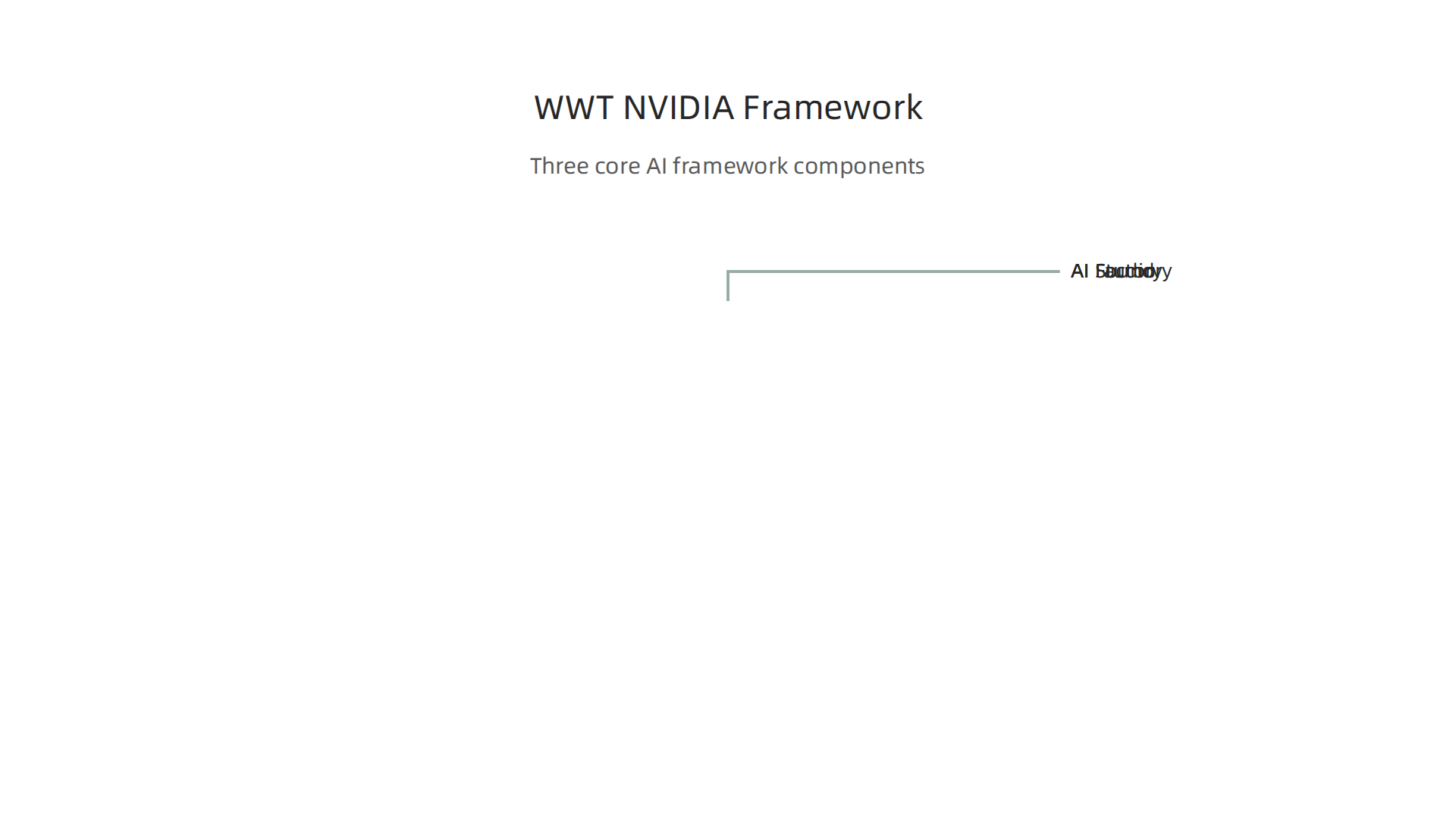
That is why World Wide Technology partners with companies like NVIDIA, Dell, NetApp, and the major cloud providers to deliver optimized AI stacks. For example, WWT and NVIDIA built a comprehensive AI framework that includes an AI Studio for strategic alignment, an AI Foundry for rapid application development, and an AI Factory for scaling infrastructure.
You can explore the details on the NVIDIA partnership overview page.
WWT also works closely with NetApp to solve data management challenges. The goal is a data infrastructure that is secured, scalable, and governed for AI. When you combine NetApp’s storage expertise with WWT’s integration skills, you get a foundation that can support even the most demanding applications of AI.
For policy professionals and executives tracking these developments, understanding the technology side matters. The choices companies make about AI infrastructure today will shape how they comply with regulations tomorrow. If you want to dive deeper into how technical decisions influence policy outcomes, check out our piece on rigorous artificial intelligence review for policy compliance.
The bottom line is simple. AI infrastructure is not just about buying the fastest GPUs. It is about building a complete system where data flows freely, models run efficiently, and security is baked in from the start. WWT’s ATC and its partner ecosystem give enterprises a proven path to get there.
If you want to stay ahead of how these technical shifts affect policy and regulation, you need clear, daily updates. Subscribe to The AI Newsletter Worth Reading to get insights that cut through the noise.
Navigating the Regulatory Maze: AI Governance and Compliance at WWT
In 2026, running AI without a solid governance plan is not just risky. It is illegal in many places.

Regulations like the EU AI Act, Canada’s AIDA, and various US state laws create a fragmented landscape that is hard to navigate. The EU AI Act High-Risk Deadline: Enterprise Readiness Gap shows that companies must have their high-risk systems compliant by August 2026 or face steep penalties.
World Wide Technology has built a governance framework that directly addresses this challenge. They help clients map every AI system against the specific rules in each jurisdiction. This process, called compliance mapping, identifies where a system is considered high-risk and what steps are needed. It covers everything from data governance to human oversight requirements.
For a broader view of how regulations are evolving this year, take a look at our coverage of the biggest information technology policy shifts of 2026.
A core part of WWT’s approach is making sure transparency, explainability, and bias testing are built into the AI lifecycle from the start. These are not features you add later. They are requirements that allow a system to pass a compliance audit. This is exactly the kind of rigor that policy professionals and tech executives should demand from their own AI deployment strategies.
The work WWT does here also connects directly to larger questions about national security and how AI is governed. You can learn more about those overlaps in our analysis of Palantir Technologies’ national security role and AI governance.
The takeaway is simple. You need infrastructure that works. But you also need governance that keeps you legal. World Wide Technology provides both.
Real-World Impact: Case Studies from WWT’s Enterprise AI Practice
Governance is only half the equation. The real test of any AI strategy is whether it delivers results in real business environments.

World Wide Technology has proven that its approach works across healthcare, financial services, and manufacturing.
In healthcare, WWT helped a large health system streamline operations and improve the patient experience. By deploying AI tools that automate documentation and revenue cycle tasks, clinicians gained back hours each day. One case study from WWT shows how a healthcare system used AI to strengthen network reliability and create consistent mobile interactions for patients. You can read about transforming the patient experience with AI to see the full results.
The healthcare industry is now moving from pilot projects to enterprise-wide deployments. WWT’s blog on moving healthcare from AI pilots to enterprise AI at scale explains how organizations are embedding AI into clinical and operational functions with measurable ROI.
Financial services is another area where WWT has driven real impact. In one example, an investment advisory firm used AI to automate client meeting preparation and portfolio compliance tasks. This reduced prep time by nearly 90 percent and improved the quality of client-facing materials. This example comes from WWT’s research on the ROI paradox, which examines how firms can move from AI promise to profit.
Manufacturing organizations also benefit from WWT’s expertise. They help factories integrate AI with legacy systems to improve predictive maintenance and supply chain optimization. The challenge is often connecting old equipment to new AI platforms, but WWT’s infrastructure know-how makes this possible.
Across all these industries, the pattern is the same. Companies that pair strong infrastructure with smart governance see faster time-to-insight, lower costs, and better compliance. If you want to stay current on how these trends are shaping technology policy, check out how AI regulation differs across industries.
Getting clear, daily updates on AI developments can help you make better decisions. That is exactly what The AI Newsletter Worth Reading delivers every day.
The Ecosystem Advantage: WWT’s Partnerships and the Competitive Landscape
World Wide Technology does not build AI solutions in a silo. The company’s real strength comes from its deep, long-term partnerships with the biggest names in technology. By working closely with NVIDIA, Dell Technologies, NetApp, and every major cloud provider, WWT creates a value chain that few other integrators can match.
These partnerships go beyond simple resale. WWT engineers collaborate directly with vendors to design and validate AI architectures. The company’s Advanced Technology Center, or ATC, is the heart of this work. The ATC is a billion-dollar lab with over 500 racks of equipment from Cisco, Intel, AMD, NVIDIA, and more. Clients can walk in, test their AI workloads on real hardware, and see performance before buying a single component. This try-before-you-buy model reduces risk and speeds up deployment.
WWT’s work with NVIDIA is a prime example. The company integrates NVIDIA DGX systems into customer environments through its AI Proving Ground and ATC. This setup lets organizations run benchmarks on high-end GPUs, explore reference architectures, and validate that their AI applications will work at scale. The NVIDIA and WWT partnership overview gives a detailed look at this collaboration. In 2023, WWT committed over $500 million to expand the ATC and create new composable AI labs, as covered in the press release about World Wide Technology’s $500M AI investment.
When you compare WWT to other large integrators, a clear difference emerges. Firms like Accenture, Deloitte, and HCL offer strong strategy and consulting expertise. But they often lack the hands-on infrastructure and supply chain depth that WWT brings. WWT can build, test, and deploy the full technology stack from hardware to software. This end-to-end capability makes it easier for companies to move from pilot to production without hitting integration roadblocks. A recent analysis of the WWT competitive landscape notes that the ATC gives WWT an engineering advantage over scale rivals like CDW and Insight Enterprises.
For anyone choosing a partner for AI initiatives, understanding these differences is key. The right infrastructure partner affects not just speed and cost, but also security, governance, and long-term compliance. To dive deeper into how technology policy is shifting across industries, check out our guide on tech news analysis for policy professionals. It helps you turn daily headlines into actionable intelligence.
Looking Ahead: Enterprise AI Trends That Will Define 2026 and Beyond
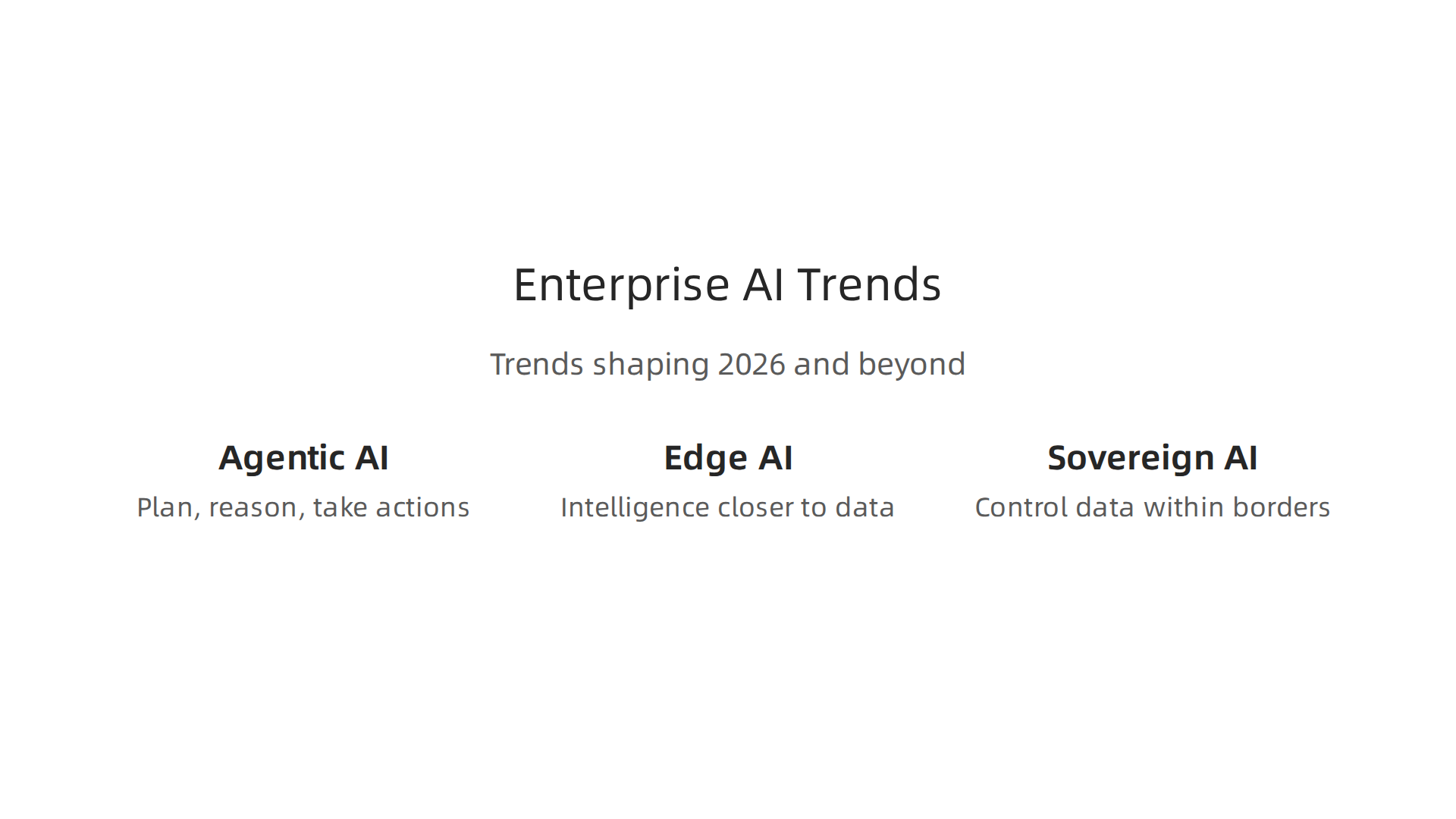
The world of enterprise AI is moving fast. Three big trends are reshaping the landscape in 2026: agentic AI, edge AI, and sovereign AI.
Each one brings new opportunities and fresh challenges for policy professionals and business leaders alike.
Agentic AI is the biggest shift. Instead of simple chatbots, AI systems can now plan, reason, and take independent actions. Gartner predicts that 40% of enterprise applications will include task-specific AI agents by the end of 2026. This move from generative to agentic AI changes how organizations think about workflow, oversight, and accountability. As these systems become more autonomous, the need for clear governance grows. The World Economic Forum notes that agentic AI adoption is accelerating but warns that companies must redesign governance models to integrate autonomous systems safely.
Edge AI brings intelligence closer to where data is created. Think sensors on factory floors, cameras in retail stores, or devices in healthcare settings. Processing happens in real time without sending everything to the cloud. This reduces latency, saves bandwidth, and improves privacy. But managing thousands of edge devices securely is a challenge. Success in 2026 will depend on policy-driven orchestration and tight integration with central platforms.
Sovereign AI is the newest and perhaps most consequential trend for policy professionals. Governments and regulated industries want to keep control over data, models, and infrastructure within national borders. The EU AI Act, which becomes substantially operational on August 2, 2026, is a key driver. Companies must classify their AI systems, conduct risk assessments, and implement human oversight measures. Non-compliance penalties can reach up to €35 million or 7% of global annual turnover. Staying ahead of these regulations is critical.
Global technology leaders like World Wide Technology are already investing heavily in these areas. WWT’s Advanced Technology Center and AI Proving Ground allow clients to test sovereign and edge architectures before deployment. Their research on AI and data priorities for 2026 highlights the need to build governance into every layer of the AI stack. For policy professionals tracking these shifts, understanding how integrators prepare for regulatory demands is essential.
To navigate this complex terrain, continuous learning is a must. Our guide on how to become an AI engineer in 2026 with policy expertise offers a practical roadmap for building the skills that matter most right now.
Finally, staying informed on daily AI and policy developments can feel overwhelming. That is why we recommend The AI Newsletter Worth Reading from The Deep View. It delivers clear, concise updates straight to your inbox so you never miss a critical regulatory shift or innovation trend.
Summary
This article explains how World Wide Technology (WWT) helps enterprises move AI from pilots into production by combining hands-on infrastructure, engineering expertise, and compliance frameworks. It describes WWT’s Advanced Technology Center (ATC) as a large testbed for validating AI stacks, and outlines partner integrations with NVIDIA, NetApp, and major cloud providers that speed deployment and reduce risk. The piece highlights governance work—compliance mapping, explainability, bias testing, and human oversight—that keeps systems legal under rules like the EU AI Act. Practical case studies from healthcare, finance, and manufacturing show measurable benefits such as automation gains and faster time-to-insight. The article also compares WWT to other integrators and explains why its lab-first, vendor-collaborative model matters for regulated industries. Finally, it reviews 2026 trends—agentic, edge, and sovereign AI—and what policy professionals and executives must do to stay compliant and operationally effective.