
The autonomous trucking industry reached an inflection point in 2026, and one company stands at the center of it all. Aurora Innovation has quietly moved from pilot programs to real commercial operations, logging more than 250,000 driverless miles with zero system-attributed collisions. The company validated a 1,000-mile route from Fort Worth to Phoenix that a single human driver cannot legally complete under federal hours-of-service rules. These are not theoretical tests. They are revenue-generating deliveries happening today on public highways.
For policy professionals, investors, and tech leaders, tracking aurora innovation news is no longer optional.

The regulatory landscape is shifting just as fast as the technology. California recently passed rules allowing autonomous trucking, and the SELF DRIVE Act of 2026 could unlock multi-state corridors by 2027. Partnerships with Volvo, PACCAR, Uber Freight, and FedEx signal that major industrial players are betting billions on this transition.
Understanding these developments requires more than headlines. Decision-makers need clear, focused analysis that connects operational milestones to policy implications and market opportunities. That is why many turn to The AI Newsletter Worth Reading for daily updates on AI and autonomous systems.

As Aurora triples its driverless network to 10 routes and targets more than 200 trucks by year’s end, the stakes continue to rise. This article breaks down the key advances, regulatory wins, and strategic moves that define Aurora’s 2026 story. Whether you are shaping policy, allocating capital, or guiding a technology team, the following sections will help you separate signal from noise.
Aurora Innovation’s 2026 Milestones
The milestones Aurora hit in 2026 tell a clear story.
The company moved from testing to real revenue, one route at a time. For anyone following aurora innovation news, the pace of execution has been remarkable.
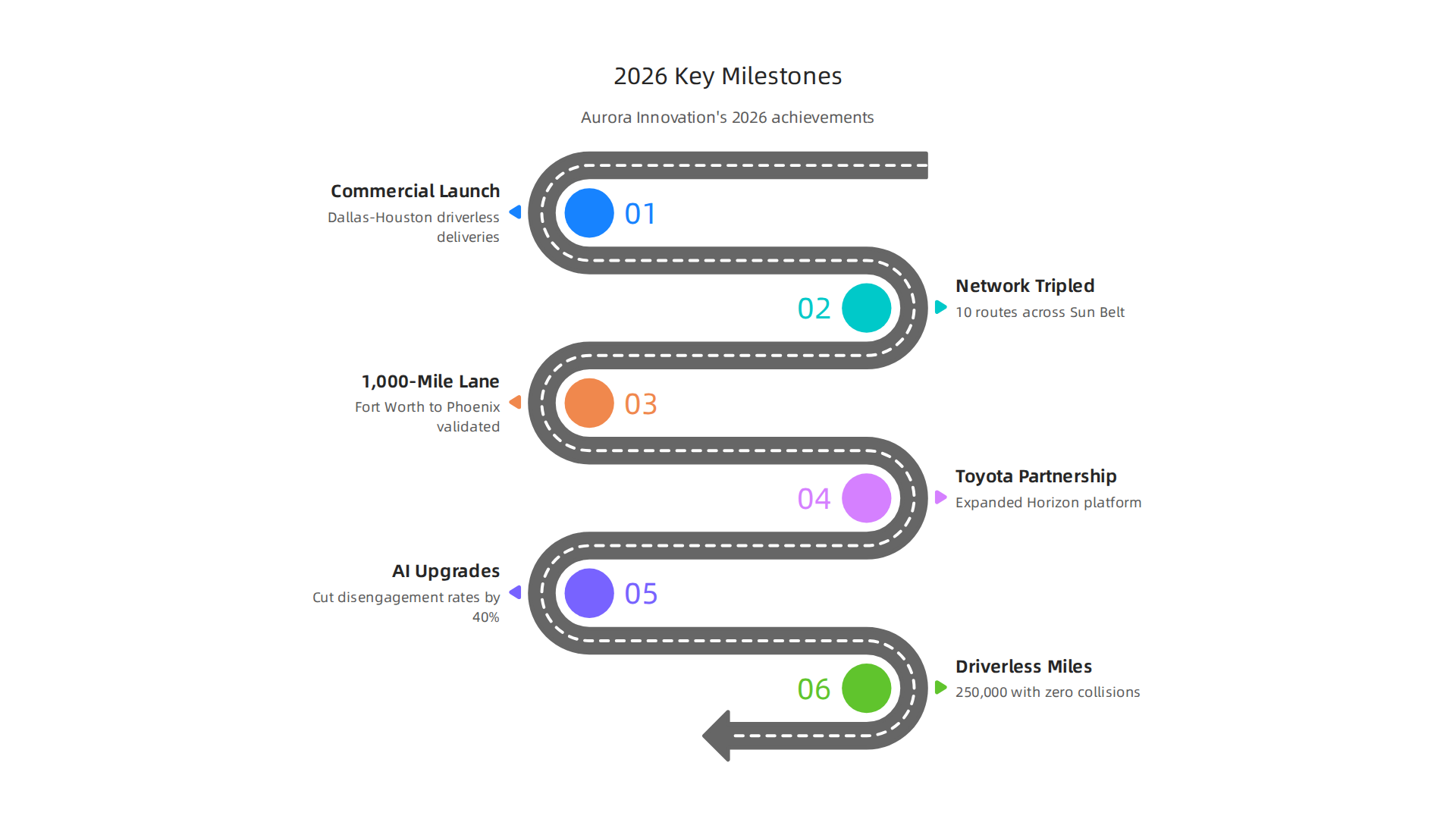
The first big step was the commercial launch between Dallas and Houston. Aurora started running regular driverless deliveries with a safety driver as a fallback. This was not a demo. It was real freight moving between two major Texas cities for paying customers like Uber Freight and Hirschbach Motor Lines. The announcement of Aurora’s commercial driverless service confirmed that heavy-duty autonomous trucks had finally reached commercial operations on public roads.
Route network exploded. By February 2026, Aurora tripled its driverless network to 10 routes across the Sun Belt. The company validated a 1,000-mile lane from Fort Worth to Phoenix that no single human driver can legally complete under federal hours-of-service rules. As detailed in the Aurora triples driverless network update, the fleet had logged more than 250,000 driverless miles with zero system-attributed collisions by January. By Q1 2026, the network expanded further to include a Dallas-to-Laredo route and a Dallas-to-Oklahoma City lane in partnership with Volvo.
Toyota partnership expanded the Horizon platform. A new collaboration with Toyota brought the Horizon platform into last-mile delivery services. This moved Aurora beyond just long-haul highway routes into the final leg of the supply chain. Trucks now navigate city streets and customer loading docks, not just transfer hubs. It is a natural extension of the hub-to-hub model and one that adds significant value for shippers.
AI upgrades cut disengagement rates by 40%. Improved perception algorithms helped the Aurora Driver handle tricky situations more reliably. The system got better at detecting pedestrians, predicting red light runners, and navigating inclement weather such as rain and fog. Fewer disengagements mean the trucks spend more time moving freight and less time handing control back to a human. These improvements came from upgraded sensor fusion and a new generation of machine learning models trained on millions of miles of real-world driving data.
The combination of commercial routes, strategic partnerships, and better AI performance makes 2026 the year aurora innovation news shifted from promise to proof. For anyone tracking the autonomous freight industry, these milestones show that the technology is not just working. It is scaling rapidly.
For a broader look at how these technology shifts affect regulation and governance, check out this tech news analysis for policy professionals.
Navigating the U.S. Regulatory Maze
Building the technology is one thing. Getting permission to deploy it across state lines is another challenge entirely.
For Aurora, the regulatory landscape in 2026 is not slowing down, but it is getting more complex.
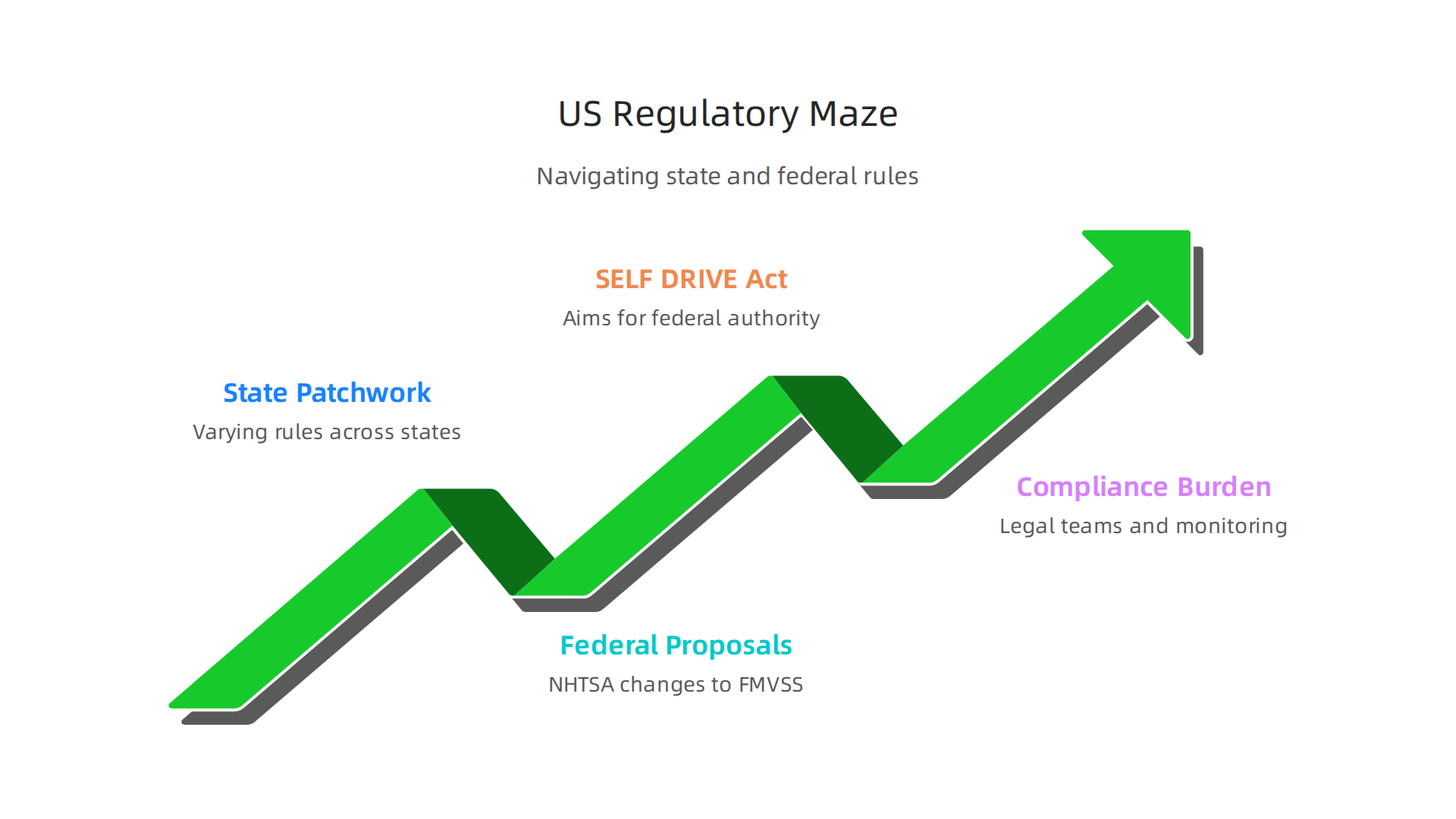
A patchwork of rules at the state level. Texas has been the most welcoming state for Aurora’s expansions. The state allows driverless truck testing with minimal red tape. But as Aurora plans routes into California and other states, it faces very different rules. California requires a permit for every autonomous vehicle deployment and has stricter reporting rules. This creates a lot of legal work for companies like Aurora. They need dedicated teams just to track which rules apply on which route.
New federal proposals could help. In early 2026, NHTSA took an important step. The agency proposed changes to several Federal Motor Vehicle Safety Standards that were written for human drivers. For example, one proposed rule would remove the requirement for transmission shift indicators and windshield wipers in trucks that have no human driver. The goal is to clear outdated rules that slow down autonomous vehicle deployment. This is part of a broader NHTSA review of federal motor vehicle safety standards that could make future approvals easier.
Congress is also moving on legislation. The SELF DRIVE Act of 2026, introduced as H.R. 7390, aims to give NHTSA clearer authority over automated driving systems. The bill would create new safety standards specifically for ADS-equipped vehicles and establish federal definitions that could help harmonize rules across states. If passed, it could reduce some of the regulatory friction Aurora faces when crossing state borders.
Aurora’s compliance burden is real. For every new route, the company must work with state departments of transportation, verify that its trucks meet local safety requirements, and submit crash data to NHTSA under the Standing General Order. These compliance costs add up fast. They require legal teams, policy experts, and constant monitoring of rule changes. It is not the flashy part of aurora innovation news, but it is essential for scaling safely.
For policy professionals tracking these shifts in real time, understanding the regulatory maze is just as important as following the technology.
A dedicated resource like this analysis of how AI policy in the public sector is transforming government compliance can help connect the dots between federal rules and state-level execution. And to stay ahead of every major regulatory move, subscribe to The AI Newsletter Worth Reading for clear daily updates on the policies shaping autonomous trucking.
Technological Advances in AI Perception
While navigating regulations is essential for scaling, the technology itself has to perform reliably. That is where Aurora’s latest advances in AI perception come in.

The company’s newest sensor fusion system combines lidar, radar, and cameras into a single neural network that processes all the data at once. Instead of each sensor feeding separate information into the system, the new architecture lets the AI "think" across all inputs at the same time. That makes object detection faster and more accurate.
Better performance in bad weather. One big challenge for self-driving trucks is rain, fog, and heavy wind. Older systems struggle when sensors get blocked or confused. Aurora’s latest software release changes that. According to the company’s official announcement, the Aurora Driver can now navigate highways and surface streets through multiple forms of inclement weather, including rain, fog, and heavy wind. The system uses the neural network to blend lidar returns with radar data that cuts through precipitation. The result is a clear picture of the road even when humans would struggle to see.
Handling the rare and tricky cases. The most dangerous moments for any autonomous system are the "long-tail" edge cases. That is the weird scenario that happens once in a million miles. A mattress falling off a truck. A deer leaping onto the highway. A car running a red light. Aurora’s AI stack has gotten much better at spotting these situations early. The system can now predict red light runners and detect pedestrians in the dark hundreds of meters away. This reduces the need for a remote operator to step in. Each improvement means the truck makes safe decisions on its own more often.
These software upgrades are not just lab experiments. They power real trucks moving freight right now. With over 250,000 driverless miles logged and zero collisions caused by the Aurora Driver, the perception technology is proving itself on public roads. Policy professionals who track these developments can benefit from understanding how image-based artificial intelligence is reshaping safety standards. For a deeper look, read our analysis on how image artificial intelligence is driving new policy in 2026.
Competitive Dynamics in Autonomous Driving
While Aurora’s technology is impressive on its own, the company doesn’t operate in a vacuum.
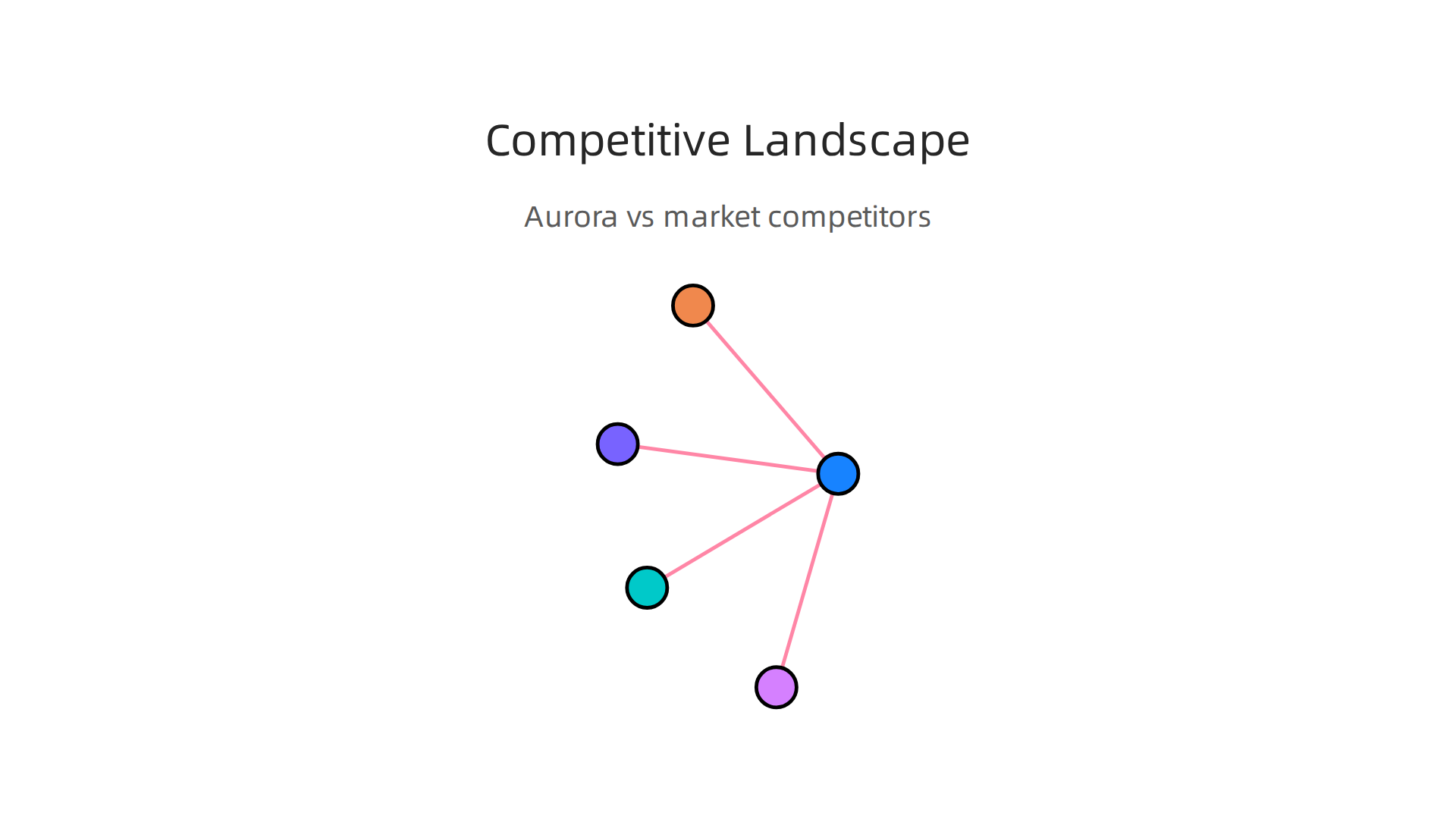
The race to dominate autonomous trucking is heating up with several major players vying for market share. According to an autonomous truck market report from Grand View Research, the global autonomous truck market was valued at USD 46.77 billion in 2025 and is projected to reach USD 139.49 billion by 2033. Key competitors include Waymo LLC, Tesla, Daimler Truck AG, AB Volvo, and of course Aurora Innovation.
Where Aurora differentiates itself. The biggest strategic difference is focus. Waymo leads in robotaxis, and Tesla pushes personally owned autonomous vehicles with its Full Self-Driving system. Aurora, by contrast, is all in on trucking. This singular focus lets Aurora optimize every sensor, every algorithm, and every partnership for long‑haul freight. The company also offers an open Horizon platform that allows fleet operators and OEMs to integrate Aurora’s driver technology into their own trucks. This open model contrasts with competitors that lock customers into proprietary hardware.
Partnerships as a network advantage. Aurora has built a web of alliances that few rivals can match. Its partnership with Toyota gives access to world‑class manufacturing expertise and a potential global distribution channel. The FedEx collaboration provides real‑world freight routes and operational data that accelerate learning. And the recent deal with NVIDIA, announced at CES 2025, sent Aurora’s shares soaring 35% and gives the company access to cutting‑edge AI compute chips. These relationships create a network effect: the more partners Aurora works with, the more data and deployment opportunities it gains, making its system smarter and harder to displace.
Chinese competition looms. It is not just U.S. rivals Aurora has to watch. Chinese companies like PlusAI and Waabi AI are advancing rapidly, often with strong government support and a massive domestic logistics market to test on. If they enter the U.S. market, they could bring lower costs and alternative approaches to autonomy. Policy professionals tracking the industry need to monitor regulatory developments around foreign autonomous vehicle testing and data security.
Staying on top of these competitive shifts is critical for anyone involved in technology or transportation policy. For a broader look at how to turn breaking tech news into actionable intelligence, explore our tech news analysis for policy professionals. And if you want to keep a daily pulse on the AI and autonomy landscape without the noise, get clear daily AI updates from The Deep View Newsletter.
Global Regulatory Landscape: EU and Asia
Aurora’s technology might be ready for the road, but getting it onto roads across the world means dealing with a maze of different rules.
The company’s expansion plans depend heavily on how well it can navigate regulations in Europe and Asia. And right now, those rules are changing fast.
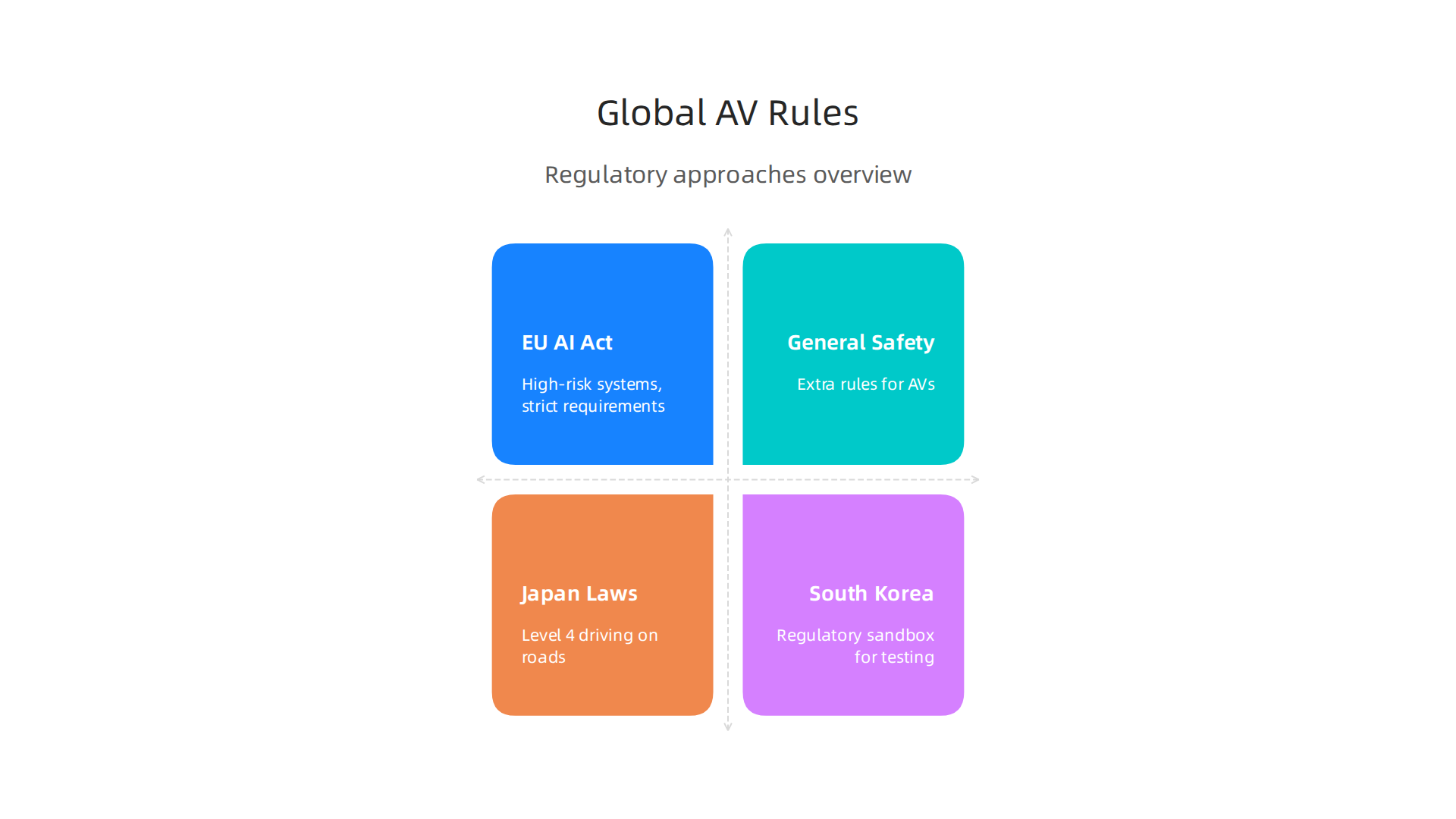
Europe sets a high bar. The European Union has passed the AI Act, one of the most strict laws for artificial intelligence in the world. For autonomous driving systems, this is a big deal. The act classifies many AI systems used in vehicles as high risk. That means companies like Aurora must meet tough requirements on risk management, data quality, documentation, and human oversight. The most demanding rules for these high risk AI systems started applying in August 2026. On top of that, the EU’s revised General Safety Regulation adds extra rules for autonomous vehicles. For a look at what these requirements mean in practice, check out the EU AI Act requirements for autonomous vehicle safety.
Japan and South Korea are moving fast. While Europe focuses on strict rules, Japan and South Korea have taken a different approach. Both countries have sped up their autonomous vehicle legislation to attract investment and become leaders in the space. Japan passed new laws that allow Level 4 autonomous driving on public roads in certain areas. South Korea created a "regulatory sandbox" that lets companies test self-driving technology without waiting for every rule to be written. These moves are designed to bring in companies like Aurora and give them a friendly place to operate.
What this means for Aurora. For Aurora innovation news, the key takeaway is that the company cannot use a one size fits all strategy. The EU demands proof of safety documentation and ongoing monitoring before any system can be deployed. Japan and South Korea want speed and are offering incentives. Any serious expansion plan will need a team that understands each region’s laws and can adjust the technology to match.
Keeping up with these global shifts is part of tracking how autonomous trucking will really take off. For a deeper look at how regulations are reshaping the whole tech landscape, explore the biggest technology policy shifts of 2026.
Safety, Privacy, and Public Trust
With regulators drawing the lines, the next big hurdle for Aurora is not a technical one. It is a human one. Can the public trust driverless trucks? And will the data they collect protect people’s privacy?

Aurora has been working hard to answer both questions.
In 2026, Aurora published a detailed safety report. It introduced something called the Safety Case Framework. This is not a marketing document. It is a structured way to prove that Aurora’s autonomous system is safe to operate on public roads. The report includes real incident data, breakdowns of why the system disengaged or needed help, and what Aurora learned from each event. This level of transparency is rare in the self-driving industry. It matters because trust is built on evidence, not promises.
But safety is only part of the story. Public perception surveys show a split in how people view autonomous trucks. On one side, many shippers and logistics companies are excited about the cost savings and efficiency gains. On the other side, everyday drivers and communities have real worries. Job loss for truck drivers is a top concern. And data privacy is another big one. Every mile an autonomous truck drives, it collects massive amounts of information about roads, traffic patterns, and even nearby vehicles. People want to know who owns that data and how it is used.
Cybersecurity adds another layer. The United Nations regulation UN R155 now requires automakers and autonomous vehicle developers to prove their systems are protected against cyberattacks. This means Aurora has to show it can detect and stop hacks in real time. A breach could shake public trust in an instant. For a deeper look at how data privacy concerns are shaping tech policy, check out the privacy and policy questions around AI background noise removal. These same principles apply to autonomous vehicle data.
Rebuilding trust takes action, not just words. Aurora’s Safety Case Framework is a solid start. But keeping that trust will require continuous reporting, real cybersecurity measures, and honest conversations about job impacts. For professionals tracking how all these pieces fit together, staying informed is essential. Get clear daily AI updates from The Deep View Newsletter to follow the intersection of autonomous technology, regulation, and public trust.
Investment Trends and Financial Outlook
Beyond public trust and safety, the financial story of Aurora is just as compelling. In 2026, the company’s stock price has moved up and down with each regulatory announcement and operational milestone. When Aurora announced its partnership with NVIDIA at CES, shares soared 35% in a single day. That kind of swing shows how sensitive investor confidence is to news about technology partnerships and regulatory progress. For analysts tracking these movements, the stock is a proxy for the entire autonomous trucking sector’s health.
Venture capital money is flowing into autonomous trucking faster than ever. In Q1 2026, VC investment in the space jumped 30% compared to the previous quarter. This surge signals strong belief that autonomous freight is close to commercial scale. The global autonomous truck market is projected to grow from roughly $47 billion in 2026 to over $115 billion by 2033, according to recent market analysis. Aurora sits right at the center of that growth curve.
What makes investors optimistic? Aurora runs what it calls the first fully autonomous commercial trucking operation in the United States. While many stealth AI companies are still hidden behind closed doors, Aurora has real trucks moving freight on public highways. That reality gives the company a lead that rivals like Waymo and Daimler are working hard to close. The trickle AI approach of adding autonomy incrementally has helped Aurora prove its system mile by mile.
Analyst consensus in early 2026 points to Aurora as a potential acquisition target. Its proprietary tech stack, the Aurora Driver, is one of the most advanced autonomous systems in development. Large automakers and logistics giants may see buying Aurora as a faster path to market than building their own system from scratch. This speculation adds another layer of financial interest for anyone following aurora innovation news.
For policy professionals and investors needing to connect the dots between technology regulation and market moves, understanding these investment trends is essential. The biggest information technology policy shifts of 2026 directly affect how companies like Aurora are valued and regulated. Staying ahead means watching both the financial signals and the regulatory signals at the same time.
AI Policy Developments Shaping the Industry
The White House issued a major executive order on safe and trustworthy AI in 2026. This order includes specific rules for autonomous vehicles. That means companies like Aurora must follow new federal guidelines on testing and deploying self-driving trucks. The goal is to make sure AI systems are safe before they hit the road. For anyone following aurora innovation news, this order sets the stage for how the industry can grow.
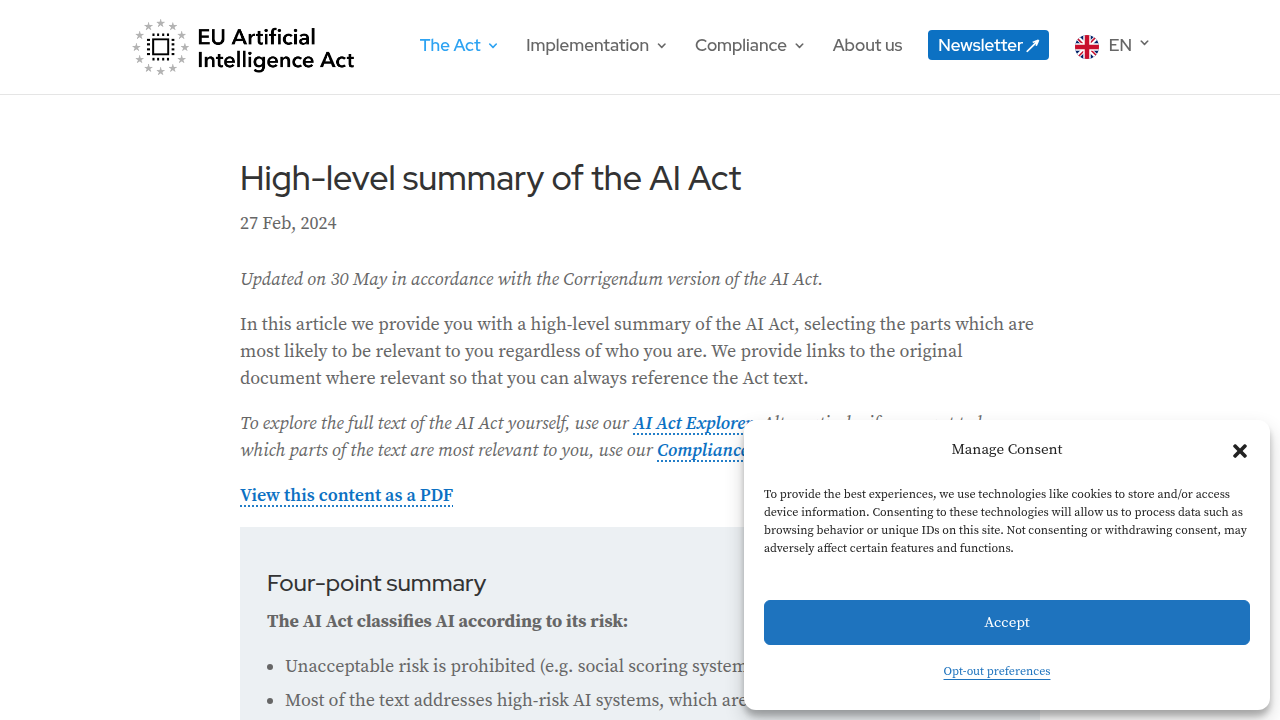
The EU AI Act creates another big layer of rules for autonomous vehicle systems. Under this law, AI systems used in self-driving trucks are considered high-risk. That classification comes with serious requirements. Before launching in Europe, companies need third-party audits of their AI systems. They must also do risk management, keep detailed records, and show human oversight measures. The enforcement date for these high-risk rules is August 2, 2026. That means Aurora and its rivals are already racing to meet the deadline. You can read more in this High-level summary of the AI Act for the full list of obligations.
Data privacy laws also play a big role in autonomous trucking. U.S. state privacy laws like the California Consumer Privacy Act and Europe’s GDPR control how companies can collect and use driving data. Aurora’s trucks record huge amounts of video, sensor data, and location information. Privacy rules require clear consent, strict storage limits, and data protection measures. This adds another compliance layer to an already complex regulatory picture. For a deeper look at how policy is shifting across the board, check out this analysis of the biggest information technology policy shifts of 2026.
Staying on top of these fast-moving AI regulations is essential for executives, investors, and policy pros. The rules change almost weekly. That is why getting reliable daily updates matters. The AI Newsletter Worth Reading delivers clear, practical insights on AI governance and tech policy every day. It helps you connect the dots between regulation and market moves without the noise.
Conclusion: Looking Ahead at Autonomous Vehicle Innovation
Looking back at 2026, one thing is clear: autonomous trucking is no longer a distant dream. Aurora’s steady progress this year shows that the technology is finally ready for real-world use. The company plans to launch fully driverless operations soon, mirroring moves by Volvo and Kodiak. In fact, Volvo Autonomous Solutions recently announced it will remove the safety driver in Q1 2027 and aims to have more than 300 autonomous trucks on U.S. highways by the end of that year. You can read more about that timeline in this story on Volvo Autonomous Solutions plans fully driverless operations.
But technology alone won’t decide the winner here. The biggest wildcard remains regulation. As we covered earlier, rules vary wildly between the U.S., the EU, and individual states. The EU AI Act, new U.S. executive orders, and state privacy laws all create a patchwork that companies must navigate. For Aurora and its rivals, success depends on aligning their rollout with regulatory timelines. If the SELF DRIVE Act passes, multi-state corridors could open by 2028. If not, progress stays limited to a few approved lanes.
For decision-makers tracking this space, staying on top of policy changes is just as important as following tech breakthroughs. The market is moving fast. The Level 4 autonomous trucking market was already valued at $1.5 billion in 2026, and McKinsey projects it could reach $178 billion in the U.S. alone by 2035. But those numbers depend on regulatory clarity that could shift at any moment.
That is why consistent, reliable policy analysis matters. If you want to keep your finger on the pulse of autonomous vehicle regulations and broader tech policy, consider following expert-driven coverage. Tech news analysis for policy professionals offers daily insights that help you connect the dots between regulation, innovation, and market opportunity.
The road ahead for autonomous trucking is long, but 2026 proved that the industry is accelerating. Smart leaders will watch both the technology and the rules of the road.
Summary
This article explains why 2026 was a turning point for Aurora Innovation as the company moved from pilots to revenue-generating autonomous trucking operations, logging 250,000+ driverless miles without system-attributed collisions and validating long routes like Fort Worth–Phoenix. It details Aurora’s commercial launches, expanded route network, partnerships (Toyota, Volvo, FedEx, NVIDIA), and AI perception upgrades that cut disengagements and improved performance in bad weather and rare edge cases. The piece also walks through the complicated U.S. and global regulatory landscape—including state patchworks, proposed federal rules and the EU’s AI Act—and why compliance teams and policymakers matter for scaling. It covers safety, privacy, cybersecurity, and public trust measures such as Aurora’s Safety Case Framework, plus investment trends, competitive dynamics, and what the regulatory outlook means for expansion. After reading, policy professionals, investors, and tech leaders will understand Aurora’s operational progress, the legal hurdles ahead, and the practical signals to watch when evaluating autonomous trucking opportunities.