
The Silent Revolution: How Lucid AI Is Reshaping Business and Work
Something is shifting in the world of artificial intelligence. For years, AI systems felt like black boxes. You fed data in, got answers out, and hoped for the best. But by 2026, that old approach is giving way to something new. Something clearer.
Meet lucid AI.
Lucid AI means systems that show their work. They explain their reasoning. They don’t just give you an answer. They tell you why.

This shift toward transparency is not a small nicety. It is a business necessity.
Here is why this matters right now. After the explosion of AI adoption in 2023 and 2024, companies and governments woke up to a hard truth. You cannot trust what you cannot understand. You cannot regulate what you cannot see. And you cannot build a future on tools that feel mysterious.
The National Institute of Standards and Technology has been working on this problem for years. Their push for explainable AI systems outlines core principles that help us judge whether an AI can really explain itself.
These principles focus on evidence, reasoning, and accountability. They give us a framework for trusting the tools we build.
But lucid AI is about more than just trust. It is about survival in a fast-changing world.
Business leaders today face a tricky balancing act. They need to innovate fast. They also need to follow new rules around data privacy, bias, and safety. They need to retrain workers whose jobs are changing. And they need to do all of this while keeping the public on their side.
Policy professionals feel this squeeze too. The regulations coming online in 2026 demand clear answers. If your AI system cannot explain a hiring decision or a loan denial, you could be in trouble. The era of "the algorithm made me do it" is over. To stay ahead, you need to understand the latest AI trends and governance challenges shaping this new landscape.
This article is your roadmap. We will walk through what lucid AI means for your business, your workforce, and your policy approach. We will look at the real trade-offs between speed and safety. And we will show you how to navigate this new landscape without getting left behind.
For daily insights on AI policy and governance, be sure to check out The AI Newsletter Worth Reading from The Deep View.

It delivers clear updates straight to your inbox so you can stay informed without the noise.
The revolution is quiet. But it is happening right now.
Understanding Lucid AI: Beyond the Buzzword
So what exactly is lucid AI? The term gets thrown around a lot in 2026, but the core idea is simple. Lucid AI refers to systems whose decisions can be understood and audited by humans. Instead of a black box that spits out answers, lucid AI shows its work. It explains why it reached a particular conclusion.
Think about the old way. You ask an AI system why it denied a loan application. It gives you a number or a score and nothing else. Frustrating, right? Now imagine a different scenario. The same system tells you exactly which factors mattered most. Your debt-to-income ratio. Your payment history. A data gap in your application. That is lucid AI in action.
The black box problem has haunted AI for years. Early machine learning models were incredibly powerful but also incredibly opaque. Even the engineers who built them could not always explain how they arrived at a specific result. That worked fine for recommending movies. It did not work for hiring decisions, medical diagnoses, or criminal justice.
Lucid AI solves this by building four key components into every system. The NIST principles for explainable AI systems lay out exactly what these components should include.
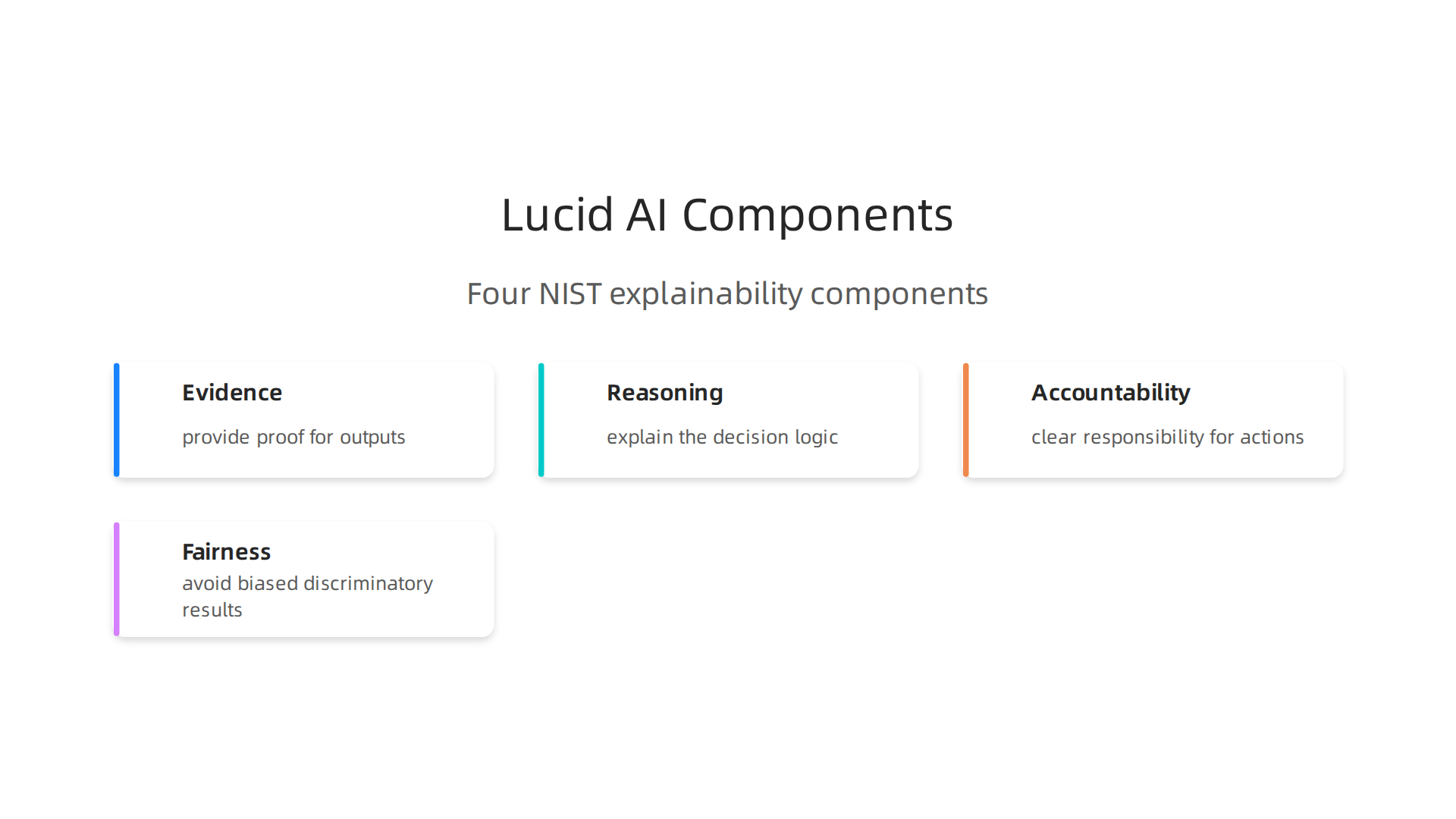
First, evidence. The AI must provide proof for its outputs. Second, reasoning. The system should explain the logic behind each decision. Third, accountability. Someone must be responsible for what the AI does. Fourth, fairness. The AI must not produce biased or discriminatory results.
These four pillars turn AI from a mysterious tool into a trustworthy partner.
Business adoption of lucid AI is not happening by accident. Two powerful forces are driving it. The first is regulation. Laws like the EU AI Act now require companies to explain how their AI systems make decisions. If you cannot explain it, you cannot use it in high-risk settings. The second force is customer demand. People are tired of getting rejected by algorithms with no explanation. They want to know why. And they will take their business elsewhere if you cannot tell them.
For a deeper look at how different regions are handling this, check out our guide on tech policy 2026 and global AI regulation comparisons.
Lucid AI is not just a nice feature anymore. It is the price of entry for doing business in a world that expects transparency.
The Redefinition of Work: AI’s Impact on Job Roles and Skill Demands
This shift toward lucid AI is not happening in a vacuum. It is directly tied to the biggest workplace change since the internet went mainstream. Your job might not disappear, but it will almost certainly change.
Let’s talk about the elephant in the room. Will AI take your job? The short answer is probably not entirely. But it will take over many of the routine tasks you do. This is called augmentation, not full replacement. A recent BCG report on reshaping jobs in 2026 found that AI will reshape far more roles than it will eliminate. Over the next few years, over half of all jobs in the US will be touched by AI. That means your role will evolve. You will focus on higher-level thinking, strategy, and exception handling while AI handles the repetitive parts.
Here is the catch. You need to know how to work with the tool. Demand for AI-literate workers is exploding across every sector. PwC’s 2026 Global AI Jobs Barometer shows a clear two-track labor market forming. Workers who embrace AI skills see their value go up fast. Those who ignore it risk falling behind. Routine manual and cognitive tasks are declining. But jobs that require AI management, prompt engineering, and data interpretation are growing. For a closer look at specific roles that are emerging, read our breakdown of AI tech jobs in 2026.
This rapid change makes reskilling and upskilling the most important factor for staying competitive.

Companies cannot just hire their way out of this skills gap. They must invest in their current people. And workers need to take charge of their own learning. Whether it is learning to use a personal AI assistant to double your productivity or understanding how to audit a lucid AI system for bias, these skills are becoming non-negotiable. If you are wondering where to begin, we have a practical roadmap on how to learn AI and build a future-ready career.
There is also a hidden risk here. When companies do not provide official AI tools or training, employees often bring in their own. This shadow AI creates huge security and compliance gaps. A smart governance strategy must account for this behavior before it becomes a problem.
The world of work is changing fast. Policy and business leaders need to keep up every single day. The best way to track these workforce shifts is to get clear, daily insights. I highly recommend getting daily AI updates from The Deep View Newsletter to stay ahead of the curve.
Regulatory Landscapes: Navigating the Patchwork of AI Laws in 2026
As AI reshapes your daily work, a bigger question looms. Who makes the rules? And which rules apply to you?
Here is the hard truth for 2026. There is no single global standard for AI regulation. Instead, we have a messy patchwork of laws that varies wildly depending on where you operate.

For anyone building or deploying a lucid AI system, understanding this landscape is not optional. It is survival.
The most ambitious framework by far is the European Union’s AI Act. It took effect in stages, and by August 2026, most of its core rules are now enforceable. The Act sorts AI systems by risk level. Unacceptable risk applications like social scoring are banned outright. High risk systems face strict rules on transparency, documentation, and human oversight. Lower risk systems have lighter obligations.
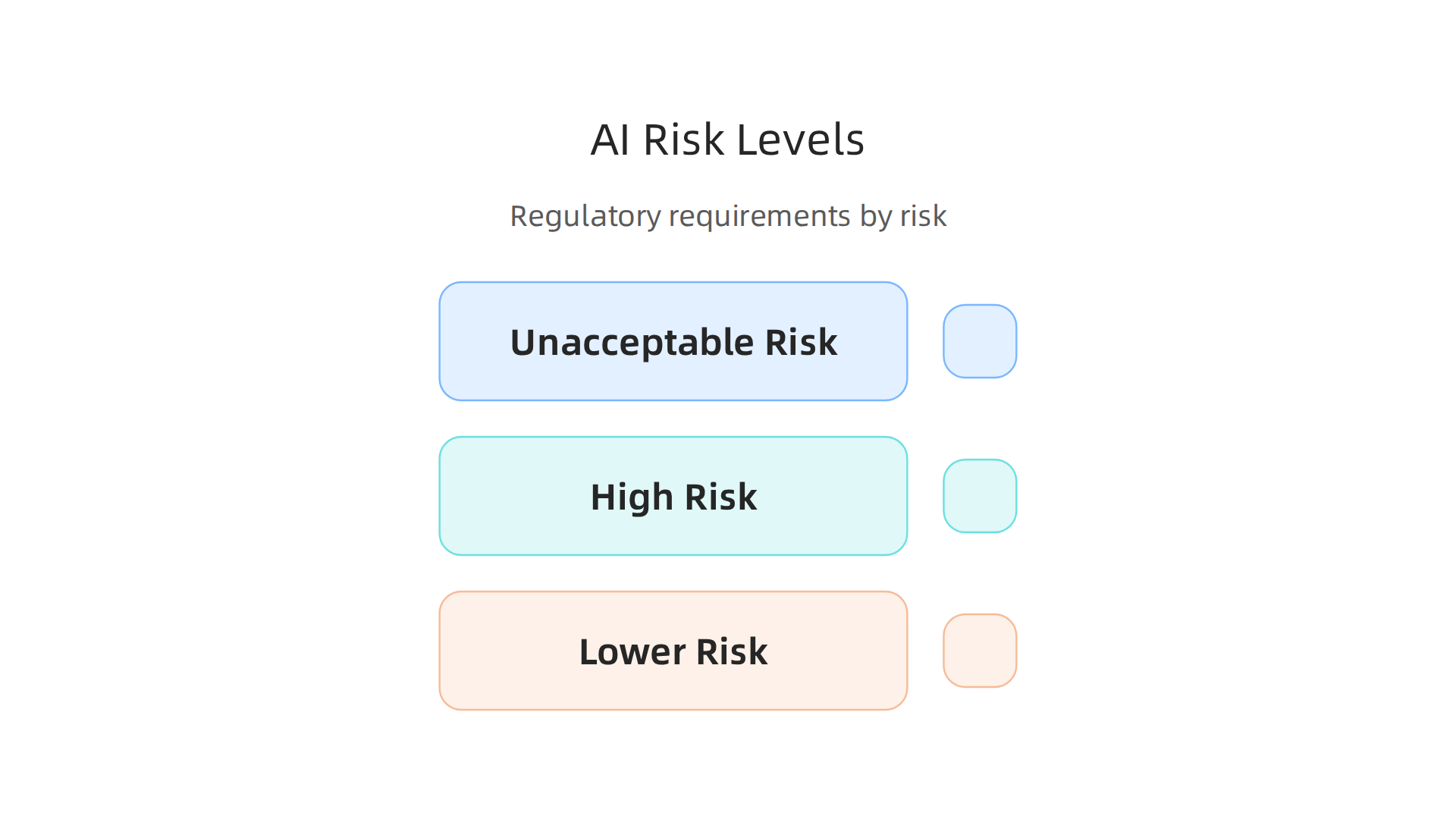
This risk based approach is the first of its kind anywhere in the world. If you want the full picture, check out the official high level summary of the AI Act from the European Commission.
What does this mean for a lucid AI system deployed in Europe? You need to classify your use case. Are you using AI in hiring, healthcare, or law enforcement? That likely puts you in the high risk category. You will need to conduct a conformity assessment, keep detailed technical documentation, and ensure human oversight is baked into the workflow. The deadlines are real. Non compliance can cost you up to 7 percent of your global annual revenue.
Now flip the map to the United States. There is no single federal AI law like the EU AI Act. Instead, regulation comes through sector specific rules. The Federal Trade Commission goes after deceptive AI practices. The Equal Employment Opportunity Commission watches AI in hiring for bias. The White House issued executive orders on AI safety and innovation. And individual states are not waiting for Washington. California, Colorado, and others have passed their own AI related laws covering everything from algorithmic transparency to deepfake disclosure.
This creates a compliance nightmare for companies operating across multiple states. A lucid AI tool that passes muster in Texas might need changes to work in California. And the rules keep shifting. For a deeper dive on how these differences play out, read our global comparison of AI regulations across the US, EU, China, and beyond.
Then there is China. The approach there is fundamentally different. Beijing treats AI as a strategic asset that must serve state priorities. Regulations focus on content moderation, algorithm备案 (filing), and ideological alignment. Any ai response generated by a system used in China must align with state approved values. Transparency is less about user rights and more about government oversight. For multinational companies, this means you need separate AI deployments for China versus the rest of the world. One size fits all is not possible.
So where does this leave you? The regulatory patchwork means you must build compliance into your AI strategy from day one. Do not treat it as an afterthought. A truly trustworthy lucid AI system is one that can prove where it came from, how it was trained, and what safeguards protect against harm. That is not just good ethics. In 2026, it is the law in multiple jurisdictions.
The landscape will keep evolving. But one thing is clear. The countries and companies that figure out smart, balanced AI regulation first will set the standard for everyone else.
Strategic Integration: How Businesses Are Embedding AI for Competitive Advantage
So how do you actually put these regulatory lessons into practice? The smartest companies in 2026 are not treating AI as a side project. They are weaving lucid ai into the core of their operations. Supply chain, customer service, product development, you name it. They want every ai response to be explainable and trustworthy. And they are seeing real returns.
Take the supply chain. One global manufacturer used a transparent AI system to predict demand across 50 warehouses. The result? A 15 percent drop in inventory costs and a 22 percent improvement in on time delivery. That is not a pilot. That is a permanent shift.
Customer service is another big win. When companies deploy a personal ai assistant that can explain its reasoning, customers trust it more. One telecom provider saw a 35 percent increase in self service resolution rates after switching from a black box chatbot to a lucid AI system. Customers could see why the system suggested a certain plan. That transparency built confidence.
In product development, teams are using AI to analyze user feedback at scale. Instead of guessing what features matter, they get a ranked list with clear reasoning behind every suggestion. One SaaS company cut its feature backlog prioritization time by 60 percent. According to 2026 AI business predictions from PwC, companies that embed AI strategically are outpacing competitors by a wide margin.
But let’s be real. It is not all smooth sailing. Three big challenges keep coming up.
First, data quality. Garbage in, garbage out. If your training data is messy or biased, your lucid ai system will produce unreliable ai response. Clean data pipelines are not optional.
Second, legacy systems. Many companies run on software that is 10 or 15 years old. Getting a modern AI assistant to talk to a 2012 database takes serious engineering work. You cannot just bolt on AI and hope it works.
Third, talent scarcity. People who understand both AI and business strategy are rare. Companies are poaching each other’s best talent. That drives up costs and slows down deployment.
If your organization is wrestling with these challenges, you are not alone. The best way to keep up is to learn from others who are further along. For a deeper look at how real companies are tackling the enterprise AI adoption gap, check out our guide on bridging the enterprise AI adoption gap.
And if you want to stay ahead of every shift in AI policy and strategy, you need a steady stream of clear, daily updates. Consider subscribing to The AI Newsletter Worth Reading. It delivers concise insights straight to your inbox, so you never miss a beat on how AI is reshaping business and regulation.
Risk, Ethics, and Trust: Building Responsible AI Frameworks
Building a lucid ai system is one thing. Making sure people actually trust it is another. When an ai response affects a customer’s credit score or a patient’s treatment plan, you cannot afford to guess whether the system is fair. You need proof.
That is why continuous monitoring of fairness and bias has become a non-negotiable practice in 2026. It is not a one-time check during development. You have to keep watching after launch. Models drift. Data changes. New biases can sneak in. The only way to catch them is constant vigilance.
Shadow AI is a big problem here. Teams inside companies often deploy tools without telling anyone. Those hidden systems skip all the fairness checks. They make decisions in the dark. A proper responsible AI framework catches shadow AI early and brings every system into the light.
The OECD AI Principles offer a solid starting point for any organization building a responsible AI framework.
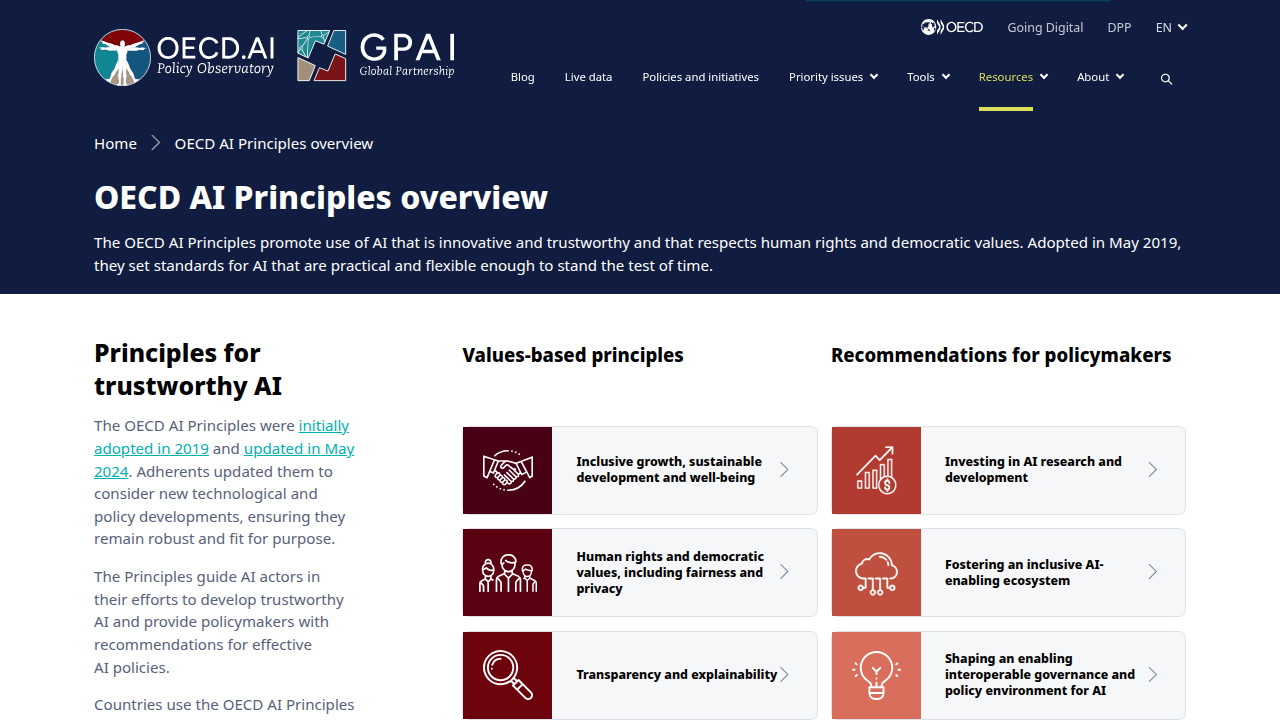
These principles cover transparency, accountability, and human oversight. Many companies in 2026 are embedding these principles directly into their corporate governance structures. It is not a separate checklist. It becomes part of how the board operates.
Third-party audits and certifications are emerging as real market differentiators. A lucid ai system that can prove its compliance through an outside audit stands out. Customers and regulators both pay attention to that. If you want a deeper look at how different regions handle these requirements, check out this guide on AI regulations across global markets.
The Harvard Business Review outlines 5 key principles for responsible AI that every leader should know.
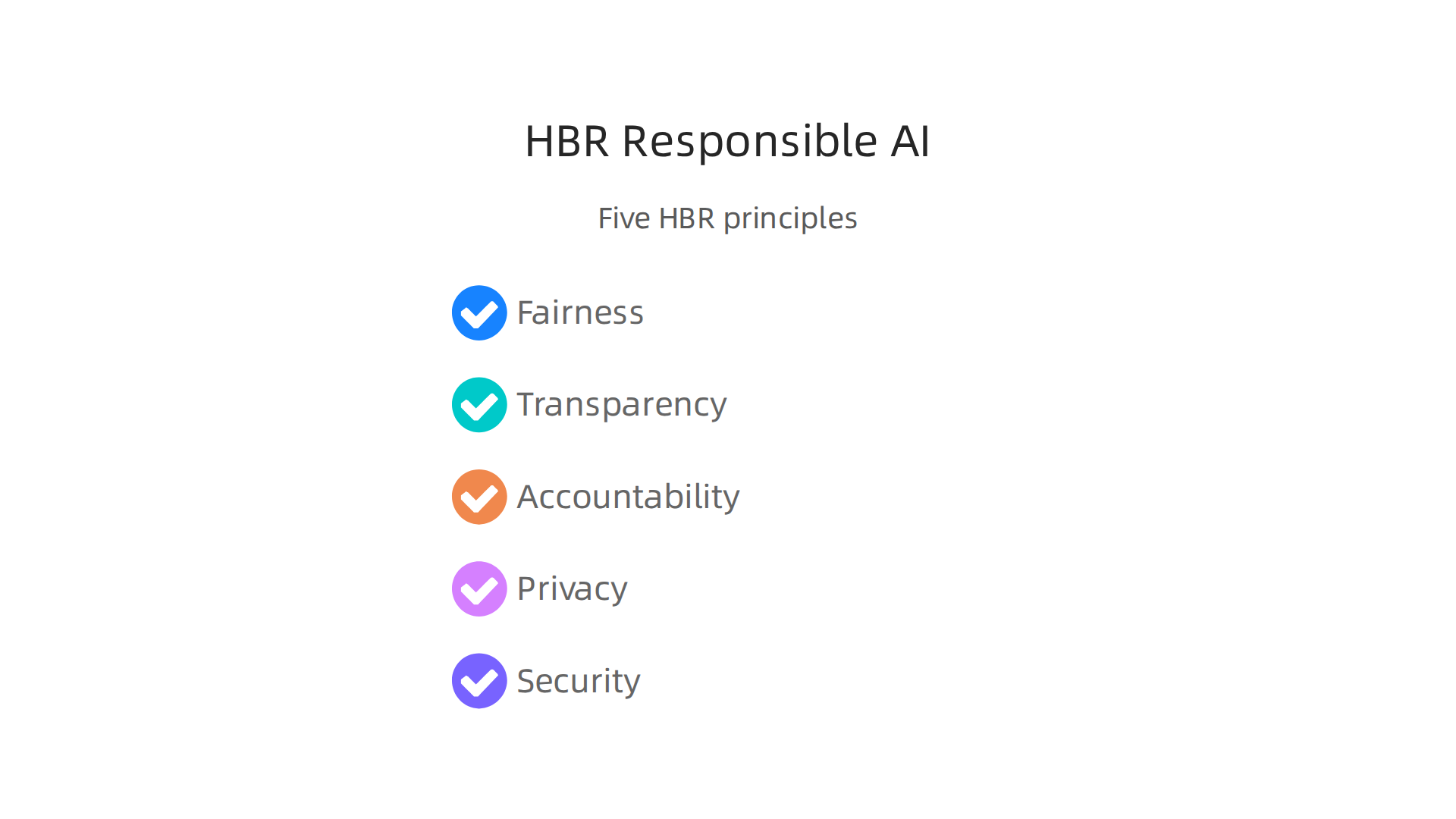
Fairness, transparency, accountability, privacy, and security. These five pillars give you a clear framework to test every ai response against. If a system fails any of them, you go back and fix it before deployment.
None of this works without clear ownership. Someone has to be in the room when decisions are made. Someone has to answer for what the system does. That is what accountability means in practice. You cannot blame the algorithm when something goes wrong. The buck stops with a person.
Building trust takes time. But losing it takes seconds. The companies that invest in responsible AI frameworks today are the ones that will lead tomorrow.
For daily insights on how AI ethics and regulation are evolving, subscribe to The AI Newsletter Worth Reading. It delivers clear updates straight to your inbox so you never miss a critical policy shift.
The Global AI Race: Policy Implications for National Competitiveness
While building a trusted lucid ai system is a challenge for individual companies, the bigger picture is global. In 2026, nations are pouring massive resources into AI research and infrastructure. They see it as a way to gain economic and military advantages that could last for decades.

This is not just a tech story. It is a policy story that affects trade, national security, and even the balance of power.
Governments understand that whoever leads in AI will shape the future. China’s national AI strategy aims for world leadership by 2030. The United States is investing billions through the CHIPS and Science Act and AI-related initiatives. The European Union is putting its weight behind the risk-based framework of the AI Act, hoping to set a global standard. The EU AI Act, as the world’s first comprehensive legal framework on AI, is a big part of that strategy. You can read a detailed summary of the AI Act to understand how it classifies AI systems by risk level.
But the race is not just about building better models. It is about controlling the supply chain. Export controls on advanced AI chips and foundation models are already reshaping global supply lines. Companies that used to buy cutting-edge hardware freely now face restrictions. This forces nations to either develop their own chip manufacturing or find creative workarounds. The result is a fragmented global market where the flow of technology depends as much on geopolitics as on innovation.
International cooperation is struggling to keep up. Organizations like the Global Partnership on AI (GPAI) and the OECD work to create shared rules, but their progress is slow compared to how fast AI moves. Unilateral actions by major powers often outpace agreements. This creates uncertainty for businesses trying to operate across borders. A company that builds a lucid ai assistant for global customers must navigate conflicting regulations from the US, EU, China, and others. That is a massive compliance burden.
For policy professionals, staying ahead means understanding these dynamics. If you want a deeper look at how different regions handle AI rulemaking, check out this comparison of AI regulations across global markets. It breaks down the approaches of the US, EU, China, and beyond.
The winners in this race will not just have the best technology. They will have the best policy frameworks to support innovation while protecting their citizens. That balance is hard to get right. But it is exactly what will determine which nations lead in the next decade.
Summary
This article explains the rise of lucid AI — systems that show their work and can be audited — and why transparency has become a business and policy imperative by 2026. It covers the core components of explainable systems (evidence, reasoning, accountability, fairness), the regulatory pressures such as the EU AI Act, and the practical trade-offs companies face between speed and safety. You’ll learn how lucid AI changes job roles through augmentation rather than wholesale replacement, which skills employers now prize, and why reskilling and governance are essential. The piece also outlines real-world business wins from transparent AI, common operational challenges like data quality and legacy systems, and the importance of continuous bias monitoring and third‑party audits. Finally, it maps the fragmented global regulatory landscape and explains why national strategy and supply chains matter for AI competitiveness. After reading, you’ll know the steps to start integrating lucid AI responsibly, how to prepare your workforce, and what compliance priorities to build into your strategy.