
Why Small Business Week Matters for Strategic Growth
Every year, Small Business Week is a special time. It’s when we celebrate all the hard work and big dreams of small businesses across the country. But in 2026, it’s more than just a celebration. It’s a chance for business owners like you to think about how to grow your company even bigger and better.

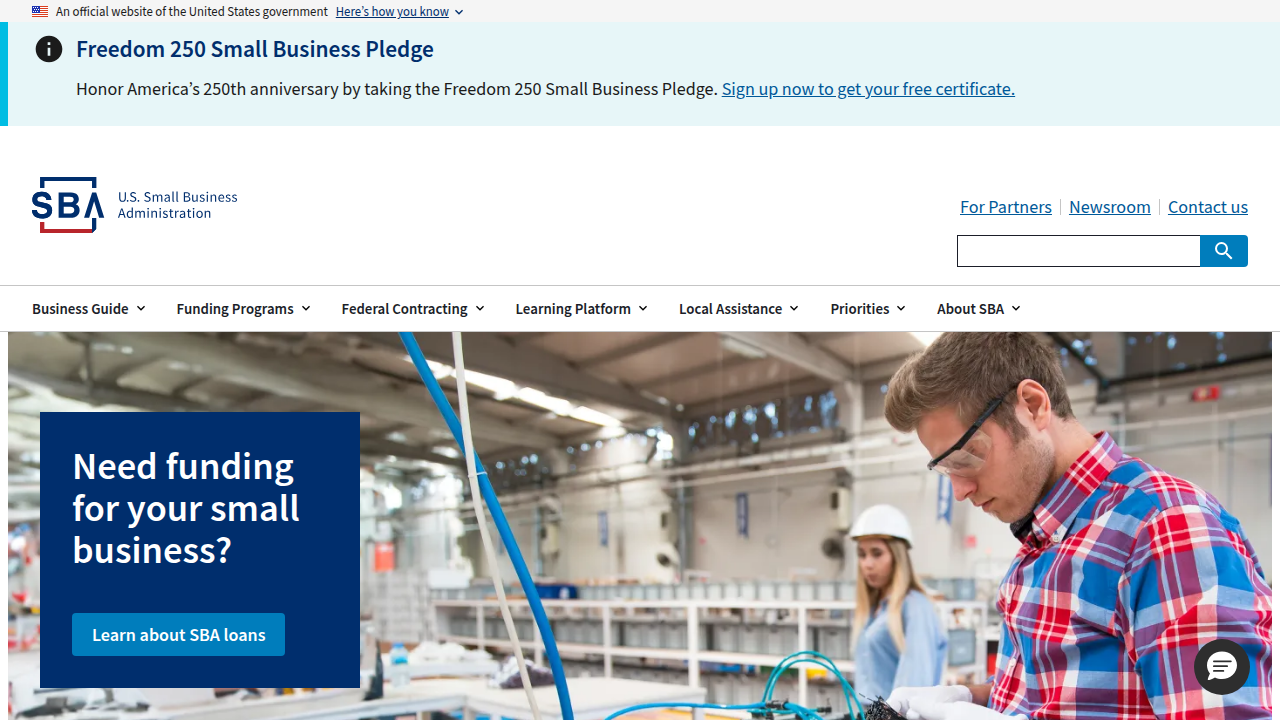
Right now, running a small business comes with both exciting chances and tricky new rules. You might be looking for new business ideas to start or wondering about the best way to keep your business running smoothly, like doing business as an LLC. The world changes fast. New technologies and rules pop up all the time. This means it can be hard to keep up with what’s new and what could help your company grow. For example, the U.S. Small Business Administration (SBA) offers many programs, including grants that can help businesses, but knowing which ones to pick can be complex Grants | U.S. Small Business Administration.
This article is here to help. We will give you clear steps and proven ways to figure out what growth activities you should focus on during this Small Business Week. We will look at what’s important for your business right now. You will learn how to make smart choices that lead to real growth.
To keep your small business strong and growing, you need to understand the latest rules. Knowing about things like LLC Compliance 2026: New Regulations Every Limited Liability Company Should Know can help you avoid problems and grab new chances.
Think of this as your guide to building a thriving business empire, one smart step at a time.
For professionals who need to stay on top of all the changes in technology and policy, especially in areas like AI, there’s a valuable resource.
Get clear daily AI updates from The AI Newsletter Worth Reading.
Map Your Support: Grants, Loans, and Advising Programs to Prioritize
Now that we know Small Business Week is a great time to plan for growth, let’s talk about where to find help. There are many programs that can give your business a boost, whether you’re just starting out with new business ideas to start or looking to expand your existing business empire. Knowing which ones are right for you is key.
Finding Federal Help: The SBA and Beyond
The U.S. Small Business Administration (SBA) is a big helper for small businesses. They offer lots of ways to get money and advice. Think of them as a main source for support. Besides the SBA, you can find other federal grants by checking sites like Grants.gov.

This helps you search for money you don’t have to pay back, often for special projects like research or community efforts.
State and Local Programs Are Your Friends Too
Don’t forget about your state and local governments. Many states offer their own programs for small businesses. For example, some states have business loans and grants for local businesses to help with things like starting up or expanding. Others might have special grants, such as the Small Business Advantage Grant in Pennsylvania, to help businesses be more eco-friendly. Even your city or county might have an office that helps businesses like yours. These local supports are often very specific to your area’s needs.
Choosing Your Support: Grants, Loans, or Advising?
It’s important to know the difference between the main types of help:
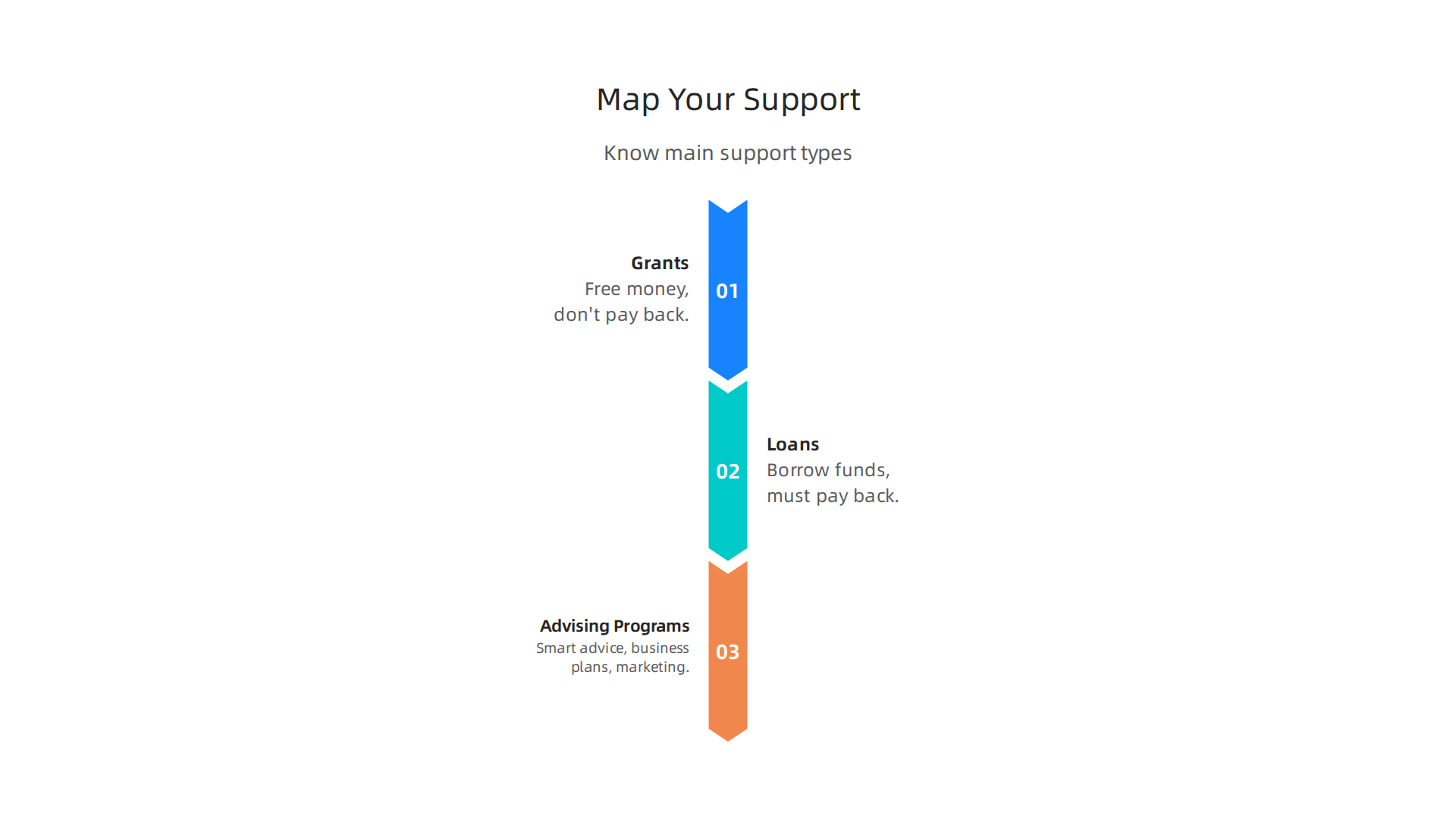
- Grants: This is like free money! You usually don’t have to pay it back. Grants are often given for specific reasons, like if your business helps the community or works on new technology. You need to apply and show how your project fits their goals.
- Loans: These are funds you borrow and must pay back, usually with a small extra fee called interest. SBA-backed loans, for example, come from regular banks but have special rules to make them easier for small businesses to get. Loans are good when you need a larger sum of money for things like buying equipment, hiring more people, or getting a bigger space.
- Advising Programs: Sometimes, what you need most isn’t money but smart advice. Many government groups and non-profits offer free help with things like making a business plan, understanding how to run a company (like doing business as an LLC), or marketing. This kind of help can be just as valuable as money, especially for a new business woman or man.
How to Pick What’s Best for Your Business
To decide which type of help to look for during Small Business Week, ask yourself these questions:
- What do I need the money for? Is it for a specific project that helps the community (maybe a grant)? Or is it for general growth and expenses (maybe a loan)?
- How much money do I need? Grants are often smaller, while loans can be much larger.
- Am I okay with paying money back? If not, focus on grants. If yes, loans could be a good option.
- Do I need expert advice more than money right now? Sometimes, getting clear steps from a business advisor can save you more in the long run than a small grant.
- What stage is my business in? New businesses might need more advising and smaller startup grants. Growing businesses might need larger loans to expand.
By thinking about these points, you can make a smart plan to find the right support for your business this Small Business Week.
Now that you have a good idea of where to find help, let’s talk about how to use that energy to get more customers. Small Business Week is also a great time to try out new ways to reach people and make sales without spending a lot of money. These are called "low-cost experiments." They help you learn what your customers really want and what they are willing to pay.
Trying Out New Ideas: Why Experiments are Smart
Think of low-cost experiments like a chef trying a small taste of a new recipe before making a big batch. You’re testing your [business ideas to start] with real people in a small way. This helps you understand what works for your business and what doesn’t. The goal is to get early money coming in and to make sure your prices are just right.
Local Connections and Partnerships
One easy way to experiment is by working with others in your area.
- Join Local Events: Does your town have a farmer’s market, a craft fair, or a community festival? Setting up a small booth can be a very cheap way to meet potential customers. You can offer samples, talk to people, and get their direct feedback.

This helps you see if there’s real interest in what you sell.
- Team Up with Other Businesses: Find other small businesses that are not your direct competition but serve similar customers. For example, a coffee shop and a local bakery could offer a special deal together. This lets you both reach new people. You can even swap ideas on cost-effective small business advertising ideas for 2026 and other strategies.
- Ask for Referrals: If you already have some happy customers, ask them to tell their friends. Offer a small thank you for each new customer they bring in. Word-of-mouth is still one of the best ways to grow.
Using Digital Tools for Small Tests
The internet offers many ways to try new things without a big budget.
- Simple Social Media Posts: Use platforms like Facebook or Instagram to share pictures and stories about your products or services. Ask questions and see what people say. This is a free way to learn what your audience likes.
- Run Small Website Tests: If you have a website, you can try showing two different offers or messages to visitors to see which one works better. This is called A/B testing. For example, you might test if people click more on "Buy Now" or "Learn More." This kind of marketing experimentation can lead to big wins for small businesses in 2026 by helping you refine your approach based on data, not guesses.
- Build an Email List: Ask visitors to your website or local events if they want to get emails from you. Offer a special discount for signing up. Then, send out simple emails with news or special deals. This helps you talk directly to people who are interested. Many small business marketing experiments can be run with email to test different offers over a short period of time.
- Get Creative with AI Tools: Modern tools can help you create engaging content quickly and cheaply. If you need help making catchy ads or designing simple graphics, there are AI-powered tools that can assist. Learning about these tools can help any business woman or man master creative tasks for growth. To stay on top of how these tools are changing things, consider exploring resources like Creatify AI explained: master creative tools for business growth.
Measuring What Works
No matter what experiments you try, the most important part is to watch what happens. Did more people buy your product when you offered a special deal? Did more people sign up for your email list? Keep track of what you do and what results you get. As one expert suggests, starting simple and testing what works, then growing from there, is a proven and profitable approach for small business marketing strategies for 2026. This can be seen in advice on 7 Simple Marketing Strategies For 2026 (PROVEN & PROFITABLE).
By testing these low-cost strategies during Small Business Week, you can find the best ways to attract customers and make your business grow.
Staying informed about new technologies and strategies, especially those related to AI, can give your business a real edge.
The AI Newsletter Worth Reading
Staying informed about new technologies and strategies, especially those related to AI, can give your business a real edge. Now, let’s look at how to use that advantage to build a strong business that can grow without needing to hire lots of new people right away.
Operational Priorities: Building Scalable Processes Without Hiring Fast
Think of your small business as a growing plant. For it to get bigger and stronger, it needs good roots and a clear path. The "roots" are your daily tasks and how you do them. If these tasks are messy or slow, it’s hard to grow. This is why having clear, repeatable steps for common tasks is so important. When you standardize processes, you save time, cut down on mistakes, and keep customers happy.

This helps you build a solid business empire, step by step.
Which Processes to Standardize First
To keep your customers and reduce costs, focus on these main areas first:
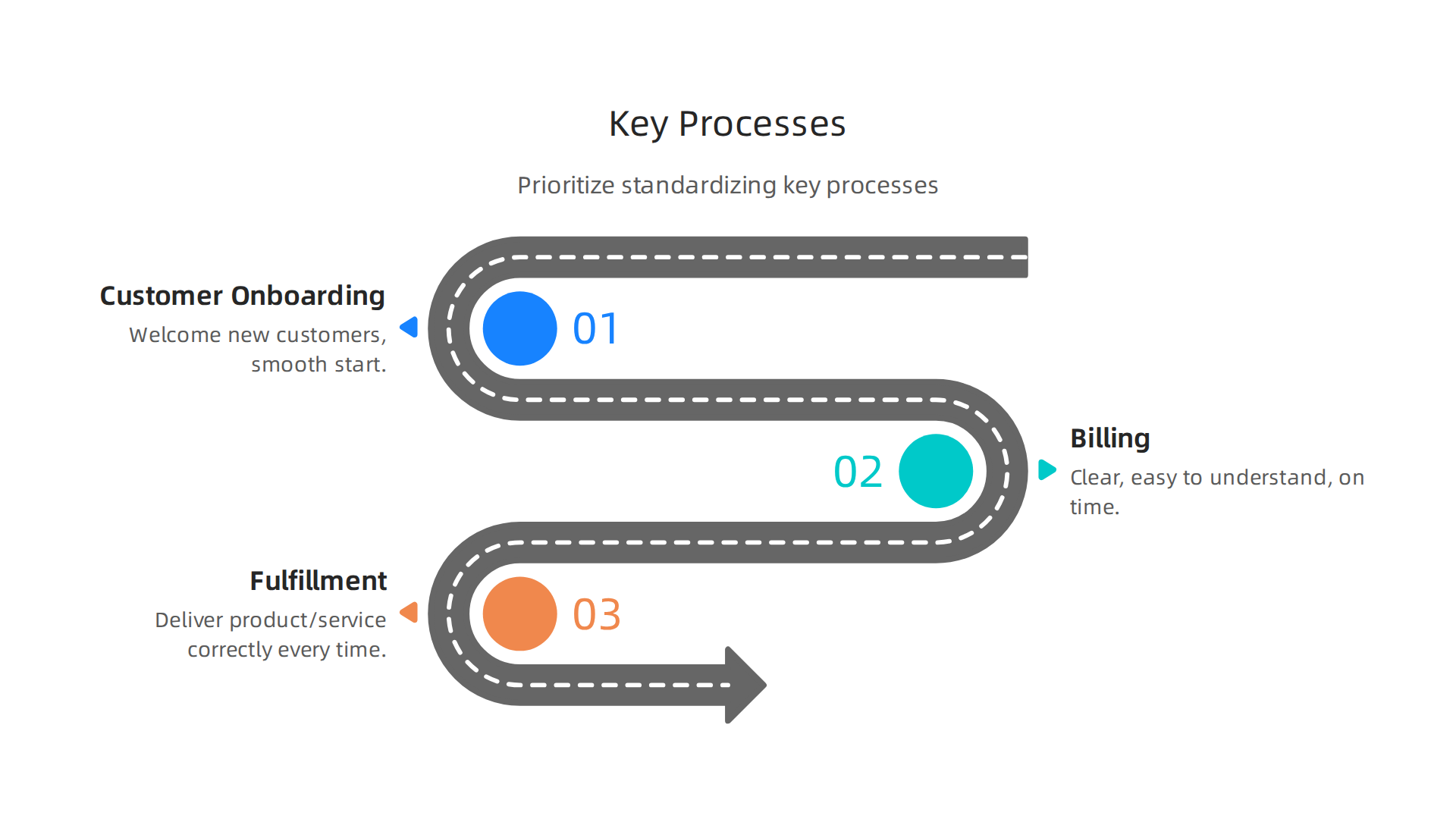
- Customer Onboarding: This is how you welcome new customers. Make it easy for them to get started with your product or service. A smooth start can make customers feel good about their choice and want to stick around. Good onboarding helps reduce "churn," which is when customers leave. Experts suggest that strong customer retention practices, like smooth onboarding, can boost your results in 2026 significantly, as explained in advice on Customer Retention And….
- Billing: How do you charge your customers? Make sure it’s clear, easy to understand, and always on time. No one likes surprises when it comes to money.
- Fulfillment: This is how you deliver your product or service. Whether it’s shipping a physical item or giving access to an online course, make sure it’s done correctly every time.
By making these steps clear and easy to follow, anyone could step in and do them if needed. This makes your business more flexible and less dependent on just one person. It’s smart planning for any business woman or man.
Using Smart Tools and Help from Outside
You don’t have to do everything yourself. In 2026, there are many tools and partners that can help your small business run smoothly without adding full-time staff.
- Low-Code/No-Code Tools: These are like building blocks for websites or apps. They let you create tools and systems without needing to know a lot about computer coding. For example, you can set up automatic emails, simple customer portals, or track projects more easily. This helps you act like a bigger company, even when you’re just starting some [business ideas to start].
- Outsourced Partners: Sometimes, it makes sense to pay another company to handle certain tasks. This could be for things like bookkeeping, customer service calls, or managing your social media. It’s like having a team without the need for hiring and training them yourself.
During a busy time like Small Business Week, you might only have a short time to plan. So, when looking at these tools and partners, focus on what’s simple to set up and what will give you the biggest help right away. Think about the costs and how these tools might fit into your overall AI infrastructure 2026: navigating cost, security, and compliance. Choosing the right ones can help your business grow while keeping your team lean.
To keep up with how technology can help your business, especially with AI, it’s important to have good information.
The AI Newsletter Worth Reading
Staying informed about new technologies, especially AI, is super important. But just knowing about them isn’t enough. You also need to pick the right tools that truly help your business grow without adding extra costs or big problems. It’s like building a strong house; you want to choose the best materials and put them together carefully.
Product & Technology: Prioritizing Features That Reduce Cost and Risk
When you’re running a small business, every choice you make about new products or technology matters a lot. You want new tools to make your work easier, save money, and help you get more done. But you also need to be careful. Not all new tech is a good fit, and some can even bring risks like high costs later on, or issues with how you handle customer information.
In 2026, many small businesses are looking at AI and other data tools to help them. But before jumping in, think about how to pick features that reduce costs and keep your business safe. This is called "risk-aware product prioritization." It means thinking about what could go wrong before you invest.
Choosing AI and Data Tools Smartly
Here’s how to make smart choices when looking at new tech:
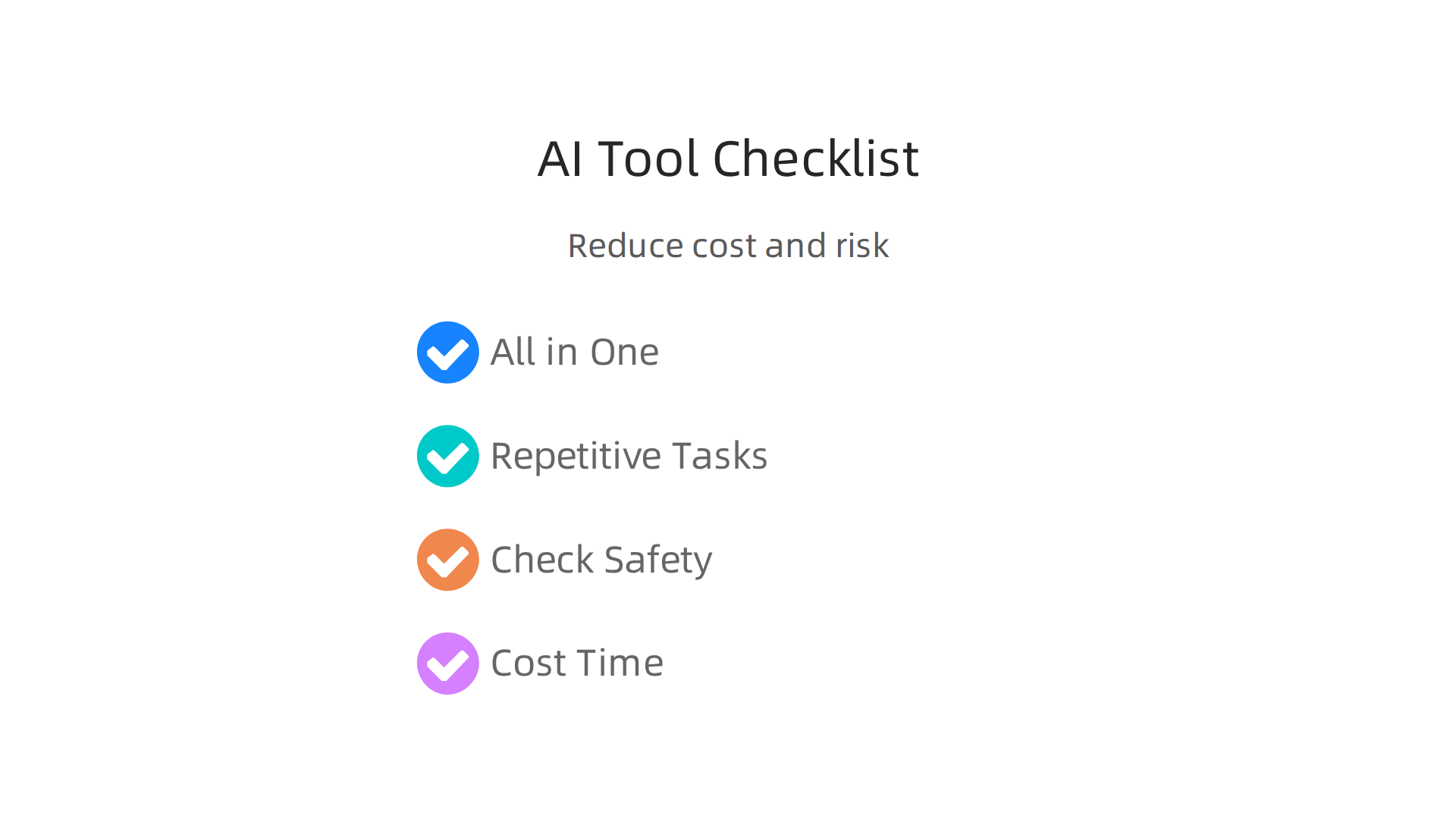
- Look for All-in-One Solutions: Many small businesses in 2026 are looking for tools that do many things at once. Instead of buying lots of separate programs, they want one main system that can handle different parts of their work, from getting paid to using AI to help out. This way, everything works together smoothly, as noted in the 2026 small business digital adoption report.
- Focus on Repetitive Tasks: Experts say that AI helps most with jobs that are done over and over again, like entering data or sorting information. If you have tasks where work is piling up, that’s a good spot to try AI. By automating these, you can save a lot of time and money, with AI potentially saving 20-30% on operational costs, according to insights on SMB Technology Trends 2026 Impacting Your Bottom Line.
- Check for Safety and Privacy: When you use any new tool, especially one that handles data, you need to know how it keeps your information and your customers’ information safe. Before bringing in new AI tools, it’s wise to do a rigorous Artificial Intelligence review for policy compliance to ensure everything is above board.
- Think About the Cost: Not just the price tag, but also how much time it will take to learn and use the tool. Will it need special training? Will it fit with your other systems?
Investing in Tools That Are Easy to Change
For a small team, it’s important to choose technology investments that are "modular" and "reversible." This means they are like building blocks: you can add them easily, and if they don’t work out, you can take them away without breaking everything else.
- Start Small: Don’t try to change everything at once. Pick one small problem that a new tool could solve and try it there first. This helps you see if it truly helps your business without making a huge commitment. Think of it as a small experiment to build momentum, as advised in the Digital Transformation SMB: Small Business Strategy 2026 guide.
- Compare Options: Before you commit, look at different tools that do the same job. Make a simple list of the good and bad points for each. This helps you choose the best fit for your unique business, as detailed in Six Considerations For SMBs Adopting New Technology.
- Be Ready for Changes: The world of technology is always moving fast. Make sure your chosen tools can keep up and don’t tie you down to one way of doing things. Understanding AI Trends 2026 Multimodal Models Autonomous Agents and the Governance Challenge can help you pick flexible options.
- Protect Your Business: Always have a plan for keeping your data safe. This includes using strong passwords and backing up important information regularly. Learning how to navigate AI privacy cybersecurity and antitrust changes is key for any small business in 2026.
By being smart about how you choose and use new technology, your small business can grow strong and steady. It means you’re building a solid foundation, ready for anything. During times like Small Business Week, making these careful choices sets you up for long-term success, no matter how you’re doing business as an entrepreneur.
Building a strong foundation for your small business also means making smart money choices. It’s not just about how you spend, but also how you get the money to grow.

In 2026, many small businesses are thinking about different ways to get funds, some of which don’t mean giving up a piece of their company. This can be a big deal for any business owner, whether you’re an entrepreneur with exciting business ideas to start or someone looking to expand their operations, no matter how you’re doing business as an entrepreneur.
Choosing Money That Lets You Stay in Charge
When you need money for your business, you usually have two main choices:
- Equity Funding: This is when you sell a part of your company to investors. They give you money, and in return, they own a piece of your business. This means they get a say in how things are run and share in your profits.
- Non-Dilutive Funding: This type of funding gives you money without taking any ownership from you. It’s called "non-dilutive" because it doesn’t "dilute" or lessen your share of the company.
Non-dilutive options are often a good choice for small businesses. They help you keep full control of your company and all your profits. Here are some common types:
- Grants: These are like gifts of money that you don’t have to pay back. Government programs, non-profits, or big companies often offer grants to small businesses that fit certain goals, like promoting new technology or helping local communities.
- Revenue-Based Financing: With this, you get money upfront and then pay it back based on a small percentage of your sales each month. It’s not a loan with fixed payments, so if your sales are slower one month, you pay less. This can be less risky than a traditional bank loan.
For many small businesses, especially during important times like Small Business Week, picking non-dilutive funding can be smarter if you want to hold onto your business. It allows you to fund new ideas or grow without sharing your pie.
Talking to Investors: Show You’re Smart About Risks
Even if you choose non-dilutive funding, knowing how to talk about your business with investors is always useful. If you ever do seek equity funding, or even just partner with other businesses, you’ll need to explain your vision.
Investors want to see a clear plan for how your business will grow and make more money. They love a good growth story! But in 2026, smart investors also want to know that you understand the possible problems and how you plan to deal with them. This is especially true when it comes to "policy risk."
Policy risk means how new laws or government rules might affect your business. For example, laws about data privacy, how you use AI, or even how you run your company can change. If you can show investors that you’ve thought about these changes and have plans for them, they will see you as a more reliable and thoughtful leader. This includes understanding the Biggest Information Technology Policy Shifts of 2026 and preparing for them.
Being ready means you can talk about:
- How new rules about AI could change how you use your favorite tools.
- What you’re doing to keep customer data safe if privacy laws get stricter.
- How you’ll handle new rules about fair competition or worker rights.
Showing this kind of careful planning can make your business look even stronger. It tells investors you’re not just dreaming big, but also planning smart. Experts suggest that smart strategies for small businesses in 2026 focus on strategic reinvestment and investing in employee retention to navigate the economic environment effectively, which all ties into strong financial planning and growth narratives Smart Strategies for Small Businesses in the 2026 Economic Environment. You can also learn how to prepare for National Small Business Week by setting clear goals and aligning them with your long-term strategy.
To stay on top of all these fast-changing rules and new technology ideas, getting regular updates is a smart move. Get clear daily AI updates from The AI Newsletter Worth Reading.
Policy risks can feel tricky for a small business, but you can take easy steps to manage them. You don’t need to be a big company to be smart about laws and rules, especially during important times like Small Business Week. Let’s look at quick things you can do this week to keep your business safe and sound.
Policy & Compliance: Quick Wins to Reduce Regulatory Risk This Week
Making sure your business follows the rules doesn’t have to be a huge task. There are simple checks you can do right now to lower your risks. This is especially true for small businesses that might be using new tools like Artificial Intelligence, or AI.
Here are some fast ways to get your legal and privacy work in order:
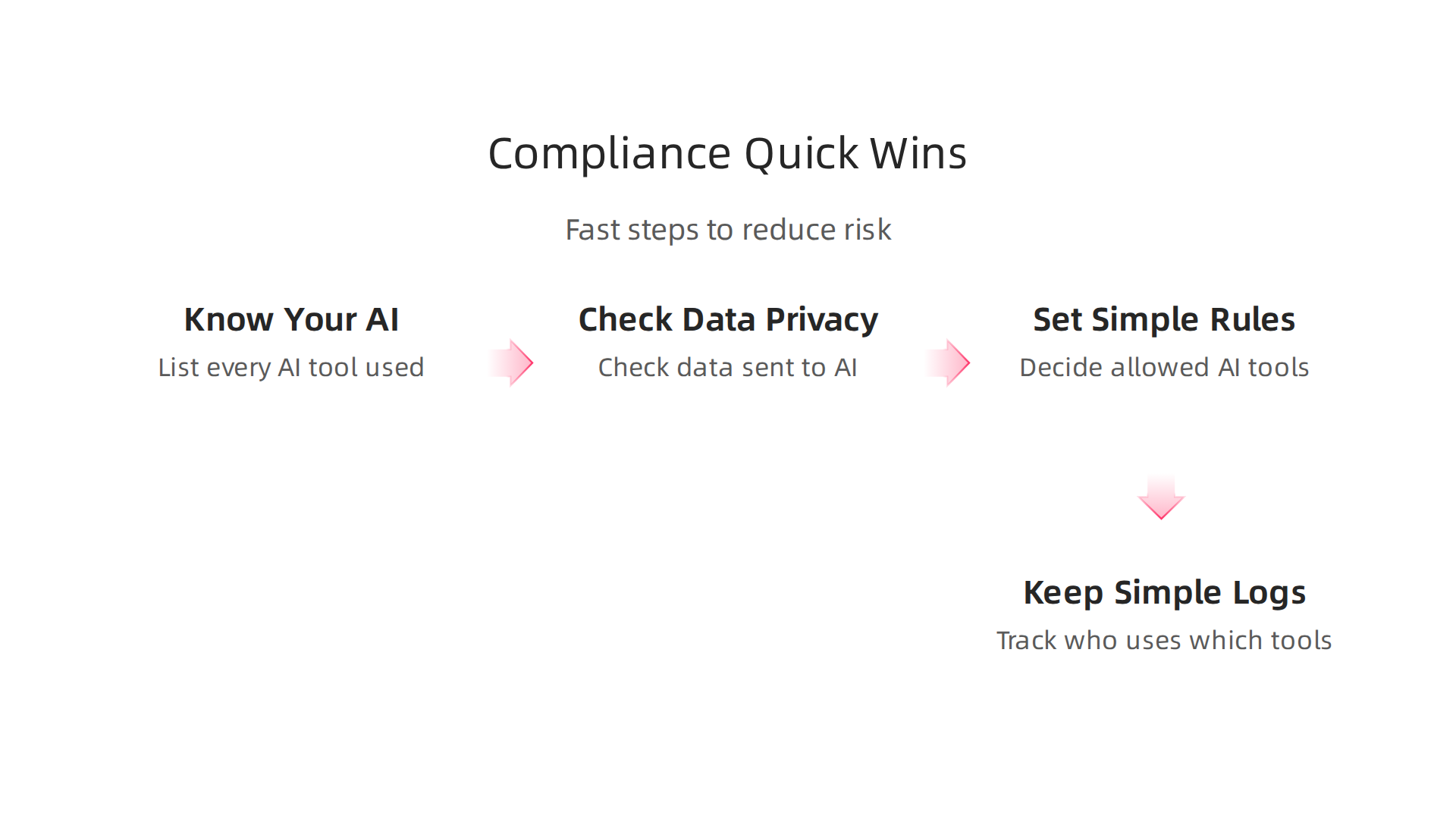
1. Know Your AI Tools
Many businesses, big and small, are using AI in 2026. This might be a tool to help write emails, create pictures, or even manage customer chats. The first step is to simply list every AI tool your business uses. Don’t forget the free ones or tools your employees might use on their own, like ChatGPT or Gemini. For each tool, write down what it does and who uses it. Knowing what’s being used is the start of being smart about compliance, as experts suggest creating a simple AI usage policy and inventory AI Compliance Made Simple: A “Good Enough” SMB ….
2. Check Your Data Privacy
Once you know your tools, think about the information that goes into them. Are you putting customer names, addresses, or other private details into AI tools? It’s important to know what kind of data each AI tool processes and where that data is kept. You also want to make sure your privacy rules tell customers how their data is being used with AI. One good tip is to only send the data that’s truly needed for a task and to hide or remove sensitive parts like personal information Practical AI for business operations with tangible ROI. Making sure your customer data is safe is a big part of reducing risk. If you are doing business as an entrepreneur, this is a key step.
3. Set Up Simple Rules for AI Use
You don’t need a huge rulebook. Just have a clear list of what AI tools are okay to use and which ones are not. Also, be very clear about what kind of information employees should never put into AI tools. This could be things like private customer details, health information, or secret company plans. These simple rules help everyone know what to do. You can even create an "approved-tool whitelist" and make sure certain data types are off-limits for AI use AI, Privacy & Compliance: A Small Business Survival Guide. It’s also helpful to train your team on these guidelines.
4. Keep Simple Logs
Keeping track of things can seem like extra work, but it saves headaches later. You can create a quick log that shows:
- Who uses which AI tools. Just note down who has access to different AI programs.
- Any mistakes or "incidents." If someone accidentally uploads a client file, write it down and what you did to fix it Minimal Viable AI Governance: A Pre-Regulatory …. This helps you learn and show that you’re being careful.
Building Your Priority List
Not every business has a big team or lots of money for legal help. That’s okay! When you’re thinking about your legal and privacy work, focus on the biggest risks first. If you handle very sensitive customer information, that should be your top priority. If you’re a business woman or man with new business ideas to start, start with the most basic checks and grow from there.
A good way to build your priority list is to:
- List all your AI tools and the data they use.
- Figure out which tools handle the most sensitive data. These are your high-risk areas.
- Make small changes each week. Don’t try to fix everything at once. Pick one or two things from your list and work on them.
Getting your basic AI governance in order is essential for all businesses in 2026. Taking these quick steps can help you prepare for future policy changes without panic. For more guidance on managing technology within your company, you can explore insights on AI infrastructure 2026: Navigating cost, security, and compliance.
Summary
This article explains how Small Business Week 2026 can be used as a focused planning moment to drive real, strategic growth for your company. It walks through where to find financial and advisory support—from federal SBA programs to state and local grants—and shows how to pick between grants, loans, and advising based on your needs and stage. You’ll learn low-cost marketing experiments and partnership tactics to attract customers quickly, plus practical steps to standardize onboarding, billing, and fulfillment so you can scale without staffing up. The guide also covers how to evaluate AI and other technology choices with an eye toward cost, reversibility, and data safety, and offers simple compliance checks to reduce regulatory risk this week. Finally, it lays out funding options that preserve ownership and how to talk about policy risk with investors. After reading, you’ll have a clear set of actions to prioritize during Small Business Week and the know-how to make smarter, lower-risk growth decisions.