

Introduction
The software industry is growing faster than ever. In 2026, the global software market is expected to reach a value of around $921 billion, with IT spending projected to hit $6.31 trillion worldwide. That’s a massive jump. But here’s the thing: with that kind of growth comes serious scrutiny.
Software companies today face a perfect storm of regulatory pressures. AI governance rules are tightening fast. Antitrust enforcement is getting more aggressive. Data privacy laws are spreading across more jurisdictions than ever before. And new rules around cybersecurity and national security are adding even more complexity.
If you’re a tech executive, policy professional, or founder trying to navigate this landscape, you already know the challenge. Staying on top of every new regulation feels impossible. One week it’s a new AI law in Europe. The next week it’s a fresh antitrust case in the US. And all of this affects your strategy, your compliance costs, and your bottom line.
That’s why we built this guide. It gives you a clear, evidence-based overview of the software industry’s policy environment in 2026. We’ve pulled together the latest data from trusted sources like Gartner, Deloitte, and Precedence Research. You’ll learn what’s changing, what it means for your organization, and how to stay ahead.
By the end, you’ll have a structured understanding of the major policy shifts shaping software companies right now. Think of it as your roadmap for making smarter decisions in a fast-moving regulatory world.
Speaking of staying informed, one of the best ways to keep up with daily changes is through a trusted source of curated insights. If you want clear, concise AI and tech policy updates delivered to your inbox each morning, consider subscribing to The AI Newsletter Worth Reading.

It helps busy professionals cut through the noise and focus on what actually matters.
Let’s dive in.
Software Industry Market Overview: Key Metrics and Trends in 2026
To understand the policy pressures software companies face today, you first need a clear picture of the market they operate in. And the numbers are genuinely eye-opening.
The global software market was valued at $823.92 billion in 2025. In 2026, it’s expected to reach $921.14 billion, according to the latest Software Market Size, Share and Trends 2026 to 2035 report from Precedence Research.
That’s nearly a $100 billion jump in a single year. And the growth is nowhere near done. Analysts project the market could hit $2.47 trillion by 2035, with a compound annual growth rate of 11.6 percent.
What’s driving this surge? Three big forces: cloud adoption, artificial intelligence, and cybersecurity.
Worldwide IT spending tells a similar story. Gartner now forecasts global IT spending to reach $6.31 trillion in 2026, up 13.5 percent from 2025.
A recent Gartner Forecasts Worldwide IT Spending to Grow 13.5% in 2026 report highlights that data center systems spending alone is set to grow by 55.8 percent this year. AI infrastructure and generative AI models are the main engines behind that growth.
Speaking of generative AI, spending on GenAI models is expected to grow by 80.8 percent in 2026, according to the same Gartner forecast. That’s not a small bump. It’s a transformation. And it’s reshaping how software companies build products, compete for talent, and think about regulatory risk.
But here’s the part that matters most for policy professionals: the software market is getting more concentrated. A handful of major players like Microsoft, Oracle, Salesforce, and Alphabet dominate the landscape. This concentration is drawing serious attention from antitrust regulators in the US, Europe, and Asia. When a few companies control the infrastructure that thousands of others depend on, regulators start asking tough questions about fair competition, data access, and market power. For a deeper look at how these dynamics are playing out across the technology sector, check out our guide to the biggest information technology policy shifts of 2026.
The 2026 Global Software Industry Outlook from Deloitte points to three major themes shaping the year ahead: intensifying competition, AI-first development models, and agentic cybersecurity. Each of these themes has a clear policy angle. More competition means more lobbying and more regulatory scrutiny. AI-first development raises questions about intellectual property, liability, and workforce displacement. Agentic cybersecurity touches on national security, data privacy, and critical infrastructure protection.
Deloitte’s analysis also flags a powerful prediction from Gartner: 40 percent of enterprise applications will be integrated with task-specific AI agents by the end of 2026. That shift alone could push the application software market to $780 billion by 2030. For successful startups and established players alike, the race to capture that value is already underway.
For software companies trying to stay ahead, understanding these market dynamics is the first step. The next step is knowing which regulations will hit hardest and when. That’s exactly what we’ll cover in the sections ahead.
AI Regulation on the March: The EU AI Act and Global Frameworks
The software market is growing fast, but so is the rulebook. In 2026, the biggest regulatory story for software companies is the EU AI Act. After years of preparation, it is now moving from theory into enforcement. And the deadlines are real.
The EU AI Act entered into force back in August 2024, but its requirements are rolling out in phases. The first big milestone hit in February 2025, when rules on prohibited AI practices and AI literacy kicked in. Then in August 2025, governance rules for general-purpose AI models took effect. But the date every compliance team is watching is August 2, 2026.
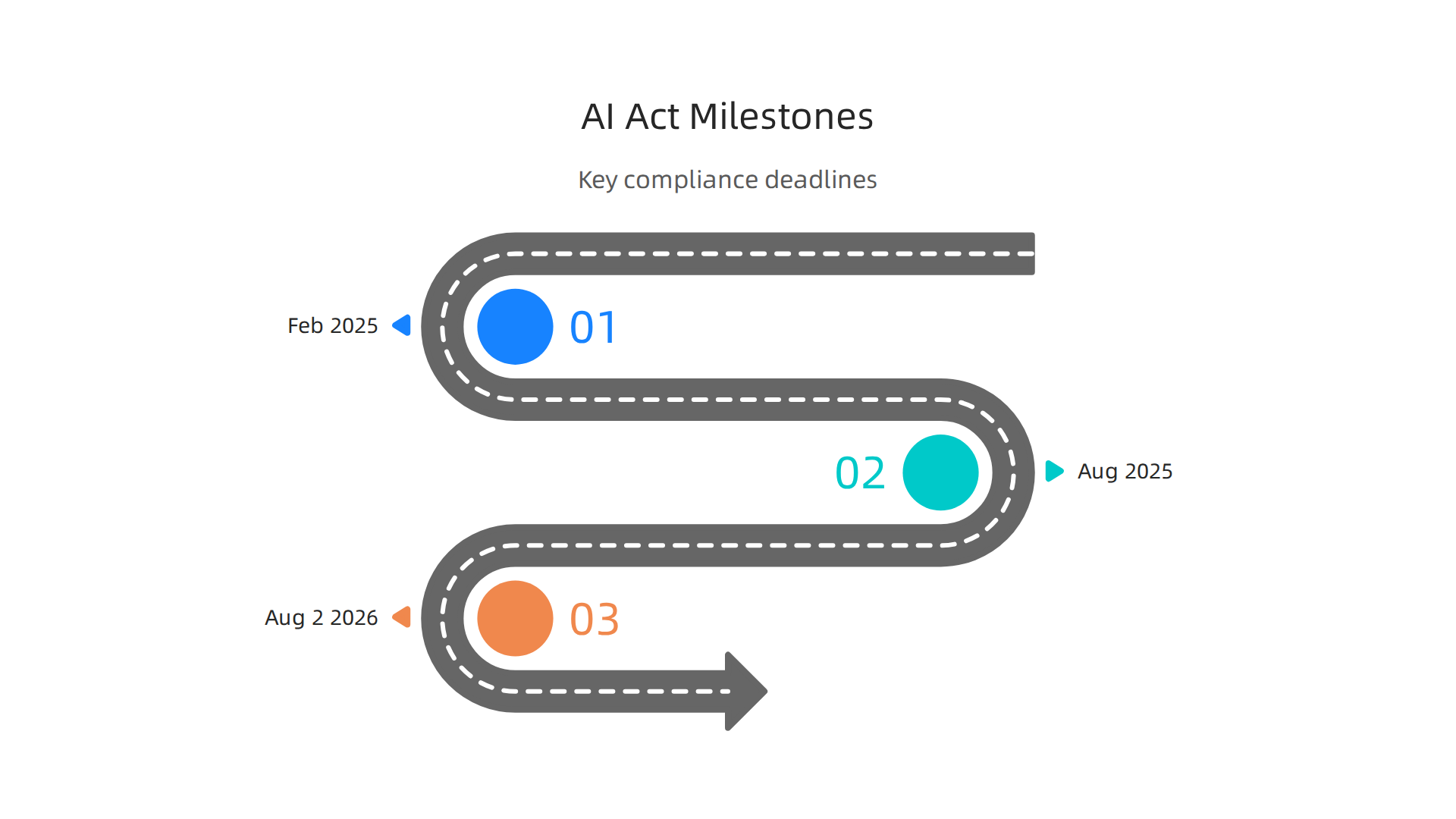
That is when the obligations for high-risk AI systems become enforceable. According to the EU AI Act Compliance Timeline: Key Dates and How to Prepare, providers and deployers of high-risk AI systems must meet requirements covering risk management, technical documentation, and conformity assessment by that date.
There has been some talk of delays. In November 2025, the European Commission proposed pushing back certain high-risk deadlines to December 2027 as part of its Digital Omnibus package. As of mid-2026, that proposal has not been formally adopted. The legal deadline remains August 2, 2026. As the AI Act Update: EU Resolves to Change Rules and Extend Deadlines from Latham & Watkins explains, the European Parliament and Council have signaled support for the extension, but formal adoption is expected by July 2026. The smart play for any software company is to prepare for the current deadline and treat any delay as a bonus.
What counts as a high-risk AI system? The Act lists specific categories under Annex III, including AI used in biometrics, critical infrastructure, education, employment, migration, and law enforcement. If your company builds or deploys AI in any of these areas, you are likely in scope.
And the EU is not acting alone. The United States is advancing its own AI regulatory framework through executive orders and agency guidance. The UK is developing a pro-innovation approach centered on existing regulators. Canada, Japan, and Brazil are all moving forward with AI legislation. For globally active software companies, this means navigating a patchwork of rules that keep evolving.
For a deeper look at how these global AI policy shifts are taking shape, check out our analysis of how artificial superintelligence is driving a new wave of regulations in 2026.
So what should successful startups and established software companies do right now? Start with an audit. Classify every AI system you build or use. Determine whether it falls into a high-risk category. If it does, map the requirements for risk management, data governance, transparency, and human oversight. The work takes months, not weeks. Companies that are tech savvy about compliance will have a real advantage over those waiting for the final deadline.
One last tip: stay informed. AI regulation is shifting fast, and the rules in August might look different from what was on the table in January. The AI Newsletter Worth Reading delivers clear, actionable AI and policy insights straight to your inbox every day. It is a simple way to keep your whole team aligned on what is changing and what it means for your business.
Privacy and Data Protection: Evolving Standards for Software Companies
Privacy enforcement is no longer just a warning. In 2026, it has become a costly reality for software companies that fall short. The numbers are staggering. Since 2018, European regulators have issued more than €7.1 billion in GDPR fines. And the pace is accelerating. Over €1.2 billion in penalties landed in 2025 alone, and the first half of 2026 has already added more than €600 million, according to the GDPR Fines Tracker 2026 overview.
The message is clear. Regulators are not slowing down. The average fine sits around €2.36 million, but a few massive cases dominate the total. Meta’s €1.2 billion fine from 2023 still stands as the largest, and new penalties keep coming. In 2026 alone, the CNIL fined Free Mobile €27 million and Reddit received a £14.5 million penalty, as noted in the biggest GDPR fines of 2026 summary.
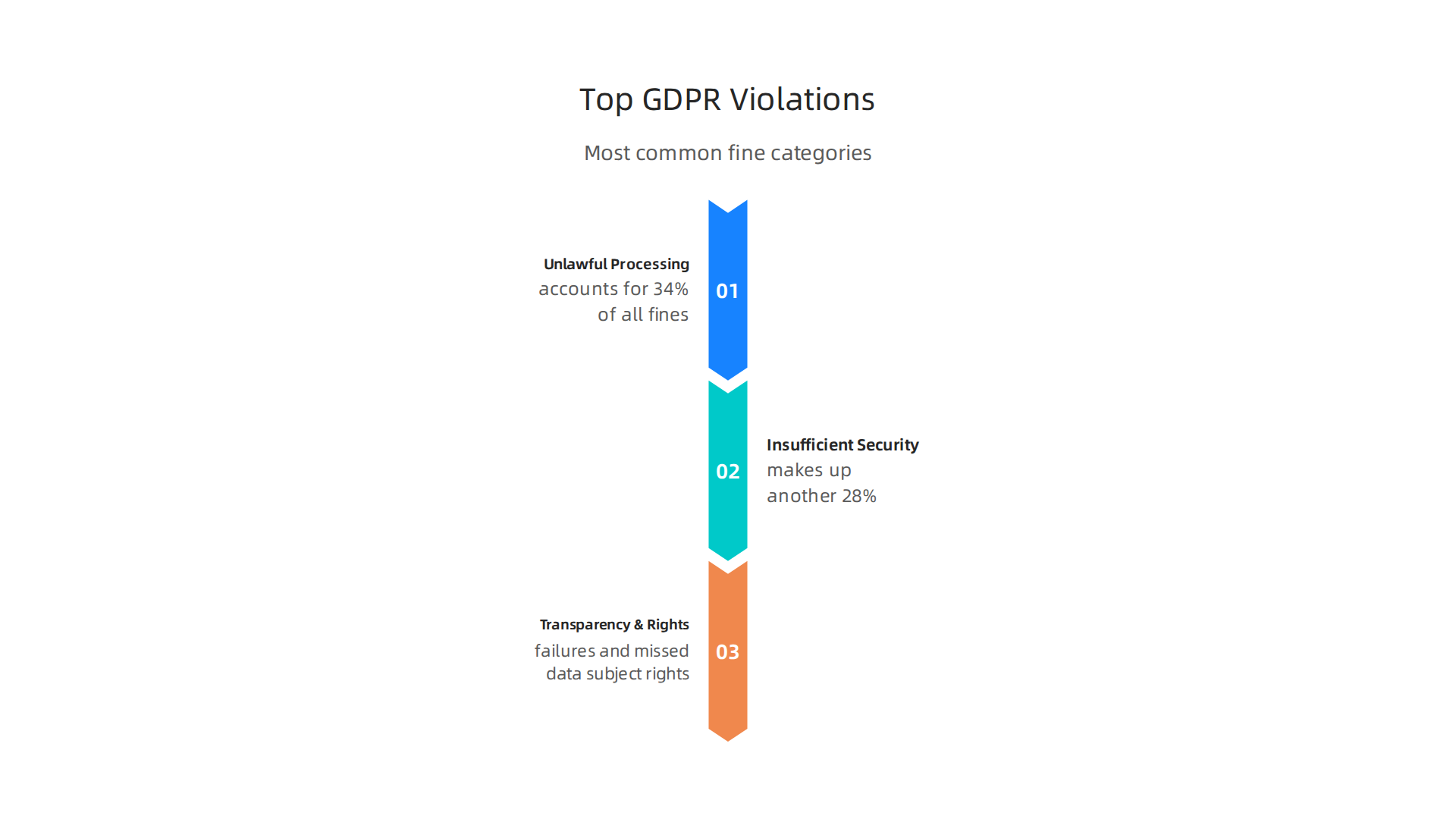
But GDPR is only one piece of the puzzle. Across the Atlantic, US state privacy laws are creating a complicated patchwork for software companies. Nineteen states now have comprehensive data privacy laws in effect. California, Colorado, and Virginia led the way, and states like Indiana, Kentucky, and Rhode Island joined in January 2026. California imposed its largest CCPA fine to date in 2025, a $1.55 million settlement against an online health information publisher. The GDPR enforcement trends analysis shows that the most common violation types are consistent worldwide. Unlawful processing of data accounts for 34% of all fines. Insufficient security measures make up another 28%. Transparency failures and missed data subject rights fill out the rest.
So what does this mean for your software company in practice? You need to embed privacy into your product from the start. Privacy-by-design is not optional anymore. It is a legal requirement under both GDPR and many US state laws. That means limiting what data you collect, storing it securely, and deleting it when you no longer need it. Data minimization is your best defense. If you do not have the data, you cannot leak it, misuse it, or get fined for it.
For successful startups, building privacy into the development process early saves enormous costs down the line. Retrofitting privacy controls after a product ships is much more expensive than designing them in from day one. And regulators are watching. They now receive over 443 breach notifications every single day across Europe alone.
The compliance landscape is shifting fast. To stay on top of these changes, it helps to understand the biggest information technology policy shifts of 2026. Privacy is a moving target, and the companies that treat it as a strategic advantage rather than a checkbox will come out ahead.
Antitrust and Competition Policy: Big Tech Under the Microscope
Privacy rules are not the only thing changing for tech companies. In 2026, antitrust enforcement has become just as important. The biggest technology companies in the world are facing serious legal challenges that could reshape how they do business. And for software companies that operate in their ecosystems, these changes matter a lot.
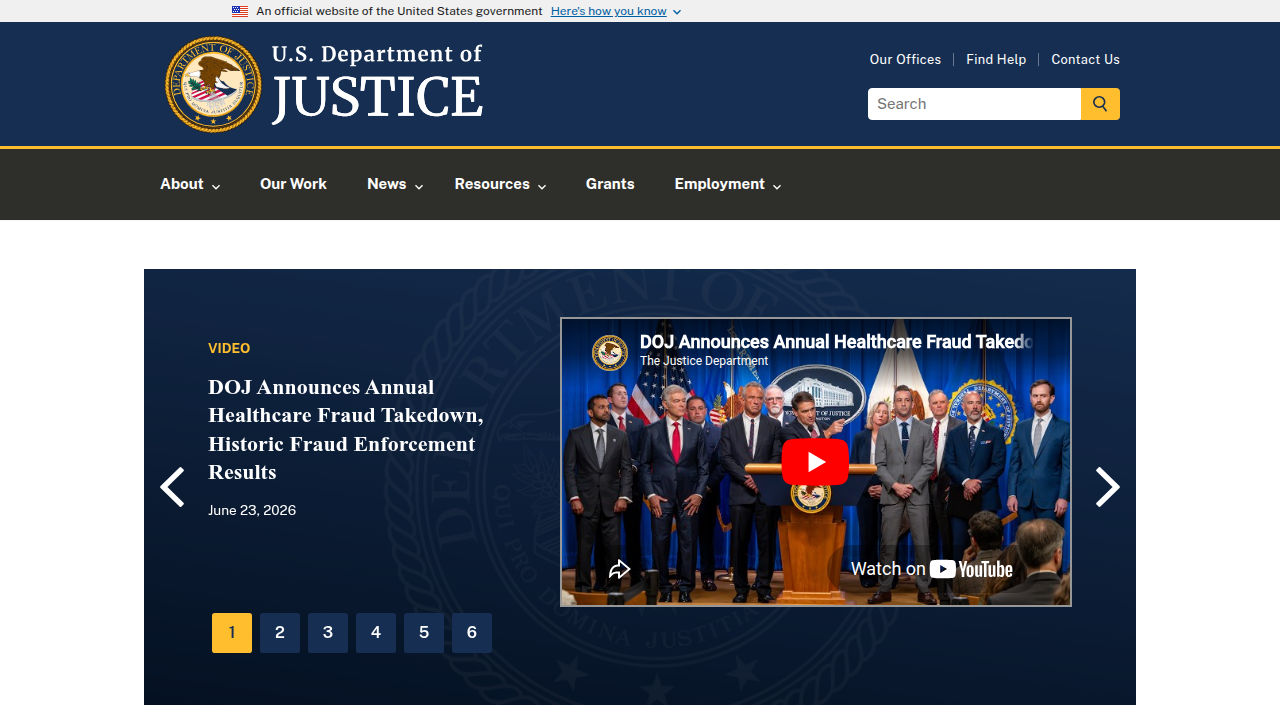
The biggest story right now is Google. The company has lost two major antitrust cases in the United States. In August 2024, a federal judge ruled that Google holds an illegal monopoly in online search. Then in April 2025, another judge found Google guilty of monopolizing digital advertising markets. The Department of Justice has won significant remedies that force Google to share search data with competitors and stop using exclusive contracts to block rivals. You can read the full details in the US v. Google search antitrust trial updates.
But Google is not the only target. Apple, Amazon, and Meta all face their own antitrust battles in the US and Europe. The European Union’s Digital Markets Act went into full effect in 2024, and it has already forced major changes. Apple had to open its App Store to alternative payment systems.

Meta faced restrictions on how it combines user data across platforms. These rules are directly affecting how software companies can reach customers and compete.
In the United States, lawmakers are pushing new bills like the American Innovation and Choice Online Act, or AICOA. This legislation would ban dominant platforms from favoring their own products over those of competitors. For successful startups and tech savvy developers, this could mean fairer access to app stores, cloud markets, and advertising tools. The days of getting squeezed by platform fees or sudden rule changes may be coming to an end.
These cases are not finished yet. Google has said it will appeal both rulings, and the DOJ has appealed parts of the search remedies decision. The appeals process could stretch into 2027 or beyond. But the direction is clear. Regulators in both the US and Europe are committed to breaking up the power of Big Tech.
For software companies building on these platforms, the message is simple. The rules are changing. Exclusive deals that used to be standard practice are now illegal. Access to data and distribution channels will become more open. And the cost of ignoring these changes could be high. The Department of Justice’s remedies against Google set a new standard for what is expected.
If you work in tech policy or run a software company, staying on top of these antitrust developments is critical. They will affect your costs, your partnerships, and your ability to compete. That is why getting clear daily updates from The AI Newsletter Worth Reading can help you stay ahead of the curve as these cases move forward.
Compliance and Risk Mitigation: Practical Strategies for Software Firms
So how do you build a compliance program that actually works in 2026? The answer is not simple, but it is clear. You cannot treat regulation as something that happens outside your product team. It has to live inside your development process from day one.
Here is the hard truth. European regulators issued €1.2 billion in GDPR penalties in 2025 alone, and cumulative fines have passed €7.1 billion since enforcement began in 2018. The GDPR enforcement trends for 2026 show that most fines come from just a few categories: weak legal basis for processing data, poor security measures, missing privacy notices, and slow responses to user requests. If your software company handles any user data in Europe, these categories should be on your compliance radar every single day.
The EU AI Act adds another layer. The obligation for high-risk AI systems becomes enforceable on August 2, 2026, unless the Digital Omnibus proposal officially changes that date. Right now, the EU AI Act high-risk compliance deadline still sits at August 2026, and the European Commission has not formally adopted any delay. That means your team must be ready to meet requirements for risk management, technical documentation, and conformity assessment before that deadline hits.
Build compliance into your product development cycle
The most effective way to handle this is to integrate regulatory intelligence into your product development and governance frameworks from the start. Do not wait until a product is finished to check if it is compliant. That approach leads to costly redesigns and missed deadlines.
Instead, your legal team, engineering team, and policy team should collaborate on a compliance roadmap before any code is written.

Cross-functional teams that work together from the beginning catch problems early and fix them cheaply. The biggest technology policy shifts of 2026 make this kind of collaboration not just smart, but necessary for survival in regulated markets.
Watch your third-party risk
One area that catches many software companies off guard is third-party risk management. If you use an external AI model, a cloud provider, or a data processing vendor, their compliance failures become your compliance failures. Regulators do not care who wrote the code. They care whose product is on the market.
Supply chain audits for software vendors are becoming mandatory in 2026, especially under the EU AI Act. You need to know exactly where your data goes, how it is processed, and whether your vendors meet the same standards you do. This means reviewing contracts, asking for certification evidence, and running regular audits on critical partners.
For tech savvy teams, this is an opportunity. Successful startups that build compliance into their DNA from the beginning will have a huge advantage when regulators come knocking. They will not need to scramble. They will already have the documentation, the risk assessments, and the governance structures in place.
The cost of getting this wrong is not just a fine. It is lost trust, lost customers, and lost time. And in 2026, the regulators are not slowing down. They are just getting started.
Future Outlook: Geopolitics, Innovation, and the Next Policy Waves
Looking ahead, the challenges for software companies go far beyond just keeping up with today’s rules. The next few years will bring new geopolitical pressures and breakthrough technologies that reshape the entire policy landscape. If you think things are moving fast now, you haven’t seen anything yet.
The numbers tell part of the story. The global software market forecast for 2026 to 2035 shows the industry growing from $921 billion this year to nearly $2.5 trillion by 2035. That is a compound annual growth rate of over 11 percent. But growth does not happen in a vacuum. As the market gets bigger, governments around the world are fighting for control over the technology that powers it.
Geopolitical tensions are driving a wave of national tech sovereignty measures. Countries want to own their own AI infrastructure, data storage, and cloud platforms. That means new rules that affect software exports, cross-border data flows, and international partnerships. A software company based in the US may find it harder to sell into certain Asian markets. A European startup may struggle to use American AI models because of data localization laws. These walls are going up fast, and they affect everyone. The artificial superintelligence and new regulations in 2026 article explains how the race for advanced AI is pushing countries to act even faster.
Emerging technologies will also force regulators to play catch up. Quantum computing is still early, but it threatens to break current encryption standards. Deepfakes are already so realistic that they can sway elections and destroy reputations. Open-source AI models spread faster than any law can contain them. Each of these will spark new regulatory debates in the coming years. Governments will ask hard questions about who is responsible when a deepfake causes harm, or when an open-source model is used to build a dangerous tool. Software companies that build with these risks in mind will be ready. Those that ignore them will face surprise rules that upend their products.
So what should you do? Start investing in policy foresight now. Do not wait for the next regulation to appear in the news. Build a small team or hire a partner whose job is to track policy signals across the markets you serve.

Engage with regulators early, not when they are writing fines. The companies that shape the rules are the ones that show up before the rules are written.
One of the best ways to stay ahead is to make daily policy intelligence part of your routine. The AI Newsletter Worth Reading delivers clear, daily updates on exactly these kinds of shifts so you never get caught off guard.
The future belongs to tech savvy teams that treat policy as a competitive advantage, not a burden. The regulators are not slowing down, and the technology is not either. The question is whether you will be ready for what comes next.
Summary
This guide explains the major policy pressures reshaping software companies in 2026 and gives practical advice for navigating them. It synthesizes market data—like a projected $921 billion software market and $6.31 trillion in global IT spending—with regulatory developments across AI, privacy, and competition law. The article covers the EU AI Act timelines (including the August 2, 2026 high-risk deadline), rising GDPR enforcement and fines, big antitrust actions against dominant platforms, and the operational implications for product, legal, and compliance teams. You will learn how to classify AI systems, embed privacy-by-design into development, manage third-party and supply-chain risk, and set up policy foresight to handle geopolitics and emerging tech risks. The emphasis is on concrete steps companies can take now—audits, cross-functional roadmaps, vendor assurances—to reduce legal exposure and turn compliance into a strategic advantage.