

Why Deep Tech Policy Matters Now — And What This Guide Will Deliver
In 2026, technology is changing faster than ever before. We see amazing new ideas pop up all the time. But some of these new technologies are much deeper and harder to understand than others.

These are called deep tech. They are built on big scientific discoveries or new ways of engineering things that change what’s possible in the world around us.
What exactly is deep tech? Think of it this way: it’s not just making a new app that uses existing tools. Instead, deep tech creates the brand new tools themselves. These are technologies that come from deep scientific research and engineering breakthroughs. They aim to solve very big, complex problems, not just small, everyday ones. For example, things like advanced Artificial Intelligence (AI) and biotechnology are part of deep tech, pushing the boundaries of what computers and even living things can do in 2026 What Is Deep Tech? A Playbook for Investors and Founders.
The European Commission also highlights digital and space technologies as key deep tech areas, showing just how wide these new fields are EIC Tech Report 2026 identifies 25 emerging deep tech ….
Because deep tech is so new and complex, it creates special challenges for everyone, from governments to businesses. These technologies often need a lot of research and development, and it can take years before they are ready for people to use Deep Tech: Definition, Examples, and Markets – Teachfloor Blog. This long, complicated path makes it hard to set clear rules or policies for them. People who make policy face big questions: How do we make sure these powerful new tools are used safely and fairly? How do we understand all the new AI domains that are emerging from the ai revolution?
These deep tech challenges lead to important problems for businesses and policy leaders:
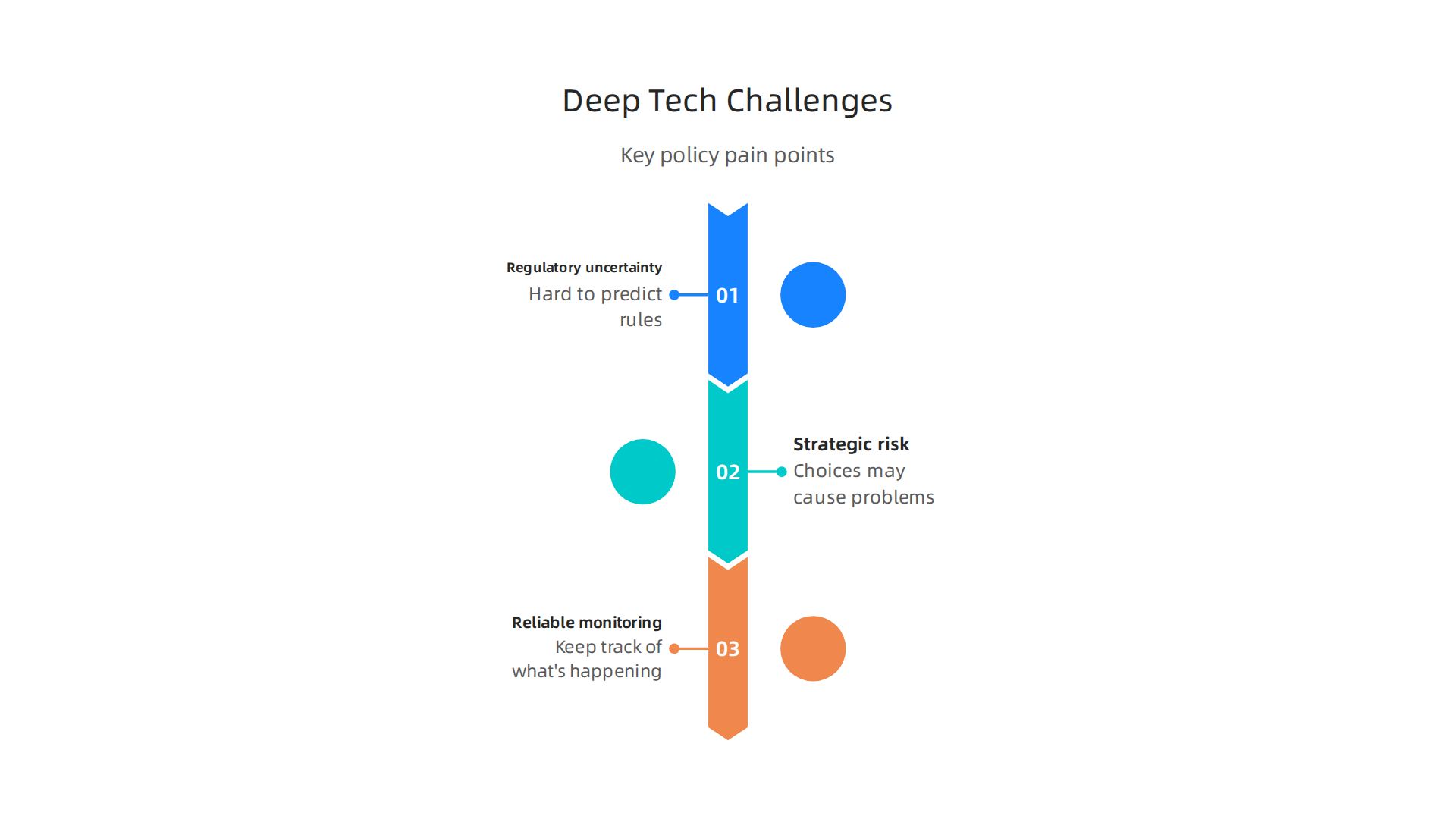
- Regulatory uncertainty: It’s tough to know what the rules will be tomorrow when the technology is changing so fast today. This can make it hard for companies to plan for the future.
- Strategic risk: Investing in deep tech can be risky. Without clear guidance, companies might make choices that lead to problems later on, or even fall behind other countries.
- Need for reliable monitoring: With so much new technology, we need good ways to keep track of what’s happening and how it affects society. This helps us make smart decisions.
This guide will help you understand the world of deep tech and its policy needs. We will break down these complex topics into clear, easy-to-understand parts. We will cover important areas like AI governance, data privacy, and how new technologies affect national security. Our goal is to give you the knowledge you need to make good decisions in this fast-changing world. You can also get daily updates and deep dives into these topics when you sign up for The AI Newsletter Worth Reading.
We want to help you cut through the noise and understand the crucial policy shifts happening right now, especially in areas like Artificial Intelligence series guides decision makers through AI policy.
What is deep tech? Domains, timelines, and policy relevance
As we touched on, deep tech isn’t just about making small improvements. It’s about creating entirely new ways of doing things, often based on big scientific breakthroughs. These technologies are truly changing what’s possible in 2026, pushing the boundaries of science and engineering to solve the world’s toughest problems What Is Deep Tech? Definition, Examples, and Why ….
Deep tech covers many different areas. Here are some of the main ones:
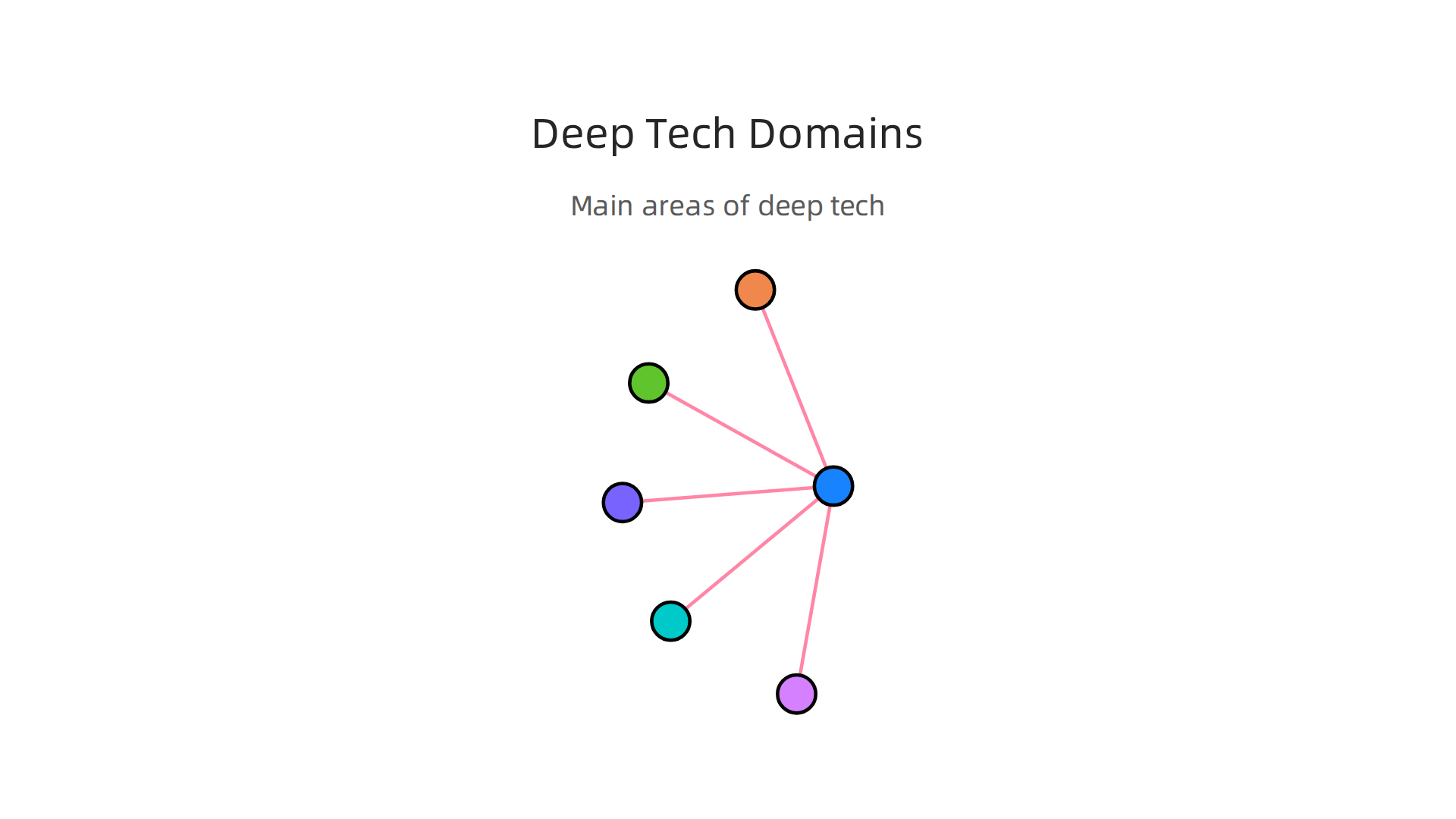
- Advanced Artificial Intelligence (AI): This goes beyond simple AI tools. It includes things like creating truly smart systems that can learn and make complex decisions on their own. Think about the big strides in machine learning and the ai revolution that brought us things like generative AI. Understanding the different ai domains is key to making good policy.
- Biotechnology and Life Sciences: This field uses living systems and organisms to make new products or technologies. For example, creating new medicines, advanced genetic engineering, or ways to grow food more sustainably. For more insights on this area, you can learn about biotech’s future and policy implications.
- Quantum Computing: This is a whole new way of computing that uses the strange rules of quantum physics. It could solve problems that even the fastest normal computers cannot, opening doors to new breakthroughs in areas like materials science and cryptography.
- Advanced Materials: Developing new materials with special properties, like stronger, lighter, or more conductive substances. These can change how we build everything from airplanes to electronics.
- Robotics and Automation: Creating robots that can do very complex tasks, often working with AI to learn and adapt. This includes everything from self-driving cars to advanced manufacturing robots.
- Space Technologies: Innovations related to exploring space, like new satellite systems, space travel, or ways to use resources from other planets.
Different Timelines and Supply Chains
One big difference for deep tech is how long it takes to develop. Unlike a new app that might be built in months, deep tech often needs years, sometimes even a decade or more, of intense research and development. This is because it starts with fundamental science. Imagine trying to develop a new type of battery or a breakthrough drug; it requires many experiments, tests, and careful steps. Investors in deep tech often need a long-term vision because of these extended development periods DeepTech investments in 2026: a long-term vision.
Also, the way deep tech products are made is very different from regular software. Software can often be copied and distributed easily. But deep tech often relies on complex, global supply chains. These supply chains involve many specialized parts, rare materials, and highly skilled workers from different countries. For example, making advanced computer chips for AI needs very specific equipment and materials that might only come from a few places in the world.
Policy Relevance: Why These Differences Matter
These long timelines and complex supply chains create unique policy challenges:
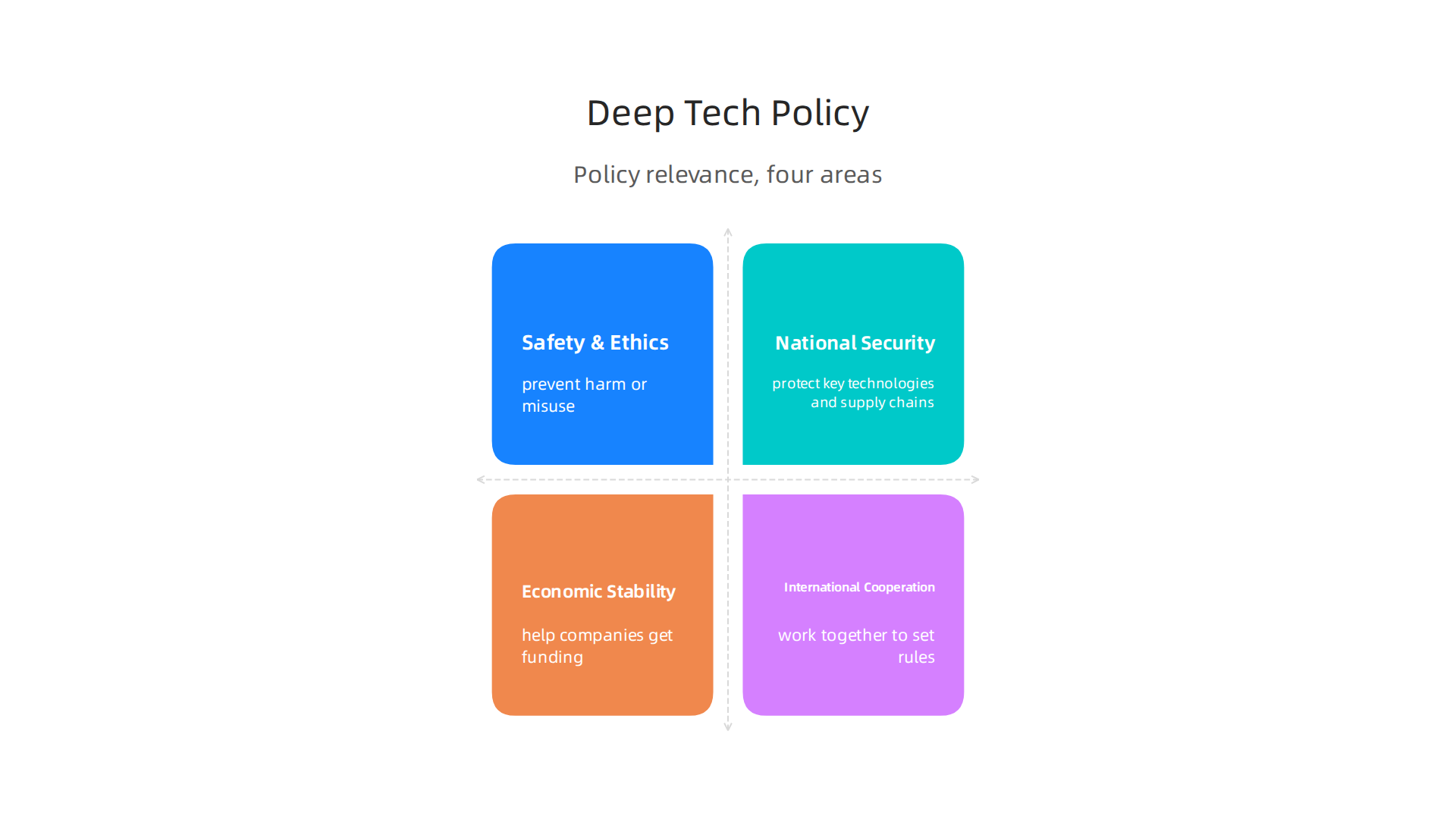
- Safety and Ethics: Because deep tech can be so powerful and new, there are big questions about how to make sure it’s safe and used in a good way. For example, with advanced AI, we need rules to prevent harm or misuse. We also need to think about the ethics of things like biotechnology.
- National Security: Many deep tech areas, like advanced AI or quantum computing, have strong links to national security. Countries want to make sure they have access to these technologies and that they are not used against them. This means governments often get involved in funding research and setting rules to protect key technologies and supply chains.

If you want to dive deeper into this, you can explore how to unpack Palantir Technologies’ national security role.
- Economic Stability: The long development times and high costs mean that deep tech companies need a lot of support. Policies are needed to help these companies get funding, protect their new ideas (intellectual property), and bring their products to market. This helps countries stay competitive and create new jobs.
- International Cooperation: Because supply chains are global and the problems deep tech solves are often worldwide, countries need to work together to set rules and share information. This helps ensure that the benefits of deep tech are shared widely and its risks are managed carefully.
Deep tech doesn’t just bring great benefits; it also comes with special risks that make creating rules for it quite tricky. These risks are often much bigger and harder to understand than those from simpler technologies. This means that policymakers need to think differently about how to guide deep tech safely.
Different Kinds of Risks in Deep Tech
Deep tech fields like advanced AI and biotechnology have specific kinds of dangers:
- Systemic Risk: This is when a problem in one part of a system can cause big problems everywhere else. Think of it like a domino effect. For example, if an AI system used in many banks or power grids suddenly fails, it could harm the whole economy or critical services. Experts are actively discussing how AI can create new systemic risks AI, Digital Platforms, and the New Systemic Risk. The European Systemic Risk Board has even pointed to artificial intelligence as a source of macro-financial risk, especially from cyber risks related to powerful AI models C/2026/3795 – European Systemic Risk Board.
- Dual-Use Technologies: Many deep tech inventions can be used for good things, like helping people, but also for bad things, like causing harm. Advanced AI is a prime example. The same AI that helps doctors find diseases could also be used to create powerful weapons or harmful cyberattacks. This makes policies very important to stop misuse

How a surge in defence and dual-use technology investment could …. For a closer look, you can watch a discussion on Emerging Dual-Use Technologies in an Era of Strategic Competition.
- Supply Chain Concentration: As we discussed, deep tech often relies on very specific parts or materials from only a few places in the world. If something happens to one of these suppliers or regions, it can stop the whole production of a vital technology. This risk is especially big for national security, as countries want to control key technologies.
Challenges for Rule-Making
Because deep tech is so new and changes so fast, it’s hard to make rules that keep up.
- Complex Enforcement: It’s tough for governments to create and enforce rules for technologies that are still being invented. Imagine trying to set strict rules for an AI before anyone fully knows all it can do. The fast pace of the AI revolution means regulators are constantly playing catch-up, leading to a rapidly changing regulatory landscape globally AI Special: The Global Regulatory Acceleration.
- Need for Agile Regulation: Traditional government processes are often slow. But deep tech needs "agile regulation," meaning rules that can change quickly as the technology grows. This is a big challenge for long-horizon technologies, which take many years to develop. Regulators are trying to adapt, with some places already setting up frameworks for AI like Europe’s AI Act, while the US is still figuring things out AI Watch: Global regulatory tracker – United States.
- Predicting the Future: It’s hard to make rules for something that might not be fully ready for 5 or 10 years. Policy has to try and predict what problems might arise. This is especially true for different AI domains. This also means that staying informed on the latest developments in AI and regulatory discussions is key for anyone involved in policy. If you’re a professional looking to better understand these shifting rules, consider exploring resources on AI Literacy for Policy Professionals.
These issues make policy for deep tech much more complex than for other tech. It requires a lot of smart thinking and cooperation to manage these big risks while still letting new inventions flourish.
Making rules for deep tech is a big job, as we have seen. It means governments and experts must work together to create smart policies that deal with the special challenges of technologies like AI, quantum computing, and biotechnology. In 2026, these areas are at the heart of many policy talks around the world.
AI Policy: Finding a Balance
When it comes to Artificial Intelligence (AI), countries are trying to figure out how to let new AI ideas grow while also keeping people safe. This means looking at new rules for AI, often called AI governance. One key area is making sure AI works well across different fields, which needs a smart plan that includes what is possible, what is useful, and what is allowed by rules A Synergistic Framework for AI Cross-Domain Innovation. There’s a big focus on how to balance new AI inventions with good rules, trying to find a path for balanced regulation as the AI revolution moves fast AI at the crossroads: charting a path for balanced regulation in the …. For those wanting to dive deeper into these discussions, exploring an Artificial Intelligence Series Guides Decision Makers Through AI Policy can be very helpful.
Quantum Technology Policy: Geopolitical Concerns
Quantum technology is another deep tech area getting a lot of attention. While it sounds like science fiction, it promises powerful new ways to compute and secure information. But because it’s so powerful, countries are starting to see it as very important for their own safety and power. This has led to more talks about how quantum technologies fit into global politics Narratives on quantum technologies: a cross-domain …. Public policy needs to think carefully about these new quantum computing ideas and how they might change the world Public policy considerations of quantum computing.
Biotechnology Policy and Dual-Use Concerns
Biotechnology is also seeing a lot of growth, especially with synthetic biology, which lets scientists create new biological parts or systems. Just like AI, these tools can be used for good, like making new medicines, but also for harm. This "dual-use" nature means policymakers must be extra careful. There’s a strong effort to align how we invent new things in AI-enabled biotechnology with security needs Aligning innovation and security in AI-enabled biotechnology. Because AI and biotech are coming together more and more, figuring out the rules for this mix is a big challenge Governing the AI–biotech convergence.
Where Policies Meet and Where They Differ
Across these deep tech fields, we see some similar ideas for making rules. Many countries agree on the need for risk frameworks. This means having ways to figure out and manage the dangers of new technologies. They also discuss common ethical ideas about what is right and wrong. Events like the Global Conference on AI, Security and Ethics 2026 show how much countries want to work together on these topics.
However, there are still big differences in how countries make rules. For example, Europe, the United States, and China all have their own ways of dealing with AI. These different paths can make it tricky for companies and researchers who work across borders. Each region has unique priorities, leading to different rules, such as those for handling health data powered by AI Cross-border health data and AI governance in China. Understanding these different approaches is key for anyone involved in technology policy today. To compare how different parts of the world are making rules for AI, a Tech Policy 2026: Global Comparison of AI Regulations Across the US, EU, China, and Beyond offers a clear picture. This ongoing balancing act of convergence and divergence shows how complex governing deep tech really is.
Different countries have their own ways of making rules for deep tech, and this means businesses working across borders often face a mix of challenges and opportunities. While some general ideas about safety and ethics are shared, the specific laws in places like the United States, the European Union, and the United Kingdom can be quite different.
The United States’ Approach
In the US, the way deep tech is regulated tends to be more piecemeal. Instead of one big law for something like AI, different government groups make rules for their own areas. For example, some rules might cover how AI is used in healthcare, while others might focus on protecting consumer data. This approach often uses existing laws or creates guidelines rather than entirely new, broad laws. This means that for companies, understanding US AI governance means looking at various agencies and state-level rules How the U.S., EU and U.K. Are Reshaping A.I. Governance. The US aims to encourage new ideas in the AI revolution while still keeping people safe.
The European Union’s Strict AI Rules
The European Union (EU) has taken a very different path with its AI Act. This is a big law designed to set clear rules for how AI systems can be developed and used across all EU countries. It sorts AI into different risk levels, with "high-risk" AI systems facing the strictest rules. Many parts of the AI Act started to apply in August 2024, and more will be fully in force in August 2026, especially for high-risk AI AI Act | Shaping Europe’s digital future – European Union. This comprehensive approach aims to ensure AI is trustworthy and respects people’s rights. Staying on top of these changes is a big part of The Biggest Information Technology Policy Shifts of 2026.
The United Kingdom’s Agile Stance
After leaving the EU, the UK is creating its own rules for deep tech. Its approach is often seen as more agile and principles-based, meaning it focuses on general ideas rather than very detailed laws. The UK wants to support innovation and be a leader in technology. However, it still needs to consider how its rules fit with those in the EU, especially when it comes to data and privacy Data, privacy and cyber in the UK and EU: Ten watchouts ….
Cross-Border Headaches and Harmonization
These different rules create "cross-border headaches" for businesses that operate in multiple regions. For example, an AI company in the US might have to follow one set of rules for its home market and a completely different set for its customers in the EU. This can be complex, especially with things like how data flows between countries and making sure everything is compliant. Trying to keep up with all the different rules can be hard, turning regulatory complexity into a major challenge for many businesses AI Regulation 2026: Turning Regulatory Complexity into ….
Companies working in AI domains, like those developing generative AI, need to understand these varying rules deeply. While the US, EU, and UK each have their own ways, there are talks about how to make these different systems work better together. However, for 2026, the key remains that the US, EU, and UK diverge significantly on tech regulation, creating distinct compliance models US, EU and UK Diverge on Tech Regulation—3 Compliance Models Reshape Strategy. Understanding these differences is crucial for anyone involved in global tech policy and business.
To stay current with the fast-moving world of AI and technology policy, keeping up with daily insights is a must. Get clear daily AI updates from The AI Newsletter Worth Reading. This balancing act of having different rules while trying to work together is a big part of Navigating Global Tech Systems Policy in 2026.
When different countries have their own rules for new technologies, it can feel like a puzzle for businesses and people who invest in them. To help with this, companies need a smart way to plan for what might happen next. This is where "scenario mapping" comes in handy. It’s like drawing different maps of the future based on how rules might change, helping businesses and investors make good choices right now.
What is Scenario Mapping?
Scenario mapping is a way to think about different possible futures. For deep tech companies and investors, it means looking at how new rules or changes in laws could affect their projects. By imagining different "what if" situations, they can be ready for anything. This helps them understand what might go wrong and what opportunities might pop up, especially with the ongoing AI revolution.
A Simple Plan for Businesses and Investors
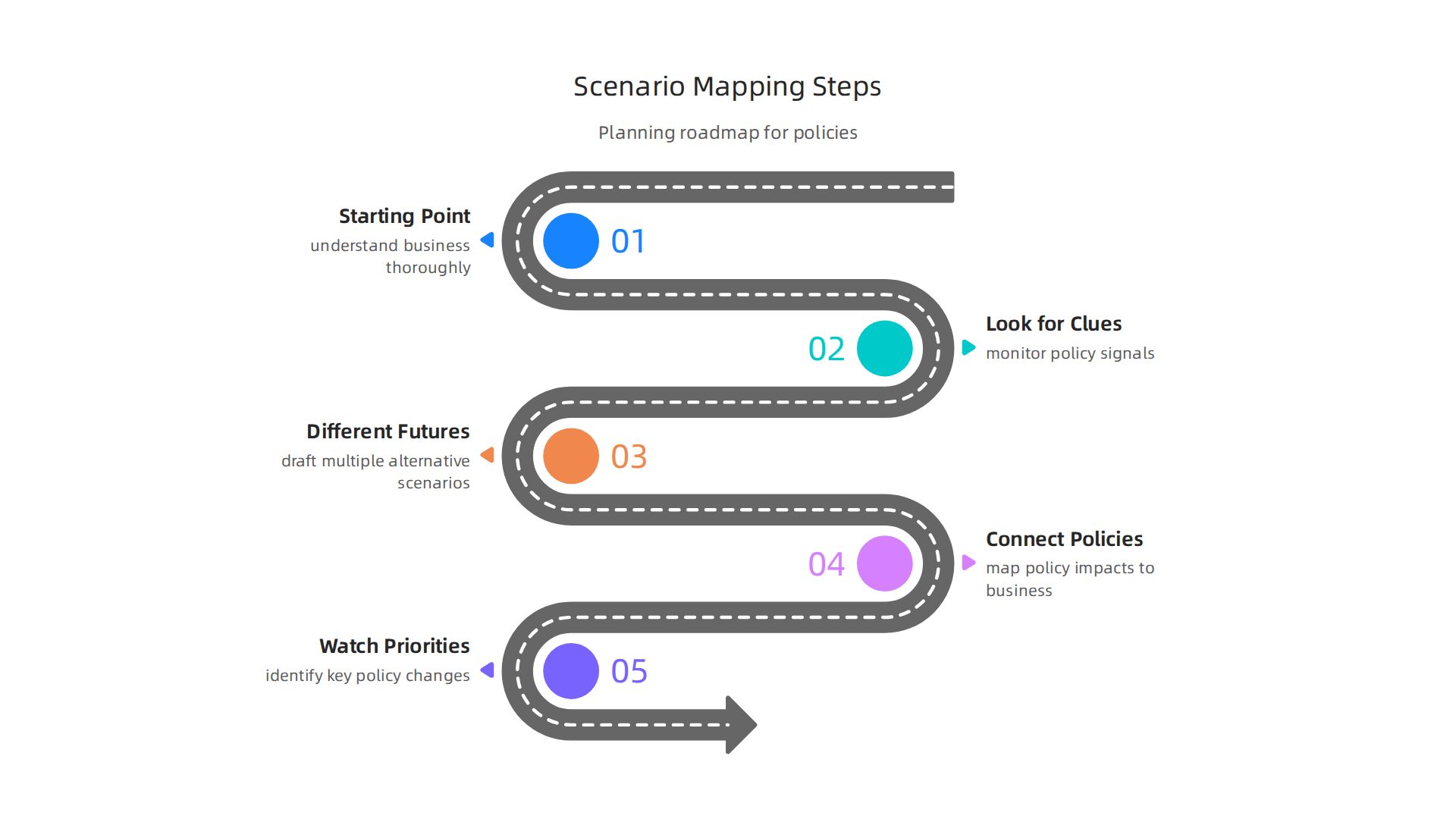
Here’s a step-by-step way to use scenario mapping:
-
Know Your Starting Point: First, understand your own business very well. What deep tech are you building? What are your main goals? For investors, what kind of companies are you putting money into? This helps you see how policy changes might impact you directly. Remember to think about what is covered by How an AI development company navigates regulation and opportunity in 2026.
-
Look for Clues (Signals): Pay attention to what lawmakers and governments are saying. Are they talking about new rules for generative AI? Are there new discussions about data privacy or how AI domains should be used? These are "signals" that can tell you what might be coming. You can learn more about how to listen to these clues in Listen to the Signals to Enhance Your Strategic Planning.
-
Draw Different Future Pictures: Based on the clues, create a few different future stories.
- Best Case: What if the rules become very helpful for deep tech?
- Worst Case: What if strict rules make things very hard?
- Middle Ground: What if things change slowly?
For example, for AI, you might imagine a future where the rules are very strict like in the EU, or more flexible like in the US. The goal is to avoid ignoring policy risks in your plans, as discussed in Why Your Decision-Making Framework Ignores Policy Risk.
-
Connect Policies to Your Plans: For each future picture, think about how it would affect different parts of your business.
- Product Development: Would you need to change how you build your deep tech products?
- Market Entry: Would it be easier or harder to sell in different countries?
- Investment Decisions: For investors, would certain types of deep tech become riskier or safer?
This mapping helps you see the bigger picture of how policy signals can lead to strategic action, as explained in From Policy Signals to Strategic Action.
-
Decide What to Watch For: Not all risks are equal. Figure out which policy changes would hurt or help you the most. These are your "priority risks." Then, set up alerts or check-ins. For example, if a new law about AI safety is being discussed, that might be a trigger to review your product plans. You can use tools like threat modeling to identify possible problems, as mentioned in the International AI Safety Report 2026.
By using this approach, businesses and investors can be smarter about the future of deep tech. They can keep a close eye on important policy news and be ready to act, making sure their plans stay strong no matter what the future holds. To make sense of the constant flow of information, policy professionals often rely on good Tech news analysis for policy professionals.
After thinking about all the different ways the future might unfold, the next step for deep tech companies and investors is to get ready with real-world tools and a simple plan. This means knowing how to watch for new rules, make sure your projects follow them, and even talk to the people who make these rules.
Practical tools: monitoring, compliance, and engagement playbook
To stay on top of quick changes, especially in areas like the ongoing AI revolution, you need a clear way to act. Here’s a simple playbook to help your team reduce risks and react quickly.
1. Monitoring Policy Changes
Think of monitoring as being a detective for new rules. You need to keep your eyes and ears open for anything that might affect your deep tech work.
- Watch Official News: Governments often share their plans for new rules. For example, in 2026, the European Union’s AI Act is becoming fully active for many high-risk AI systems. This means companies using these systems must follow strict new guidelines AI Act | Shaping Europe’s digital future – European Union. Rules for how general-purpose AI models should be enforced are also being set this year AI View – February 2026.
- Follow Tech Policy Experts: There are groups and people who spend all their time understanding these new rules. They can help break down complicated legal talk into simple facts. It’s smart to know that rules for AI, data privacy, and online business are changing fast in places like the UK and EU in 2026 Data, privacy and cyber in the UK and EU: Ten watchouts ….
- Use Smart Tools: Some tools can scan lots of news and legal papers for you, highlighting what’s important for deep tech or specific AI domains. Staying informed is key, especially as the US, EU, and UK are creating different ways to handle tech rules US, EU and UK Diverge on Tech Regulation—3 Compliance Models Reshape Strategy. You can also learn how to understand these changes by watching useful videos like AI Rules Are Changing: Key Regulatory Updates for 2025 & 2026.
2. Conducting Compliance Audits
Once you know about new rules, you need to check your own work. This is called a compliance audit.
- Check Your Deep Tech Products: Go through all your deep tech products and services. Do they still fit the new rules? For example, if you’re building generative AI, are you sure it respects new privacy laws? You might need to change how some parts of your AI work. To make sure your AI systems are fair and safe, it’s wise to have a rigorous artificial intelligence review for policy compliance.
- Look at Your Processes: It’s not just about the products. It’s also about how your team works. Do your internal rules need updating? This helps prevent problems before they start.
- Get Expert Help: Sometimes, it’s best to ask lawyers or special consultants to review your deep tech projects. They can spot things you might miss and help you build AI securely and compliantly.
3. Engaging Policymakers
It’s helpful for deep tech companies to talk to the people who make the laws.
- Share Your Knowledge: You are the expert in your deep tech field. Teach lawmakers how your technology works and what it can do. This helps them make better, more informed rules.
- Give Feedback: When new rules are being thought about, there’s often a chance to share your ideas. Speak up about what works well and what might cause problems for innovation. This helps shape how AI policy in the public sector is transforming government compliance in 2026.
- Join Industry Groups: Many businesses in the same field work together to talk to governments. Joining these groups can make your voice stronger.
Your Quick Operational Playbook
To keep all this running smoothly, here’s a simple plan:
- Assign Roles: Decide who on your team will watch for new rules, who will check for compliance, and who will talk to policymakers.
- Hold Regular Check-ins: Have short meetings every month or quarter to discuss new policy signals and how they might affect your deep tech work.
- Create a "What If" Plan: For important new rules, have a clear plan for what your team will do if they pass. This includes changes to products, budgets, or even market focus.
By following these steps, your business can stay agile and ready for whatever the future holds in the fast-changing world of deep tech regulation.
Get clear daily AI updates from The AI Newsletter Worth Reading.
Summary
This guide explains why deep tech—from advanced AI and biotech to quantum and advanced materials—requires a different policy approach in 2026. It walks through what deep tech is, how its long development timelines and concentrated supply chains create unique regulatory, strategic, and security challenges, and why those differences matter for governments, investors, and companies. The article compares major regulatory styles (US piecemeal, EU comprehensive, UK agile), outlines specific risks like systemic failures and dual‑use, and shows how to use scenario mapping to prepare for divergent futures. It also offers a practical playbook—monitoring, compliance audits, and policymaker engagement—so teams can act quickly and keep innovation aligned with safety and market access. Readers will finish able to spot policy signals, map plausible regulatory outcomes, and build basic operational plans to reduce legal and strategic risk.