

Introduction
Are you wondering what it really takes to become an AI engineer in 2026? You are not alone.
The field is moving faster than ever. Companies are racing to build smarter systems, and they need people who can make it happen. According to recent data, AI skills now appear in 2.5% of all US job postings. That number jumped 55% from last year and 72% from 2022. The demand is real and it is growing fast.
But here is the thing. The job of an AI engineer is not what it used to be even a year ago. The technology definition of this role keeps shifting. You cannot just focus on coding anymore. You also need to understand how to use AI responsibly. And that means knowing the rules.
2026 is a huge year for regulation. The EU AI Act became the world’s first comprehensive AI law when it was adopted in 2024. Now, by August 2, 2026, it will be fully applicable. Every member state must set up at least one AI regulatory sandbox. This changes how engineers build, test, and launch systems. If you want to stay competitive, you need to know these rules.
So how do you prepare? You need both technical skills and policy smarts. That is a rare mix. But it is exactly what employers are looking for.
Some people ask whether they need a formal degree like an artificial intelligence OMSCS program. Others wonder if they can learn on the job. The truth is, there are many paths. But the most successful AI engineer professionals combine deep tech knowledge with a solid grasp of the policy landscape.
We have already seen how new rules affect everything from legal practice to public sector compliance. The shift is happening across all industries.
This article gives you a structured roadmap for career growth.

We will look at evidence-based insights. We will cover the skills that matter most. And we will help you figure out your next step.
The future of artificial intelligence is being shaped right now. You can be part of it.
If you want to stay ahead of the curve, get clear daily updates on AI policy and career trends. Subscribe to The Deep View Newsletter for insights that help you make smarter decisions.
The AI Engineer Role: Evolving Definition and Core Competencies
If you looked up the technology definition of an AI engineer five years ago, you probably found a job description that focused mostly on building models. Write some Python. Train a neural network. Deploy a basic API. Done.
That version of the role is gone.
In 2026, the ai engineer title covers a much wider range of responsibilities. And honestly, that is great news for your career. It means more opportunities, higher earning potential, and work that actually matters.
What Changed and Why
Let us start with the demand numbers. In early 2026, nearly one in 20 job postings mentions AI. For data and analytics roles, that number jumps to 45%. That is from the AI Skills 2026: The Employer’s Wishlist report.

So companies are clearly hunting for talent.
But here is the key shift. Employers no longer want someone who only knows machine learning. They want engineers who understand the full lifecycle of AI. That includes building models, deploying them at scale, checking for bias, and staying compliant with new regulations.
Think about what the EU AI Act means for your daily work. By August 2026, every system you build needs to meet specific rules around transparency and risk management. That is not a side project for the legal team. It is your job.
Core Competencies You Need Now
Based on analysis of over 1,000 job postings, the AI Engineer Job Outlook 2026 report shows three skill areas that keep showing up:
- Machine learning and deep learning fundamentals. You still need to know how models work under the hood.
- Software engineering best practices. Version control, testing, CI/CD pipelines. These are non-negotiable.
- Policy and ethics awareness. Understanding how to use AI responsibly is now a core job requirement.
That last piece is what makes the role different today. You need to know the rules before you write a single line of code. That is why staying informed on how AI policy in the public sector is transforming government compliance in 2026 matters so much.
The Multidisciplinary Reality
Some people ask whether the role is more about being ai or human focused. The truth is, it is both. You need the technical depth of an engineer and the strategic thinking of a policy analyst.
This shift in technology definition also changes how you prepare. You can still pursue a formal education path like an artificial intelligence omscs program. That gives you structured learning and a credential. But you also need real exposure to the regulatory landscape.
The biggest technology policy shifts of 2026 are reshaping what employers expect. They want engineers who can talk to compliance officers, explain trade-offs to product managers, and still ship clean code.
Where to Start
If you want to stay ahead of these changes, you need daily signals. Not weekly summaries. Not monthly digests. Daily insights that help you connect the technical and policy sides of the role.
The best way to get that is to subscribe to The Deep View Newsletter. It gives you clear daily updates on AI policy and career trends. That kind of knowledge separates a good engineer from a great one.
Policy Landscape Shaping AI Career Pathways
Imagine you are in a job interview for an ai engineer role. You talk about your Python skills and model accuracy. Then the interviewer asks, "How would your system meet the transparency requirements of the EU AI Act?"
Can you answer that question? In 2026, your ability to do so could decide whether you get the job.
Here is the reality. Three major regulatory hubs are creating compliance demands that directly shape your daily work.
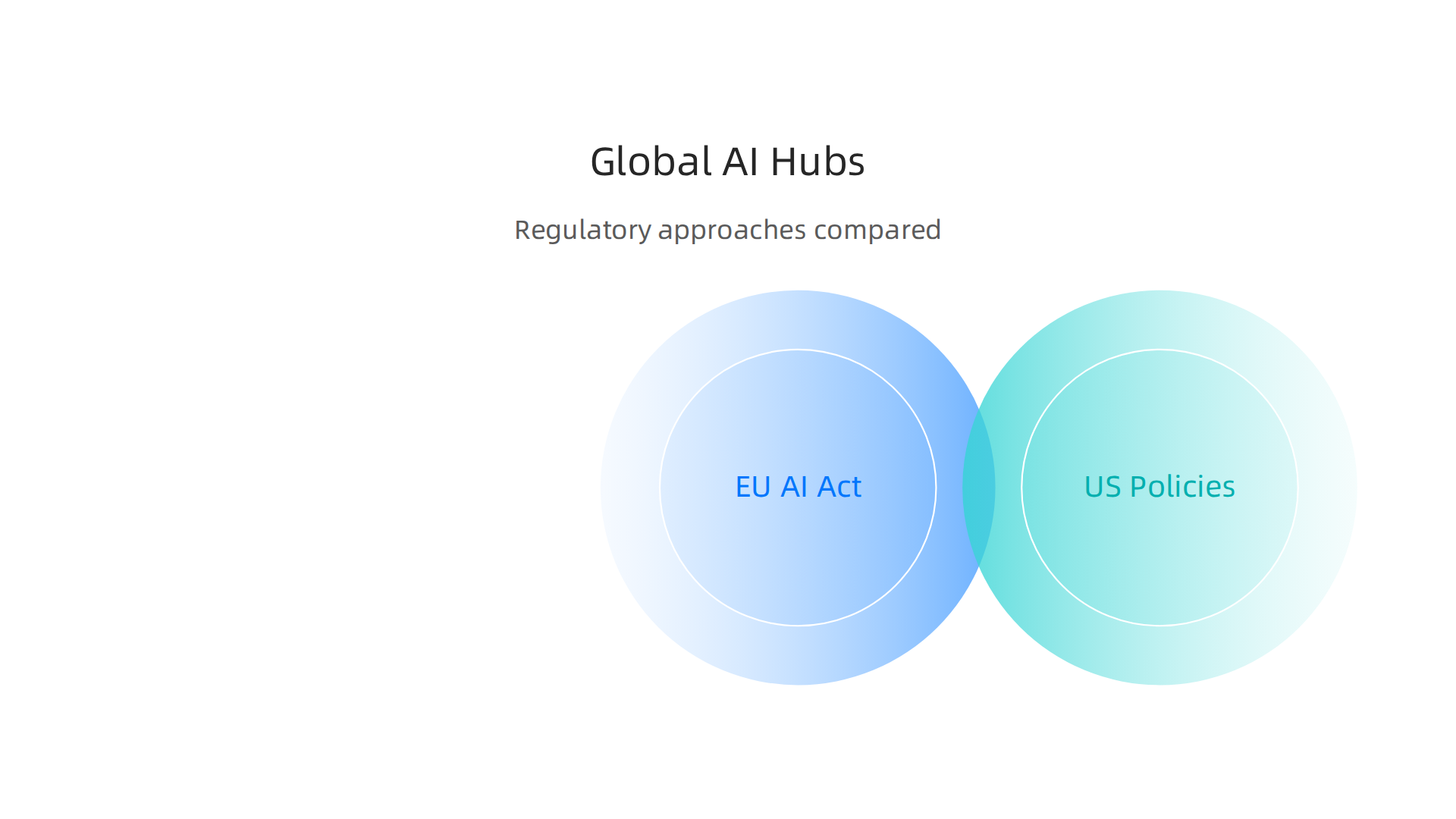
You need to know them.
The EU AI Act: The World’s First Comprehensive Framework
The EU AI Act entered into force in August 2024. It will be fully applicable by August 2, 2026, with some exceptions for specific rules like prohibited AI practices and general-purpose AI codes of practice. That is according to the official EU AI Act page.
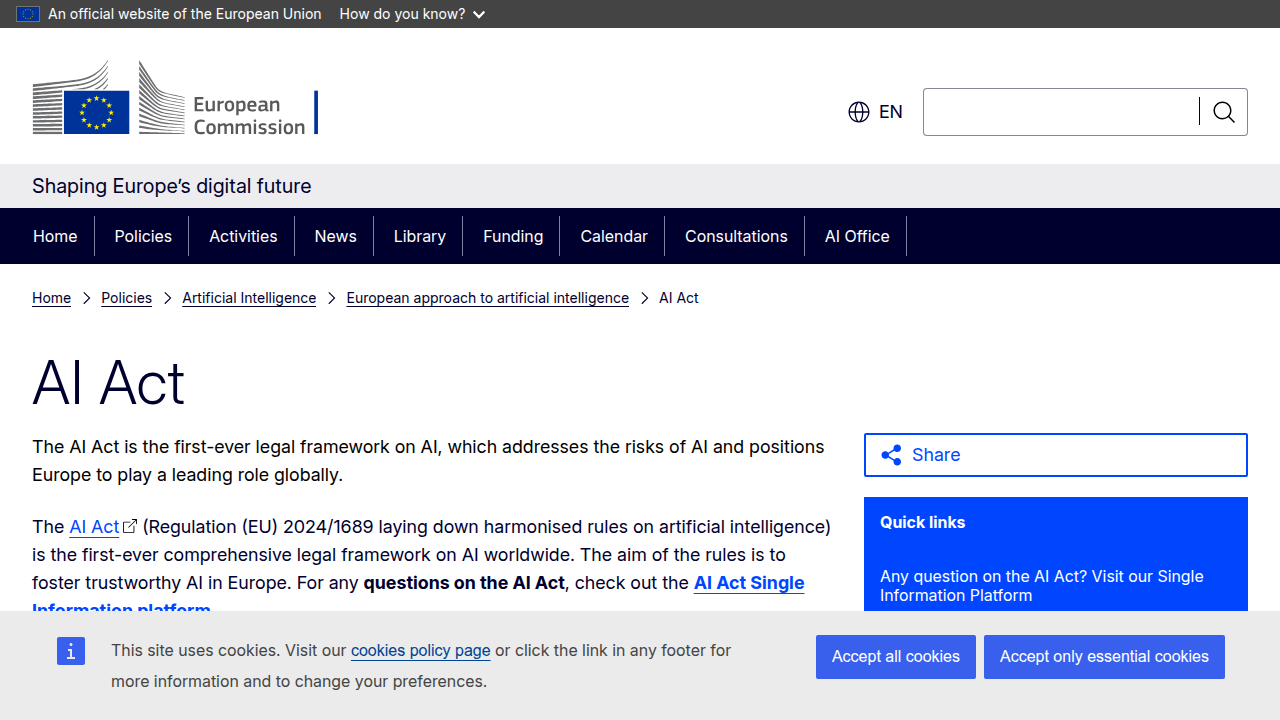
What does this mean for you as an engineer? The Act classifies AI systems by risk level. If you build a system that falls into the high-risk category, you must follow strict rules about data governance, transparency, human oversight, and risk management. You cannot just ship a model and move on.
The Usercentrics guide to the EU AI Act explains that this regulation covers the entire lifecycle of AI. From training data to deployment to ongoing monitoring, every step needs documentation. That documentation is not a legal formality. It is a technical requirement you must build into your system.
US and UK Policies: Different Approaches, Same Compliance Needs
While the EU leads with a single law, the United States has taken a different path. The US relies on a mix of Executive Orders, agency guidance, and sector-specific rules. For example, the White House has issued orders focused on AI safety, equity, and civil rights. There is no single AI Act, but the pressure for compliance is just as real.
The UK has also developed its own framework, focusing on a pro-innovation approach with principles rather than strict rules. But make no mistake. Transparency and accountability are still central.
The 2026 Guide to AI Regulations in the US, UK, and EU highlights how all three regions share core themes: data privacy, transparency, and ethics. Even when the laws differ, the practical demands on engineers are similar.
Why This Creates Career Opportunities
Here is the good news. Policy knowledge differentiates you from other candidates. Most engineers understand models. Fewer understand compliance. That gap is your edge.
Companies in 2026 are desperate for ai engineer professionals who can design systems that meet regulatory standards from day one. They do not want to fix compliance problems after launch. They want engineers who build compliant systems from the start.
This opens specialized roles you might not have considered. Think about AI compliance engineer. Regulatory AI architect. Responsible AI lead. These are real titles with high salaries. You get there by combining your technical skills with policy knowledge.
The AI Regulations around the World – 2026 report shows the global regulatory landscape is still changing rapidly. The EU and US are actually starting to align on some approaches, as noted by Brookings. This means the skills you build today will stay relevant across markets.
Your Next Step
You cannot afford to ignore policy. But keeping up with every update across the US, EU, and UK is a full-time job by itself. That is where a reliable daily source helps.
If you want to turn policy insights into career advantage, subscribe to The Deep View Newsletter. It delivers clear daily updates on AI regulations, compliance trends, and the career opportunities they create. One email a day. No noise. Just the signals you need to stay ahead.
Skills and Certifications That Matter in 2026
You now understand the regulatory landscape. But how do you prove to an employer that you can actually apply that knowledge? In 2026, the best ai engineer candidates bring a powerful mix of hard technical skills and formal policy credentials.
Technical Skills Are Still the Foundation
Let’s be clear. You absolutely need the core technical abilities. Machine learning, natural language processing, MLOps, and Python are still non-negotiable.
The demand for these skills is staggering. According to Lightcast data cited in the AI Developer Hiring 2026 guide, AI skills now appear in 2.5 percent of all US job postings. That is a 55 percent jump year-over-year.
A report from TripleTen confirms this trend. By early 2026, nearly one in 20 job postings mentions AI. For data and analytics roles, that number climbs to 45 percent. You must be fluent in how to use AI tools to stay competitive in this market.
The AI Engineer Job Outlook 2026 adds another layer. Companies want engineers who can deploy and maintain models in production. Notebook skills alone will not cut it anymore.
Policy Certifications Are Your Career Accelerator
Here is the big shift in 2026. Technical skills get you an interview. Policy credentials get you the job offer.
Why? Because companies are terrified of fines and reputational damage. They do not want an ai engineer who ignores regulations. They want someone who says, "I built this system to comply from day one."
That is why certifications in AI ethics, governance, and compliance are exploding in value.
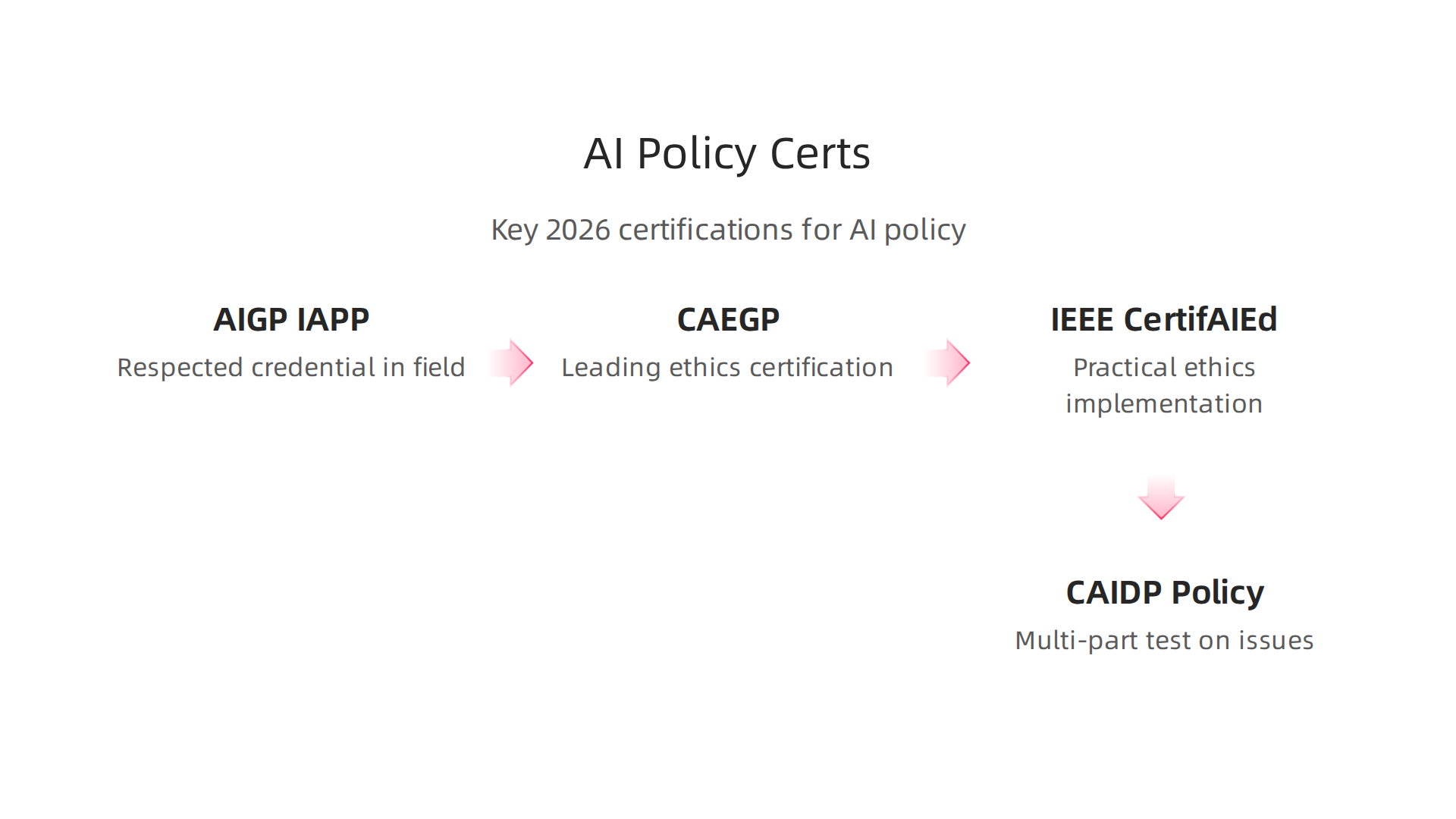
Here are the top credentials worth your time:
- AIGP (IAPP Artificial Intelligence Governance Professional): Considered one of the most respected credentials in the field. The AI Governance Certification 2026 guide ranks it as a top option.
- CAEGP (Certified AI Ethics and Governance Professional): Highlighted as a leading certification by Teamland in their review of ethics courses for 2026.
- IEEE CertifAIEd: Another strong program mentioned in the same Teamland article that focuses on practical ethics implementation.
- CAIDP AI Policy Certification: This one is serious. Offered by the Center for AI and Digital Policy, it requires passing a multi-part test on AI history, institutions, and issues, as detailed on their AI Policy Clinic page.
The Best Responsible AI Certifications 2026 Guide points out that the best programs combine ethics, governance, risk management, and practical implementation. That exact mix is what employers are starved for right now.
Why Employers Are Demanding This Hybrid Skillset
Think about what happens when you combine strong technical skills with policy knowledge. You become the person who can design a compliant AI system without needing a lawyer in every meeting. That saves companies time, money, and risk.
As AI policy in the public sector transforms government compliance, these hybrid skills become even more critical. The AI Software Engineer Jobs in 2026 report confirms that demand is exploding for engineers who can bridge code and compliance.
Your Next Step
Keeping track of which certifications hold real weight and which regulatory shifts matter most can feel like a full-time job. You do not have to do it alone.
Get clear daily AI updates from The Deep View Newsletter. It cuts through the noise so you can focus on building skills that actually move your career forward.
How AI Policy Expertise Boosts Engineer Career Prospects
You have the technical skills. You know Python, MLOps, and machine learning inside out. But how do you move from the coding trenches to the corner office?
Here is the truth in 2026. The engineers getting promoted the fastest are not the ones with the most lines of code. They are the ones who can talk about risk, compliance, and regulation as fluently as they talk about model accuracy.

Senior Roles Are Opening in Trust, Safety, and Governance
Companies are scrambling to comply with laws like the EU AI Act, which will be fully enforceable by August 2026 as explained in the official EU framework. This creates a whole new category of senior positions. We are talking about titles like Head of AI Governance, Trust and Safety Lead, and AI Compliance Officer.
The Glean analysis of industries with stringent AI compliance needs in 2026 shows that sectors from healthcare to finance are racing to fill these roles. And guess who they want? Engineers who already understand the regulatory landscape.
When you combine your technical foundation with policy knowledge, you become the person who can build compliant systems without needing a lawyer in every meeting. That is exactly what companies pay top dollar for.
You Become the Bridge Between Two Worlds
Here is a common problem. Legal teams write policies. Engineers write code. Nobody speaks the same language. The result? Misunderstandings, delays, and expensive rework.
Organizations now need engineers who can translate compliance requirements into technical specs. This is why AI governance and ethical compliance training is a high priority for 2026. The global regulatory landscape is moving fast, and companies need people who can keep up.
If you can sit in a meeting with regulators and explain how your model handles bias, then sit with developers and debug the pipeline, you become irreplaceable. That kind of flexibility leads to faster promotions and more responsibility.
Real Examples of Career Growth
Think about an engineer who gets a certification in AI ethics. They go back to their company and help draft internal guidelines for responsible AI use. Suddenly, they are leading a cross functional team. They are briefing executives. They get promoted from senior engineer to staff engineer in half the normal time.
This is not just theory. The US and EU are starting to align on AI regulation, which means standards will only become more global. Engineers who can navigate both frameworks are gold. And as AI policy in the public sector transforms government compliance, these hybrid skills become even more critical.
Your Next Step
Staying on top of fast moving regulations feels like drinking from a firehose. You need a steady stream of clear, practical updates so you can focus on building the skills that actually move your career forward.
Get clear daily AI updates from The Deep View Newsletter. It cuts through the noise so you know exactly what matters for your career.
Investing in Your AI Career: Employer Trends and Compensation
Let’s talk money. If you are wondering whether investing in policy expertise actually pays off, the numbers in 2026 give you a clear answer. Yes.

Salaries Are Climbing Fast
AI engineers are making serious money right now. According to the 2026 AI compensation benchmarks from Pin, AI and ML engineers earn between $134,000 at the entry level and $193,250 at the high end for mainstream tech employers. The midpoint sits at $170,750. Those are strong numbers by any measure.
But here is what really matters for your career. The average AI engineer salary hit $206,000 in 2025 and saw an additional 7% jump in the first quarter of 2026 alone, as reported by Acceler8 Talent’s market rate analysis. The US Bureau of Labor Statistics backs this up with a median salary of $145,080 for AI engineers according to the Coursera salary guide.
These numbers come from standard roles. What happens when you add policy skills to the mix?
The Policy Premium Is Real
Companies are competing for a rare combination. They want engineers who can build AI systems and understand the rules governing them. This pushes compensation even higher for people with both skill sets.
Think about it this way. A regular AI engineer is valuable. An AI engineer who can also navigate the biggest information technology policy shifts of 2026 and ensure compliance is priceless. That is why you see roles like AI Governance Lead and Regulatory Tech Architect offering salaries well above the standard range.
Global markets reflect this trend too. In India, senior AI engineers with policy knowledge can earn between ₹35 LPA and ₹70+ LPA according to the Tredence global compensation guide. The premium for regulatory expertise gives you leverage no matter where you work.
Employers Are Paying for Your Training
Here is a shift you need to know about. More companies are now funding certifications in ethics and compliance directly.
Why? Because finding qualified talent is harder than paying to train it. Organizations would rather invest in an existing engineer who gets the technology and then teach them policy, than hire someone from outside who has policy knowledge but no technical depth.
This changes how you should think about your career. You do not have to pay for every certification yourself. When you go into a salary negotiation, ask about professional development budgets specifically for AI ethics and compliance training. Many companies expect this request in 2026.
New Roles in Regulatory Tech and AI Audit
Hiring is not just happening in traditional engineering roles. Entirely new categories are opening up.
Regulatory technology, or regtech, is growing fast. Companies need engineers who can build tools that automate compliance checks. AI audit roles are also expanding. These positions involve testing models for bias, fairness, and regulatory alignment before deployment.
The artificial superintelligence regulations coming in 2026 are only going to accelerate this. Every company that develops advanced AI will need people who can audit and certify their systems.
For you, this means more options. You can stay in a standard engineering role. Or you can move into these specialized positions that offer higher pay, more responsibility, and greater job security.
Your Next Step
The window is open right now. Salaries are rising. Employers are funding training. New roles are appearing. But this market will not stay wide open forever. The engineers who move first will capture the biggest rewards.
Get clear daily AI updates from The Deep View Newsletter. It helps you track employer trends and compensation shifts so you can make informed career moves.
Navigating Risks: Compliance, Ethics, and Professional Development
Making more money as an AI engineer is exciting. But with that opportunity comes a bigger responsibility. The rules around artificial intelligence are getting stricter every day, and ignoring them can hurt your career. Let’s talk about the risks and how you can stay safe.
Why Ignoring Compliance Is a Dangerous Move
Here is the thing. Non-compliance is not just a company problem. It can become your problem too. When you build or deploy AI systems, you are responsible for following the rules. If a system breaks the law, the people who built it can face legal trouble.
In 2026, the regulatory landscape is more complex than ever. The EU AI Act is the world’s first comprehensive AI law, and it came into force in 2024. By August 2026, most of its rules will be fully applicable. That means companies need AI engineers who understand these requirements.
Beyond Europe, countries like the US, UK, and Japan are also creating their own frameworks. The 2026 guide to AI regulations shows that data privacy, transparency, and ethics are now central to AI policy everywhere.
If you are an AI engineer who does not know these rules, you are a liability. Companies will not hire or promote people who might put them at risk. And if your work causes a compliance failure, your reputation takes a hit. That can close doors for years.
How to Protect Yourself: Ethics Training and Ongoing Learning
So what is the solution? You need to invest in ethical training and professional development. It is not just about avoiding trouble. It is about becoming more valuable.
Organizations are now required to train employees on AI governance, ethics, and compliance. A 2026 training guide from Coggno explains that as the EU AI Act takes effect, companies must equip their teams with knowledge of risk management and ethical standards.
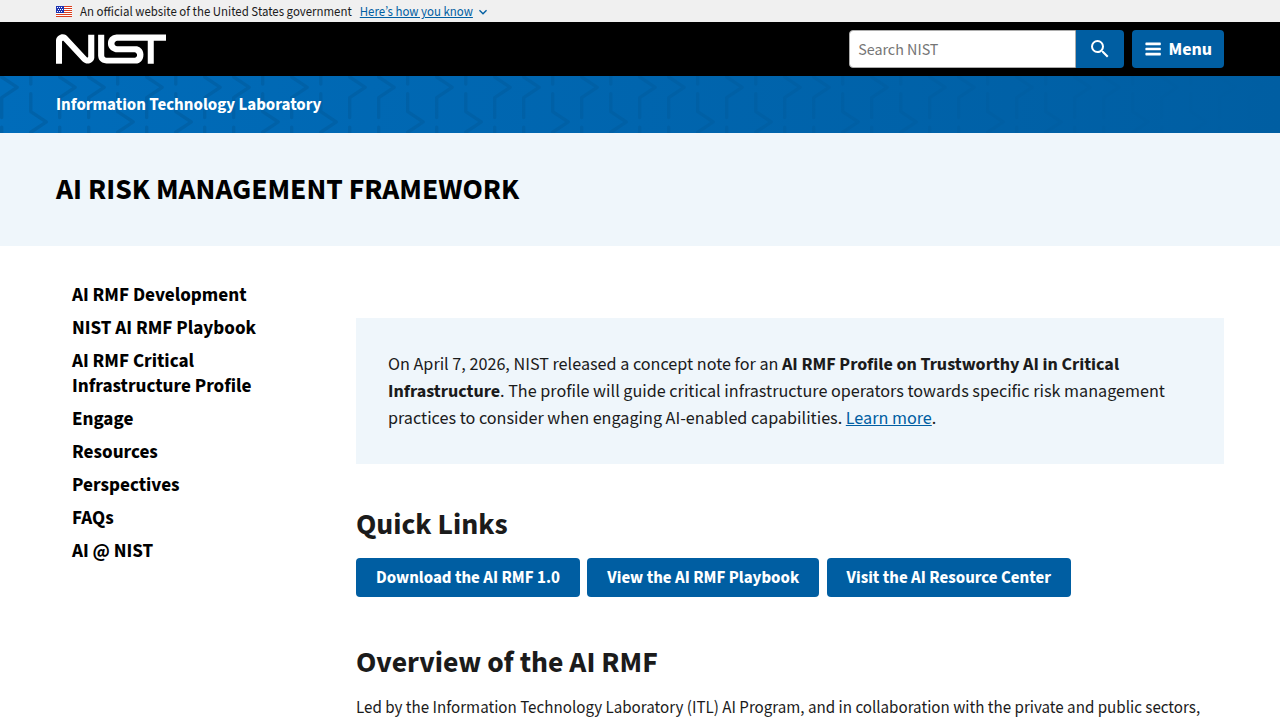
You can start by learning about the main frameworks. The NIST AI Risk Management Framework gives you a voluntary set of guidelines for managing AI risks.
Understanding this framework helps you speak the language of compliance officers and legal teams.
Similarly, the ISO 42001 standard provides a management system for AI. Knowing both NIST and ISO 42001 makes you stand out.
Many employers will pay for this training. As we saw in the previous section, companies are funding certifications in ethics and compliance. Use that money. Take courses. Get certified. It reduces your risk and increases your paycheck.
New Roles Are Emerging in AI Governance
Here is where your career gets interesting. Organizations are not just training existing staff. They are creating entirely new positions for AI governance engineers.
These roles mix technical skills with policy knowledge. You might design compliance checks into the development pipeline. You might audit models for bias before release. You might work with legal teams to ensure products meet regulatory standards.
The need for these roles is growing fast. Industries like healthcare, finance, and government have the most stringent AI compliance needs in 2026, according to Glean’s industry analysis. That means job security and higher pay for engineers who can do this work.
If you want to move into one of these roles, start building your knowledge now. Read about the biggest information technology policy shifts of 2026. Watch how regulations evolve. Talk to people already in AI governance.
Your Next Step
The window to build compliance skills is open right now. The engineers who understand both the technology and the rules will lead the next wave of AI development.
Stay informed with daily updates. It will help you track regulatory changes and career opportunities as they happen.
Get clear daily AI updates from The Deep View Newsletter. It gives you the insights you need to navigate risks and build a future-proof career.
Resources and Communities for AI Engineers
You have learned about the rules, the ethics, and the need to keep learning. But where do you go to stay updated without spending hours every day digging through the noise? The answer is simple. You need the right resources and communities.

In 2026, the field of AI moves fast. Really fast. AI skills now appear in 2.5% of all US job postings, up 55% from the year before. That means everyone is trying to catch up. But if you rely on random headlines, you will waste time and miss what matters.
The best AI engineers use curated sources to stay current. Here are the three types of resources you need to build into your routine.
Newsletters That Cut Through the Noise
A good newsletter gives you the highlights and the context. You get the biggest policy shifts, the newest tools, and the key regulatory changes, all in one place.
That is exactly what The Deep View Newsletter does. It delivers clear daily AI updates so you can track regulations, career opportunities, and industry trends without the clutter. It is the kind of resource that saves you hours every week.
Online Communities for Real Talk
Newsletters are one way. But you also need a place to ask questions, share ideas, and learn from people doing the work every day.
The Artificial Intelligence Community of Practice run by the U.S. General Services Administration is a great example. It serves as a cross-agency forum where AI professionals collaborate and share best practices. While it is government focused, the principles apply across industries.
Another valuable group is the AI Policy Clinic from the Center for AI and Digital Policy. It gives you a structured way to learn about AI history, issues, and institutions. Completing their certification test shows you really understand the landscape.
These communities help you stay ahead of rules like the EU AI Act and the NIST framework we covered earlier. If you want to go deeper on specific regulations, check out this article on how AI policy in the public sector is transforming government compliance in 2026.
Conferences That Matter
You do not need to attend every event. But picking one or two key conferences each year keeps your knowledge fresh and your network strong.
Look for events that focus on AI governance, ethics, and practical engineering. The best ones bring together policymakers, engineers, and business leaders. That mix gives you a 360 degree view of where the field is going.
Your Next Connection
The point is this. You do not have to figure everything out alone. The right newsletters, communities, and events do the heavy lifting for you.
Start with one resource today. Subscribe to The Deep View Newsletter and join one online community this month. That small step will save you hours and keep you ahead of the curve as an AI engineer.
Summary
This article explains what it takes to be an AI engineer in 2026, showing how the role has expanded from model-building to include deployment, governance, and regulatory compliance. It reviews why new laws—most notably the EU AI Act becoming fully applicable in August 2026—change engineering workflows and create demand for hybrid technical/policy skills. You will learn which core competencies employers now require (ML fundamentals, software engineering practices, and policy literacy), which certifications carry weight, and how those skills translate into higher pay and new senior roles in trust, safety, and audit. The piece also covers practical risks of non‑compliance, examples of emerging job titles, and concrete next steps for career development, plus where to find daily, curated updates and communities to stay ahead.