

Why learning AI today matters and how this guide helps
In 2026, it feels like artificial intelligence, or AI, is everywhere. From the apps on your phone to the big systems that run businesses, AI is changing how we live and work. But here’s the thing: AI tools, new research, and even the rules for using AI are changing super fast. It can be hard to keep up. How do you know what to learn? How do you figure out the best way to learn AI so you’re ready for the future?
Many people feel a bit lost because of these quick changes. The demand for new skills in AI is really changing jobs and how companies hire people today, showing that learning AI is more important than ever

IMF Report on Bridging Skill Gaps.

You might be wondering about your own job, or how to use this amazing creative technology to do new things. You might even want to know how to become an AI engineer in 2026 with policy expertise.
This guide is here to help you understand how to learn AI. We’ll give you a clear roadmap that makes sense. We’ll talk about the basics you need to know, how to practice with AI tools, why it’s important to think about the right and wrong ways to use AI, and how to keep learning all the time. Our goal is to give you trusted information and ideas so you can move forward with confidence in the world of AI.
To make sure you’re always up to date with the latest changes and important discussions in AI, there’s a great way to stay informed.
The AI Newsletter Worth Reading can help you get clear daily AI updates from The Deep View Newsletter.
1. Understand AI fundamentals: concepts, terminology, and scope
To start your journey on how to learn AI, it’s really important to know what AI is and what it isn’t. Think of AI as the big idea of making computers smart enough to do things that usually need human brains. This includes solving problems, understanding language, or even making art. In 2026, AI is everywhere, from helpful apps to complex systems that manage big data. Many people are learning AI skills across all stages of life, as shown in The 2026 AI Index Report.

One of the most common types of AI you’ll hear about is Machine Learning, or ML. Imagine AI is a whole library of smart ideas, and ML is just one special book in that library. ML helps computers learn from lots of examples without being told every single step. For instance, if you show a computer many pictures of cats and dogs, ML can help it learn to tell them apart on its own.
There are different ways computers learn through ML:
- Supervised Learning: This is like a student learning with a teacher. The computer gets examples that are already labeled. So, if it sees a picture of a cat, it’s also told, "This is a cat." It uses these labeled examples to learn.
- Unsupervised Learning: This is more like a student exploring on their own. The computer gets a lot of information that isn’t labeled. It then tries to find patterns or groups in the information by itself.
After an AI learns, we need to check if it’s doing a good job. This is called "model evaluation." It’s like giving the AI a test to see how well it performs. We want to make sure the AI is accurate and fair in its work.
AI is used in so many places today. It helps recommend movies you might like, translates languages, drives some cars, and even powers new tools that create images and music. This is often called creative technology, and it’s changing many fields. You can learn more about how AI can boost your business through these kinds of tools in Creatify AI Explained: Master Creative Tools for Business Growth.
It’s also good to clear up common misunderstandings. AI isn’t usually a robot thinking exactly like a human in every way. It’s a tool that follows rules and learns patterns from data. It’s smart in specific tasks, not generally smart like people are. Understanding these basics is the first big step on how to learn AI, giving you a strong base for all the exciting things to come.
Now that you have a good handle on what AI is, the next big step in figuring out how to learn AI is to get your hands dirty. Watching videos and reading books is helpful, but building things yourself is where the real learning happens. It’s like learning to ride a bike; you can read all about it, but you truly learn by getting on and pedaling.

Pick High-Impact Starter Projects
When you decide to learn AI, it’s best to start with projects that teach you the whole process. Think about making a small AI project from beginning to end. This means you will:
- Gather Data: Find or create the information your AI will learn from.
- Build a Model: Design the "brain" of your AI using that data.
- Check Your Work: See how well your AI performs using model evaluation.
- Show It Off: Make your AI work in a way that others can use, like a simple app.
Choosing projects that cover these steps helps you see how everything connects. For example, you could build a simple AI that tells the difference between different types of flowers, or one that recommends songs based on your mood. These types of beginner-friendly projects are great for getting started. Many experts suggest focusing on hands-on projects rather than just tutorials to truly master AI skills in 2026, as discussed in 5 Hands-On Projects to Master AI and LLM Engineering in 2026. You can find many ideas for projects, even if you are just starting your journey to learn AI, in guides like Best AI Project Ideas in 2026 for Beginners.
Tools and Platforms That Help You Learn
The good news is that there are many tools and platforms designed to make learning AI easier and faster. These tools often reflect what real AI professionals use, giving you valuable experience.
- Coding Environments: Programs like Google Colab or Jupyter Notebooks let you write and run AI code right in your web browser. They are free and easy to use.
- AI-Powered Learning Platforms: Some online tools act as an AI-powered learning platform. They can give you hints, check your code, or even suggest the next steps in your project. This personalized help can speed up your learning a lot.
- Ready-to-Use Data: Websites offer datasets that are already clean and organized, so you do not have to spend a lot of time preparing data for your first projects.
- Open-Source AI Models: You do not have to build every AI engine from scratch. Many powerful AI models are available for free, which you can use and change for your own projects. This is a big part of how creative technology is evolving in 2026.
These tools help you focus more on understanding AI concepts and less on getting stuck on small technical issues. Building projects also shows potential employers that you can actually create working AI solutions. For more in-depth knowledge on the importance of AI, especially in policy and societal impact, you can explore why Why the Picture on Artificial Intelligence Matters More Than Ever. Staying updated with the latest in AI is key to making sure your project ideas are fresh and relevant.
To make sure you are always up to date with the newest developments and deeper analyses in the world of AI, there’s an excellent resource. You can get clear daily AI updates from The AI Newsletter Worth Reading.
Learning to build AI projects is important, but like any good builder, you need strong foundations. For anyone wondering how to learn AI, understanding some basic math and computer science is a must. These are the core ideas that make AI work, like the engine that powers a car.
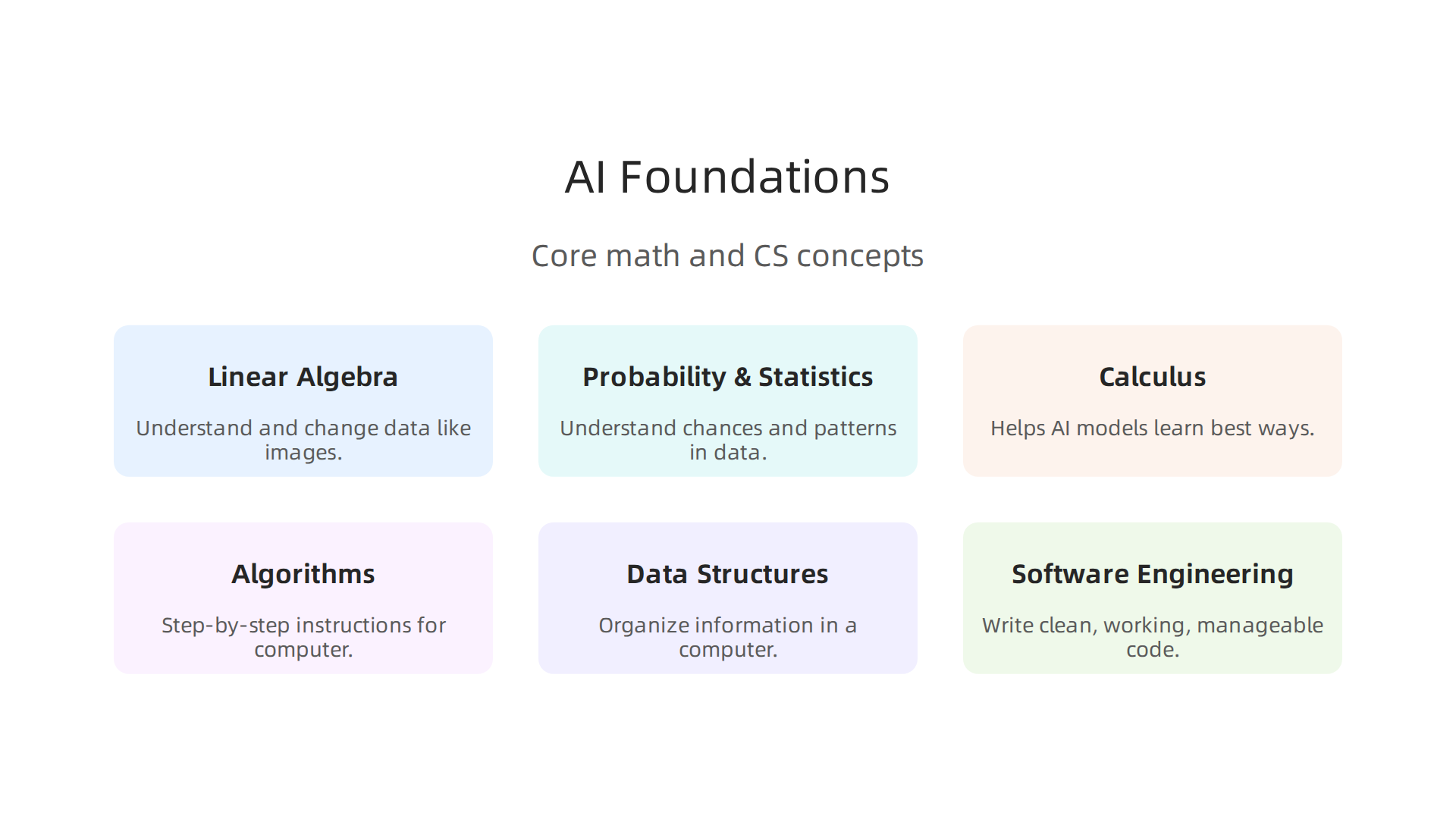
Essential Math for AI
You do not need to be a math genius to start learning AI, but certain math areas are very helpful. Think of them as tools in your AI toolbox.
- Linear Algebra: This is about working with numbers in grids, like spreadsheets. It helps AI understand and change data, which is key for things like images and sounds. Many college programs for AI and machine learning include courses in linear algebra because it’s so fundamental to the field, as highlighted by a study on Prerequisites and Performance in a Machine Learning Course.
- Probability and Statistics: These help you understand chances and patterns in data. AI uses them to make smart guesses and predictions. For example, knowing the chance of rain helps you decide if you need an umbrella.
- Calculus (especially Optimization): This branch of math helps AI models learn by finding the best way to do something, like making the fewest mistakes. It is often used to "train" an AI engine so it gets better over time. If you want to dive deeper into the specific math subjects that underpin machine learning, a video explains What MATH Do You Need for MACHINE LEARNING? in an easy-to-understand way.
You do not have to learn all of these in full depth at once. Start with the basics and learn more as your projects get bigger. Many programs that teach people how to learn AI, like the Machine Learning (BS) program at BYU, include these math courses. The goal is to understand the main ideas, not to memorize every formula.
Core Computer Science Skills
Besides math, knowing some computer science basics will make your journey to learn AI much smoother. These skills help you write better code and build more powerful AI systems.
- Algorithms: These are like recipes or step-by-step instructions that your computer follows. AI uses complex algorithms to process data and make decisions. Learning how to create efficient algorithms is vital for developing a quick and smart AI engine.
- Data Structures: This is about how you organize information in a computer so it can be used easily. Think of it like sorting your toys so you can find what you need quickly. Good data structures make your AI programs run faster.
- Software Engineering Practices: This covers how to write clean, working code and manage bigger projects. When you build a full AI system, you will want your code to be easy to understand and fix. It’s about building strong, reliable software, which is a key part of becoming an AI engineer. To learn more about the broader skillset needed in this field, check out how to become an AI Engineer in 2026 with Policy Expertise.
Having these math and computer science fundamentals will not only help you understand how AI works but also allow you to create your own innovative solutions and contribute to the world of creative technology. It is a solid base for anyone figuring out how to learn AI effectively in 2026.
After building a strong base with math and computer science, the next step in figuring out how to learn AI is to pick a learning path that fits what you want to do. Just like people who build houses specialize in different jobs like plumbing or roofing, people who work with AI also have different jobs. Your journey to learn AI will look different depending on whether you want to work in policy, product, engineering, research, or management.
Let us look at how these paths can shape your learning.
AI Policy Expert
If you want to be an AI policy expert, your learning will focus on understanding how AI affects society and how to make rules for it. You will study things like AI ethics, data privacy, and how governments use AI. This path often means reading a lot about current events, laws, and discussions around AI. For example, understanding how AI impacts education is a big part of the policy talk today, as highlighted by discussions on AI Ethics and Higher Education. Milestones might include understanding new regulations or helping draft guidelines for AI use.
AI Product Manager
For those interested in leading AI products, you will learn how to turn AI ideas into useful tools for people. This means understanding what users need, how to plan an AI project, and how to get an AI-powered learning platform or other AI tools ready for the market. Learning here involves project management, user experience, and basic AI concepts so you can talk to engineers. A key milestone would be successfully launching a new AI product feature or a complete AI solution.
AI Engineer or Developer
This path is for people who love to build. You will deep dive into coding languages like Python, machine learning frameworks, and how to train an AI engine. Your learning will be very hands-on, often involving building many small projects. A typical learning plan might include online courses, coding challenges, and contributing to open-source AI projects. Getting certified in specific AI tools or completing a complex AI project are good milestones.
AI Researcher
If you enjoy exploring new ideas and pushing the boundaries of what AI can do, a research path is for you. This often involves advanced math, understanding complex algorithms, and reading a lot of academic papers. Researchers aim to create new AI methods or improve existing ones. Learning might include pursuing higher education degrees, doing experiments, and publishing your findings. A major milestone would be developing a new AI algorithm that gets published in a respected journal.
AI Project Manager
An AI project manager focuses on making sure AI projects get done on time and within budget. This role requires understanding enough about AI to manage a team of experts, set goals, and handle problems. Your learning would include project management methods, communication skills, and how to oversee creative technology projects. Milestones involve keeping a big AI project on track and making sure the team works well together.
No matter which path you pick, learning how to learn AI means setting clear goals and checking your progress. Break your journey into smaller steps, celebrate each win, and keep learning because AI is always changing.
For those eager to stay informed on the rapidly evolving world of AI and technology policy, there is a great resource available.
The AI Newsletter Worth Reading offers clear daily AI updates to help you navigate this complex landscape.
No matter which path you pick, learning how to learn AI means setting clear goals and checking your progress. Break your journey into smaller steps, celebrate each win, and keep learning because AI is always changing. For those eager to stay informed on the rapidly evolving world of AI and technology policy, there is a great resource available.
5. Integrate ethics, safety, and governance into learning from day one
When you are learning how to learn AI, it is super important to also think about what is right and fair. Just knowing how to build an AI engine or use an ai-powered learning platform is not enough. You also need to understand how AI can affect people’s lives in good ways and bad ways.
Think about these big ideas from the very start of your AI learning:
- Ethical Risks: This means understanding if an AI system could be unfair or cause harm. For example, an AI might make decisions that are biased against certain groups of people because of how it was trained. Learning about these risks helps you build better, safer AI. Research shows that discussing ethics of using AI in K-12 education is a key topic today.
- Privacy Concerns: AI often uses lots of personal information. You must learn how to keep this information safe and respect people’s privacy.
- Regulatory Rules: Governments around the world are making new rules for AI. Knowing these rules is a must, especially if you want to work with AI in important areas. Understanding Genspark AI Regulation and Policy Challenges for Tech Executives can help you see how these rules impact businesses.
To build this understanding, you should not just read about it. Try to do some practical exercises too. This could mean:
- Looking at case studies where AI went wrong and figuring out why.
- Discussing different ideas with others about how AI should be used.
- Thinking about how a new AI tool you are building might affect different people.
By learning about ethics, safety, and rules from the beginning, you will not only be good at the technical side of AI but also be a thoughtful and responsible AI builder in 2026. This makes you a more complete and valuable expert in the field of creative technology that uses AI.
To truly understand how to learn AI and become a valuable expert, it is not enough to just grasp the basics or even dive into ethics. You also need to keep learning all the time. The world of AI changes so fast that what you know today might be different tomorrow. Staying current in 2026 means having smart ways to get new information without getting overwhelmed.
Here is how you can stay updated and become part of the larger AI community:
- Read Smart, Not Hard: There is a lot of information out there about AI. To avoid feeling burned out, pick your sources carefully. Look for trusted websites, special reports, and updates on new rules. Many experts recommend signing up for newsletters that break down the big news. For example, some of the Top 12 AI Newsletters to Follow in 2026 can help you keep up. These newsletters often summarize important research, new AI policies, and what happened at big conferences.
- Join Communities and Find Mentors: Learning is often better when you do it with others. Look for groups where people talk about AI, share ideas, and help each other. These could be online forums, local meetups, or professional groups. Being part of a community helps you see different points of view and learn from experienced people. Many places offer AI Professional Development and Learning Opportunities where you can connect and grow. You can also find mentors, which are experienced people who can guide you and give advice on your journey with creative technology.
- Give Back and Contribute: Once you learn more, think about sharing what you know. You could write articles, speak at small events, or help others in your community. This not only helps you understand things better but also builds your reputation as someone knowledgeable about AI. This kind of active learning helps solidify your understanding of how to learn AI on an ongoing basis.
Staying active in the AI world helps you keep your skills sharp and lets you see where AI is heading next. It helps you stay informed about the latest policy and technology news. If you want even more focused insights to help you stay ahead, consider a reliable resource.
Get clear daily AI updates from The AI Newsletter Worth Reading. Staying informed with expert analysis can really make a difference.
You can also learn how to get Tech News Analysis for Policy Professionals to turn headlines into smart policy moves.
7. Translate learning into career outcomes: portfolios, interviews, and internal adoption
Learning about AI is a big step, but the next important part is showing what you know. This means taking all your new knowledge about how to learn AI and using it to grow your career.

Whether you want a new job or to help your current company, you need to show the real impact of your skills.
Build a Strong Portfolio of AI Projects
When you want to show someone you know about AI, having real projects is key. Think of it like an artist showing their best paintings. For AI, your projects are your "paintings." These can be small tools you made, data you analyzed, or even smart chatbots you built. Employers in 2026 love to see that you can take ideas and turn them into working solutions.
Here are some ideas for projects that can make your portfolio shine:
- Build an AI-powered helper: You could make a simple AI tool that helps with daily tasks, like summarizing emails or planning a simple schedule.
- Work with data: Use AI to find patterns in public data, then show what you learned with easy-to-understand charts.
- Create something with creative technology: Maybe an AI that helps write stories or makes unique images.
Many experts say that actually building things is much better than just watching tutorials. For example, you can explore ideas like 5 Hands-On Projects to Master AI and LLM Engineering in 2026 or watch videos on 5 AI Engineer Projects to Build in 2026 for practical advice. There are even guides for 7 Real World AI Projects to Build in 2026 that automate everyday tasks.
When you finish a project, be sure to clearly explain:
- What problem did your AI solve?
- How did you build it?
- What were the results or benefits?
This helps people understand your thinking and your skills.
Ace Your Interviews and Show Your Value
Once you have a great portfolio, you’ll want to talk about it. In job interviews, be ready to share stories about your projects. Explain how you overcame problems, what you learned, and how your AI engine helped. This shows you’re not just someone who knows facts, but someone who can actually do things.
If you’re already working, think about how your new AI skills can help your current company. You could suggest a small pilot project where an AI-powered learning platform or tool solves a common problem. For example, maybe an AI could help sort customer feedback or automate a boring task. This shows your boss that learning AI was a smart investment and can bring real value to the company. To learn more about career paths, check out How to Become an AI Engineer in 2026 with Policy Expertise.
By actively showing what you can do with AI, you turn your learning into clear results that can advance your career.
Summary
This guide explains why learning AI matters in 2026 and gives a clear, practical roadmap to get started. It covers basic concepts (what AI and machine learning are), hands-on starter projects, the tools and platforms you should use, and the core math and computer‑science skills that make AI work. The article walks through different career paths—policy, product, engineering, research, and project management—so you can choose learning steps that match your goals. It stresses integrating ethics, privacy, and regulatory awareness from day one and shows how to stay current through newsletters, communities, and mentors. Finally, it explains how to translate projects into a portfolio, prepare for interviews, and drive AI adoption at work so your learning leads to real career outcomes.