
Introduction: Navigating the AI Innovation Storm
You are a policy professional or a tech executive. Every week, a new AI platform like Genspark AI appears with features that sound too good to be true.
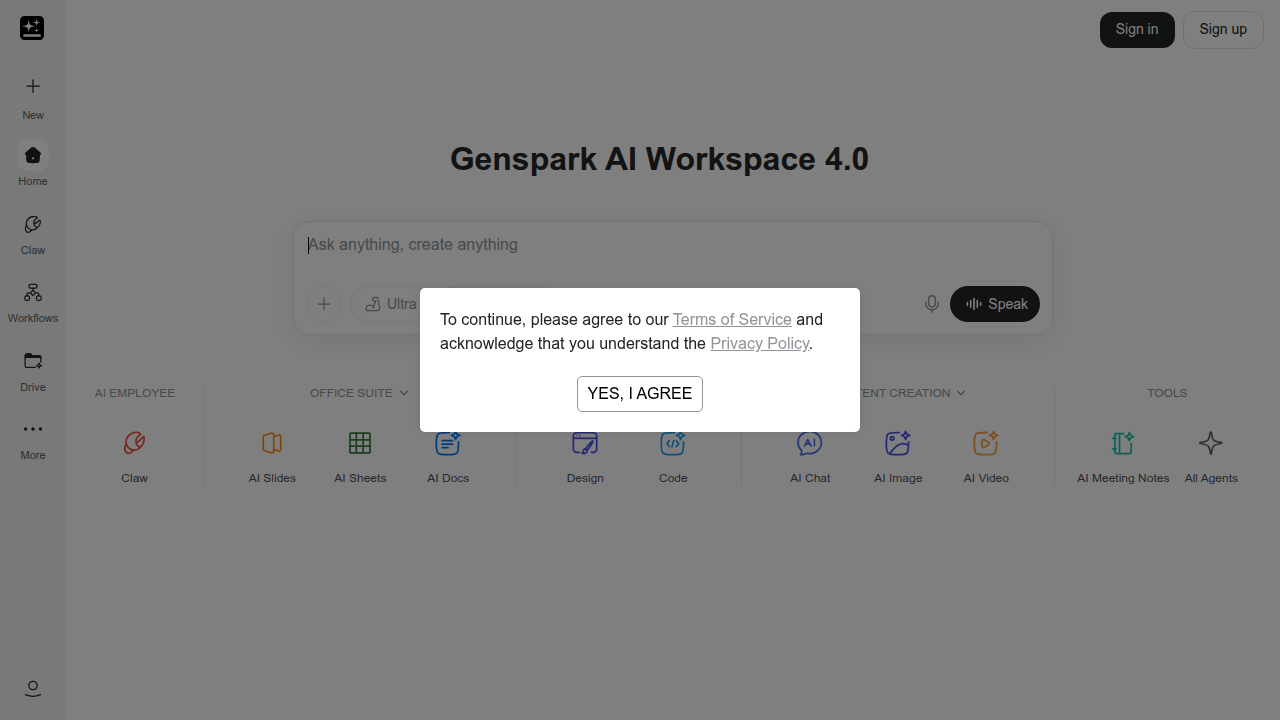
Slides, documents, images, code, even AI phone calls – all in one place. That is what Genspark promises as an all-in-one workspace. But here is the challenge: these tools are moving faster than the laws and rules that are supposed to guide them.
Platforms such as Genspark AI, Originality AI, Real Magic AI, and Open Brain AI are pushing what is possible. Yet regulators, lawmakers, and even company leaders are still trying to figure out what these tools mean for privacy, security, and fairness. The gap between innovation and regulation is growing every month.

This uncertainty creates real risks for decision-makers. If you invest in the wrong tool, you might face compliance problems later. If you ignore these platforms, you could fall behind competitors who use them smartly. You need a clear, evidence-based understanding of what these platforms actually do and how they fit into the policy landscape.
That is exactly what this article provides. We will take a closer look at groundbreaking AI platforms like Genspark AI, break down their key features, and connect them to the regulatory questions that matter most. You will get actionable insights to help you make smarter decisions, whether you work in government, a tech company, or an investment firm.
To stay ahead, you need daily intelligence on AI policy shifts. That is why we recommend The Deep View Newsletter – it delivers clear, practical AI updates every day.
Start subscribing today to keep your policy knowledge sharp.
Before we dive into the details, it also helps to understand the bigger picture of how technology policy is evolving in 2026. Check out our guide on the biggest information technology policy shifts of 2026 for context.
The Rise of Genspark AI: A New Paradigm in AI Platforms
Here is what makes Genspark AI different from the chatbots you saw a year ago. It is not a single-purpose tool. Think of it as a full digital office that runs on AI.
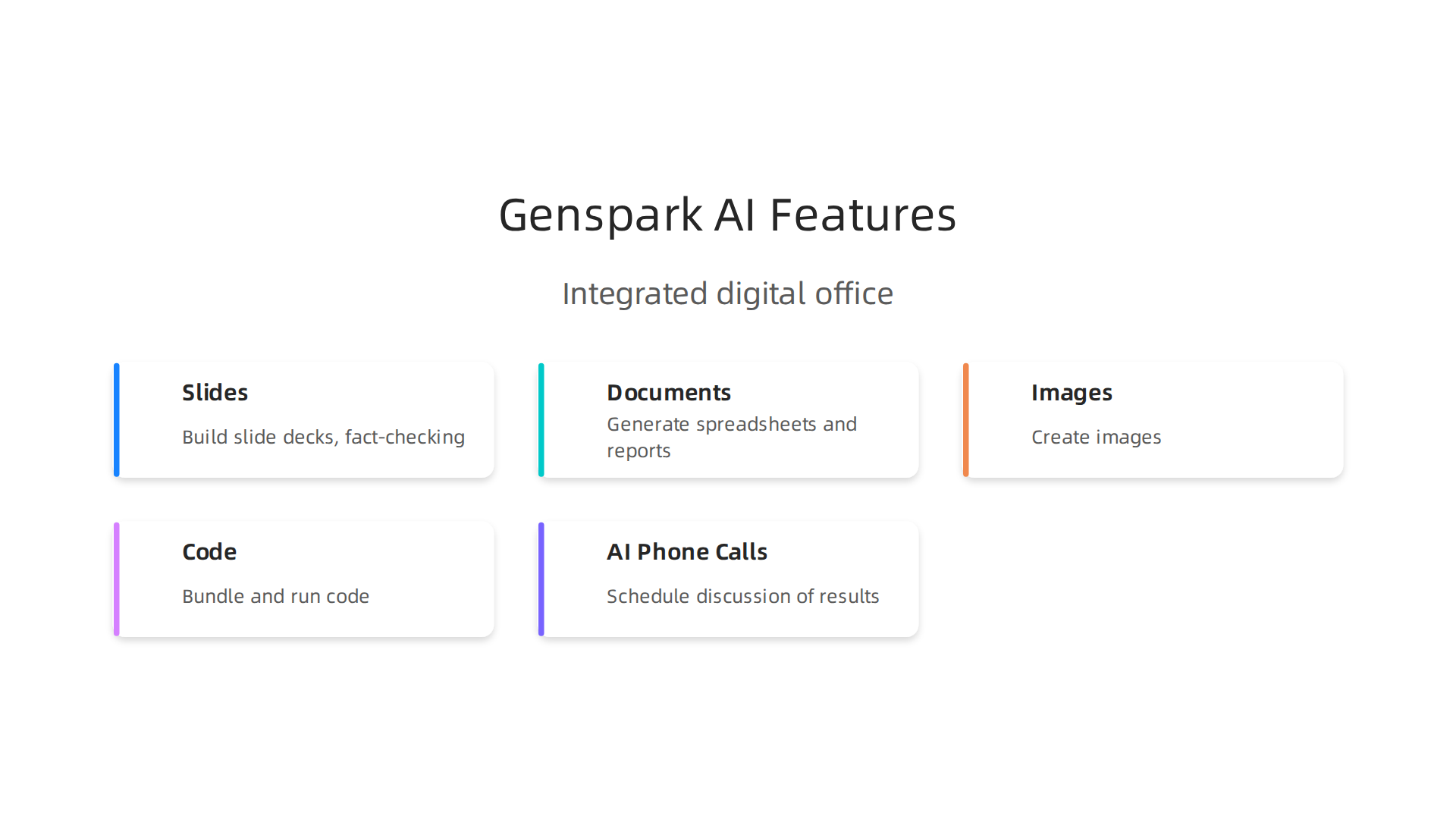
Genspark AI brings together slides, documents, images, code, and even AI-powered phone calls inside one workspace. As one in-depth review of the platform put it, Genspark is "a multi-model AI workspace that bundles coding, design, slides, documents, and even AI-powered phone calls into a single subscription." That kind of integration is rare among AI platforms today.
The features are surprisingly practical. You can build a slide deck with fact-checking built right in. You can generate a spreadsheet, write a report, create an image, and then schedule an AI phone call to discuss the results. A hands-on breakdown from early 2026 identified more than 15 distinct tools and agents inside the platform. For many users, this means replacing three or four separate subscriptions with one.
Pricing plays a role in the platform’s appeal too. At around $24.99 per month for the Plus tier, Genspark AI aims to be affordable enough for individual professionals while still powerful enough for teams.
So how does it compare to the giants like OpenAI, Google, and Anthropic? The big names tend to focus on raw model performance or narrow use cases. Genspark AI bets on versatility. It bundles everything together. That is a different bet. It also competes with tools like Originality AI (which focuses on content verification), Real Magic AI (which targets creative workflows), and Open Brain AI (which offers agent-based automation).
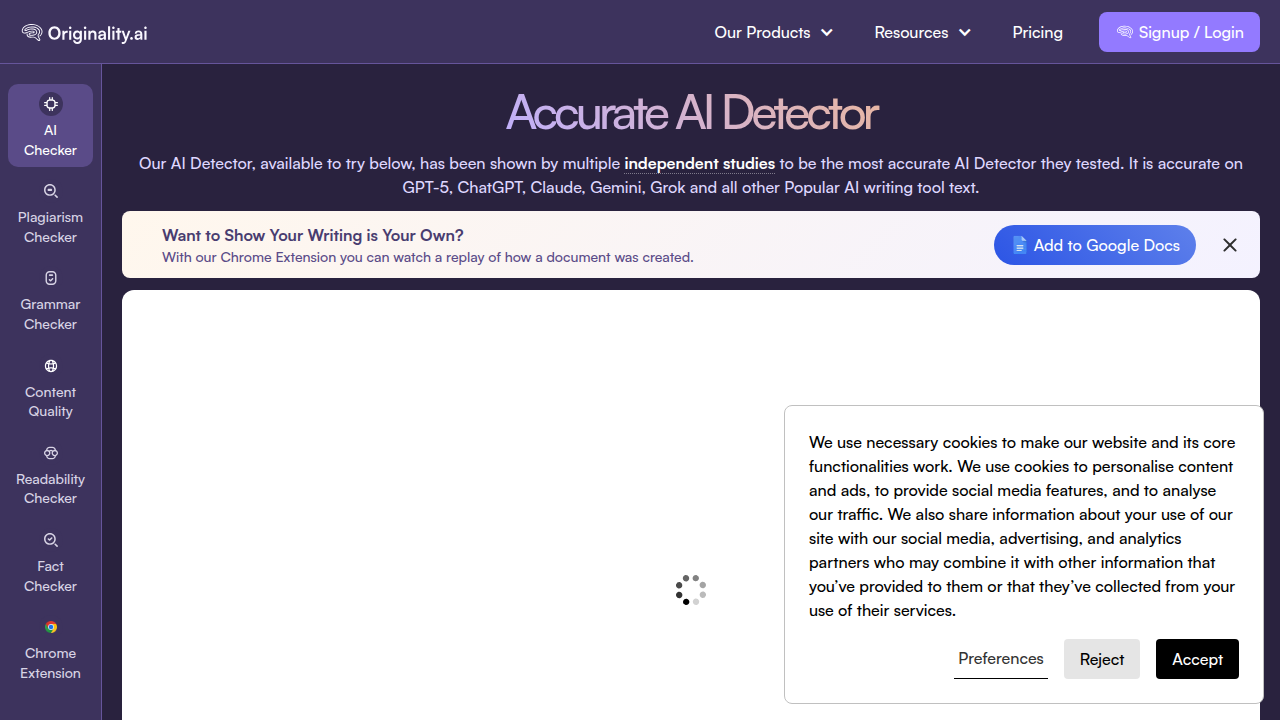
Each of these platforms handles one piece of the puzzle. Genspark tries to handle the whole puzzle.
This bundling strategy matters for policy professionals. When a single platform touches slides, documents, code, and phone calls, it collects data from every part of your workflow. That raises questions about data handling, model training, and accountability. The same convenience that makes the platform attractive also creates new compliance challenges.
If you work in policy or technology leadership, you need to understand not just what these tools do, but how they fit into the broader regulatory picture. That is why we created a guide on the new human-AI interaction guidelines for policy professionals and executives. It will help you assess platforms like Genspark with more confidence.
To stay current on developments like these, you need consistent intelligence. The Deep View Newsletter delivers a clear daily update on AI and technology policy. Subscribe today to keep your knowledge sharp in 2026.
Regulatory Challenges Posed by Generative AI Platforms
So what does all this mean if you are building or using a tool like Genspark AI? The rules around AI are changing fast in 2026. And they are not simple.
Right now, you have to follow a patchwork of laws.

In the European Union, the EU AI Act is moving to phase two. By August 2026, companies must follow new transparency rules and stricter rules for high-risk AI systems. The European Commission explains that these transparency rules will start applying in August 2026. If your platform generates content or automates decisions, you need to be ready.
In the United States, the picture is just as complicated. The White House released a National Policy Framework in March 2026 that calls for a unified federal approach. But until that happens, states are passing their own laws. For example, state laws now require risk management programs, consumer disclosures, and steps to prevent algorithmic discrimination. A new state law set to take effect in 2026 already demands that covered entities conduct risk assessments for high-risk automated decision tools before first use.
That is a lot of different requirements. Platforms like gen spark ai, originality ai, real magic ai, and open brain ai all face similar compliance hurdles. The challenge is that each tool uses AI differently. A content verification tool like Originality AI has different risks than a creative workflow tool like Real Magic AI. Yet all of them must figure out how to meet overlapping rules.
The Gaps That Still Exist
Even with all these laws, big questions remain unanswered. One major gap is transparency.
Some advanced AI models are black boxes. It is hard to explain how they reach a conclusion. Regulators want more openness. But current rules do not always say exactly what a company must reveal. Another gap is liability. If an AI tool creates false or harmful content, who is responsible? The developer? The user? The platform? Right now, there is no clear answer. A 2026 analysis of AI regulations noted that more than 69 countries have proposed over 1,000 AI policy initiatives, yet many of these fundamental issues remain unresolved.
The result is uncertainty for companies. They cannot always predict what a regulator will demand next.
What Happened in 2026 So Far
We have already seen some real world signals. In March 2026, major progress happened in both the U.S. and EU toward more unified rules. The U.S. is pushing for a single federal AI framework to replace the state patchwork. Meanwhile, enforcement actions are starting to appear. For instance, one state regulator recently issued guidance on using AI in hiring, requiring that companies audit their tools for bias. These early actions show that regulators are paying close attention.
For policy professionals and executives, this means you cannot wait. You need to understand how these regulations affect your specific platform. That is why we created a detailed look at the biggest information technology policy shifts of 2026. It covers exactly the kind of changes we are talking about here.
Stay Ahead of the Changes
The regulatory landscape will keep shifting. The best way to keep up is to get clear, daily updates. The Deep View Newsletter delivers exactly that. Subscribe today so you never miss a critical policy change that could affect your AI platform.
Data Privacy and Security: Genspark AI and the Next Frontier
The regulatory challenges we just covered are real. But for many companies, the biggest daily headache is data privacy and security. Think about how a platform like genspark ai works. It collects user prompts, scrapes data, and generates new content. Every step touches personal information. And that creates a real risk of breaching privacy regulations when we input personal data into generative AI platforms.
The Core Privacy Problem
Here is the simple truth. Most generative AI tools were not built with privacy first. They were built to be fast and useful. But now regulators want to know exactly what data you collect, how you store it, and what you do with it. Under laws like GDPR and CCPA, you cannot just grab data and figure out the rules later.
A comprehensive analysis of generative AI and data protection shows that the European legal framework demands strict accountability from AI developers. That means you need clear data governance policies before you launch. You cannot add them as an afterthought.
What Can Go Wrong
The dangers are not theoretical. When you use an AI tool, you might accidentally expose sensitive information in your prompts. The risks include bulk collection of personal data, bias, lack of transparency, and outright violations of data protection laws. For example, if an employee types a customer name into a public AI tool, that could be a GDPR violation.
Recent data from 2026 shows that 71% of firms now report compliance with recognized standards like HIPAA, SOC 2, or GDPR. That is good. But it also means 29% are still behind. And regulators are watching. The velocity of AI means security threats like phishing and credential harvesting are getting faster and harder to detect.
Practical Steps You Can Take
So what do you actually do? Start with a data audit. Know every piece of personal data your AI platform touches.
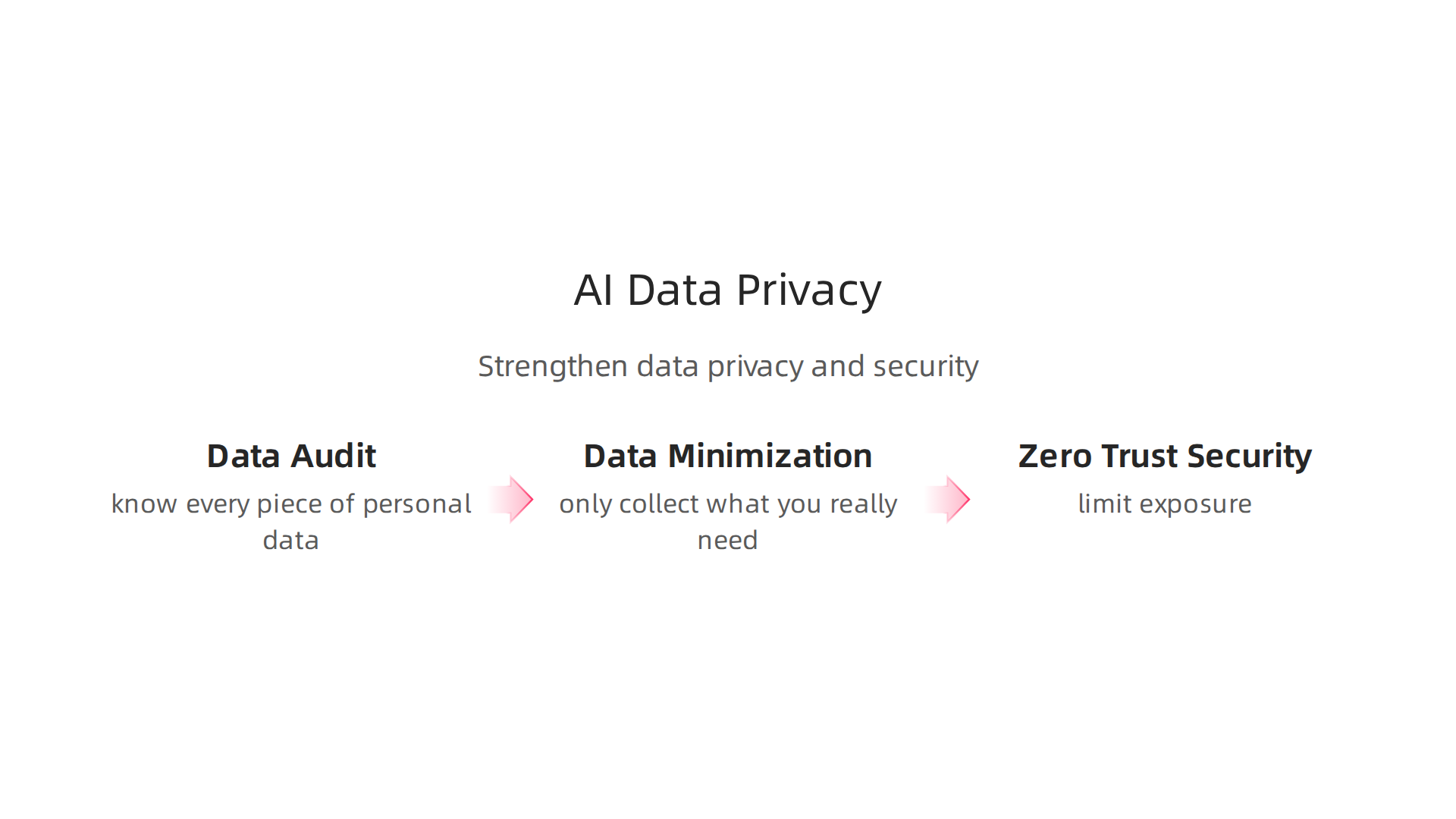
Then apply data minimization. Only collect what you really need. And use zero trust security models to limit exposure. If you want a deeper look at how privacy fits into the bigger picture, read about the new human AI interaction guidelines for policy professionals.
Also pay attention to specific use cases. For instance, AI background noise removal raises tough privacy and policy questions for leaders. The same principles apply to any tool that processes user data.
The Bottom Line
Data privacy is not a checklist. It is an ongoing practice. The rules will keep evolving. And if you miss a change, the consequences can be serious. That is why staying informed matters so much. The Deep View Newsletter delivers clear daily updates on privacy and AI policy so you never fall behind. Subscribe today.
Strategic Implications for Tech Executives and Investors
Data privacy and security are not just legal checkboxes. They directly shape your company’s future. For tech executives and investors in 2026, regulatory developments now affect product roadmaps, market access, and valuation more than ever.

How Regulation Reshapes Product Strategy
Here’s the thing. If you are building a genspark ai platform or investing in one, the rules are changing fast. The EU AI Act brought groundbreaking restrictions on high-risk AI systems. And in the US, the Biden administration’s "AI Diffusion Rule" from 2025 restricts the flow of advanced AI technologies. These laws force you to rethink what features you can ship and where.
A comprehensive analysis of generative AI and data protection shows that European law demands strict accountability from AI developers. That means your product needs built-in privacy controls from day one. You cannot add them later. Companies that wait will lose access to key markets.
BCG reports that tech companies and financial institutions are planning to spend about 2% of revenues on AI in 2026. But where you spend matters. Investing in compliance and governance is just as important as investing in model performance. If you neglect policy, you risk your entire go-to-market strategy.
Vanguard notes that AI investment’s outsized contribution to economic growth represents a key risk factor in 2026. And Goldman Sachs believes AI investment demands diversification. The smartest investors are already looking beyond pure model performance to regulatory readiness.
Investors Are Weighing Policy Risk
Policy risk used to be an afterthought. Not anymore. BlackRock highlights that AI is accelerating change and geopolitics widens near-term risk. When you evaluate a startup like originality ai or real magic ai, you need to ask hard questions about their compliance posture.
The numbers tell the story. 71% of firms now report compliance with recognized standards like HIPAA, SOC 2, or GDPR. That leaves 29% exposed. And regulators are cracking down. The velocity of AI means security threats like phishing and credential harvesting are getting faster and harder to detect.
Case Examples of Adaptation
Some companies are getting it right. They treat privacy as a competitive advantage. For example, platforms that proactively implement data minimization and zero trust models are winning enterprise contracts faster. Others using open brain ai architectures are building transparency into their models, which helps with regulatory audits.
The Cambridge paper confirms that strict accountability is becoming a baseline requirement. Companies that adapt their strategies early are seeing better valuation multiples. Those that ignore the signals are facing product bans and fines.
What This Means for You
If you are a tech executive, integrate policy analysis into every product decision. If you are an investor, make policy risk a core part of your due diligence. Read about the biggest information technology policy shifts of 2026 for a deeper look at what is changing.
Also check out how AI policy in the public sector is transforming government compliance to see how public sector clients are driving new standards.
The bottom line is simple. Regulation is not slowing down. It is accelerating. And the winners will be the ones who plan for it, not react to it.
Stay ahead of these shifts with clear daily intelligence. The Deep View Newsletter delivers concise updates on AI policy, data privacy, and market impacts so you can make informed decisions. Subscribe today.
Global Perspectives: Comparing AI Governance Across Jurisdictions
If you think AI rules are tough in one country, wait until you try to operate in five of them. The world today has a messy patchwork of AI governance models. And if you are building a genspark ai platform or investing in one, you need to know the differences.
The EU Leads with a Hard Line
The European Union set the tone with the AI Act. It is a risk based system. It classifies AI into four categories: prohibited, high risk, limited risk, and minimal risk. High risk systems must pass strict conformity checks. The EU wants to protect fundamental rights first. That full enforcement kicks in August 2026.
A comparative study of global regulation shows that the EU approach is the most comprehensive. It applies across all industries. The Brookings Institution points out that the EU uses a broad range of laws tailored to digital environments. This makes compliance heavy but predictable.
The US Takes a Different Path
The United States does not have one AI law. Instead, it relies on voluntary standards like the NIST AI Risk Management Framework. The federal government encourages innovation. But states are passing their own rules. So a company operating in California faces different rules than one in Texas.
The approach in the US blends sector specific laws with executive orders. The "AI Diffusion Rule" from 2025 restricts advanced technology exports. This creates another layer for international firms.
China Focuses on Control
China’s AI governance is all about content control and state oversight. The government wants to shape how AI is used for social stability and national security. Companies like originality ai or real magic ai that want to enter China must deal with strict censorship and data localization.
A detailed comparison from 2024 shows that China regulates AI outputs more than process. This is very different from the EU’s process heavy approach.
United Kingdom, Japan, and Others
The UK is trying to be innovation friendly. It uses a light touch, relying on existing regulators. Japan is similar, with guidelines instead of laws. But both are watching the EU closely.
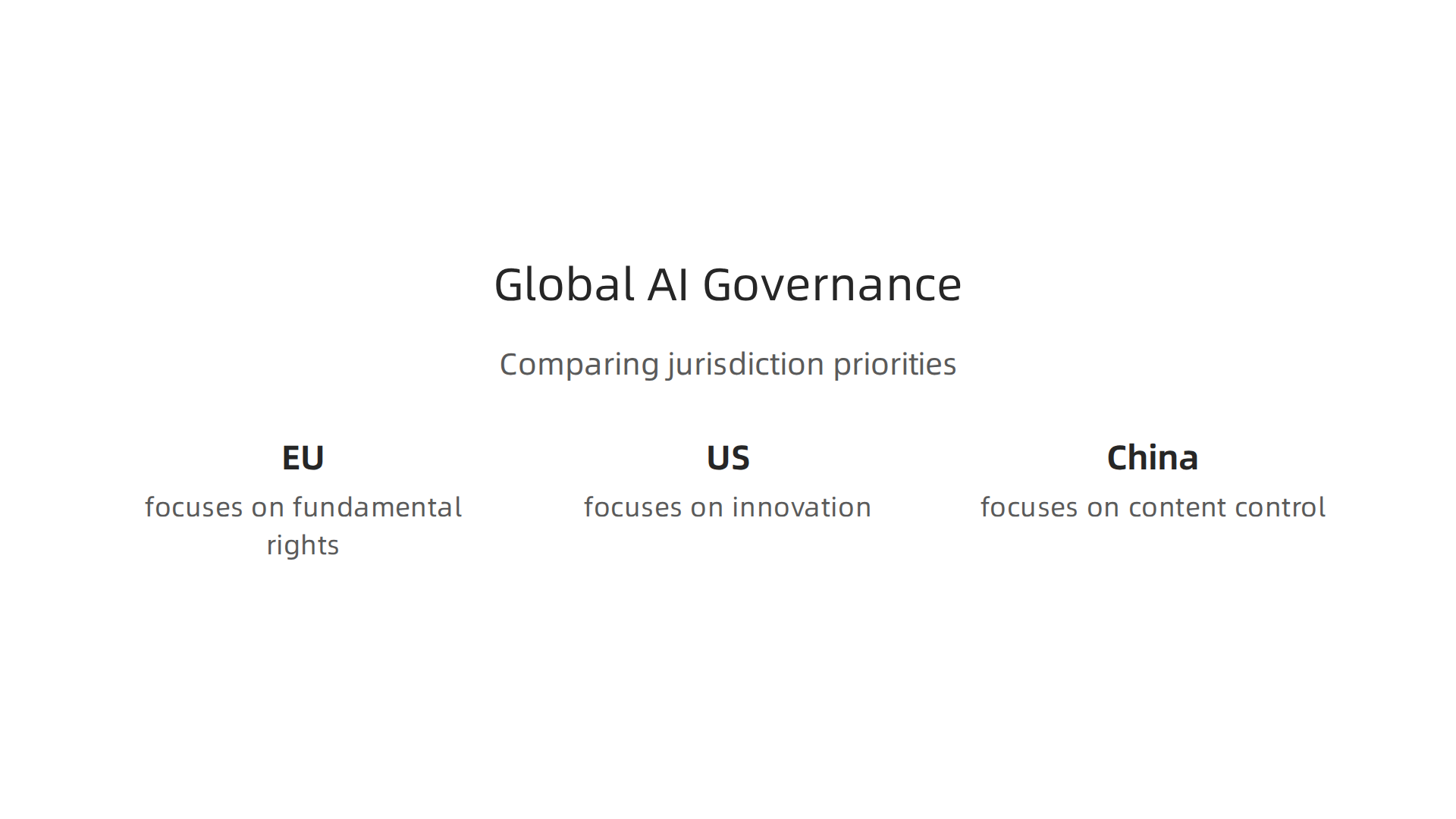
A framework analysis from early 2026 highlights how each country picks different priorities. The EU chooses rights. The US chooses innovation. China chooses control.
The Compliance Puzzle for International Firms
If your product uses open brain ai architecture, you must check every market. Divergences in risk classification, conformity assessment, and enforcement mechanisms make compliance painful. One system might be low risk in the US but high risk in the EU. You cannot use a single compliance playbook anymore.
International coordination is happening through groups like the OECD and GPAI. But progress is slow. A comprehensive guide from March 2026 maps out all major frameworks. It shows that alignment is still far away.
What to Do Next
You need to map your product against each jurisdiction. Do not assume that a rule in one place will work everywhere.
For a deeper look at how public sector clients are driving new standards, read how AI policy in the public sector is transforming government compliance.
The bottom line is this. AI governance is becoming a global maze. The teams that navigate it best will win. Stay informed every day.
Subscribe to The Deep View Newsletter for clear daily updates on AI policy and regulation across the world. It helps you turn complexity into advantage.
Preparing for the Future: Policy Recommendations and Best Practices
You have seen the messy world of AI governance. Different countries, different rules, and they keep changing. In 2026 alone, at least 69 countries have proposed over 1,000 AI related policy initiatives. That is a lot to track. So how do you keep your head above water? You need a practical playbook. Here are three steps that work.

Build a Proactive Intelligence Gathering System
You cannot follow every new law with a manual search. That is slow and risky. Instead, set up a system that monitors regulatory changes for you. This could be a dedicated role or a software tool. The key is to watch official sources, legal updates, and expert analysis regularly.
Covered entities now must conduct and document risk assessments for high risk automated decision making tools before first use, according to the 2026 AI Laws Update. New state laws and federal orders are popping up every month. If your product uses genspark ai or a similar advanced search platform, you need to know exactly where your system falls in each risk category. The same goes for any tool relying on open brain ai architecture. One wrong assumption and you are out of compliance.
For a deeper look at how government clients are driving new standards, read how AI policy in the public sector is transforming government compliance. It shows you how public sector demand shapes what rules come next.
Create Cross Functional Teams That Bridge Legal, Policy, and Product
Here is the thing. Compliance should never be an afterthought. It works best when you build it into the development cycle from day one. To do that, you need a team that mixes legal experts, policy analysts, and product developers. They all speak different languages but they must work together.
A product like originality ai that detects AI generated content might seem low risk. But if it is used in hiring decisions, it could become high risk in the EU. Similarly, a creative tool like real magic ai could face different rules depending on whether it handles personal data. Your cross functional team can catch these issues early. That saves time, money, and headaches.
The 2026 Year in Preview from WSGR emphasizes that businesses face an increasingly complex regulatory environment. A team that meets weekly to review new laws and map them to product features is worth its weight in gold. For more on how regulations are evolving alongside advanced AI, check out why artificial superintelligence is driving a new wave of regulations.
Leverage Trusted Information Sources and Expert Networks
You cannot do this alone. Rely on credible sources that filter the noise for you. Subscribe to newsletters, follow think tanks, and join professional networks. They cut down your research time and give you actionable insights.
For example, the AI Regulation in 2026 guide from Holistic AI highlights how personalization algorithms will face more scrutiny this year. If you track just two or three trusted sources, you stay ahead of major shifts.
One of the best ways to stay informed daily is to subscribe to The Deep View Newsletter. It delivers clear daily updates on AI policy and regulation across the world. It helps you turn complexity into advantage.
For a complete roundup of how technology policy is shifting globally, read the biggest information technology policy shifts of 2026. It gives you the big picture in one place.
The bottom line is this. You need to be proactive, collaborative, and well informed. Do not wait for a rule to catch you off guard. Start building your intelligence system, assemble your cross functional team, and lean on trusted sources. The organizations that prepare now will be the ones that thrive in the years ahead.
Summary
This article explains why emerging multi‑tool AI platforms like Genspark AI matter for policy professionals, tech leaders, and investors, and it connects product features to the regulatory and privacy risks they create. It describes Genspark’s bundled workspace—slides, documents, code, images and AI phone calls—and why that integration raises new compliance questions about data handling, model transparency, and liability. The piece reviews the evolving 2026 regulatory landscape, including the EU AI Act’s August 2026 transparency rules and patchwork U.S. state laws, and it highlights persistent gaps such as unclear liability and limited model explainability. It offers practical recommendations—data audits, minimization, zero‑trust security, cross‑functional teams, and proactive policy monitoring—to reduce legal and market risk. The article also outlines strategic implications for product roadmaps and investment due diligence, compares governance approaches across major jurisdictions, and points readers to specific resources and daily intelligence options to stay ahead.